Kirjojen hintavertailu. Mukana 12 595 353 kirjaa ja 12 kauppaa.

Kirjailija

John Weckert

Kirjat ja teokset yhdessä paikassa: 3 kirjaa, julkaisuja vuosilta 1997-2007, suosituimpien joukossa Information Technology and Social Justice. Vertaile teosten hintoja ja tarkista saatavuus suomalaisista kirjakaupoista.

3 kirjaa

Kirjojen julkaisuhaarukka 1997-2007.

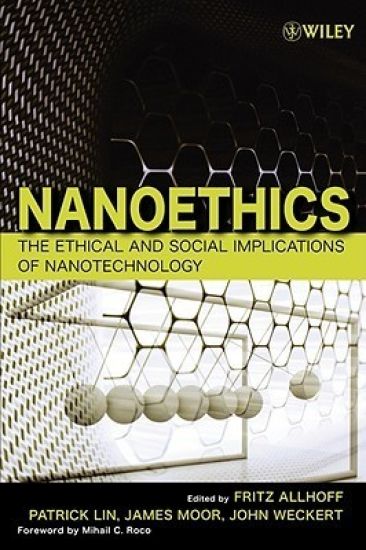
Nanoethics

Nanoethics

Fritz Allhoff; Patrick Lin; James H. Moor; John Weckert; Mihail C. Roco

John Wiley Sons Inc
2007
nidottu
Nanotechnology will eventually impact every area of our world Nanoethics seeks to examine the potential risks and rewards of applications of nanotechnology. This up-to-date anthology gives the reader an introduction to and basic foundation in nanotechnology and nanoethics, and then delves into near-, mid-, and far-term issues. Comprehensive and authoritative, it: Goes beyond the usual environmental, health, and safety (EHS) concerns to explore such topics as privacy, nanomedicine, human enhancement, global regulation, military, humanitarianism, education, artificial intelligence, space exploration, life extension, and moreFeatures contributions from forty preeminent experts from academia and industry worldwide, reflecting diverse perspectivesIncludes seminal works that influence nanoethics todayEncourages an informed, proactive approach to nanoethics and advocates addressing new and emerging controversies before they impede progress or impact our welfare This resource is designed to promote further investigations and a broad and balanced dialogue in nanoethics, dealing with critical issues that will affect the industry as well as society. While this will be a definitive reference for students, scientists in academia and industry, policymakers, and regulators, it's also a valuable resource for anyone who wants to understand the challenges, principles, and potential of nanotechnology.
Information Technology and Social Justice

Information Technology and Social Justice

Emma Rooksby; John Weckert

Information Science Publishing
2006
sidottu
The term digital divide is still used regularly to characterize the injustice associated with inequalities in access to information and communication technologies (ICTs). As the debate continues and becomes more sophisticated, more and more aspects of the distribution of ICTs are singled out as relevant to characterizations of the digital divide and of its moral status. The best way to articulate the digital divide is to relate it to other aspects of social and distributive justice, using a mixture of pre-existing theories within moral and political philosophy. These theories are complemented with contributions from sociology, communication studies, information systems, and a range of other disciplines. ""Information Technology and Social Justice"" presents conceptual frameworks for understanding and tackling digital divides. It includes information on access and skills, access and motivation, and other various levels of access. It also presents a detailed analysis of the benefits and value of access to ICTs.
Computer and Information Ethics

Computer and Information Ethics

Douglas Adeney; John Weckert

Praeger Publishers Inc
1997
sidottu
Information technology has provided numerous options to individuals, governments, and corporations around the world. These options demand that choices be made, and such choices often involve ethical decisions. Users must decide, for example, whether certain data should be made available on the Internet, whether the information contained in various databases should be sold to third parties, and whether software developers should be held responsible for social and economic problems that result from their programs. This book provides a rigorous but accessible discussion of some of the major ethical issues concerning computers and information technology. The text gives particular attention to widespread issues concerning intellectual property rights, censorship, and privacy, along with less frequently raised topics, such as ethical worries about image manipulation, virtual reality, and the moral status of intelligent machines and expert systems.Computers and information technology have created numerous options for their users. Individuals, governments, and corporations around the world must decide whether a particular technology or application should be used, how it should be employed, and toward what end. Sometimes such decisions may be based on purely economic or personal considerations. For example, a user might feel more comfortable with a particular word processing software, and a company might decide that a particular spreadsheet package meets all of its needs at a lower cost than competing products. But decisions concerning computer and information technology also involve ethical issues. Companies must determine whether it is an ethically correct objective to save money by replacing workers with technology. Courts and governments must decide whether it is ethical to censor communication on the Internet, or require software developers to have liability for social ills caused by use of their products, or for corporations to collect and sell information about individuals and their habits.This volume provides a rigorous but accessible philosophical examination of ethical issues related to computers as information processing machines. Special attention is given to questions of intellectual property, censorship, and privacy, for these issues are continually raised in the popular press and are central ethical concerns. But the book also considers ethical worries about image manipulation, virtual reality, the use of expert systems, and the moral status of intelligent machines. Some of the moral questions discussed have not yet arisen in practical situations, but these issues should be examined before they become urgent. While many issues have been omitted, the examinations within the text help show how additional ethical concerns may be approached in the future.