Kirjojen hintavertailu. Mukana 12 459 402 kirjaa ja 12 kauppaa.

Kirjailija

John Wiltshire

Kirjat ja teokset yhdessä paikassa: 12 kirjaa, julkaisuja vuosilta 1991-2019, suosituimpien joukossa Jane Austen. Vertaile teosten hintoja ja tarkista saatavuus suomalaisista kirjakaupoista.

12 kirjaa

Kirjojen julkaisuhaarukka 1991-2019.

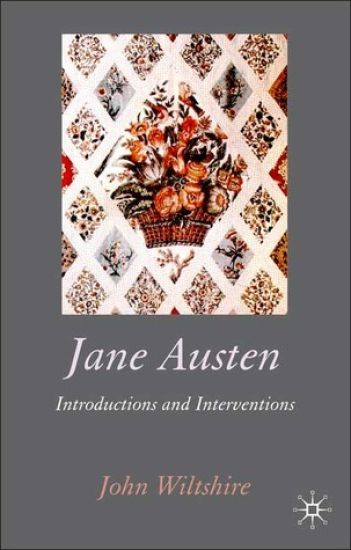
Jane Austen

Jane Austen

John Wiltshire

Red Globe Press
2006
nidottu
This volume brings together lively articles which have been reworked especially for this collection. John Wiltshire explores the key themes and issues that Austen's novels raise for modern readers and explores the controversies that surround the author's work. These accessible essays question conventional readings and consider Austen in a new light
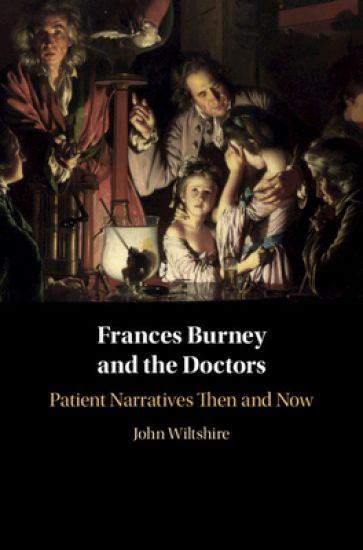
Frances Burney and the Doctors

Frances Burney and the Doctors

John Wiltshire

Cambridge University Press
2019
sidottu
Frances Burney is primarily known as a novelist and playwright, but in recent years there has been an increased interest in the medical writings found within her private letters and journals. John Wiltshire advocates Burney as the unconscious pioneer of the modern genre of pathography, or the illness narrative. Through her dramatic accounts of distinct medical events, such as her own infamous operation without anaesthetic, to those she witnessed, including the 'madness' of George III and the inoculation of her son against smallpox, Burney exposes the ethical issues and conflicts between patients and doctors. Her accounts are linked to a range of modern narratives in which similar events occur in the changed conditions of the public hospital. The genre that Burney initiated continues to make an important contribution to our understanding of medical practice in the modern world.
The Connell Guide to Jane Austen's Persuasion

The Connell Guide to Jane Austen's Persuasion

John Wiltshire

CONNELL PUBLISHING LTD
2016
pokkari
Persuasion is now probably the favourite Austen book after Pride and Prejudice. It tells the story of a life that might have been wasted, but is redeemed by love. It is a story by anyone who believes in second chances, or, in Tony Tanner's words "to anyone who has experienced the sense of an irreparably ruined owing to an irrevocable mistaken decision". While Pride and Prejudice was written when Austen was a young, marriageable woman, Persuasion was written when she was in her forties, and it features a heroine who, at twenty-seven, could in those days be destined, like Austen herself, to life as a spinster. As John Wiltshire, one of the best modern critics of Austen shows in this guide, the atmosphere of the two books is quite different, like the social world they depict - one "light and bright and sparkling" as Jane Austen herself called it, the other more sombre, shadowed by several deaths, and sometimes gentle and sometimes savage in its irony. But Persuasion has endeared itself to readers because the romance it celebrates takes place so convincingly within a constricting and believable social world. It's a love story for adults. Anne Elliot is quiet, accommodating, kind and thoughtful, but Jane Austen avoids making her a picture of perfection by inviting the reader into her consciousness. We see that she is watchful of herself, critical of herself, aware of her own self-deceptions, but at the same time subject to impulses and longings, to the dreams and sexual desires we all share.
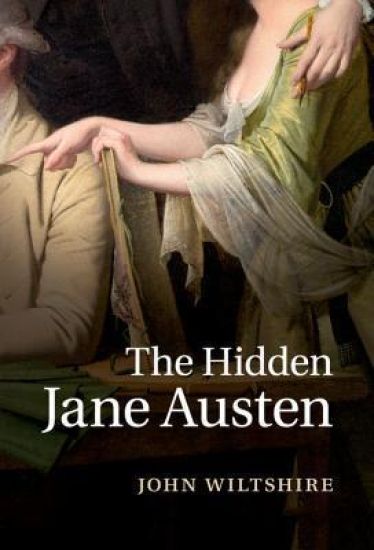
The Hidden Jane Austen

The Hidden Jane Austen

John Wiltshire

Cambridge University Press
2014
sidottu
In this major study, leading Austen scholar John Wiltshire offers new interpretations of Jane Austen's six novels, Sense and Sensibility (1811), Pride and Prejudice (1813), Mansfield Park (1814), Emma (1816), Northanger Abbey and Persuasion (1818). Much recent criticism of Austen has concentrated on the social, historical and intellectual context of her work, but Wiltshire turns attention back to Austen's prose techniques. Arguing that each of Austen's works has its own distinct focus and underlying agenda, he shows how Austen's interest in psychology, and especially her treatment of attention and the various forms of memory, helped shape her narratives. Through a series of compelling close readings of key passages in each novel, Wiltshire underscores Austen's unique ability to penetrate the hidden inner motives and impulses of her characters, and reveals some of the secrets of her narrative art.
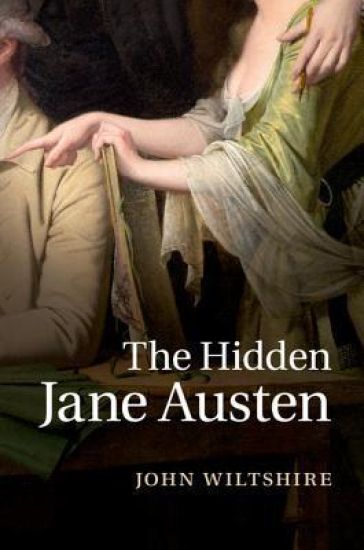
The Hidden Jane Austen

The Hidden Jane Austen

John Wiltshire

Cambridge University Press
2014
pokkari
In this major study, leading Austen scholar John Wiltshire offers new interpretations of Jane Austen's six novels, Sense and Sensibility (1811), Pride and Prejudice (1813), Mansfield Park (1814), Emma (1816), Northanger Abbey and Persuasion (1818). Much recent criticism of Austen has concentrated on the social, historical and intellectual context of her work, but Wiltshire turns attention back to Austen's prose techniques. Arguing that each of Austen's works has its own distinct focus and underlying agenda, he shows how Austen's interest in psychology, and especially her treatment of attention and the various forms of memory, helped shape her narratives. Through a series of compelling close readings of key passages in each novel, Wiltshire underscores Austen's unique ability to penetrate the hidden inner motives and impulses of her characters, and reveals some of the secrets of her narrative art.
The Cinematic Jane Austen

The Cinematic Jane Austen

David Monaghan; Ariane Hudelet; John Wiltshire

McFarland Co Inc
2009
pokkari
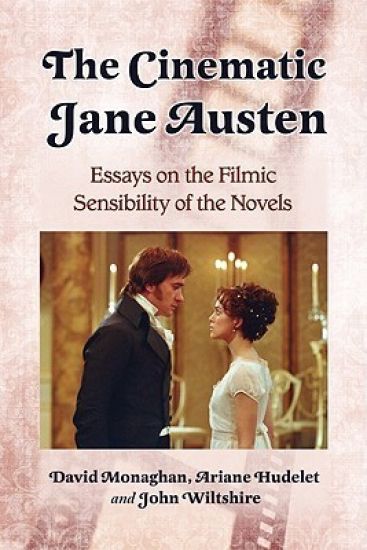
Jane Austen's novels are loved because they possess a comedic power that is often conveyed through the singular voice of the narrators. Film adaptations, however, have often been unsatisfactory because they lack or awkwardly render features, particularly the voice of the narrators. This work argues for a fresh approach that begins with a reading of the novels that emphasizes their auditory and visual dimensions. Building on their examination of Austen's inherently cinematic features, the authors then develop productive new readings of the films. Instructors considering this book for use in a course may request an examination copy here.
Jane Austen and the Body

Jane Austen and the Body

John Wiltshire

Cambridge University Press
2006
pokkari
Jane Austen has been read as a novelist of manners, whose work discreetly avoids discussing the physical. John Wiltshire shows, on the contrary, how important are faces and bodies in her texts, from complainers and invalids like Mrs Bennet and Mr Woodhouse, to the frail, debilitated Fanny Price, the vulnerable Jane Fairfax, and the 'picture of health', Emma. Talk about health and illness in the novels is abundant, and constitutes community, but it also serves to disguise the operation of social and gender politics. Behind the medical paraphernalia and incidents are serious concerns with the nature of power as exerted through and on the body, and with the manifold meanings of illness. 'Nerves', 'spirits', and sensibility figure largely in these books, and Jane Austen is seen to offer a critique of the gendering power of illness and nursing or attendance upon illness. Drawing both on modern - medical and feminist - theories of illness and the body as well as on eighteenth-century medical sources to illuminate the novels, this book offers new and controversial, but also scholarly, readings of these familiar texts.
Samuel Johnson in the Medical World

Samuel Johnson in the Medical World

John Wiltshire

Cambridge University Press
2005
pokkari
Samuel Johnson has become known to posterity in two capacities: through his own works as the great literary essayist of the eighteenth century, and, through Boswell's Life, as a man - notoriously a medical patient with a string of physical and psychological ailments. John Wiltshire brings the two together in this 1991 study of Johnson the writer as 'Doctor' and patient. The subject of modern medical historians' case studies, Johnson also cultivated the acquaintance of doctors in his own day, and was himself a 'dabbler in physics'. John Wiltshire illuminates Johnson's life and work by setting them in their medical context, and also examines the importance of medical themes in Johnson's own writings. He discusses the many parts of Johnson's work touching on doctors, medicines, hospitals and medical experimentation, and analyses the central theme of human suffering - in body and mind - and its alleviation.
Recreating Jane Austen

Recreating Jane Austen

John Wiltshire

Cambridge University Press
2001
sidottu
Recreating Jane Austen is a book for readers who know and love Austen's work. Stimulated by the recent crop of film and television versions of Austen's novels, John Wiltshire examines how they have been transposed and 'recreated' in another age and medium. Wiltshire illuminates the process of 'recreation' through the work of the psychoanalyst Donald Winnicott, and offers Jane Austen's own relation to Shakespeare as a suggestive parallel. Exploring the romantic impulse in Austenian biography, 'Jane Austen' as a commodity, and offering a re-interpretation of Pride and Prejudice, this book approaches the central question of the role Jane Austen plays in the contemporary cultural imagination.
Recreating Jane Austen

Recreating Jane Austen

John Wiltshire

Cambridge University Press
2001
pokkari
Recreating Jane Austen is a book for readers who know and love Austen’s work. Stimulated by the recent crop of film and television versions of Austen’s novels, John Wiltshire examines how they have been transposed and ‘recreated’ in another age and medium. Wiltshire illuminates the process of ‘recreation’ through the work of the psychoanalyst Donald Winnicott, and offers Jane Austen’s own relation to Shakespeare as a suggestive parallel. Exploring the romantic impulse in Austenian biography, ‘Jane Austen’ as a commodity, and offering a re-interpretation of Pride and Prejudice, this book approaches the central question of the role Jane Austen plays in the contemporary cultural imagination.
Jane Austen and the Body

Jane Austen and the Body

John Wiltshire

Cambridge University Press
1992
sidottu
Jane Austen has been read as a novelist of manners, whose work discreetly avoids discussing the physical. John Wiltshire shows, on the contrary, how important are faces and bodies in her texts, from complainers and invalids like Mrs Bennet and Mr Woodhouse, to the frail, debilitated Fanny Price, the vulnerable Jane Fairfax, and the ‘picture of health’, Emma. Talk about health and illness in the novels is abundant, and constitutes community, but it also serves to disguise the operation of social and gender politics. Behind the medical paraphernalia and incidents are serious concerns with the nature of power as exerted through and on the body, and with the manifold meanings of illness. ‘Nerves’, ‘spirits’, and sensibility figure largely in these books, and Jane Austen is seen to offer a critique of the gendering power of illness and nursing or attendance upon illness. Drawing on both modern - medical and feminist - theories of illness and the body, as well as on eighteenth-century medical sources, to illuminate the novels, this book offers new and controversial, but also scholarly, readings of these familiar texts.
Samuel Johnson in the Medical World

Samuel Johnson in the Medical World

John Wiltshire

Cambridge University Press
1991
sidottu
Samuel Johnson has become known to posterity in two capacities: through his own works as the great literary essayist of the eighteenth century, and, through Boswell's Life, as a man - notoriously a medical patient with a string of physical and psychological ailments. John Wiltshire brings the two together in this 1991 study of Johnson the writer as 'Doctor' and patient. The subject of modern medical historians' case studies, Johnson also cultivated the acquaintance of doctors in his own day, and was himself a 'dabbler in physics'. John Wiltshire illuminates Johnson's life and work by setting them in their medical context, and also examines the importance of medical themes in Johnson's own writings. He discusses the many parts of Johnson's work touching on doctors, medicines, hospitals and medical experimentation, and analyses the central theme of human suffering - in body and mind - and its alleviation.