

Kirjailija
John Y. Simon
Kirjat ja teokset yhdessä paikassa: 15 kirjaa, julkaisuja vuosilta 1969-2013, suosituimpien joukossa As If It Were Glory. Vertaile teosten hintoja ja tarkista saatavuus suomalaisista kirjakaupoista.
Mukana myös kirjoitusasut: John Y Simon
15 kirjaa
Kirjojen julkaisuhaarukka 1969-2013.
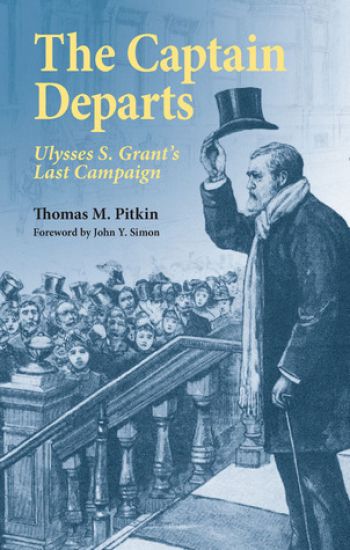
Early in 1885 Americans learned that General Grant was writing his Memoirs in a desperate race for time against an incurable cancer. Not generally known was the General’s precarious personal finances, made so by imprudent investments, and his gallant effort to provide for his family by his writing. For six months newspaper readers followed the dramatic contest, and the hearts of Americans were touched by the General’s last battle. Grant’s last year was one of both personal and literary triumph in the midst of tragedy, as Thomas M. Pitkin shows in this memorable and inspiring book. The Memoirs was completed; its remarkable literary quality made it a triumph. Ultimately more than 300,000 sets of the two-volume work were sold. And Grant accepted the inevitable with quiet courage, and faded away in a manner sadly familiar to many American families. Though told without maudlin touches, the story of Grant’s last year will leave few readers emotionally uninvolved, for it is an account of pain and suffering as well as mighty deeds, and truly deserves to be considered the General’s final victory.
Black Troops, White Commanders, and Freedmen During the Civil War
Howard C. Westwood; John Y. Simon
Southern Illinois University Press
2008
nidottu
This title recounts the experiences of black soldiers in the Civil War. In the ten probing essays collected in this volume, Howard C. Westwood recounts the often bitter experiences of black men who were admitted to military service and the wrenching problems associated with the shifting status of African Americans during the Civil War.""Black Troops, White Commanders, and Freedmen during the Civil War"" covers topics ranging from the roles played by Lincoln and Grant in beginning black soldiery to the sensitive issues that arose when black soldiers (and their white officers) were captured by the Confederates. The essays relate the exploits of black heroes such as Robert Smalls, who singlehandedly captured a Confederate steamer, as well as the experiences of the ignoble Reverend Fountain Brown, who became the first person charged with violating the Emancipation Proclamation.Although many thousands were enlisted as soldiers, blacks were barred from becoming commissioned officers and for a long time they were paid far less than their white counterparts. These and other blatant forms of discrimination understandably provoked discontent among black troops which, in turn, sparked friction with their white commanders. Westwood's fascinating account of the artillery company from Rhode Island amply demonstrates how frustrations among black soldiers came to be seen as 'mutiny' by some white officers.
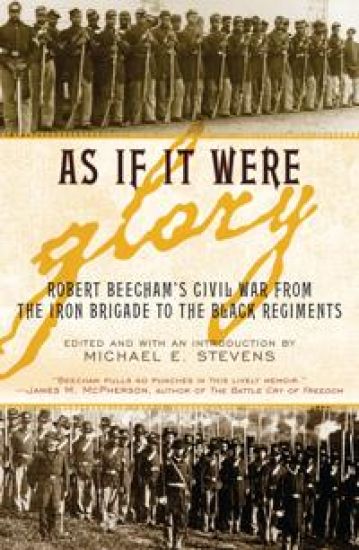
In this powerful and moving memoir, Robert Beecham tells of his Civil War experiences, both as an enlisted man in the fabled Iron Brigade of the Army of the Potomac and as an officer commanding a newly raised African-American unit. Written in 1902, Beecham recounts his war experiences with a keen eye toward the daily life of the soldier, the suffering and brutality of war, and the remarkable acts of valor, by soldiers both black and white, that punctuated the grind of long campaigns. As If It Were Glory is an unforgettable account of the Civil War, unclouded by sentimentality and insistent that the nation remain true to the cause for which it fought. Beecham's war was a long one—he served from May 1861 through the completion of the war in the spring of 1865. With the Iron Brigade he saw action at such momentous battles as Chancellorsville and then at Gettysburg, where he was taken prisoner. Returned to service in a prison exchange, Beecham was promoted to first lieutenant of the 23rd United States Colored Troops whom he lead in fierce fighting at the Battle of the Crater. At the Crater, Beecham was wounded, again captured, and, after eight months in a Confederate prison, escaped to find his way to Annapolis just before the conclusion of the war. In his narrative, Beecham celebrates the ingenuity of the enlisted man at the expense of officers who are often arrogant or incompetent. He also chides the altered recollections of fellow veterans who remember only triumphs and forgot defeats. In one of the most powerful parts of his memoir, Beecham pays tribute to the valor of the African Americans who fought under his command and insists that they were "the bravest and best soldiers that ever lived."
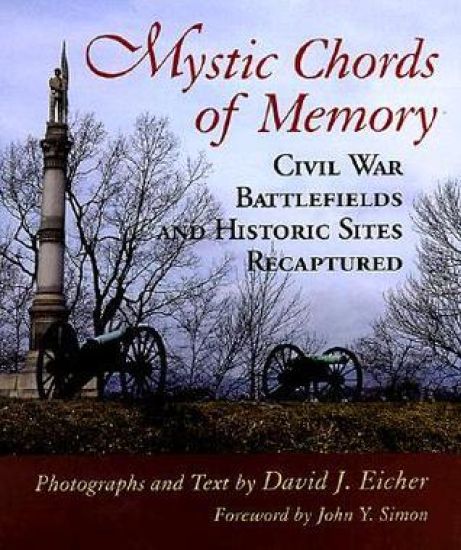
Mystic Chords of Memory
David J. Eicher; John Y. Simon
Louisiana State University Press
1998
sidottu
When I set foot on ground where Lincoln, Lee, Grant, or others walked, where the great battles raged, an almost magical feeling infuses me. Capturing these places on film, hopefully, in some small way, allows us to preserve that magical feeling of the special places and people of the war in our everyday lives."" These are the impassioned words of longtime Civil War aficionado David J. Eicher.Through his stunning photographs in Mystic Chords of Memory, Eicher presents many of the historical sites that evoke that ""magical feeling"" for him and thousands of other Civil War scholars and buffs. In this captivating -pictorial work, Eicher not only visits the most famous Civil War battlefields- Gettysburg, Vicksburg, Chickamauga, and Antietam among them- but also introduces readers to an array of lesser-known battle sites as well as monuments, forts, houses and farms, cemeteries, and museums. The breathtaking color photographs, chosen from Eicher's vast personal collection, are supplemented by powerful, historical black-and-white photographs that propel readers back to the Civil War era. The resulting richly illustrated work captures the most important, unusual, and interesting places associated with the war as they stand today.Eicher's probing analysis of the arduous four-year struggle provides background on its origins, interpretations of its major battles, and a summary of the war's aftermath. Peppered with more than 150 quotations from the journals, letters, and diaries of Civil War participants, the narrative allows readers to absorb the human aspects of the greatest of America's national tragedies.Eicher details the firing on Fort Sumter, the shock of First Bull Run, the carnage of Shiloh, the transformation of the war at Antietam, the turning points at Gettysburg and Vicksburg, the decisive, grueling campaigns of 1864, and the surrender at Appomattox. Contributing to the book's charm are dozens of images of forgotten places touched by the war, such as an abandoned graveyard in a Mississippi wood, the sandy strip of beach where some of the war's first black soldiers won fame, trenches along a Virginia county highway, and a brick church in Virginia pocked by artillery fire. Whether viewed as fields of death or fields of glory- and they were both- Civil War sites retain a commanding hold on the American imagination. In words as well as photographs, Eicher captures the poignant memory of our nation in conflict.
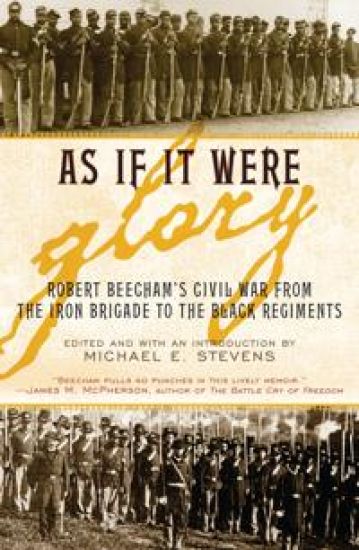
In this powerful and moving memoir, Robert Beecham tells of his Civil War experiences, both as an enlisted man in the fabled Iron Brigade of the Army of the Potomac and as an officer commanding a newly raised African-American unit. Written in 1902, Beecham recounts his war experiences with a keen eye toward the daily life of the soldier, the suffering and brutality of war, and the remarkable acts of valor, by soldiers both black and white, that punctuated the grind of long campaigns. As If It Were Glory is an unforgettable account of the Civil War, unclouded by sentimentality and insistent that the nation remain true to the cause for which it fought. Beecham's war was a long one—he served from May 1861 through the completion of the war in the spring of 1865. With the Iron Brigade he saw action at such momentous battles as Chancellorsville and then at Gettysburg, where he was taken prisoner. Returned to service in a prison exchange, Beecham was promoted to first lieutenant of the 23rd United States Colored Troops whom he lead in fierce fighting at the Battle of the Crater. At the Crater, Beecham was wounded, again captured, and, after eight months in a Confederate prison, escaped to find his way to Annapolis just before the conclusion of the war. In his narrative, Beecham celebrates the ingenuity of the enlisted man at the expense of officers who are often arrogant or incompetent. He also chides the altered recollections of fellow veterans who remember only triumphs and forgot defeats. In one of the most powerful parts of his memoir, Beecham pays tribute to the valor of the African Americans who fought under his command and insists that they were "the bravest and best soldiers that ever lived."
The Papers of Ulysses S. Grant, Volume 17
Ulysses S. Grant; John Y. Simon
Southern Illinois University Press
1991
sidottu
Although Ulysses S. Grant is best remembered as Civil War commander and as president, documents included here demonstrate his importance in the intervening years. Grant interpreted Reconstruction as the means to preserve battlefield victories. He avoided taking a public stand in the bitter dispute between President Andrew Johnson and Congress because he believed that military men served the country, not partisan interests. Nevertheless, he recognized that presidential Reconstruction had failed and privately supported passage of the First Reconstruction Act. Grant's public silence on political issues led to lively newspaper speculation, and individuals from unreconstructed rebels to ardent Unionists wrote to him offering support and advice. Circumstances were forcing him inexorably onto the political battlefield.
The Papers of Ulysses S. Grant, Volume 15
Ulysses S. Grant; John Y. Simon
Southern Illinois University Press
1988
sidottu
This volume provides material that will allow a fresh evaluation of Grant's activities following Appomattox. In April Grant commanded an army of more than 1,000,000 men maintained at enormous cost. Disbanding this army took priority. By mid-July, more than two-thirds of the volunteers had been mustered out. Grant as peacemaker exerted his power to protect his former adversaries. He opposed prosecuting Southern military leaders, including Robert E. Lee and others who had been indicted for treason. The South had to accept defeat, but Grant was no believer in a Carthaginian peace. Two military tasks remained. Grant sent his two most trusted subordinates to solve these problems: Major General Philip H. Sheridan to pressure the French in Mexico and Major General William T. Sherman to keep settlers and Indians apart. During the summer, Grant drafted his report on the last year of the war. The style as well as the substance of the report attracted widespread attention. It also made clear Grant's mastery of events during that terrible year.

The Personal Memoirs of Julia Dent Grant (Mrs. Ulysses S. Grant)
Grant Dent; John Y. Simon
Southern Illinois University Press
1988
nidottu
The First Lady's account of experiences during her husband's military and political careers
The Papers of Ulysses S. Grant, Volume 14
Ulysses S. Grant; John Y. Simon
Southern Illinois University Press
1985
sidottu
On March29, Grant opened the Ap pomattox campaign, informing Sheridan that " I now feel like ending the matter." Despite pleas to cancel the offensive because of adverse weather, Grant pressed ahead. Sheridan won the battle of Five Forks on April 1, and the next day Grant overran Lee's lines at Petersburg, forcing the evacuation of Richmond. Grant's mastery was never more appar ent than during his last battle. " I shall press the pursuit to the end," he wrote to Sherman, and by April 19 Lee had to choose between capitulation or annihila tion. With the surrender at Appomattox, Grant demonstrated his capacity for making peace as well as for waging war. In the frantic aftermath of Lincoln's death, Grant maintained his customary levelheadedness despite clamor for ven geance. He hoped that in President Andrew Johnson " we will find a man dis posed and capable of conducting the gov ernment in its old channel."
The Papers of Ulysses S. Grant, Volume 11
John Y Simon
Southern Illinois University Press
1984
sidottu
On June 2, 1864, Ulysses S. Grant postponed until the following morning an assault on Confederate lines near Cold Harbor planned for that afternoon because of delays in positioning troops. In the meantime, Confederate forces strengthened their lines, and the assault became a slaughter that haunted Grant for the rest of his life. Thus began a summer of frustration for the general-in-chief of the U.S. Army. By failing to press their advantage, Major General William F. “Baldy” Smith and Major General Ambrose E. Burnside in a six-week period fumbled two genuine opportunities to defeat Lee’s army. Annoyed by the constant calls of Major Generals William S. Rosecrans and Samuel R. Curtis for reinforcements in Missouri and Kansas, he wrote that “I am satisfied you would hear the same call if they were stationed in Maine.” Confederate forces commanded by Lieutenant General Jubal A. Early again threatened Washington, forcing Grant to send two army corps to defend the capital and to push the invaders back into the Shenandoah Valley. The pressure took its toll on his health: migraine headaches followed such setbacks as the battle of the Crater.
The Papers of Ulysses S. Grant v. 4; Jan.8th-Apr.5th 1862
Ulysses S. Grant; John Y. Simon
Southern Illinois University Press
1972
sidottu
Grant's trials and tribulations as a general after his victory at Fort Donelson is the scope of this 88-day period.The end of the Confederate power in western Kentucky and Ten nessee began with the Union's capture of Fort Henry on February 6. After the victory at Fort Donelson on February 16, Union occupation of the region was only a matter of time. Tried and tested in the victory at Fort Henry, Grant seemed to be on his own as a general. Yet, his direct links with Halleck broken, and with unsatisfactory communications with Gen eral George W. Cullum, Halleck's Chief of Staff at Cairo, and in spite of his great victory at Donelson, Grant was removed from command by Halleck, and was forced to remain behind at Fort Henry while his troops moved up the Tennessee River under General Charles F. Smith. The failure of communications, when Grant could not report, both bothered and embarrassed Halleck. Unsure of his future in the army and of his relations to his superior, Grant's thoughts turned inward, toward leaving the army, and he repeatedly asked to be relieved, until on March 14he was asked to resume command.
The Papers of Ulysses S. Grant, Volume 3
Ulysses S. Grant; John Y. Simon
Southern Illinois University Press
1971
sidottu
Grant's career in the closing months of 1861 has been obscured by the success which came to him on the battlefield early in the following year, beginning with the victory at Fort Donelson in February 1862.Hence, Volume 3 of this definitive edition will be especially valuable to historians of the presidency as well as the Civil War for the clear, com prehensive insight itprovides into Grant's attitudes and motives on the eve of his military victories. The fourteen-week period covered by this volume has been exhaustively researched, and includes a great store of previously un published material, which has been combined with already available Grant documents-- many of them now printed from the original manuscripts. All the correspondence has been placed in context and annotated. As in previous volumes of the Papers, a deepening portrait of Grant emerges. Here is the key to his future actions and policies and a guide to the thought of generations who looked to him for military and political leadership.
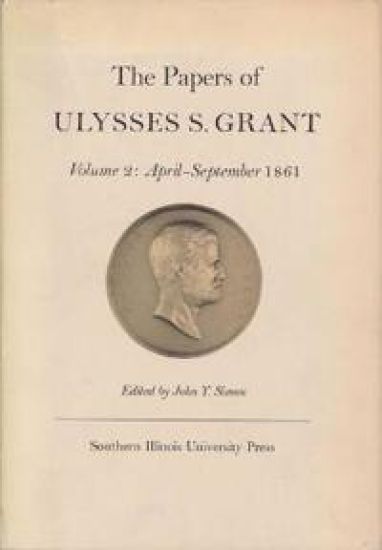
The Papers of Ulysses S. Grant, Volume 2
Ulysses S. Grant; John Y. Simon
Southern Illinois University Press
1969
sidottu
This comprehensive volume contains all known documents, both military and private, written by and to Grant during the first six months of the Civil War. Of unusual interest are his letters to his wife, father, and sister which provide the best insight into his complex character. Thirty of the letters to Julia have never before been published. The letters trace Grant's early career as a Civil War officer to his promotion to brigadier general. His assignments to command at Ironton and Jefferson City, Missouri, and Cairo, Illinois, are fully covered. At Cairo, Grant's area of responsi bility straddled the Ohio and Mississippi rivers, forming a military command Grant considered to be " third in importance in the country." From here he advanced the first federal troops into Kentucky, winning recognition for quick, sure judgment and military competence which started him on the road to Appomattox. A new and deepening picture of Grant continues to emerge with the publication of these letters. Important as original history, they deserve reading for their own sake.