Kirjojen hintavertailu. Mukana 12 426 238 kirjaa ja 12 kauppaa.

Kirjailija

Joji V S

Kirjat ja teokset yhdessä paikassa: 10 kirjaa, julkaisuja vuosilta 2021-2023, suosituimpien joukossa Traditional Rainwater Harvesting Structures. Vertaile teosten hintoja ja tarkista saatavuus suomalaisista kirjakaupoista.

Mukana myös kirjoitusasut: Joji V.S.

10 kirjaa

Kirjojen julkaisuhaarukka 2021-2023.

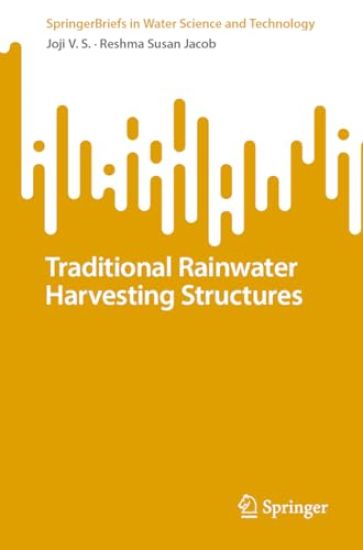
Traditional Rainwater Harvesting Structures

Traditional Rainwater Harvesting Structures

Joji V.S.; Reshma Susan Jacob

Springer International Publishing AG
2023
sidottu
This book contains detailed information about the traditional rainwater structures. Harvesting rainwater is becoming as a practical adaptation strategy for urban areas that are vulnerable to climate alteration. In the past, rainwater harvesting was more significant than it is today. Studies show that a variety of traditional and age-old rainwater gathering techniques were created or put into use in reaction to earlier climate change incidents. According to history, both floods and droughts were frequent occurrences in ancient India. Perhaps this explains why each region of the nation has its own traditional water gathering practices that are representative of the local physical and cultural diversity. All of these methods can be seen as a concept of harvesting rain whenever and wherever it falls. Water makes up 70.9 % of the Earth's surface, mainly in the form of oceans and seas. Water is found in modest proportions as 1.7 % groundwater, 1.7 % glaciers and ice caps in Antarctica and Greenland, vapour, clouds (ice and liquid water suspended in air), and 0.001% precipitation in the air. Evaporation, transpiration, evapo-transpiration, condensation, precipitation, root absorption, percolation, infiltration, base flow and runoff are processes that water goes through on its way to the sea.
Traditional Rainwater Harvesting Structures

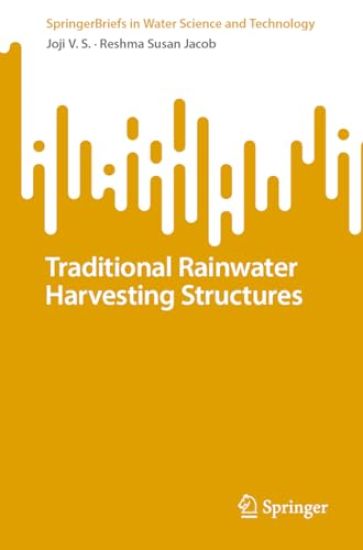
Traditional Rainwater Harvesting Structures

Joji V.S.; Reshma Susan Jacob

Springer International Publishing AG
2023
nidottu
This book contains detailed information about the traditional rainwater structures. Harvesting rainwater is becoming as a practical adaptation strategy for urban areas that are vulnerable to climate alteration. In the past, rainwater harvesting was more significant than it is today. Studies show that a variety of traditional and age-old rainwater gathering techniques were created or put into use in reaction to earlier climate change incidents. According to history, both floods and droughts were frequent occurrences in ancient India. Perhaps this explains why each region of the nation has its own traditional water gathering practices that are representative of the local physical and cultural diversity. All of these methods can be seen as a concept of harvesting rain whenever and wherever it falls. Water makes up 70.9 % of the Earth's surface, mainly in the form of oceans and seas. Water is found in modest proportions as 1.7 % groundwater, 1.7 % glaciers and ice caps in Antarctica and Greenland, vapour, clouds (ice and liquid water suspended in air), and 0.001% precipitation in the air. Evaporation, transpiration, evapo-transpiration, condensation, precipitation, root absorption, percolation, infiltration, base flow and runoff are processes that water goes through on its way to the sea.
Ground Water Abstraction Structures

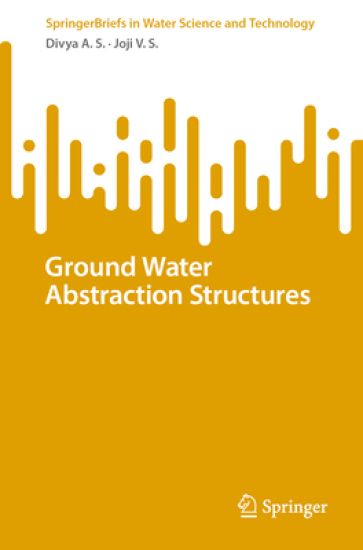
Ground Water Abstraction Structures

Divya A.S.; Joji V.S.

Springer International Publishing AG
2023
nidottu
This book focuses on natural and manmade structures which are used for drawing groundwater to the surface. Groundwater extraction structures include open dug wells (small-diameter open wells and large-diameter irrigation wells), tube wells, filter point wells, bore wells, surangams, and dug-cum-bore wells. Early abstraction structures were mainly natural but more manmade structures are now in use due to technological developments. Upto 30% of the freshwater supply in the world comes from groundwater, and among freshwater resources, groundwater plays a crucial role in the drinking water supply. Due to rapid population growth, increased urbanization, changing lifestyles, industrial growth, and agricultural methods, the demand for groundwater continues to increase. The book will be of interest to faculty and students of geology, geography and civil engineering, research scholars, hydrogeologists, planners, and professionals in the field of groundwater.
A Textbook of Managed Aquifer Recharge

A Textbook of Managed Aquifer Recharge

Joji V S; Saivinayak Viswanathan; Sebin Sebastian

SCHOLARS' PRESS
2021
pokkari
The book entitled 'A Textbook of Managed Aquifer Recharge' is useful to faculty and students of Geology, Geography and Civil Engineering, research scholars, hydrogeologists, planners, and professionals in the field of groundwater. The book consists of seven chapters of which first chapter deals with Introduction to Hydrogeologic parameters. The distribution of water in earth, hydrological cycle, occurrence of ground water and classification of aquifers are the highlights of first chapter. The chapter 2 on managed aquifer recharge (MAR), chapter 3 planning for MAR and chapter 4 various artificial recharge structures. Water quality standards and MAR are discussed in detail in the 5th chapter. The Chapter 6 deals with Economics of Managed Aquifer Recharge projects and Chapter 7 on Factors Controlling Aquifer Recharge. The chapter 8 exclusive on various aspects of roof top rainwater harvesting.