
Kirjailija
Jon A Levisohn
Kirjat ja teokset yhdessä paikassa: 4 kirjaa, julkaisuja vuosilta 2022-2026, suosituimpien joukossa Portraits of Adult Jewish Learning. Vertaile teosten hintoja ja tarkista saatavuus suomalaisista kirjakaupoista.
Mukana myös kirjoitusasut: Jon A. Levisohn
4 kirjaa
Kirjojen julkaisuhaarukka 2022-2026.
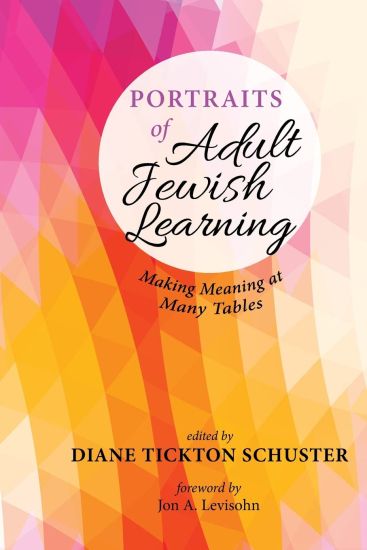
What do we mean by ""adult Jewish learning""? Where is contemporary adult Jewish learning taking place? What kinds of learning matter to adult Jewish learners in the twenty-first century? Portraits of Adult Jewish Learning boldly tackles these questions through the exploration of various learners' experiences in diverse circumstances: couples exploring a Jewish museum, actors co-creating a Jewish-themed play, social justice activists consolidating their Jewish values and identities, Jewish preschool educators visiting Israel, Jewish and non-Jewish staff at a Jewish social service agency studying traditional texts together, Latinx converts seeking to understand ""how to be a good Jew,"" members of a Torah study group producing their own commentaries, Jewish community leaders coming to terms with the challenges of Jewish pluralism. Using the social science methodology of portraiture, the authors provide nuanced detail about the wide range of participants, settings, subject matter, and ways of meaning making that characterize adult Jewish learning today. Viewing these narratives side by side enables readers to think ""outside the frame"" about programming, curricula, pedagogies, and contexts that encourage meaningful adult learning. This book will capture the imagination of educational leaders, clergy, policymakers, philanthropists, teachers, and adult learners, and will spark conversation about how to enrich the field of adult Jewish learning overall.
With this book Jon Levisohn argues that current history education is set up in a way that sees students of history at one end of a continuum with the academic experts in the field of history at the other, and where the goal of history education is to help students to think like historians. Building on a critical engagement with Carl Hempel, Hayden White, and David Carr, as well as contemporary work in virtue epistemology, Levisohn proposes a new theory of historiography which serves as a set of guidelines for the teaching and learning of history. According to the theory, the work of historiography is best characterized as a negotiation among narratives, weaving together received narratives with new information and ideas in order to construct a new narrative. This negotiation happens with a particular orientation towards negative evidence or ‘flexible disconfirmationism’, and is assessed according to the openness, sensitivity, responsibility, creativity, boldness and humility, i.e. the virtues of historical interpretation. The book rethinks the work of history education, offering new ways of thinking about the goals of the teaching of history, namely, in terms of the cultivation of the interpretive virtues.
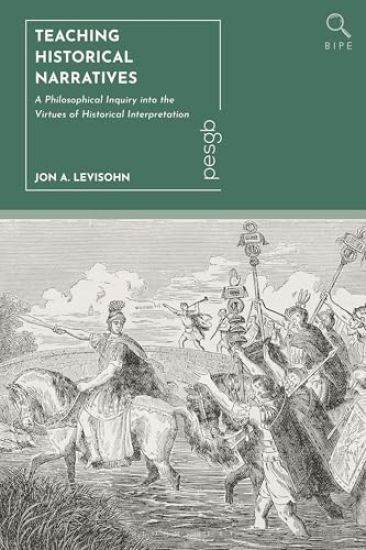
With this book Jon Levisohn argues that current history education is set up in a way that sees students of history at one end of a continuum with the academic experts in the field of history at the other, and where the goal of history education is to help students to think like historians. Building on a critical engagement with Carl Hempel, Hayden White, and David Carr, as well as contemporary work in virtue epistemology, Levisohn proposes a new theory of historiography which serves as a set of guidelines for the teaching and learning of history. According to the theory, the work of historiography is best characterized as a negotiation among narratives, weaving together received narratives with new information and ideas in order to construct a new narrative. This negotiation happens with a particular orientation towards negative evidence or ‘flexible disconfirmationism’, and is assessed according to the openness, sensitivity, responsibility, creativity, boldness and humility, i.e. the virtues of historical interpretation. The book rethinks the work of history education, offering new ways of thinking about the goals of the teaching of history, namely, in terms of the cultivation of the interpretive virtues.