Kirjojen hintavertailu. Mukana 12 595 353 kirjaa ja 12 kauppaa.

Kirjailija

Jon A. Shields

Kirjat ja teokset yhdessä paikassa: 6 kirjaa, julkaisuja vuosilta 2001-2026, suosituimpien joukossa The Republican Civil War. Vertaile teosten hintoja ja tarkista saatavuus suomalaisista kirjakaupoista.

6 kirjaa

Kirjojen julkaisuhaarukka 2001-2026.

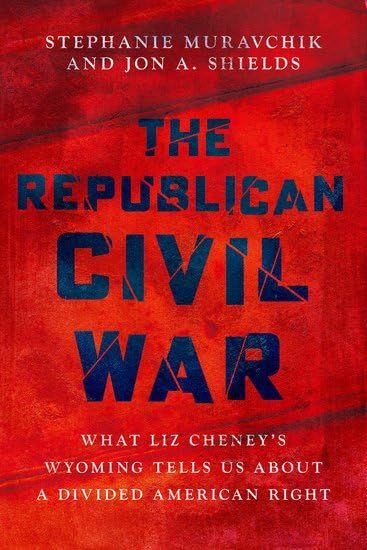
The Republican Civil War

The Republican Civil War

Stephanie Muravchik; Jon A. Shields

OXFORD UNIVERSITY PRESS INC
2026
sidottu
An insightful examination of intra-party conflict in Wyoming, revealing a fundamental disagreement between Republicans that will determine the future of the American right. No state has been more Republican and loyal to Donald Trump than Wyoming. The appearance of homogeneity, though, masks a fierce battle for the future of the party. In The Republican Civil War, Stephanie Muravchik and Jon A. Shields draw on years of on-the-ground research and dozens of interviews with elected officials and activists, finding a party divided over whether it should abandon its traditional focus on governance for a new nationalized form of identity politics. While old guard Republicans aim to solve local problems within an ethos of noblesse oblige, MAGA insurgents position themselves as "true conservatives" leading a censorious crusade against the establishment. More surprisingly, the same social cleavages that divide red and blue American--class and ruralness--shape this civil war. Most of the new insurgents in the legislature don't have college degrees and see themselves as part of a rural uprising. By shedding light on a civil war in the deepest of red states, this book not only advances our understanding of the new conservative politics of identity, it also offers a clear portrait of a GOP establishment resisting--not just capitulating--to Trumpism.
The Republican Civil War

The Republican Civil War

Stephanie Muravchik; Jon A. Shields

OXFORD UNIVERSITY PRESS INC
2025
nidottu
An insightful examination of intra-party conflict in Wyoming, revealing a fundamental disagreement between Republicans that will determine the future of the American right. No state has been more Republican and loyal to Donald Trump than Wyoming. The appearance of homogeneity, though, masks a fierce battle for the future of the party. In The Republican Civil War, Stephanie Muravchik and Jon A. Shields draw on years of on-the-ground research and dozens of interviews with elected officials and activists, finding a party divided over whether it should abandon its traditional focus on governance for a new nationalized form of identity politics. While old guard Republicans aim to solve local problems within an ethos of noblesse oblige, MAGA insurgents position themselves as "true conservatives" leading a censorious crusade against the establishment. More surprisingly, the same social cleavages that divide red and blue American--class and ruralness--shape this civil war. Most of the new insurgents in the legislature don't have college degrees and see themselves as part of a rural uprising. By shedding light on a civil war in the deepest of red states, this book not only advances our understanding of the new conservative politics of identity, it also offers a clear portrait of a GOP establishment resisting--not just capitulating--to Trumpism.
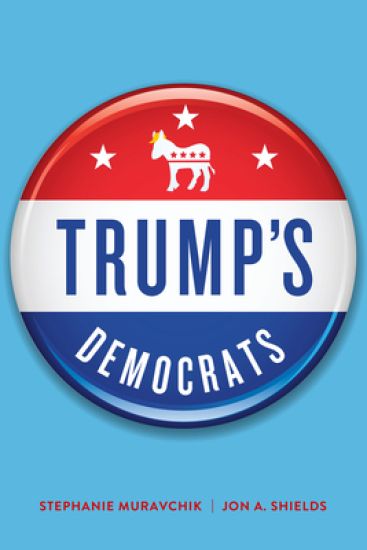
Trump's Democrats

Trump's Democrats

Stephanie Muravchik; Jon A. Shields

Brookings Institution
2020
sidottu
Why did hundreds of Democratic strongholds break for Donald Trump in 2016 and stay loyal to him in 2020?Looking for answers, Muravchik and Shields lived in three such “flipped” communities. There they discovered a political culture that was Trumpy long before the 45th president arrived on the national political scene.In these places, dominated by the white working-class, some of the most beloved and longest-serving Democratic leaders are themselves Trumpian—grandiose, combative, thin-skinned, and nepotistic. Indifferent to ideology, they promise to take care of “their people” by cutting deals—and corners if needed. Stressing loyalty, they often turn to family to fill critical political roles. Trump, resembling these old-style Democratic bosses, strikes a familiar and appealing figure in these communities.Although voters in “flipped” communities have often been portrayed as white supremacists, Muravchik and Shields find that their primary political allegiances are to place—not race. They will spend an extra dollar to patronize local businesses, and they think local jobs should go to their neighbors, not “foreigners” from neighboring counties—who are just as likely to be white and native-born. Unlike the Proud Boys, they take more pride in their local communities than in their skin color. Trump successfully courted these Democrats by promising to revitalize their struggling hometowns.Because these communities largely stuck with Trump in 2020, Biden won the presidency by just the thinnest of margins. Whether they will continue to support a Republican Party without Trump—or swing back to the Democrats—depends in part on which party can satisfy these locally grown political tastes and values. The party that does that will enjoy a stranglehold in national elections for years to come.
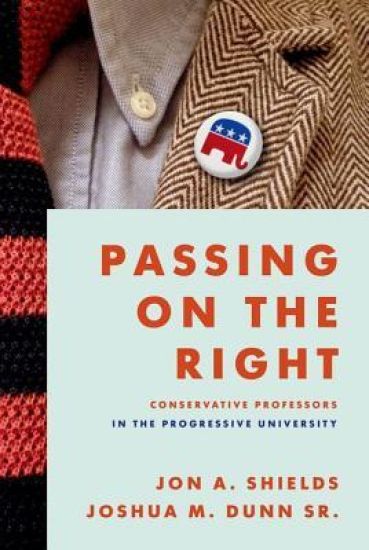
Passing on the Right

Passing on the Right

Jon A. Shields; Joshua M. Dunn Sr.

Oxford University Press Inc
2016
sidottu
Liberals represent a large majority of American university and college faculty, especially in the social sciences and humanities. This is a consistent finding challenged by no serious student. Does minority status affect the work of conservative scholars or the academy as a whole? In Passing on the Right, Dunn and Shields explore the actual experiences of conservative academics, which have long been neglected. While partisans on both sides have been preoccupied with the narrow question of whether or not conservative professors are passed over in hiring and promotion decisions, Dunn and Shields argue that the liberal dominance of the academy may affect conservatives in ways that are far more open to verification - for example, in the case of conservative professors who may censor their comments in public forums and avoid controversial questions in their research, especially prior to tenure. Conversely, minority status may also have its benefits, perhaps allowing conservatives to discover more original research questions and interpretations due to not being able to share the ideological assumptions of most of their liberal colleagues. Drawing on a collection of revealing interviews with conservative professors and graduate students, Dunn and Shields discover how these scholars negotiate their worlds, asking questions such as: How often do conservatives remain closeted? Do they discourage conservative undergraduate students from pursuing academic careers? Do they avoid mentoring conservative student groups? Do they see any professional advantages to being part of a political minority? In short, how does the liberalism of the academy shape conservative scholars and influence their sense of academic freedom? By avoiding partisanship and offering an insightful portrayal of this misunderstood political minority, this book aims to persuade liberal elites to take the minority status of conservative academics more seriously and encourage conservatives to move beyond simplistic caricatures of life in the liberal academy.
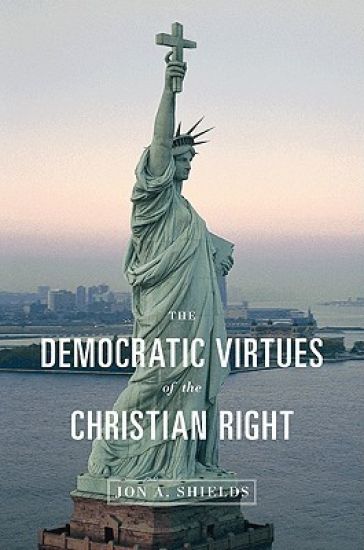
The Democratic Virtues of the Christian Right

The Democratic Virtues of the Christian Right

Jon A. Shields

Princeton University Press
2009
sidottu
The Christian Right is frequently accused of threatening democratic values. But in The Democratic Virtues of the Christian Right, Jon Shields argues that religious conservatives have in fact dramatically increased and improved democratic participation and that they are far more civil and reasonable than is commonly believed. Shields interviewed leaders of more than thirty Christian Right organizations, observed movement activists in six American cities, and analyzed a wide variety of survey data and movement media. His conclusions are surprising: the Christian Right has reinvigorated American politics and fulfilled New Left ideals by mobilizing a previously alienated group and by refocusing politics on the contentious ideological and moral questions that motivate citizens. Shields also finds that, largely for pragmatic reasons, the vast majority of Christian Right leaders encourage their followers to embrace deliberative norms in the public square, including civility and secular reasoning. At the same time, Shields highlights a tension between participatory and deliberative ideals since Christian Right leaders also nurture moral passions, prejudices, and dogmas to propel their movement. Nonetheless, the Christian Right's other democratic virtues help contain civic extremism, sharpen the thinking of activists, and raise the level and tenor of political debate for all Americans.
Managing Green Mandates

Managing Green Mandates

Pietro S. Nivola; Jon A. Shields

Brookings Institution
2001
nidottu
"Federal policies have made great progress protecting the environment. But the policies sometimes have imposed inordinate costs on local governments. Managing Green Mandates describes how various federal environmental directives do not suit diverse conditions at the local level, and compel local communities to spend their revenues on reducing relatively minor risks to the public health. While policymakers have thrown far-reaching requirements at the feet of local authorities, the federal government is providing them less aid to comply with the increasingly stringent standards. The burden of these underfunded mandates can further disadvantage many overtaxed municipalities. Pietro Nivola is a senior fellow in the Governmental Studies program at the Brookings Institution. He is the author of The Laws of the Landscape: How Politics Shape Cities in Europe and America (Brookings 1999). Jon Shields is a graduate student in the Department of Government and Foreign Affairs at the University of Virginia."