Kirjojen hintavertailu. Mukana 12 390 323 kirjaa ja 12 kauppaa.

Kirjailija

Jon C. Rogowski

Kirjat ja teokset yhdessä paikassa: 4 kirjaa, julkaisuja vuosilta 2013-2022, suosituimpien joukossa The Wartime President. Vertaile teosten hintoja ja tarkista saatavuus suomalaisista kirjakaupoista.

4 kirjaa

Kirjojen julkaisuhaarukka 2013-2022.

No Blank Check

No Blank Check

Andrew Reeves; Jon C. Rogowski

Cambridge University Press
2022
pokkari
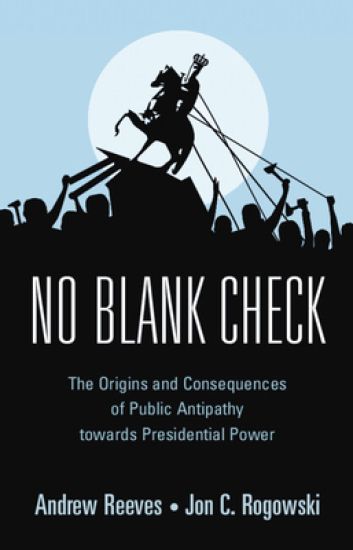
Concerns about unaccountable executive power have featured recurrently in political debates from the American founding to today. For many, presidents' use of unilateral power threatens American democracy. No Blank Check advances a new perspective: Instead of finding Americans apathetic towards how presidents exercise power, it shows the public is deeply concerned with core democratic values. Drawing on data from original surveys, innovative experiments, historical polls, and contexts outside the United States, the book highlights Americans' skepticism towards presidential power. This skepticism results in a public that punishes unilaterally minded presidents and the policies they pursue. By departing from existing theories of presidential power which acknowledge only institutional constraints, this timely and revealing book demonstrates the public's capacity to tame the unilateral impulses of even the most ambitious presidents. Ultimately, when it comes to exercising power, the public does not hand the president a blank check.
No Blank Check

No Blank Check

Andrew Reeves; Jon C. Rogowski

Cambridge University Press
2022
sidottu
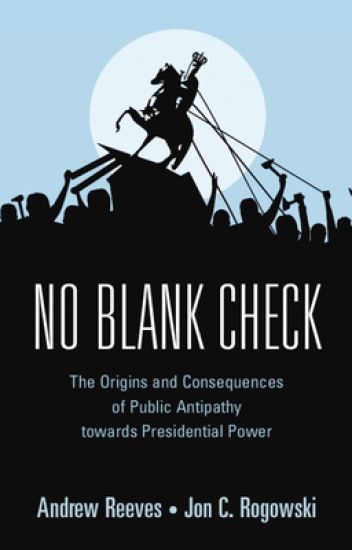
Concerns about unaccountable executive power have featured recurrently in political debates from the American founding to today. For many, presidents' use of unilateral power threatens American democracy. No Blank Check advances a new perspective: Instead of finding Americans apathetic towards how presidents exercise power, it shows the public is deeply concerned with core democratic values. Drawing on data from original surveys, innovative experiments, historical polls, and contexts outside the United States, the book highlights Americans' skepticism towards presidential power. This skepticism results in a public that punishes unilaterally minded presidents and the policies they pursue. By departing from existing theories of presidential power which acknowledge only institutional constraints, this timely and revealing book demonstrates the public's capacity to tame the unilateral impulses of even the most ambitious presidents. Ultimately, when it comes to exercising power, the public does not hand the president a blank check.
The Wartime President

The Wartime President

William G. Howell; Saul P. Jackman; Jon C. Rogowski

University of Chicago Press
2013
nidottu
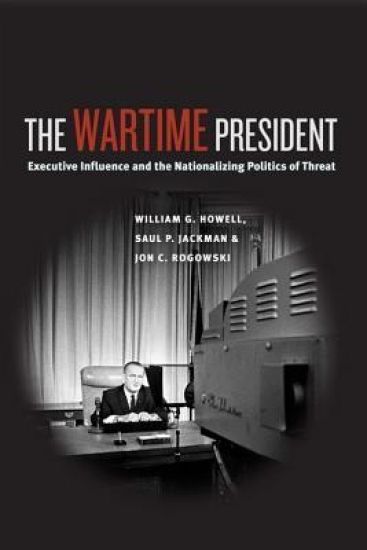
"It is the nature of war to increase the executive at the expense of the legislative authority," wrote Alexander Hamilton in the Federalist Papers. The balance of power between Congress and the president has been a powerful thread throughout American political thought since the time of the Founding Fathers. And yet, for all that has been written on the topic, we still lack a solid empirical or theoretical justification for Hamilton's proposition. For the first time, William G. Howell, Saul P. Jackman, and Jon C. Rogowski systematically analyze the question. Congress, they show, is more likely to defer to the president's policy preferences when political debates center on national rather than local considerations. Thus, World War II and the post-9/11 wars in Afghanistan and Iraq significantly augmented presidential power, allowing the president to enact foreign and domestic policies that would have been unattainable in times of peace. But, contrary to popular belief, there are also times when war has little effect on a president's influence in Congress. The Vietnam and Gulf Wars, for instance, did not nationalize our politics nearly so much, and presidential influence expanded only moderately. Built on groundbreaking research, The Wartime President offers one of the most significant works ever written on the wartime powers presidents wield at home.
The Wartime President

The Wartime President

William G. Howell; Saul P. Jackman; Jon C. Rogowski

University of Chicago Press
2013
sidottu
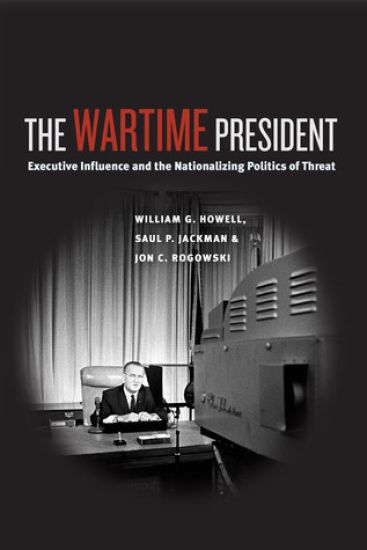
"It is the nature of war to increase the executive at the expense of the legislative authority," wrote Alexander Hamilton in the Federalist Papers. The balance of power between Congress and the president has been a powerful thread throughout American political thought since the time of the Founding Fathers. And yet, for all that has been written on the topic, we still lack a solid empirical or theoretical justification for Hamilton's proposition. For the first time, William G. Howell, Saul P. Jackman, and Jon C. Rogowski systematically analyze the question, Congress, they show, is more likely to defer to the president's policy preferences when political debates center on national rather than local considerations. Thus, World War II and the post-9/11 wars in Afghanistan and Iraq significantly augmented presidential power, allowing the president to enact foreign and domestic policies that would have been unattainable in times of peace. But, contrary to popular belief, there are also times when war has little effect on a president's influence in Congress. The Vietnam and Gulf Wars, for instance, did not nationalize our politics nearly so much, and presidential influence expanded only moderately. Built on groundbreaking research, The Wartime President offers one of the most significant works ever written on the wartime powers presidents wield at home.