Kirjojen hintavertailu. Mukana 12 595 353 kirjaa ja 12 kauppaa.

Kirjailija

Jon Coaffee

Kirjat ja teokset yhdessä paikassa: 11 kirjaa, julkaisuja vuosilta 2003-2023, suosituimpien joukossa Security, Resilience and Planning. Vertaile teosten hintoja ja tarkista saatavuus suomalaisista kirjakaupoista.

11 kirjaa

Kirjojen julkaisuhaarukka 2003-2023.

The War on Terror and the Normalisation of Urban Security
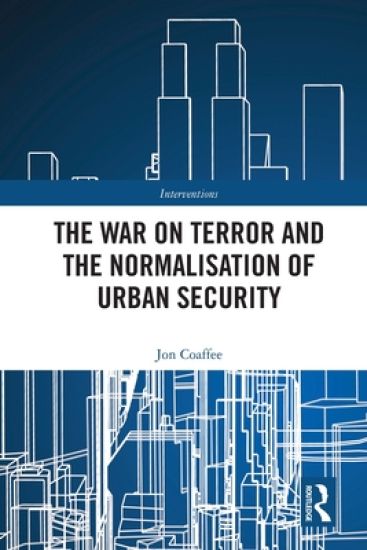
This book explores the processes by which, in the 20 years after 9/11, the practices of urban security and counter-terrorism have impacted the everyday experiences of the Western city. Highlighting the localised urban responses to new security challenges, it reflects critically upon the historical trajectory of techniques of territorialisation and physical protection, urban surveillance and the increasing need for cities to enhance resilience and prepare for anticipated future attacks and unpacks the practices and impacts of the intensification of recent urban security practices in the name of countering terrorism. Drawing on over 25 years of research and practical experience, the author utilises a range of international case studies, framed by conceptual ideas drawn from critical security, political and geographical theory. The book will be of interest to students and scholars of politics, war studies, urban studies, geography, sociology, criminology, and the growing market of security and resilience professionals, as well as non-academic audiences seeking to understand responses to terrorist risk.
The War on Terror and the Normalisation of Urban Security
This book explores the processes by which, in the 20 years after 9/11, the practices of urban security and counter-terrorism have impacted the everyday experiences of the Western city. Highlighting the localised urban responses to new security challenges, it reflects critically upon the historical trajectory of techniques of territorialisation and physical protection, urban surveillance and the increasing need for cities to enhance resilience and prepare for anticipated future attacks and unpacks the practices and impacts of the intensification of recent urban security practices in the name of countering terrorism. Drawing on over 25 years of research and practical experience, the author utilises a range of international case studies, framed by conceptual ideas drawn from critical security, political and geographical theory. The book will be of interest to students and scholars of politics, war studies, urban studies, geography, sociology, criminology, and the growing market of security and resilience professionals, as well as non-academic audiences seeking to understand responses to terrorist risk.
Securing and Sustaining the Olympic City

Securing and Sustaining the Olympic City

Pete Fussey; Jon Coaffee; Dick Hobbs

Routledge
2020
nidottu
Often seen as the host nation's largest ever logistical undertaking, accommodating the Olympics and its attendant security infrastructure brings seismic changes to both the physical and social geography of its destination. Since 1976, the defence of the spectacle has become the central feature of its planning, one that has assumed even greater prominence following the bombing of the 1996 Atlanta Games and, most importantly, 9/11. Indeed, the quintupled cost of securing the first post-9/11 summer Games in Athens demonstrates the considerable scale and complexity currently implicated in these operations. Such costs are not only fiscal. The Games stimulate a tidal wave of redevelopment ushering in new gentrified urban settings and an associated investment that may or may not soak through to the incumbent community. Given the unusual step of developing London's Olympic Park in the heart of an existing urban milieu and the stated commitments to 'community development' and 'legacy', these constitute particularly acute issues for the 2012 Games. In addition to sealing the Olympic Park from perceived threats, 2012 security operations have also harnessed the administrative criminological staples of community safety and crime reduction to generate an ordered space in the surrounding areas. Of central importance here are the issues of citizenship, engagement and access in urban spaces redeveloped upon the themes of security and commerce. Through analyzing the social and community impact of the 2012 Games and its security operation on East London, this book concludes by considering the key debates as to whether utopian visions of legacy can be sustained given the demands of providing a global securitized event of the magnitude of the modern Olympics.
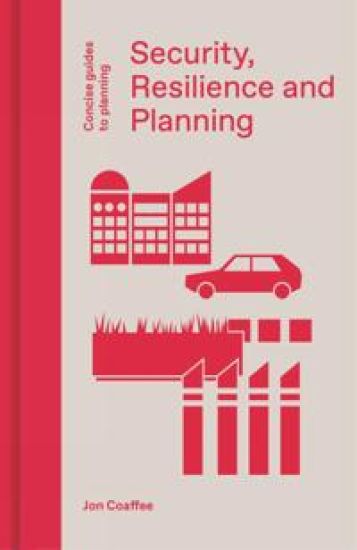
Security, Resilience and Planning

Security, Resilience and Planning

Jon Coaffee

Lund Humphries Publishers Ltd
2020
sidottu
This book offers key concepts and practical guidance about the planner’s role in countering terrorist risk. Public safety and security has always been a fundamental premise of successful public spaces, and a material consideration in planning processes, but especially so since the events of 9/11 2001. Recent attacks in Berlin, Nice, Stockholm, London, Melbourne, Barcelona, New York and elsewhere using fast-moving vehicles in crowded places has led to a re-evaluation of security in many public locations. In these uncertain times, planners are increasingly being seen as key stakeholders in national security and counter-terrorism endeavours where the spatial configuration and aesthetic design of protective security interventions will have a crucial impact upon the vibrancy, resilience and safety of urban centres both now and in the future.Illustrated with historic and contemporary international case studies, this book discusses: the changing roles and responsibilities of planning; how security is increasingly becoming a statutory consideration in the planning process; the need for planners to engage with a range of non-traditional stakeholders such as the military, police and security services to facilitate better planning outcomes; the importance of planning in national and global politics; the ethics of planning decision-making and the importance of determining what is in the public interest; how to advance proportionate counter-terrorist security in plans that balance effectiveness with social and cultural factors; and the role of training, guidance, standards and regulation in enforcing or encouraging the fulfilment of planning requirements.
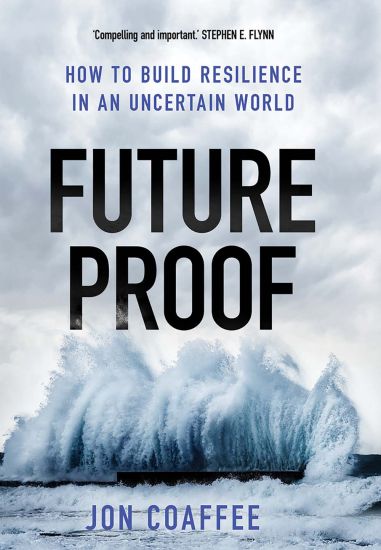
Futureproof

Futureproof

Jon Coaffee

Yale University Press
2019
sidottu
A compelling and definitive account of why we need to radically rethink our approach to dealing with catastrophic events Catastrophic events such as 9/11, Hurricane Katrina, and the Tohoku "Triple Disaster" of earthquake, tsunami, and nuclear meltdown that hit the eastern seaboard of Japan in 2012 are seen as surprises that have a low probability of occurring but have a debilitating impact when they do. In this eye-opening journey through modern and ancient risk management practices, Jon Coaffee explains why we need to find a new way to navigate the deeply uncertain world that we live in. Examining how governments have responded to terrorist threats, climate change, and natural hazards, Coaffee shows how and why these measures have proven inadequate and what should be done to make us more resilient. While conventional approaches have focused on planning and preparing for disruptions and enhanced our ability to "bounce back," our focus should be on anticipating future challenges and enhancing our capacity to adapt to new threats.
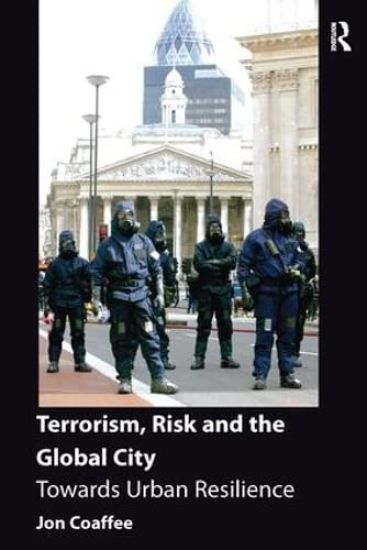
Terrorism, Risk and the Global City
First published in 2003, this account of the anti-terrorist measures of London's financial district and the changes in urban security after 9/11 has been revised to take into account developments in counter-terrorist security and management, particularly after the terrorist attack in London on July 7th 2005. It makes a valuable addition to the current debate on terrorism and the new security challenges facing Western nations. Drawing on the post-9/11 academic and policy literature on how terrorism is reshaping the contemporary city, this book explores the changing nature of the terrorist threat against global cities in terms of tactics and targeting, and the challenge of developing city-wide managerial measures and strategies. Also addressed is the way in which London is leading the way in developing best practice in counter-terrorist design and management, and how such practice is being internationalized.
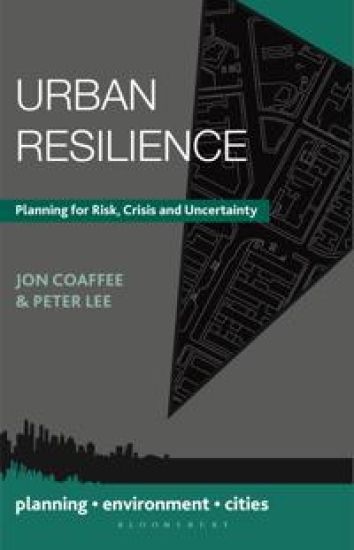
Urban Resilience

Urban Resilience

Jon Coaffee; Peter Lee

Red Globe Press
2016
nidottu
As the cities of the world increasingly come under threat from crisis and disaster, planners are searching for ways to build resilience into the foundations of modern urban centres.This important book provides a comprehensive account of the theory and practice of urban resilience in response to a range of disruptions, including terrorism, climate change and economic crises. It examines how the concepts and principles of resilience exert increasing significant influence over the form and function of planning. Discussing a 'politics of resilience' in which fundamental questions of social and spatial justice are posed, this book examines how urban planners are increasingly tasked with the responsibility of safeguarding the future of urbanised centres and those that live in them. Drawing on international examples and detailed case-studies, this book provides a nuanced account of the uses, and misuses, of resilience and points a way forward for planning activity, from an approach that is too often narrowly technical in focus towards an integrated and adaptable model for coping with risk, crisis and uncertainty. It will make essential reading for students of urban planning and researchers alike.
Urban Resilience

Urban Resilience

Jon Coaffee; Peter Lee

Red Globe Press
2016
sidottu
As the cities of the world increasingly come under threat from crisis and disaster, planners are searching for ways to build resilience into the foundations of modern urban centres.This important book provides a comprehensive account of the theory and practice of urban resilience in response to a range of disruptions, including terrorism, climate change and economic crises. It examines how the concepts and principles of resilience exert increasing significant influence over the form and function of planning. Discussing a 'politics of resilience' in which fundamental questions of social and spatial justice are posed, this book examines how urban planners are increasingly tasked with the responsibility of safeguarding the future of urbanised centres and those that live in them. Drawing on international examples and detailed case-studies, this book provides a nuanced account of the uses, and misuses, of resilience and points a way forward for planning activity, from an approach that is too often narrowly technical in focus towards an integrated and adaptable model for coping with risk, crisis and uncertainty. It will make essential reading for students of urban planning and researchers alike.
Securing and Sustaining the Olympic City

Securing and Sustaining the Olympic City

Pete Fussey; Jon Coaffee; Dick Hobbs

Ashgate Publishing Limited
2011
sidottu
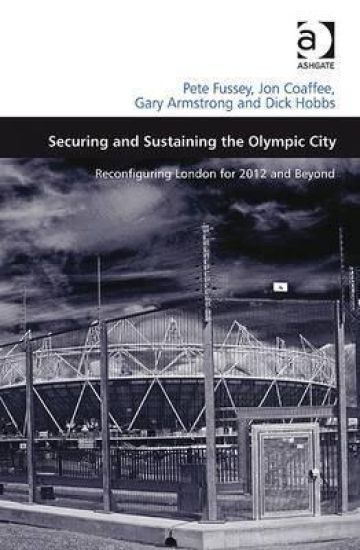
Often seen as the host nation's largest ever logistical undertaking, accommodating the Olympics and its attendant security infrastructure brings seismic changes to both the physical and social geography of its destination. Since 1976, the defence of the spectacle has become the central feature of its planning, one that has assumed even greater prominence following the bombing of the 1996 Atlanta Games and, most importantly, 9/11. Indeed, the quintupled cost of securing the first post-9/11 summer Games in Athens demonstrates the considerable scale and complexity currently implicated in these operations. Such costs are not only fiscal. The Games stimulate a tidal wave of redevelopment ushering in new gentrified urban settings and an associated investment that may or may not soak through to the incumbent community. Given the unusual step of developing London's Olympic Park in the heart of an existing urban milieu and the stated commitments to 'community development' and 'legacy', these constitute particularly acute issues for the 2012 Games. In addition to sealing the Olympic Park from perceived threats, 2012 security operations have also harnessed the administrative criminological staples of community safety and crime reduction to generate an ordered space in the surrounding areas. Of central importance here are the issues of citizenship, engagement and access in urban spaces redeveloped upon the themes of security and commerce. Through analyzing the social and community impact of the 2012 Games and its security operation on East London, this book concludes by considering the key debates as to whether utopian visions of legacy can be sustained given the demands of providing a global securitized event of the magnitude of the modern Olympics.
Terrorism, Risk and the Global City

Terrorism, Risk and the Global City

Jon Coaffee

Ashgate Publishing Limited
2009
sidottu
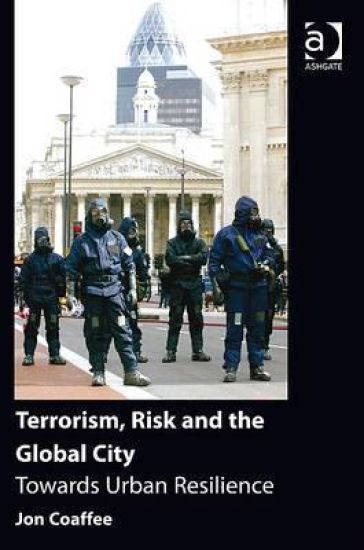
First published in 2003, this account of the anti-terrorist measures of London's financial district and the changes in urban security after 9/11 has been revised to take into account developments in counter-terrorist security and management, particularly after the terrorist attack in London on July 7th 2005. It makes a valuable addition to the current debate on terrorism and the new security challenges facing Western nations. Drawing on the post-9/11 academic and policy literature on how terrorism is reshaping the contemporary city, this book explores the changing nature of the terrorist threat against global cities in terms of tactics and targeting, and the challenge of developing city-wide managerial measures and strategies. Also addressed is the way in which London is leading the way in developing best practice in counter-terrorist design and management, and how such practice is being internationalized.
Terrorism, Risk and the City

Terrorism, Risk and the City

Jon Coaffee

Ashgate Publishing Limited
2003
sidottu
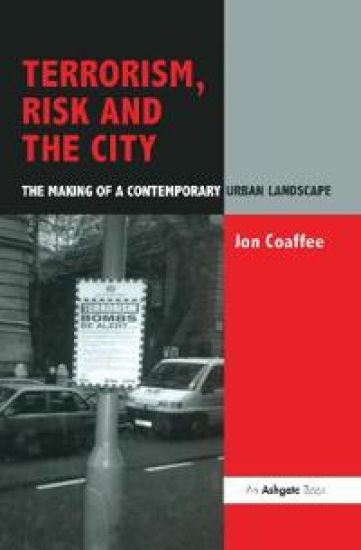
The development of defensive strategies encompassing the fortification and privatization of the city has attracted significant attention during recent years, and has become particularly relevant in the aftermath of September 11th. Dealing with issues of risk, security and the spatial restructuring of contemporary western cities, this book examines how the perceived risk of terrorist attack led to changes in the physical form and institutional infrastructure of the city of London during the 1990s when the city was a prime terrorist target. The book analyses how the various formal and informal strategies adopted in the City attempted to reduce both the physical and financial risk of terrorism. This was undertaken through a series of place-specific security initiatives and risk management policies which led to increased fortification, a substantial rise in terrorism insurance premiums, and, changing institutional relations at a variety of spatial scales. It also argues that the security measures deployed were developed not in terms of an anti-terrorist effort, but in relation to the unintended by-products of these approaches such as crime reduction and enhanced traffic management capabilities.