Kirjojen hintavertailu. Mukana 12 390 323 kirjaa ja 12 kauppaa.
Kirjailija
Jon H. Pammett
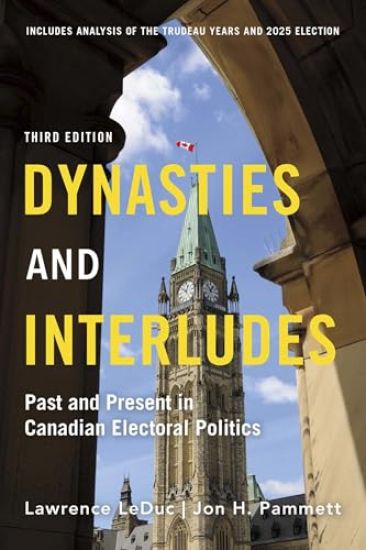
Kirjat ja teokset yhdessä paikassa: 6 kirjaa, julkaisuja vuosilta 2010-2026, suosituimpien joukossa Dynasties and Interludes: Past and Present in Canadian Electoral Politics. Vertaile teosten hintoja ja tarkista saatavuus suomalaisista kirjakaupoista.
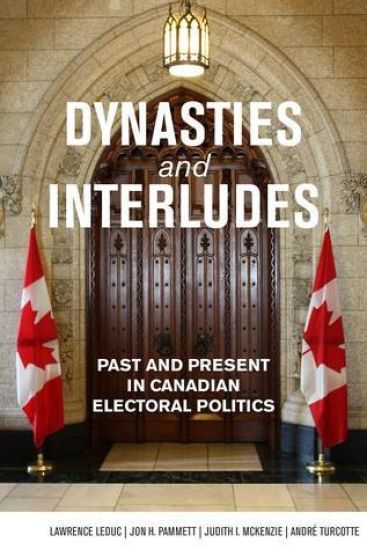
The Hill Times: Best Books of 2016An overview of the history of elections and voting in Canada, including minority governments, dynasties, and social movements. Dynasties and Interludes provides a comprehensive and unique overview of elections and voting in Canada from Confederation to the most recent election. Its principal argument is that the Canadian political landscape has consisted of long periods of hegemony of a single party and/or leader (dynasties), punctuated by short, sharp disruptions brought about by the sudden rise of new parties, leaders, or social movements (interludes).This revised and updated second edition includes an analysis of the results of the 2011 and 2015 federal elections as well as an in-depth discussion of the “Harper Dynasty.”
The Hill Times: Best Books of 2016 Written by the foremost authorities, The Canadian Federal Election of 2015 provides a complete investigation of the election. A comprehensive analysis of the campaigns and the election outcome, this collection of essays examines the strategies, successes, and failures of the major political parties: the Conservatives, the Liberals, the New Democrats, the Bloc Québécois, and the Green Party. Also featured are chapters on the changes in electoral rules, the experience of local campaigning, the play of the polls, the campaign in the new media, the role of the debates, and the experience of women in the campaign. The book concludes with a detailed analysis of voting behaviour in 2015 and an assessment of the Stephen Harper dynasty. Appendices contain all of the election results. The Canadian Federal Election of 2015 is the tenth volume in a series that has chronicled every national election campaign since 1984.
Written by the foremost authorities, The Canadian Federal Election of 2011 provides a complete investigation of all aspects of the campaigns and the outcome of the election. The Canadian Federal Election of 2011 is a comprehensive analysis of all aspects of the campaign and election outcome. The chapters, written by leading academics, examine the strategies, successes, and failures of the major political parties the Conservatives (Faron Ellis and Peter Woolstencroft), the Liberals (Brooke Jeffrey), the New Democrats (David McGrane), the Bloc Qubcois (Eric Belanger and Richard Nadeau), and the Green Party (Susan Harada).Also featured in this volume are chapters on the nature of local campaigning (Alex Marland), the polls (André Turcotte), the campaign in the new social media (Mary Francoli, Josh Greenberg and Christopher Waddell), and the nature of modern conservatism (Jonathan Malloy and Jim Farney). The book concludes with a detailed analysis of voting behaviour in 2011 (Harold Clarke and Tom Scotto) and an assessment of whether Canada is headed for a Stephen Harper dynasty (Jon H. Pammett and Lawrence LeDuc). Appendices contain all of the election results.
Dynasties and Interludes provides a comprehensive and unique overview of elections and voting in Canada from Confederation to the recent spate of minority governments. Its principal argument is that the Canadian political landscape has consisted of long periods of hegemony of a single party and/or leader (dynasties), punctuated by short, sharp disruptions brought about by the sudden rise of new parties, leaders, or social movements (interludes). Changes in the composition of the electorate and in the technology and professionalization of election campaigns are also examined in this book, both to provide a better understanding of key turning points in Canadian history and a deeper interpretation of present-day electoral politics.
Dynasties and Interludes provides a comprehensive and unique overview of elections and voting in Canada from Confederation to the recent spate of minority governments. Its principal argument is that the Canadian political landscape has consisted of long periods of hegemony of a single party and/or leader (dynasties), punctuated by short, sharp disruptions brought about by the sudden rise of new parties, leaders, or social movements (interludes). Changes in the composition of the electorate and in the technology and professionalization of election campaigns are also examined in this book, both to provide a better understanding of key turning points in Canadian history and a deeper interpretation of present-day electoral politics.