Kirjojen hintavertailu. Mukana 12 657 676 kirjaa ja 12 kauppaa.
Kirjailija
Jon Henderson
Kirjat ja teokset yhdessä paikassa: 8 kirjaa, julkaisuja vuosilta 2007-2026, suosituimpien joukossa Diving the Thistlegorm. Vertaile teosten hintoja ja tarkista saatavuus suomalaisista kirjakaupoista.
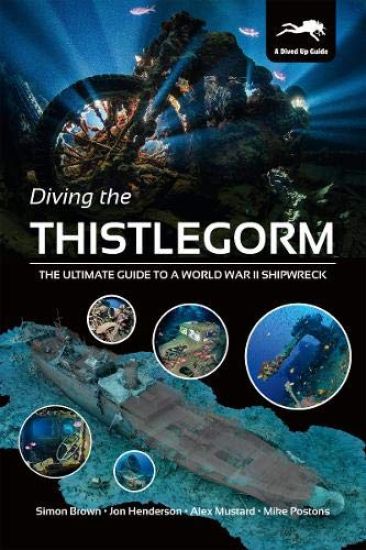
Incredibly detailed 'photogrammetry' of the famous wreck and its fascinating contents. A guide for divers and a case study in modern maritime archaeology survey methods
Diving the Thistlegorm is a unique in-depth look at one of the world's best-loved shipwrecks, the World War II British Merchant Navy steamship, featuring award-winning underwater photography. In this highly visual guide, cutting edge photographic methods enable views of the famous wreck and its fascinating cargo which were previously impossible. Sitting upright in 30m of clear, inviting Red Sea waters, the ship is packed with the materials of war. Largely complete lorries, trucks, motorbikes, aircraft spares and airfield equipment are crammed into the forward holds and the remains of other vehicles lie amongst boxes of ammunition in the exploded aft holds. Often referred to as an underwater museum, the wreck fascinates visitors for dive after dive. The book is the culmination of decades of experience, archaeological and photographic expertise, many hours underwater, months of computer processing time, and days spent researching and verifying the history of the ship and its cargo. For the first time, Diving the Thistlegorm brings the rich and complex contents of the wreck together, identifying individual items and illustrating where they can be found. As the expert team behind the underwater photography, reconstructions and explanations take you through the wreck in incredible detail, you will discover not only what has been learned but also what mysteries are still to be solved. Limited run of hardbacks.
Long before perma-tanned football agents and TV mega-rights ushered in the age of the multimillionaire player, footballers’ wages were capped – even the game’s biggest names earned barely more than a plumber or electrician. Footballing legends such as Tom Finney and Stanley Matthews shared a bond of borderline penury with the huge crowds they entertained on Saturday afternoons, on pitches that were a world away from the pristine lawns of the game’s modern era. Instead of the gleaming sports cars driven by today’s top players, the stars of yesteryear travelled to matches on public transport and returned to homes every bit as modest as those of their supporters. Players and fans would even sometimes be next-door neighbours in a street of working-class terraced houses. Based on the first-hand accounts of players from a fastdisappearing generation, When Footballers Were Skint delves into the game’s rich heritage and relates the fascinating story of a truly great sporting era.
‘Stanley Matthews taught us the way football should be played’ Pelé'I couldn't believe he was just a man. He was the best player in the world' Bobby Charlton'He told me that he used to play for just twenty pounds a week. Today he would be worth all the money in the Bank of England' Gianfranco ZolaStanley Matthews is one of the most famous footballers ever to play the beautiful game. Nicknamed ‘The Wizard of Dribble’ for his deadly skills, he made fools of defenders around the world. He played 84 matches for England in a career that spanned an extraordinary 33 years and such was his popularity that attendance for his club teams, Stoke City and Blackpool, more than doubled when he played. He was a global superstar decades before Beckham, Ronaldo or Messi, yet what do we really know about this legendary man?This first full and objective biography looks beyond the public face of the ‘first gentleman of soccer’ to explore a life not without controversy. This was a player who clashed with his managers, who felt undervalued in the age of the maximum wage – leading to a charge of blackmarketeering – and who was criticised for his showmanship and perceived lack of team spirit. There were private dramas too – an unhappy first marriage that produced two beloved children, and a second, to the love of his life, a Czech with a dark secret even Matthews never knew and which acclaimed biographer Jon Henderson reveals for the first time.Recreating the magic on the pitch and analyzing the key moments that made Matthews great, this is a meticulously researched story of a national hero and a fascinating insight into English football in the 20th century.
It may be surprising to learn that this book is the first ever survey of the Atlantic Iron Age: this tradition is cited in archaeology frequently enough to seem firmly established, yet has never been clearly defined.With this book, Jon Henderson provides an important and much-needed exploration of the archaeology of western areas of Britain, Ireland, France and Spain to consider how far Atlantic Iron Age communities were in contact with each other. By examining the evidence for settlement and maritime trade, as well as aspects of the material culture of each area, Henderson identifies distinct Atlantic social identities through time. He also pinpoints areas of similarity: the possibility of cultural 'cross-pollination' caused by maritime links and to what extent these contacts influenced and altered the distinctive character of local communities. A major theme running through the book is the role of the Atlantic seaboard itself and what impact this unique environment had on the ways Atlantic communities perceived themselves and their place in the world. As a history of these communities unfolds, a general archaeological Atlantic identity breaks down into a range of regional identities which compare interestingly with each other and with traditional models of Celtic identity. Bringing together the Iron Age settlement evidence for the Atlantic regions in one place for the first time, this excellent and original book is certain to establish itself as the definitive study of the Atlantic Iron Age.
It may be surprising to learn that this book is the first ever survey of the Atlantic Iron Age: this tradition is cited in archaeology frequently enough to seem firmly established, yet has never been clearly defined.With this book, Jon Henderson provides an important and much-needed exploration of the archaeology of western areas of Britain, Ireland, France and Spain to consider how far Atlantic Iron Age communities were in contact with each other. By examining the evidence for settlement and maritime trade, as well as aspects of the material culture of each area, Henderson identifies distinct Atlantic social identities through time. He also pinpoints areas of similarity: the possibility of cultural 'cross-pollination' caused by maritime links and to what extent these contacts influenced and altered the distinctive character of local communities. A major theme running through the book is the role of the Atlantic seaboard itself and what impact this unique environment had on the ways Atlantic communities perceived themselves and their place in the world. As a history of these communities unfolds, a general archaeological Atlantic identity breaks down into a range of regional identities which compare interestingly with each other and with traditional models of Celtic identity. Bringing together the Iron Age settlement evidence for the Atlantic regions in one place for the first time, this excellent and original book is certain to establish itself as the definitive study of the Atlantic Iron Age.