Kirjojen hintavertailu. Mukana 12 595 353 kirjaa ja 12 kauppaa.

Kirjailija

Jon Lawrence

Kirjat ja teokset yhdessä paikassa: 9 kirjaa, julkaisuja vuosilta 1998-2023, suosituimpien joukossa Me, Me, Me. Vertaile teosten hintoja ja tarkista saatavuus suomalaisista kirjakaupoista.

9 kirjaa

Kirjojen julkaisuhaarukka 1998-2023.

Me, Me, Me

Me, Me, Me

Jon Lawrence

Oxford University Press
2023
nidottu
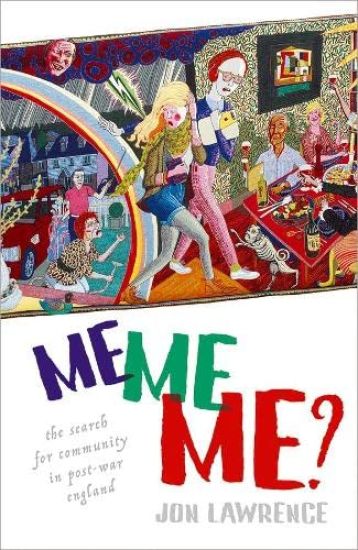
Many commentators tell us that, in today's world, everyday life has become selfish and atomised—that individuals live only to consume. But are they wrong? In Me, Me, Me, Jon Lawrence re-tells the story of England since the Second World War through the eyes of ordinary people—including his own parents— to argue that, in fact, friendship, family, and place all remain central to our daily lives, and whilst community has changed, it is far from dead. He shows how, in the years after the Second World War, people came increasingly to question custom and tradition as the pressure to conform to societal standards became intolerable. And as soon as they could, millions escaped the closed, face-to-face communities of Victorian Britain, where everyone knew your business. But this was not a rejection of community per se, but an attempt to find another, new way of living which was better suited to the modern world. Community has become personal and voluntary, based on genuine affection rather than proximity or need. We have never been better connected or able to sustain the relationships that matter to us. Me, Me, Me makes that case that it's time we valued and nurtured these new groups, rather than lamenting the loss of more 'real' forms of community—it is all too easy to hold on to a nostalgic view of the past.
Me, Me, Me

Me, Me, Me

Jon Lawrence

Oxford University Press
2019
sidottu
Many commentators tell us that, in today's world, everyday life has become selfish and atomised--that individuals live only to consume. But are they wrong? In Me, Me, Me, Jon Lawrence re-tells the story of England since the Second World War through the eyes of ordinary people--including his own parents-- to argue that, in fact, friendship, family, and place all remain central to our daily lives, and whilst community has changed, it is far from dead. He shows how, in the years after the Second World War, people came increasingly to question custom and tradition as the pressure to conform to societal standards became intolerable. And as soon as they could, millions escaped the closed, face-to-face communities of Victorian Britain, where everyone knew your business. But this was not a rejection of community per se, but an attempt to find another, new way of living which was better suited to the modern world. Community has become personal and voluntary, based on genuine affection rather than proximity or need. We have never been better connected or able to sustain the relationships that matter to us. Me, Me, Me makes that case that it's time we valued and nurtured these new groups, rather than lamenting the loss of more 'real' forms of community--it is all too easy to hold on to a nostalgic view of the past.
Contesting the Borderlands

Contesting the Borderlands

Deborah Lawrence; Jon Lawrence

University of Oklahoma Press
2016
nidottu
Conflict and cooperation have shaped the American Southwest since prehistoric times. For centuries indigenous groups and, later, Spaniards, French, and Anglo-Americans met, fought, and collaborated with one another in this border area stretching from Texas through southern California. To explore the region's complex past from prehistory to the U.S. takeover, this book uses an unusual multidisciplinary approach. In interviews with ten experts, Deborah and Jon Lawrence discuss subjects ranging from warfare among the earliest ancestral Puebloans to intermarriage and peonage among Spanish settlers and the Indians they encountered. The scholars interviewed form a distinguished array of archaeologists, anthropologists, ethnohistorians, and historians: Juliana Barr, Brian DeLay, Richard and Shirley Flint, John Kessell, Steven LeBlanc, Mark Santiago, Polly Schaafsma, David J. Weber, and Michael Wilcox. All speak forthrightly about complex and controversial issues, and they do so with minimal academic jargon and temporizing, bringing the most reliable information to bear on every subject they discuss. Themes the authors address include the origin and scope of conflicts between ethnic groups and the extent of accommodation, cooperation, and cross-cultural adaptation that also ensued. Seven interviews explore how Indians forced colonizers to modify their behavior. All of the experts explain how they deal with incomplete or biased sources to achieve balanced interpretations. As the authors point out, no single discipline provides a complete, accurate historical picture. Spanish documents must be sifted for political and ideological distortion, the archaeological record is incomplete, and oral traditions erode and become corrupted over time. By assembling the most articulate practitioners of all three approaches, the authors have produced a book that will speak to general readers as well as scholars and students in a variety of fields.
Violent Encounters

Violent Encounters

Deborah Lawrence; Jon Lawrence

University of Oklahoma Press
2011
sidottu
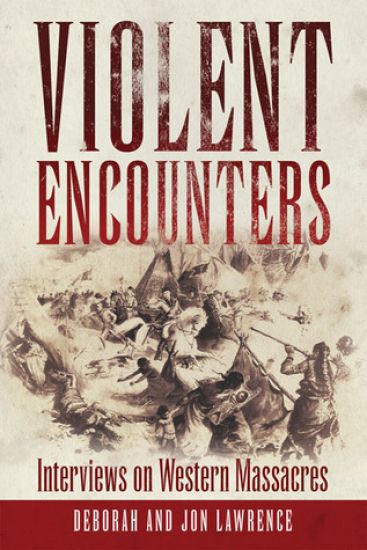
Merciless killing in the nineteenth-century American West, as this unusual book shows, was not as simple as depicted in dime novels and movie Westerns. The scholars interviewed here, experts on violence in the West, embrace a wide range of approaches and perspectives and challenge both traditional views of western expansion and politically correct ideologies.The Battle of the Little Big Horn, the Sand Creek Massacre, the Battle of the Washita, and the Mountain Meadows Massacre are iconic events that have been repeatedly described and analyzed, but the interviews included in this volume offer new points of view. Other events discussed here are little-known today, such as the Camp Grant Massacre, in which Anglo-Americans, Mexican Americans, and Tohono O'odham Indians killed more than a hundred Pinal and Aravaipa Apache men, women, and children.In addition to specific events, the interviews cover broader themes such as violence in early California; hostilities between the frontier army and the Sioux, including the Santee Sioux Revolt and Wounded Knee; and violence between European Americans and Great Basin tribes, such as the Bear River Massacre. The scholars interviewed include academic historians, public historians, an anthropologist, and a journalist. The interview format provides insights into the methodology and tools of historical research and allows questions and speculations often absent from conventional, written accounts. The scholars share their latest thoughts on long-standing controversies, address the political uses often made of history, and discuss the need to incorporate multiple viewpoints.Scholars and students of history and historiography will be fascinated by the nuts-and-bolts information about the practice of history revealed in these interviews. In addition, readers with specific interests in the events discussed will gain much new information and many fresh insights.
Electing Our Masters

Electing Our Masters

Jon Lawrence

Oxford University Press
2009
sidottu
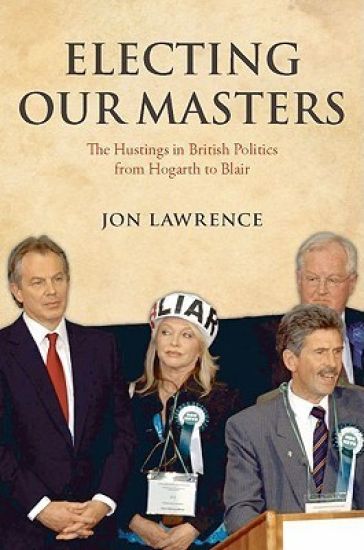
In this engagingly written history of electioneering in Britain from the eighteenth century to the present, Jon Lawrence explores the changing relationship between politicians and public. Throughout this period, he argues, British politics has been characterized by bruising public rituals intended to bestow legitimacy on politicians by obliging them to face an often irreverent public on broadly equal terms. Face-to-face interaction was central both to the disorderly civic rituals of eighteenth-century politics, and to the Victorian and Edwardian election meeting. Perhaps surprisingly, it also survived in pretty rude health between the wars, despite the emergence of the new mass communication media of radio and cinema. But the same cannot be said of the post-war era and the rise of television. Today most politicians are content merely to offer the semblance of meaningful engagement - walkabouts, canvassing and meetings are all designed to ensure that most senior politicians come into contact only with the smiling faces of that dwindling band, the 'party faithful'. Lloyd George and Churchill might have relished the rough and tumble of a tumultuous public meeting, but their modern counterparts tend to be more risk-averse (and not without reason, given that the cameras are always present to capture their mishaps). But this is not another nostalgic lament for a lost 'golden age'. On the contrary, Electing Our Masters argues that politicians frequently still crave the kudos to be derived from bruising encounters with an irreverent public - hence Tony Blair's so-called 'masochism strategy' in the 2005 election campaign, with its succession of gruelling sessions before live studio audiences. As Lawrence points out, the vital question for today is: can we persuade our broadcasters that such encounters must form a staple of modern, mediated politics?
Speaking for the People

Speaking for the People

Jon Lawrence

Cambridge University Press
2002
pokkari
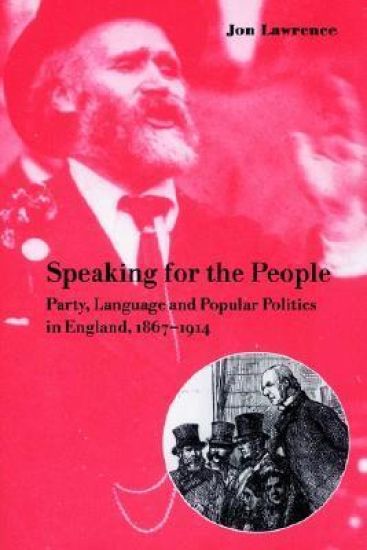
Speaking for the People draws our attention to the problematic nature of politicians’ claims to represent others, and in doing so it challenges conventional ideas about both the rise of class politics, and the triumph of party between 1867 and 1914. The book emphasises the strongly gendered nature of party politics before the First World War, and suggests that historians have greatly underestimated the continuing importance of the ‘politics of place’. Most importantly, however, Speaking for the People argues that we must break away from teleological notions such as the ‘modernisation’ of politics, the taming of the ‘popular’, or the rise of class. Only then will we understand the shifting currents of popular politics. Speaking for the People represents a major challenge to the ways in which historians and political scientists have studied the interaction between party politics and popular political cultures.
Speaking for the People

Speaking for the People

Jon Lawrence

Cambridge University Press
1998
sidottu
Speaking for the People, first published in 1998, draws our attention to the problematic nature of politicians' claims to represent others, and in doing so it challenges conventional ideas about both the rise of class politics, and the triumph of party between 1867 and 1914. The book emphasises the strongly gendered nature of party politics before the First World War, and suggests that historians have greatly underestimated the continuing importance of the 'politics of place'. Most importantly, however, Speaking for the People argues that we must break away from teleological notions such as the 'modernisation' of politics, the taming of the 'popular', or the rise of class. Only then will we understand the shifting currents of popular politics. Speaking for the People represents a major challenge to the ways in which historians and political scientists have studied the interaction between party politics and popular political cultures.