Kirjojen hintavertailu. Mukana 12 152 606 kirjaa ja 12 kauppaa.

Kirjailija

Jon Meacham

Kirjat ja teokset yhdessä paikassa: 41 kirjaa, julkaisuja vuosilta 2003-2026, suosituimpien joukossa A Word on Words. Vertaile teosten hintoja ja tarkista saatavuus suomalaisista kirjakaupoista.

41 kirjaa

Kirjojen julkaisuhaarukka 2003-2026.

A Word on Words

A Word on Words

Andrew Maraniss; Arna Bontemps; John Egerton; John Lewis; David Halberstam; Jesse Hill Ford; Pat Conroy; Ann Patchett; Dori Sanders; Alice Randall; Nikki Giovanni; Marshall Chapman; Marty Stuart; Rodney Crowell; Waylon Jennings; Kinky Friedman; Charles Fountain; William Marshall; William Price Fox; Jon Meacham; Doris Kearns Goodwin; David Maraniss; John Michael Seigenthaler

VANDERBILT UNIVERSITY PRESS
2023
sidottu
For years the legendary John Seigenthaler hosted A Word on Words on Nashville's public television station, WNPT. During the show’s four-decade run (1972 to 2013), he interviewed some of the most interesting and most impor­tant writers of our time. These in-depth exchanges revealed much about the writers who appeared on his show and gave a glimpse into their creative pro­cesses. Seigenthaler was a deeply engaged reader and a generous interviewer, a true craftsman. Frye Gaillard and Pat Toomay have collected and transcribed some of the iconic interactions from the show. Featuring interviews with: Arna Bontemps • Marshall Chapman • Pat Conroy • Rodney Crowell • John Egerton • Jesse Hill Ford • Charles Fountain • William Price Fox • Kinky Friedman • Frye Gaillard • Nikki Giovanni • Doris Kearns Goodwin • David Halberstam • Waylon Jennings • John Lewis • David Maraniss • William Marshall • Jon Meacham • Ann Patchett • Alice Randall • Dori Sanders • John Seigenthaler Sr. • Marty Stuart • Pat Toomay
On Democracy

On Democracy

E B White; Jon Meacham

HarperLuxe
2019
pokkari
A New York Times Book Review New & Noteworthy TitleA collection of essays, letters and poems from E.B. White, "one of the country's great literary treasures" (New York Times), centered on the subject of freedom and democracy in America."I am a member of a party of one, and I live in an age of fear."These words were written by E. B. White in 1947.Decades before our current political turmoil, White crafted eloquent yet practical political statements that continue to resonate. "There's only one kind of press that's any good--" he proclaimed, "a press free from any taint of the government." He condemned the trend of defamation, arguing that "in doubtful, doubting days, national morality tends to slip and slide toward a condition in which the test of a man's honor is his zeal for discovering dishonor in others." And on the spread of fascism he lamented, "fascism enjoys at the moment an almost perfect climate for growth--a world of fear and hunger."Anchored by an introduction by Pulitzer Prize-winning historian Jon Meacham, this concise collection of essays, letters, and poems from one of this country's most eminent literary voices offers much-needed historical context for our current state of the nation--and hope for the future of our society. Speaking to Americans at a time of uncertainty, when democracy itself has come under threat, he reminds us, "As long as there is one upright man, as long as there is one compassionate woman . . . the scene is not desolate."
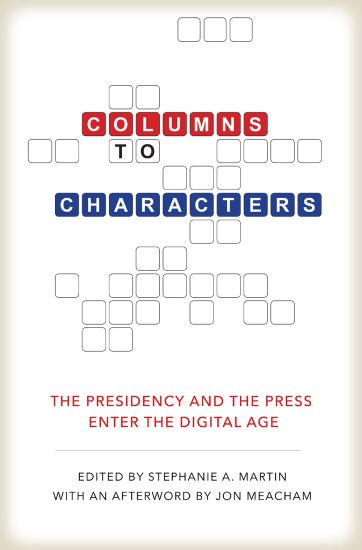
Columns to Characters

Columns to Characters

Peter Baker; Martha Joynt Kumar; Rita Kirk; David Demarest; Roderick P Hart; Thomas M. DeFrank; Stephen A Smith; Tony Pedersen; Robert W Mong; George C Edwards; Jennifer R. Mercieca; Stacia Deshishku; Jon Meacham

Texas A M University Press
2017
sidottu
The relationship between the presidency and the press has transformed—seemingly overnight—from one where reports and columns were filed, edited, and deliberated for hours before publication into a brave new world where texts, tweets, and sound bites race from composition to release within a matter of seconds. This change, which has ultimately made political journalism both more open and more difficult, brings about many questions, but perhaps the two most important are these: Are the hard questions still being asked? Are they still being answered?In Columns to Characters, Stephanie A. Martin and top scholars and journalists offer a fresh perspective on how the evolution of technology affects the way presidents interact with the public. From Bill Clinton’s saxophone playing on the Arsenio Hall Show to Barack Obama’s skillful use of YouTube, Twitter, and Reddit as the first “social media president,” political communication appears to reflect the increasing fragmentation of the American public.The accessible essays here explore these implications in a variety of real-world circumstances: the “narcotizing” numbness of information overload and voter apathy; the concerns over privacy, security, and civil liberties; new methods of running political campaigns and mobilizing support for programs; and a future “post-rhetorical presidency” in which the press is all but irrelevant. Each section of the book concludes with a “reality check,” a short reflection by a working journalist (or, in one case, a former White House insider) on the presidential beat.
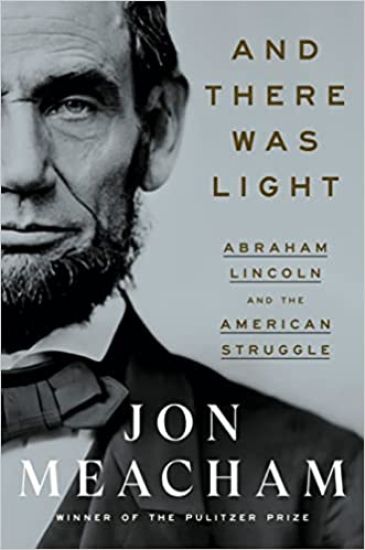
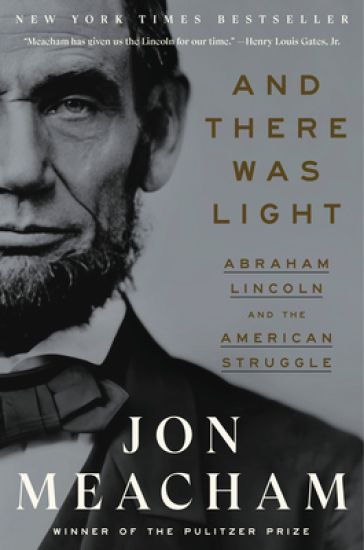
And There Was Light: Abraham Lincoln and the American Struggle

And There Was Light: Abraham Lincoln and the American Struggle

Jon Meacham

Random House Large Print Publishing
2022
nidottu
NEW YORK TIMES BESTSELLER - Pulitzer Prize-winning biographer Jon Meacham chronicles the life of Abraham Lincoln, charting how--and why--he confronted secession, threats to democracy, and the tragedy of slavery to expand the possibilities of America. "Meacham has given us the Lincoln for our time."--Henry Louis Gates, Jr. Winner of the Gilder Lehrman Lincoln Prize - Longlisted for the Biographers International Plutarch Award - One of the Best Books of the Year: The Christian Science Monitor, Kirkus Reviews A president who governed a divided country has much to teach us in a twenty-first-century moment of polarization and political crisis. Hated and hailed, excoriated and revered, Abraham Lincoln was at the pinnacle of American power when implacable secessionists gave no quarter in a clash of visions bound up with money, race, identity, and faith. In him we can see the possibilities of the presidency as well as its limitations. At once familiar and elusive, Lincoln tends to be seen as the greatest of American presidents--a remote icon--or as a politician driven more by calculation than by conviction. This illuminating new portrait gives us a very human Lincoln--an imperfect man whose moral antislavery commitment, essential to the story of justice in America, began as he grew up in an antislavery Baptist community; who insisted that slavery was a moral evil; and who sought, as he put it, to do right as God gave him to see the right. This book tells the story of Lincoln from his birth on the Kentucky frontier in 1809 to his leadership during the Civil War to his tragic assassination in 1865: his rise, his self-education, his loves, his bouts of depression, his political failures, his deepening faith, and his persistent conviction that slavery must end. In a nation shaped by the courage of the enslaved of the era and by the brave witness of Black Americans, Lincoln's story illustrates the ways and means of politics in a democracy, the roots and durability of racism, and the capacity of conscience to shape events.
And There Was Light

And There Was Light

Jon Meacham

RANDOM HOUSE USA INC
2022
sidottu
Pulitzer Prize-winning biographer and #1 New York Times bestselling author Jon Meacham chronicles the life of Abraham Lincoln, charting how--and why--he confronted secession, threats to democracy, and the tragedy of slavery to expand the possibilities of America. "In his captivating new book, Jon Meacham has given us the Lincoln for our time."--Henry Louis Gates, Jr. A president who governed a divided country has much to teach us in a twenty-first-century moment of polarization and political crisis. Hated and hailed, excoriated and revered, Abraham Lincoln was at the pinnacle of American power when implacable secessionists gave no quarter in a clash of visions bound up with money, race, identity, and faith. In him we can see the possibilities of the presidency as well as its limitations. At once familiar and elusive, Lincoln tends to be seen as the greatest of American presidents--a remote icon--or as a politician driven more by calculation than by conviction. This illuminating new portrait gives us a very human Lincoln--an imperfect man whose moral antislavery commitment, essential to the story of justice in America, began as he grew up in an antislavery Baptist community; who insisted that slavery was a moral evil; and who sought, as he put it, to do right as God gave him to see the right. This book tells the story of Lincoln from his birth on the Kentucky frontier in 1809 to his leadership during the Civil War to his tragic assassination in 1865: his rise, his self-education, his loves, his bouts of depression, his political failures, his deepening faith, and his persistent conviction that slavery must end. In a nation shaped by the courage of the enslaved of the era and by the brave witness of Black Americans, Lincoln's story illustrates the ways and means of politics in a democracy, the roots and durability of racism, and the capacity of conscience to shape events.
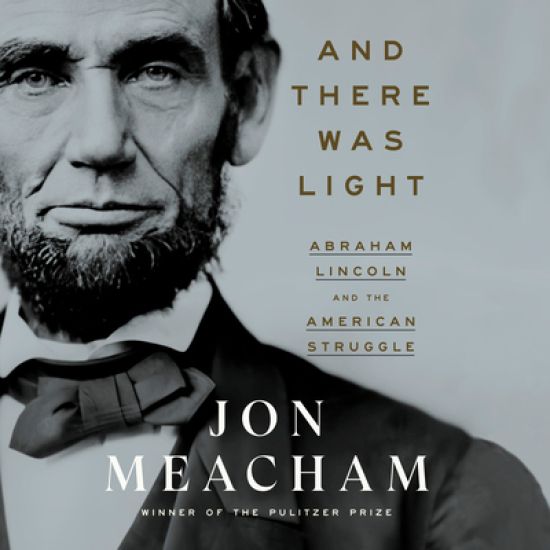
And There Was Light

And There Was Light

Jon Meacham

RANDOM HOUSE USA INC
2022
cd
Pulitzer Prize-winning biographer and #1 New York Times bestselling author Jon Meacham chronicles the life of Abraham Lincoln, charting how--and why--he confronted secession, threats to democracy, and the tragedy of slavery to expand the possibilities of America. "In his captivating new book, Jon Meacham has given us the Lincoln for our time."--Henry Louis Gates, Jr. A president who governed a divided country has much to teach us in a twenty-first-century moment of polarization and political crisis. Hated and hailed, excoriated and revered, Abraham Lincoln was at the pinnacle of American power when implacable secessionists gave no quarter in a clash of visions bound up with money, race, identity, and faith. In him we can see the possibilities of the presidency as well as its limitations. At once familiar and elusive, Lincoln tends to be seen as the greatest of American presidents--a remote icon--or as a politician driven more by calculation than by conviction. This illuminating new portrait gives us a very human Lincoln--an imperfect man whose moral antislavery commitment, essential to the story of justice in America, began as he grew up in an antislavery Baptist community; who insisted that slavery was a moral evil; and who sought, as he put it, to do right as God gave him to see the right. This book tells the story of Lincoln from his birth on the Kentucky frontier in 1809 to his leadership during the Civil War to his tragic assassination in 1865: his rise, his self-education, his loves, his bouts of depression, his political failures, his deepening faith, and his persistent conviction that slavery must end. In a nation shaped by the courage of the enslaved of the era and by the brave witness of Black Americans, Lincoln's story illustrates the ways and means of politics in a democracy, the roots and durability of racism, and the capacity of conscience to shape events.
The Education of a Senator

The Education of a Senator

Lamar Alexander; Jon Meacham

Post Hill Press
2026
sidottu
A behind-the-scenes story of the last sixty years of American politics, told with purpose and humor by a political legend who worked with ten presidents, made deals with both Obama and Trump, and believes that serving in public office is the best way to help the largest number of people and to keep our Republic from falling apart. “To read Lamar Alexander’s vivid and surprising memoir is to be in conversation with a man who knows how to tell a great story.” —Jon Meacham, Pulitzer Prize-Winning Author “What a wonderful and refreshing memoir! Lamar Alexander has been a gift to us—more interested in getting things done and improving the lives of others than in grabbing headlines and bashing an opponent. Bravo!” —Ken Burns, Filmmaker, The American Revolution “Revealing and highly entertaining...takes us inside some of the most important moments in our nation’s history.” —Karl Rove, Sr. Advisor to President George W. Bush Can we survive this?” worried friends ask Lamar Alexander. A US senator who started in JFK’s Justice Department, worked in the Nixon White House, turned down serving as GOP Watergate counsel and as Ford’s campaign manager, walked for six months across Tennessee to become governor, lost two runs for president, and served as a university president and education secretary before winning three senate terms—Lamar Alexander answers that question with a resounding, “Yes.” Over nearly six decades, Alexander saw the public arena from as many angles as any living American. With wry humor and wisdom, he reminds us that Americans have asked this question in times more troubling than today—through wars, economic panics, pandemics, and social upheaval. Alexander paints insider portraits of the ten presidents he worked with—including the one best suited to the job, the most skillful politician, most accomplished in foreign affairs, most “normal,” and another who was on his way to being the most consequential. His book is for Americans hungry for optimism and leadership. It will inspire anyone who wants to serve in public office but doesn’t know how to start. It is a blueprint for those who want to join the 519,682 Americans already elected to office and the millions who work with them. “I woke up every day thinking I might do something good for my state or country and went to bed most nights thinking that I had.” —Lamar Alexander
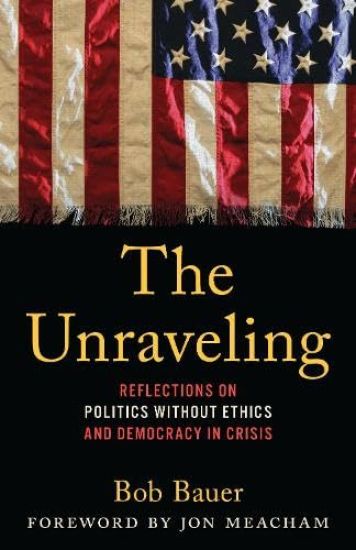
The Unraveling

The Unraveling

Bob Bauer; Jon Meacham; Jack Goldsmith

BLOOMSBURY PUBLISHING PLC
2026
nidottu
Now with a new foreword by Harvard Law Professor and former Assistant Attorney General Jack Goldsmith, and with a new concluding chapter from the author on the unprecedented ethical challenges in the first year of Trump 2.0. Essential reading for anyone interested in modern American politics, get the book that former President Barack Obama on X calls "a deeply thoughtful book" and says, "couldn’t be a more timely read." Part memoir, part rumination on the declining moral compass of the American political class, The Unraveling is the first book to place restoring political ethics at the center of the renewal of American democracy. Politics is a brutal game, but Bauer asks where does the line fall between the “hardball” of politics and attacks on the very foundation of democracy? Looking back on 46 years in the political arena, Bauer tries to better grasp what has gone wrong and to understand what shaped his own decisions and actions. He offers anecdotes, perspectives, and insights that are vitally relevant in our world today, including efforts in 2020 (and 2024) to defend our democratic system of elections from attack and distrust, and the struggles with social media, such as Meta, to combat disinformation in a post-truth politics. The expanded paperback edition includes a new concluding chapter highlighting the ethical failures of public institutions under the the second Trump administration—law firms, universities, and the media, as well as the Trump administration itself—and the imperative to do better in order to preserve the consent of the governed in American democracy. He writes about the various personal experiences along the way—the highs, the lows, and the absurd. Bauer presents a smart and serious look at our political culture and the role that he has played in shaping it. The Unraveling will be essential reading for anyone interested in American politics of the last 50 years--and the next.
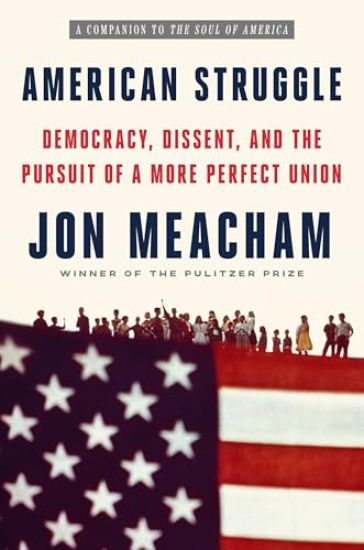
American Struggle: Democracy, Dissent, and the Pursuit of a More Perfect Union
The #1 New York Times bestselling author of The Soul of America offers an empowering lens to understand our national debates and divisions from 1619 to the present, with his signature commentary on the consequential speeches, letters, and essays that led us to this moment. In a polarized era, history can become a subject of political contention. Many have seen America as perfect; many others argue that the national experiment is fundamentally flawed. The truth, Meacham shows, likely lies in between these extremes. America has had shining hours, and also dark ones. In American Struggle, Jon Meacham looks to the nation's complicated past for lessons on the way forward. This rich and diverse collection covers a wide spectrum of history, from 1619 to the present, with primary-source documents that spotlight in their own words those who sought unity or division, and with Meacham's commentary throughout--from the founders to Lincoln; to leaders in the South; to leaders during the World Wars; to figures in the modern era such as Martin Luther King, Jr., JFK, LBJ, Shirley Chisolm, Walter Cronkite, Bill Clinton, Barack Obama, and many more. As clashes over liberty and slavery, inclusion and exclusion play out, these voices, brilliantly framed by Meacham's singular commentary, remind us that contentious citizenship and fair-minded observations are essential to bringing about the more perfect union envisioned in the preamble to the Constitution, which Frederick Douglass called a "glorious liberty document". Conflict is nothing new in American life; rather, as Meacham and these texts show, these arguments are built into the nation's character. To know what has come before, to watch as long-running disputes rise and fall, is to be armed against despair.
The Unraveling

The Unraveling

Bob Bauer; Jon Meacham

ROWMAN LITTLEFIELD
2024
sidottu
Part memoir, part rumination on the declining moral compass of the American political class, The Unraveling is the first book to place restoring political ethics at the center of the renewal of American democracy. Politics is a brutal game, but Bauer asks where does the line fall between the “hardball” of politics and attacks on the very foundation of democracy? Looking back on 46 years in the political arena, Bauer tries to better grasp what has gone wrong and to understand what shaped his own decisions and actions. He offers anecdotes, perspectives, and insights that are vitally relevant in our world today, including efforts in 2020 (and 2024) to stop one president from overturning democratic elections, and the struggles with social media, such as Meta, to combat disinformation in a post-truth politics. He writes about the various personal experiences along the way—the highs, the lows, and the absurd. Bauer presents a smart and serious look at our political culture and the role that he has played in shaping it. The Unraveling will be essential reading for anyone interested in American politics of the last 50 years--and the next.
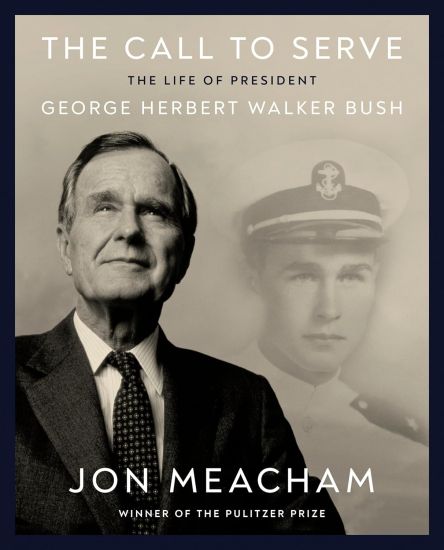
The Call to Serve

The Call to Serve

Jon Meacham

RANDOM HOUSE USA INC
2024
sidottu
In honor of the one hundredth anniversary of George H. W. Bush's birth, this visually stunning chronicle features never-before-published photos and memories celebrating the forty-first president's vision of leadership as service to country--curated by Pulitzer Prize-winning biographer Jon Meacham. Lavishly illustrated, The Call to Serve is an intimate, illuminating portrait of the forty-first president, a man who was so much more than just his politics. In words and images--many found in a lifetime of scrapbooks kept by Barbara Pierce Bush--Jon Meacham brings George H. W. Bush vividly to life. From the values of integrity, empathy, and grace that Bush learned in childhood to his leadership at the highest levels in tumultuous times, the forty-first president embodied an ideal of service that warrants attention in our own divided time. Bush pursued a life of service to America through his heroic combat experience in the Pacific during World War II, his political rise in Texas, his serving as U.S. ambassador to the UN, his time as envoy to China and as director of the CIA, his tenure as Ronald Reagan's vice president, and his election as the forty-first president of the United States. Set against the background of America during the twentieth and twenty-first centuries, this book commemorates the legacy of a man who was far from perfect--he could be cutthroat on the campaign trail--but whose ambition was not an end unto itself. Bush's drive to succeed was, rather, a means to put the values of balance, patriotism, and respect for others into action in the political arena. Toward the end of Bush's life, the forty-fourth president, Barack Obama, said that Bush put the country first "both before he was president, while he was president, and ever since." Featuring more than 450 photographs, Meacham's introduction and commentary throughout, and narration drawn from his biography of George H. W. Bush, Destiny and Power, this is an essential tribute to a uniquely American life.
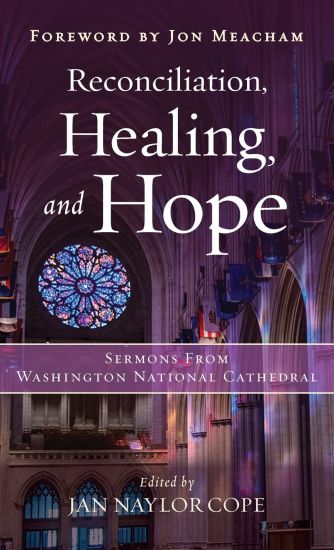
Reconciliation, Healing, and Hope

Reconciliation, Healing, and Hope

Jon Meacham

CHURCH PUBLISHING INC
2022
sidottu
Powerful sermons from Washington National Cathedral that inspire and a foreword by John Meacham.Through their sermons, Cathedral clergy and guest preachers such as Jon Meacham, Kelly Brown Douglas, and Presiding Bishop Michael B. Curry share inspiring words. Collectively, they offer lasting guidance for difficult times, reinforcing that even in the midst of loss and chaos, God is at work among us, lifting us up and giving us hope for the future.Topics include hope, faith during times of distress, love, grief, and the presence of God. With a foreword by Jon Meacham.
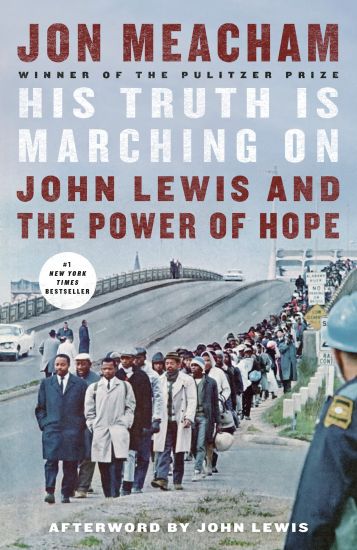
His Truth Is Marching On

His Truth Is Marching On

Jon Meacham; John Lewis

RANDOM HOUSE USA INC
2021
nidottu
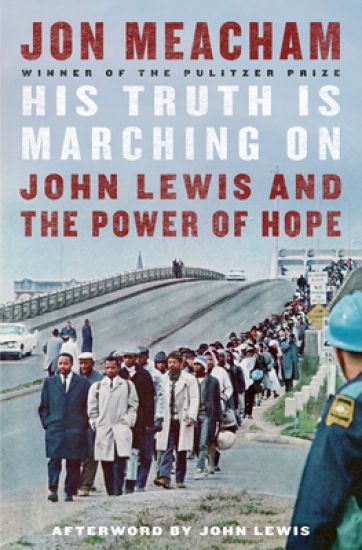
#1 NEW YORK TIMES BESTSELLER - An intimate and revealing portrait of civil rights icon and longtime U.S. congressman John Lewis, linking his life to the painful quest for justice in America from the 1950s to the present--from the Pulitzer Prize-winning author of The Soul of America NAMED ONE OF THE BEST BOOKS OF THE YEAR BY THE WASHINGTON POST AND COSMOPOLITAN John Lewis, who at age twenty-five marched in Selma, Alabama, and was beaten on the Edmund Pettus Bridge, was a visionary and a man of faith. Drawing on decades of wide-ranging interviews with Lewis, Jon Meacham writes of how this great-grandson of a slave and son of an Alabama tenant farmer was inspired by the Bible and his teachers in nonviolence, Reverend James Lawson and Martin Luther King, Jr., to put his life on the line in the service of what Abraham Lincoln called "the better angels of our nature." From an early age, Lewis learned that nonviolence was not only a tactic but a philosophy, a biblical imperative, and a transforming reality. At the age of four, Lewis, ambitious to become a minister, practiced by preaching to his family's chickens. When his mother cooked one of the chickens, the boy refused to eat it--his first act, he wryly recalled, of nonviolent protest. Integral to Lewis's commitment to bettering the nation was his faith in humanity and in God--and an unshakable belief in the power of hope. Meacham calls Lewis "as important to the founding of a modern and multiethnic twentieth- and twenty-first-century America as Thomas Jefferson and James Madison and Samuel Adams were to the initial creation of the Republic itself in the eighteenth century." A believer in the injunction that one should love one's neighbor as oneself, Lewis was arguably a saint in our time, risking limb and life to bear witness for the powerless in the face of the powerful. In many ways he brought a still-evolving nation closer to realizing its ideals, and his story offers inspiration and illumination for Americans today who are working for social and political change.
His Truth is Marching On

His Truth is Marching On

Jon Meacham

Random House USA Inc
2020
sidottu
An intimate and inspiring portrait of civil rights icon and longtime U.S. congressman John Lewis, linking his life to the quest for justice in America from the 1950s to the present--from the Pulitzer Prize-winning author of The Soul of America John Lewis, who at age twenty-five marched in Selma, Alabama, and was beaten on the Edmund Pettus Bridge, is a visionary and a man of faith. Drawing on decades of wide-ranging interviews with Lewis and deep research into the history of the civil rights movement, Jon Meacham writes of how this great-grandson of a slave and a son of an Alabama tenant farmer was inspired by the Bible and his teachers in nonviolence, Reverend James Lawson and Martin Luther King, Jr., to put his life on the line in the service of what Abraham Lincoln called "the better angels of our nature." A believer in hope above all else, Lewis learned from a young age that nonviolence was not only a tactic but a philosophy, a biblical imperative, and a transforming reality. At the age of four, Lewis, ambitious to become a minister, practiced by preaching to his family's chickens. When his mother cooked one of the chickens, the boy refused to eat it--his first act, he wryly recalled, of nonviolent protest. Integral to Lewis's commitment to bettering the nation was his faith in humanity and in God--and an unshakable belief in the power of hope. Meacham calls Lewis "as important to the founding of a modern and multiethnic twentieth- and twenty-first-century America as Thomas Jefferson and James Madison and Samuel Adams were to the initial creation of the nation-state in the eighteenth century. He did what he did--risking limb and life to bear witness for the powerless in the face of the powerful--not in spite of America, but because of America, and not in spite of religion, but because of religion." In many ways Lewis made his vision a reality, and his example offers Americans today a map for social and political change.
On Democracy

On Democracy

E. B White; Jon Meacham

HarperPerennial
2020
nidottu
A New York Times Book Review New & Noteworthy Title"For democracy’s weary champions, White’s time-tested prose is a shot of adrenaline" (Madeleine Albright).“I am a member of a party of one, and I live in an age of fear.”These words were written by E. B. White in 1947.Decades before our current political turmoil, White crafted eloquent yet practical political statements that continue to resonate. “There’s only one kind of press that’s any good—” he proclaimed, “a press free from any taint of the government.” He condemned the trend of defamation, arguing that “in doubtful, doubting days, national morality tends to slip and slide toward a condition in which the test of a man’s honor is his zeal for discovering dishonor in others.” And on the spread of fascism he lamented, “fascism enjoys at the moment an almost perfect climate for growth—a world of fear and hunger.”Anchored by an introduction by Pulitzer Prize-winning historian Jon Meacham, this concise collection of essays, letters, and poems from one of this country’s most eminent literary voices offers much-needed historical context for our current state of the nation—and hope for the future of our society. Speaking to Americans at a time of uncertainty, when democracy itself has come under threat, he reminds us, “As long as there is one upright man, as long as there is one compassionate woman . . . the scene is not desolate.”
In the Hands of the People

In the Hands of the People

Jon Meacham; Annette Gordon-Reed

Random House Inc
2020
sidottu
Pulitzer Prize-winning historian Jon Meacham offers a collection of inspiring words about how to be a good citizen, from Thomas Jefferson and others, and reminds us why our country's founding principles are still so important today. Thomas Jefferson believed in the covenant between a government and its citizens, in both the government's responsibilities to its people and also the people's responsibility to the republic. In this illuminating book, a project of the Thomas Jefferson Foundation at Monticello, the #1 New York Times bestselling author Jon Meacham presents selections from Jefferson's writing on the subject, with an afterword by Pulitzer Prize-winning historian Annette Gordon-Reed and comments on Jefferson's ideas from others, including Colin Powell, Madeleine Albright, Frederick Douglass, Carl Sagan, and American presidents. This curated collection revitalizes how to see an individual's role in the world, as it explores such Jeffersonian concepts as religious freedom, the importance of a free press, public education, participation in government, and others. Meacham writes, "In an hour of twenty-first-century division and partisanship, of declining trust in institutions and of widespread skepticism about the long-term viability of the American experiment, it is instructive to return to first principles. Not, to be sure, as an exercise in nostalgia or as a flight from the reality of our own time, but as an honest effort to see, as Jefferson wrote, what history may be able to tell us about the present and the future."