Kirjojen hintavertailu. Mukana 12 390 323 kirjaa ja 12 kauppaa.

Kirjailija

Jon Pierre

Kirjat ja teokset yhdessä paikassa: 22 kirjaa, julkaisuja vuosilta 2010-2023, suosituimpien joukossa Interactive Governance. Vertaile teosten hintoja ja tarkista saatavuus suomalaisista kirjakaupoista.

22 kirjaa

Kirjojen julkaisuhaarukka 2010-2023.

Politik som organisation : förvaltningspolitikens grundproblem

Politik som organisation : förvaltningspolitikens grundproblem

Carl Dahlström; Shirin Ahlbäck Öberg; Rasmus Broms; Erica Falkenström; Nils Hertting; Lennart J Lundqvist; Marina Nistotskaya; Helena Olofsdotter Stensöta; Anna Persson; Jon Pierre; Bo Rothstein; Martin Sjöstedt; Jan Teorell

Studentlitteratur AB
2023
nidottu
Politik i den moderna staten är till stor del en fråga om organisation. Den offentliga förvaltningens organisationsform spelar därför en betydelsefull roll för vår förståelse av politik. Detta har särskilt kommit att uppmärksammas inom områden som välfärds- och utbildningspolitik samt på senare tid även vad gäller frågor om fattigdomsbekämpning i utvecklingsländer. Frågor om förvaltningsapparatens legitimitet, om styrning och kontroll av för­valtningen, och hur förvaltningen genomför politiska beslut utgör centrala problem i såväl utvecklingsländer som i de välmående demokratierna. Inom många politikområden är det en öppen fråga var den offentliga makten faktiskt är belägen: hos politikerna, hos internationella och centrala tjänstemän eller hos de lokala tjänstemän som direkt möter medborgarna?Politik som organisation är en uppskattad lärobok som nu ges ut i en sjunde omarbetad upplaga. I denna upplaga har bland annat ett kapitel om etik i offentlig förvaltning tillkommit. Boken, som ger en problemorienterad översikt över ett antal områden inom den statsvetenskapliga analysen av den offentliga förvaltningen, är tänkt som en introduktion i ämnet.Sjunde upplagan
Interactive Governance

Interactive Governance

Jacob Torfing; B. Guy Peters; Jon Pierre; Eva Sørensen

Oxford University Press
2019
nidottu
Governance has become one of the most commonly used concepts in contemporary political science. It is, however, often used to mean a variety of different things. This book helps to clarify this conceptual muddle by concentrating on one variety of governance-interactive governance. The authors argue that although the state may remain important for many aspects of governing, interactions between state and society represent an important, and perhaps increasingly important, dimension of governance. These interactions may be with social actors such as networks, with market actors or with other governments, but all these forms represent means of governing involving mixtures of state action with the actions of other entities.This book explores thoroughly this meaning of governance, and links it to broader questions of governance. In the process of explicating this dimension of governance the authors also explore some of the more fundamental questions about governance theory. For example, although governance is talked about a great deal political science has done relatively little about how to measure this concept. Likewise, the term multi-level governance has become widely used but its important to understand that idea more fully and see how it functions in the context of interactive forms of governance. The authors also link governance to some very fundamental questions in political science and the social sciences more broadly. How is power exercised in interactive governance? How democratic is interactive governance, and is democratic governance always advanced through transparency?
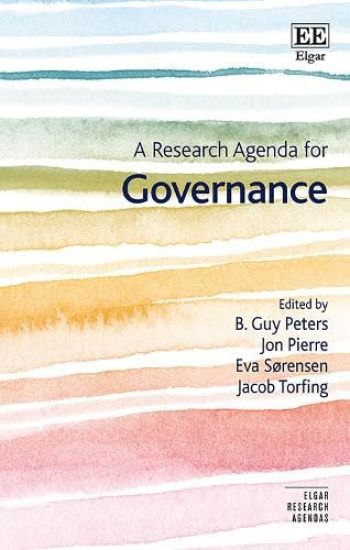
A Research Agenda for Governance

A Research Agenda for Governance

B. Guy Peters; Jon Pierre; Eva Sørensen; Jacob Torfing

EDWARD ELGAR PUBLISHING LTD
2023
nidottu
Elgar Research Agendas outline the future of research in a given area. Leading scholars are given the space to explore their subject in provocative ways, and map out the potential directions of travel. They are relevant but also visionary.This incisive Research Agenda for Governance draws together unique contributions from leading scholars to examine the two distinct models of governance: the traditional model, based on the state and exercise of control through law and bureaucracy, and an alternative model centred on the collaboration of public and private sector actors.Introducing the essential principles and rationale of these alternative models of governance, both of which can be seen operating at all levels of government in democratic as well as non-democratic regimes, the chapters evaluate the strengths and weaknesses of the two systems. Drawing conclusions from critical areas of inquiry, including multi-level governance, the nature of governance in democratic and authoritarian regimes, and digital innovations in governance, the book offers a richly detailed insight into the respective workings of the models of governing by control and by collaboration.This Research Agenda will be an invaluable resource for academics and graduate students of public policy, regulation and governance, and public administration management. Its measured consideration of the possibilities for enhancing public innovation via alternative models of governance will also be of significant interest to employees within the public sector.
A Research Agenda for Governance

A Research Agenda for Governance

B. Guy Peters; Jon Pierre; Eva Sørensen; Jacob Torfing

EDWARD ELGAR PUBLISHING LTD
2022
sidottu
Elgar Research Agendas outline the future of research in a given area. Leading scholars are given the space to explore their subject in provocative ways, and map out the potential directions of travel. They are relevant but also visionary.This incisive Research Agenda for Governance draws together unique contributions from leading scholars to examine the two distinct models of governance: the traditional model, based on the state and exercise of control through law and bureaucracy, and an alternative model centred on the collaboration of public and private sector actors.Introducing the essential principles and rationale of these alternative models of governance, both of which can be seen operating at all levels of government in democratic as well as non-democratic regimes, the chapters evaluate the strengths and weaknesses of the two systems. Drawing conclusions from critical areas of inquiry, including multi-level governance, the nature of governance in democratic and authoritarian regimes, and digital innovations in governance, the book offers a richly detailed insight into the respective workings of the models of governing by control and by collaboration.This Research Agenda will be an invaluable resource for academics and graduate students of public policy, regulation and governance, and public administration management. Its measured consideration of the possibilities for enhancing public innovation via alternative models of governance will also be of significant interest to employees within the public sector.
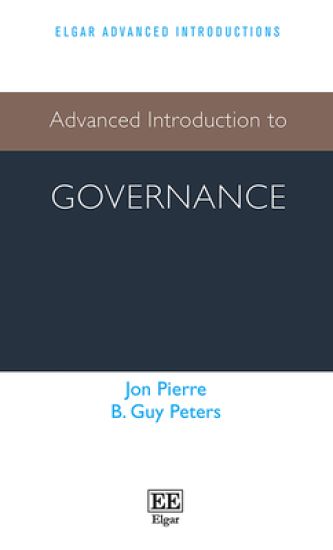
Advanced Introduction to Governance

Advanced Introduction to Governance

Jon Pierre; B Guy Peters

Edward Elgar Publishing Ltd
2021
sidottu
Elgar Advanced Introductions are stimulating and thoughtful introductions to major fields in the social sciences, business and law, expertly written by the world’s leading scholars. Designed to be accessible yet rigorous, they offer concise and lucid surveys of the substantive and policy issues associated with discrete subject areas. Jon Pierre and Guy Peters expertly guide the reader through governance - one of the most widely used terms in political science - and its differing interpretations, with comprehensive discussion of the key issues covering global as well as local level governance. A detailed look into what constitutes 'good governance', whether produced by a government or by more informal means, is also explored. Key features include: examination of what governance is, how it is created and the differing styles of governancehow governance is becoming more collaborative between governments and the private sectoran investigation into the governance process and outcomes, including topics such as bargaining, negotiation and the use of political power. This insightful Advanced Introduction will be an excellent resource for both graduates and undergraduates studying governance and political science. It will also be a useful guide for academics who are interested in governance and who need a concise introduction.
Advanced Introduction to Governance

Advanced Introduction to Governance

Jon Pierre; B Guy Peters

Edward Elgar Publishing Ltd
2021
nidottu
Elgar Advanced Introductions are stimulating and thoughtful introductions to major fields in the social sciences, business and law, expertly written by the world’s leading scholars. Designed to be accessible yet rigorous, they offer concise and lucid surveys of the substantive and policy issues associated with discrete subject areas. Jon Pierre and Guy Peters expertly guide the reader through governance - one of the most widely used terms in political science - and its differing interpretations, with comprehensive discussion of the key issues covering global as well as local level governance. A detailed look into what constitutes 'good governance', whether produced by a government or by more informal means, is also explored. Key features include: examination of what governance is, how it is created and the differing styles of governancehow governance is becoming more collaborative between governments and the private sectoran investigation into the governance process and outcomes, including topics such as bargaining, negotiation and the use of political power. This insightful Advanced Introduction will be an excellent resource for both graduates and undergraduates studying governance and political science. It will also be a useful guide for academics who are interested in governance and who need a concise introduction.
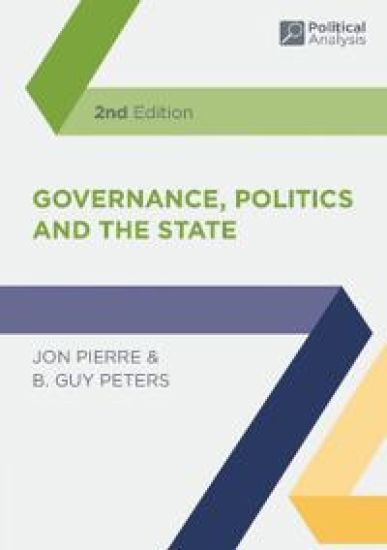
Governance, Politics and the State

Governance, Politics and the State

Jon Pierre; B. Guy Peters

Red Globe Press
2020
nidottu
Having started out as a new and alternative way of thinking about policy making and governing more broadly, governance is now established as a dominant paradigm in understanding national, subnational and global politics.The long-awaited second edition of this textbook takes into account the significant growth and proliferation of the field in recent years and offers a state of the art introduction to how governance is being theorised and studied today.Written by two leading political scientists, Governance, Politics and the State considers how societies are being, and can be, steered in a complex world where states must increasingly interact with and influence other actors and institutions to achieve results. It is a valuable book for all students of governance.New to this Edition:- A fully updated and revised set of chapters, including four new chapters – on multilevel governance, global governance, metagovernance and populism and governance. - A postscript on how to study governance
Governance, Politics and the State

Governance, Politics and the State

Jon Pierre; B. Guy Peters

Red Globe Press
2020
sidottu
Having started out as a new and alternative way of thinking about policy making and governing more broadly, governance is now established as a dominant paradigm in understanding national, subnational and global politics.The long-awaited second edition of this textbook takes into account the significant growth and proliferation of the field in recent years and offers a state of the art introduction to how governance is being theorised and studied today.Written by two leading political scientists, Governance, Politics and the State considers how societies are being, and can be, steered in a complex world where states must increasingly interact with and influence other actors and institutions to achieve results. It is a valuable book for all students of governance.New to this Edition:- A fully updated and revised set of chapters, including four new chapters – on multilevel governance, global governance, metagovernance and populism and governance. - A postscript on how to study governance
Granskningssamhället - Offentliga verksamheter under lupp

Granskningssamhället - Offentliga verksamheter under lupp

Bengt Jacobsson; Jon Pierre; Göran Sundström; Jenny de Fine Licht; Anders Ivarsson Westerberg; Livia Johannesson; Anders Nordström; Martin Qvist; Marta Reuter; Max Rosendahl; Jenny Svensson; Noomi Weinryb

Studentlitteratur AB
2019
nidottu
Vi lever i ett granskningssamhälle. Det inspekteras, tillsynas, kontrolleras, revideras, certifieras, utvärderas och följs upp som aldrig förr. Offentliga verksamheter måste självfallet granskas noggrant, men hur kommer det sig att ”mer granskning” har kommit att uppfattas som en universalmedicin mot allehanda problem?Granskningssamhället beskriver och analyserar hur granskning inom sex olika politikområden - skola, äldreomsorg, arbetsmarknad, järnväg, polis och asylpolitik - har förändrats sedan slutet av 1980-talet och fram till i dag. Vad har drivit granskningen inom dessa områden? Finns det något som skiljer granskningens dynamik åt mellan olika sektorer av samhället? I boken beskrivs hur ett fragmenterat granskningslandskap har vuxit fram, till synes utan någon övergripande plan. Vilka konsekvenser får allt detta granskande? Är det verkligen rätt saker som granskas? Vilka granskningar skulle vi klara oss utan, och vilka kommer sällan till stånd trots att de vore önskvärda?Förvaltningsakademin är en mångvetenskaplig centrumbildning vid Södertörns högskola som bedriver forskning om förvaltning, erbjuder uppdragsutbildning och verkar för kvalificerade möten mellan forskning och praktik.
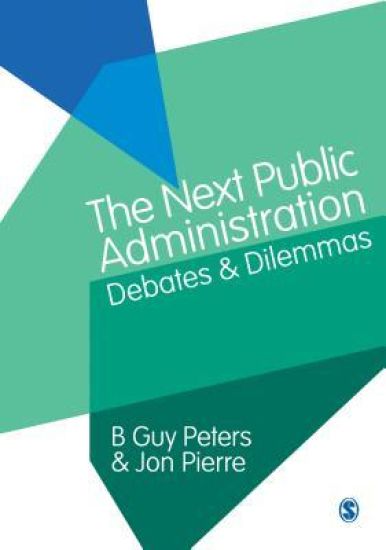
The Next Public Administration

The Next Public Administration

B. Guy Peters; Jon Pierre

SAGE Publications Ltd
2017
nidottu
Written by two of the leading scholars in the field, this book explores public administration in the past, present and future, critically reviewing the modernization of public management reform. It reasserts public administration as an integral component of democratic governance and fostering a state-citizen relationship. Wide-ranging in scope, The Next Public Administration: Extends basic public administration to consider issues associated with management, governance and democracyCovers core public administration concepts and their evolution through timeDraws on an international spread of examples, bringing theoretical discussions to lifeIncludes lists of further reading Essential reading for students of public management and public administration.
The Next Public Administration

The Next Public Administration

B. Guy Peters; Jon Pierre

SAGE Publications Ltd
2017
sidottu
Written by two of the leading scholars in the field, this book explores public administration in the past, present and future, critically reviewing the modernization of public management reform. It reasserts public administration as an integral component of democratic governance and fostering a state-citizen relationship. Wide-ranging in scope, The Next Public Administration: Extends basic public administration to consider issues associated with management, governance and democracyCovers core public administration concepts and their evolution through timeDraws on an international spread of examples, bringing theoretical discussions to lifeIncludes lists of further reading Essential reading for students of public management and public administration.
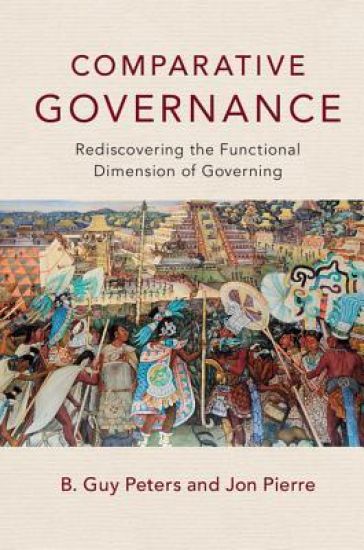
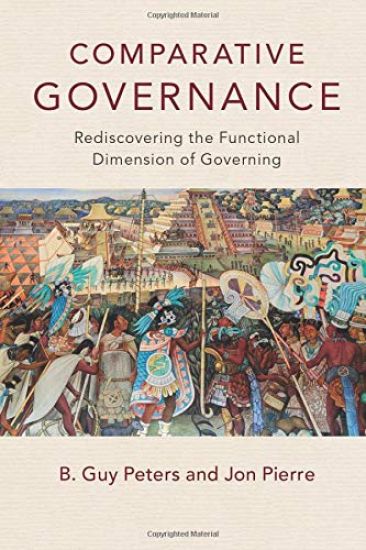
Comparative Governance

Comparative Governance

B. Guy Peters; Jon Pierre

Cambridge University Press
2016
sidottu
Decision-making is at the heart of governing and governance, and is a more challenging task compared to just a few decades ago as a result of increasing social complexity and globalization. In this book, B. Guy Peters and Jon Pierre propose a new framework for the comparative analysis of governance, arguing that government remains a central actor in governance. By articulating the functionalist dimension of governance they show how goal setting, resource mobilization, decision-making, implementation and feedback can be performed by a combination of different types of actors. Even so, effective governance requires a leading role for government. The framework is also applied to a taxonomy of governance arrangements and national styles of governing. Comparative Governance advances our knowledge about governance failure and how forms of governance may change. It also significantly strengthens the theory of governance, showing how governance can be studied conceptually as well as empirically.
Comparative Governance

Comparative Governance

B. Guy Peters; Jon Pierre

Cambridge University Press
2016
pokkari
Decision-making is at the heart of governing and governance, and is a more challenging task compared to just a few decades ago as a result of increasing social complexity and globalization. In this book, B. Guy Peters and Jon Pierre propose a new framework for the comparative analysis of governance, arguing that government remains a central actor in governance. By articulating the functionalist dimension of governance they show how goal setting, resource mobilization, decision-making, implementation and feedback can be performed by a combination of different types of actors. Even so, effective governance requires a leading role for government. The framework is also applied to a taxonomy of governance arrangements and national styles of governing. Comparative Governance advances our knowledge about governance failure and how forms of governance may change. It also significantly strengthens the theory of governance, showing how governance can be studied conceptually as well as empirically.
The Relevance of Political Science

The Relevance of Political Science

Gerry Stoker; B. Guy Peters; Jon Pierre

Red Globe Press
2015
nidottu
What does political science tell us about important real-world problems and issues? And to what extent does and can political analysis contribute to solutions? Debates about the funding, impact and relevance of political science in contemporary democracies have made this a vital and hotly contested topic of discussion, and in this original text authors from around the world respond to the challenge.A robust defence is offered of the achievements of political science research, but the book is not overly sanguine given its sustained recognition of the need for improvement in the way that political science is done. New insights are provided into the general issues raised by relevance, into blockages to relevance, and into the contributions that the different subfields of political science can and do make. The book concludes with a new manifesto for relevance that seeks to combine a commitment to rigour with a commitment to engagement.
The Relevance of Political Science

The Relevance of Political Science

Gerry Stoker; B. Guy Peters; Jon Pierre

Red Globe Press
2015
sidottu
What does political science tell us about important real-world problems and issues? And to what extent does and can political analysis contribute to solutions? Debates about the funding, impact and relevance of political science in contemporary democracies have made this a vital and hotly contested topic of discussion, and in this original text authors from around the world respond to the challenge.A robust defence is offered of the achievements of political science research, but the book is not overly sanguine given its sustained recognition of the need for improvement in the way that political science is done. New insights are provided into the general issues raised by relevance, into blockages to relevance, and into the contributions that the different subfields of political science can and do make. The book concludes with a new manifesto for relevance that seeks to combine a commitment to rigour with a commitment to engagement.
Globalization and Governance

Globalization and Governance

Jon Pierre

Edward Elgar Publishing Ltd
2015
nidottu
Globalization raises important questions about the governing capacity of domestic institutions. In Globalization and Governance, Jon Pierre studies the impact of international norms and prescriptions on domestic governance in Japan, Sweden and the United States.The empirical analysis is focused on economic governance, administrative reform and intergovernmental relationships. Drawing on survey data, documents and interviews, the analysis finds that domestic institutions still intrinsically shape domestic governance. International norms towards deregulation and market-based administrative reform confront domestic institutions with prescriptions for reform but the three countries provide only very few examples of unmitigated domestic implementation. What Jon Pierre calls 'the microfoundations of globalization'-the assessment, adoption or rejection of international norms and ideas in vogue-is a complex process where domestic institutions and path dependencies remain at the helm. The most important exception to this pattern is governance during financial crises where countries are dependent on conditioned support from transnational institutions.This insightful and informative book will appeal to researchers, academics, post-graduate, as well as undergraduate, students in governance, political economy and international relations.Contents: 1. Globalization and the State 2. Globalization and Domestic Governance 3. Still Governing the Economy? Economic Governance 4. Cities and Regions in a Globalized World: Inter-Governmental Relationships 5. Modernizing the State: Administrative Reform 6. Conclusions: Domestic Governance in a Globalizing World References Index
Governing the Embedded State

Governing the Embedded State

Bengt Jacobsson; Jon Pierre; Göran Sundström

Oxford University Press
2015
sidottu
Governing the Embedded State integrates governance theory with organization theory and examines how states address social complexity and international embeddedness. Drawing upon extensive empirical research on the Swedish government system, this volume describes a strategy of governance based in a metagovernance model of steering by designing institutional structures. This strategy is supplemented by micro-steering of administrative structures within the path dependencies put in place through metagovernance. Both of these strategies of steering rely on subtle methods of providing political guidance to the public service where norms of loyalty to the government characterize the relationship between politicians and civil servants. By drawing upon this research, the volume will explain how recent developments such as globalization, Europeanization, the expansion of managerial ideas, and the fragmentation of states, have influenced the state's capacity to govern. The result is an account of contemporary governance which shows the societal constraints on government but also the significance of close interaction and cooperation between the political leadership and the senior civil servants in addressing those constraints.
Globalization and Governance

Globalization and Governance

Jon Pierre

Edward Elgar Publishing Ltd
2013
sidottu
Globalization raises important questions about the governing capacity of domestic institutions. In Globalization and Governance, Jon Pierre studies the impact of international norms and prescriptions on domestic governance in Japan, Sweden and the United States.The empirical analysis is focused on economic governance, administrative reform and intergovernmental relationships. Drawing on survey data, documents and interviews, the analysis finds that domestic institutions still intrinsically shape domestic governance. International norms towards deregulation and market-based administrative reform confront domestic institutions with prescriptions for reform but the three countries provide only very few examples of unmitigated domestic implementation. What Jon Pierre calls 'the microfoundations of globalization'-the assessment, adoption or rejection of international norms and ideas in vogue-is a complex process where domestic institutions and path dependencies remain at the helm. The most important exception to this pattern is governance during financial crises where countries are dependent on conditioned support from transnational institutions.This insightful and informative book will appeal to researchers, academics, post-graduate, as well as undergraduate, students in governance, political economy and international relations.Contents: 1. Globalization and the State 2. Globalization and Domestic Governance 3. Still Governing the Economy? Economic Governance 4. Cities and Regions in a Globalized World: Inter-Governmental Relationships 5. Modernizing the State: Administrative Reform 6. Conclusions: Domestic Governance in a Globalizing World References Index
Interactive Governance

Interactive Governance

Jacob Torfing; B. Guy Peters; Jon Pierre; Eva Sørensen

Oxford University Press
2012
sidottu
Governance has become one of the most commonly used concepts in contemporary political science. It is, however, often used to mean a variety of different things. This book helps to clarify this conceptual muddle by concentrating on one variety of governance-interactive governance. The authors argue that although the state may remain important for many aspects of governing, interactions between state and society represent an important, and perhaps increasingly important, dimension of governance. These interactions may be with social actors such as networks, with market actors or with other governments, but all these forms represent means of governing involving mixtures of state action with the actions of other entities.This book explores thoroughly this meaning of governance, and links it to broader questions of governance. In the process of explicating this dimension of governance the authors also explore some of the more fundamental questions about governance theory. For example, although governance is talked about a great deal political science has done relatively little about how to measure this concept. Likewise, the term multi-level governance has become widely used but its important to understand that idea more fully and see how it functions in the context of interactive forms of governance. The authors also link governance to some very fundamental questions in political science and the social sciences more broadly. How is power exercised in interactive governance? How democratic is interactive governance, and is democratic governance always advanced through transparency?
The Politics of Urban Governance

The Politics of Urban Governance

Jon Pierre

Red Globe Press
2011
nidottu
The study of urban governance provides a valuable insight into economic, social, and political forces and how they shape city life. But who and what are the real drivers of change? This innovative text casts new light on the issues and re-examines the state of urban governance at the start of the twenty-first century. Jon Pierre analyses four models of urban governance: 'management', 'corporatist', 'pro-growth' and 'welfare'. Each is assessed in terms of its implications for the major issues, interests and challenges in the contemporary urban arena. Distinctively, Pierre argues that institutions – and the values which underpin them – are the driving forces of change. The book also assesses the impact of globalization upon urban governance.The long-standing debate on the decline of urban governance is re-examined and reformulated by Pierre, who applies a wider international approach to the issues. He argues that the changing cast of private and public actors, combined with new forms of political participation, have resulted in a transformation – rather than a decline – of contemporary urban governance.