Kirjojen hintavertailu. Mukana 12 152 606 kirjaa ja 12 kauppaa.

Kirjailija

Jon Stewart

Kirjat ja teokset yhdessä paikassa: 62 kirjaa, julkaisuja vuosilta 1996-2025, suosituimpien joukossa The Daily Show with Jon Stewart Presents America (the Book): A Citizen's Guide to Democracy Inaction. Vertaile teosten hintoja ja tarkista saatavuus suomalaisista kirjakaupoista.

62 kirjaa

Kirjojen julkaisuhaarukka 1996-2025.

The Daily Show with Jon Stewart Presents America (the Book): A Citizen's Guide to Democracy Inaction

The Daily Show with Jon Stewart Presents America (the Book): A Citizen's Guide to Democracy Inaction

Jon Stewart; The Writers of the Daily Show

Grand Central Publishing
2006
nidottu
The host of the award-winning humorous news program offers tongue-in-cheek insight into American democracy with coverage of such topics as the republican qualities of ancient Rome, the antics of our nation's founders, and the ludicrous nature of today's media. Reprint. 200,000 first printing.
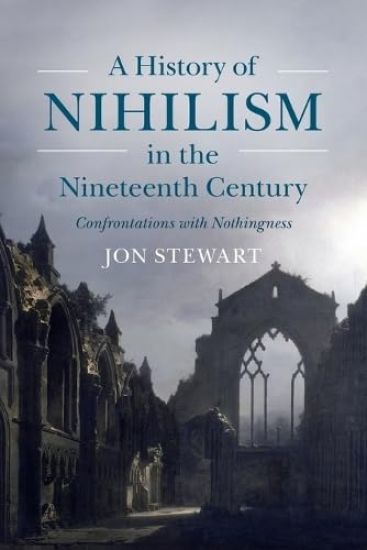
A History of Nihilism in the Nineteenth Century

A History of Nihilism in the Nineteenth Century

Jon Stewart

Cambridge University Press
2025
nidottu
Nihilism – the belief that life is meaningless – is frequently associated with twentieth-century movements such as existentialism, postmodernism and Dadaism, and thought to result from the shocking experiences of the two World Wars and the Holocaust. In his rich and expansive new book, Jon Stewart shows that nihilism's beginnings in fact go back much further to the first half of the nineteenth century. He argues that the true origin of modern nihilism was the rapid development of Enlightenment science, which established a secular worldview. This radically diminished the importance of human beings so that, in the vastness of space and time, individuals now seemed completely insignificant within the universe. The author's panoramic exploration of how nihilism developed – not only in philosophy, but also in religion, poetry and literature – shows what an urgent topic it was for thinkers of all kinds, and how it has continued powerfully to shape intellectual debates ever since.
A History of Hegelianism in Golden Age Denmark, Tome III
This is the third volume of a three-volume work dedicated to exploring the influence of G.W.F. Hegel’s philosophical thinking in Golden Age Denmark. The work demonstrates that the largely overlooked tradition of Danish Hegelianism played a profound and indeed constitutive role in many spheres of the Golden Age culture. This third tome covers the most exciting and dynamic time in the Danish Hegel reception from 1842 to 1855. This heterogeneous period saw the emergence of several new figures, many of whom were associated with the left-Hegelian school. This period is best known for the publication of the pseudonymous works of Søren Kierkegaard. The present tome places these famous works in the context of other contemporary Danish discussions about Hegel’s philosophy. It shows that many of Kierkegaard’s criticisms had been raised by other Danish thinkers before him and that a large part of his polemical campaign was aimed at the leading figures of the previous periods of the Danish Hegel reception, namely, Johan Ludvig Heiberg and Hans Martensen.
Hegel's Century

Hegel's Century

Jon Stewart

Cambridge University Press
2024
pokkari
The remarkable lectures that Hegel gave in Berlin in the 1820s generated an exciting intellectual atmosphere which lasted for decades. From the 1830s, many students flocked to Berlin to study with people who had studied with Hegel, and both his original students, such as Feuerbach and Bauer, and later arrivals including Kierkegaard, Engels, Bakunin, and Marx, evolved into leading nineteenth-century thinkers. Jon Stewart's panoramic study of Hegel's deep influence upon the nineteenth century in turn reveals what that century contributed to the wider history of philosophy. It shows how Hegel's notions of 'alienation' and 'recognition' became the central motifs for the era's thinking; how these concepts spilled over into other fields – like religion, politics, literature, and drama; and how they created a cultural phenomenon so rich and pervasive that it can truly be called 'Hegel's century.' This book is required reading for historians of ideas as well as of philosophy.
Dylan, Lennon, Marx and God

Dylan, Lennon, Marx and God

Jon Stewart

Cambridge University Press
2023
pokkari
Bob Dylan and John Lennon are two of the most iconic names in popular music. Dylan is arguably the twentieth century's most important singer-songwriter. Lennon was founder and leader of the Beatles who remain, by some margin, the most covered songwriters in history. While Dylan erased the boundaries between pop and poetry, Lennon and his band transformed the genre's creative potential. The parallels between the two men are striking but underexplored. This book addresses that lack. Jon Stewart discusses Dylan's and Lennon's relationship; their politics; their understanding of history; and their deeply held spiritual beliefs. In revealing how each artist challenged the restrictive social norms of their day, the author shows how his subjects asked profound moral questions about what it means to be human and how we should live. His book is a potent meditation and exploration of two emblematic figures whose brilliance changed Western music for a generation.
A History of Nihilism in the Nineteenth Century

A History of Nihilism in the Nineteenth Century

Jon Stewart

Cambridge University Press
2023
sidottu
Nihilism – the belief that life is meaningless – is frequently associated with twentieth-century movements such as existentialism, postmodernism and Dadaism, and thought to result from the shocking experiences of the two World Wars and the Holocaust. In his rich and expansive new book, Jon Stewart shows that nihilism's beginnings in fact go back much further to the first half of the nineteenth century. He argues that the true origin of modern nihilism was the rapid development of Enlightenment science, which established a secular worldview. This radically diminished the importance of human beings so that, in the vastness of space and time, individuals now seemed completely insignificant within the universe. The author's panoramic exploration of how nihilism developed – not only in philosophy, but also in religion, poetry and literature – shows what an urgent topic it was for thinkers of all kinds, and how it has continued powerfully to shape intellectual debates ever since.
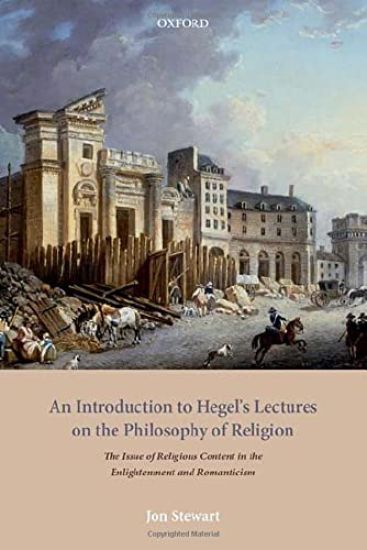
An Introduction to Hegel's Lectures on the Philosophy of Religion
An Introduction to Hegel's Lectures on the Philosophy of Religion examines Hegel's religious thinking by seeing it against the backdrop of the main religious trends in his own day, specifically the Enlightenment and Romanticism. A basic introduction to Hegel's lectures, it provides an account of the criticism of religion by key Enlightenment thinkers such as Voltaire, Lessing, Hume, and Kant. This is followed by an analysis of how the Romantic thinkers, such as Rousseau, Jacobi and Schleiermacher, responded to these challenges. For Hegel, the views of these thinkers from both the Enlightenment and Romanticism tended to empty religion of its content. The goal that he sets for his own philosophy of religion is to restore this lost content. The book provides a detailed account of Hegel's Lectures on the Philosophy of Religion and argues that the basic ideas of the Enlightenment and Romanticism are still present today, and remain an important issue for both academics and non-academics, regardless of their religious orientation.
Dylan, Lennon, Marx and God

Dylan, Lennon, Marx and God

Jon Stewart

Cambridge University Press
2021
sidottu
Bob Dylan and John Lennon are two of the most iconic names in popular music. Dylan is arguably the twentieth century's most important singer-songwriter. Lennon was founder and leader of the Beatles who remain, by some margin, the most covered songwriters in history. While Dylan erased the boundaries between pop and poetry, Lennon and his band transformed the genre's creative potential. The parallels between the two men are striking but underexplored. This book addresses that lack. Jon Stewart discusses Dylan's and Lennon's relationship; their politics; their understanding of history; and their deeply held spiritual beliefs. In revealing how each artist challenged the restrictive social norms of their day, the author shows how his subjects asked profound moral questions about what it means to be human and how we should live. His book is a potent meditation and exploration of two emblematic figures whose brilliance changed Western music for a generation.
Hegel's Century

Hegel's Century

Jon Stewart

Cambridge University Press
2021
sidottu
The remarkable lectures that Hegel gave in Berlin in the 1820s generated an exciting intellectual atmosphere which lasted for decades. From the 1830s, many students flocked to Berlin to study with people who had studied with Hegel, and both his original students, such as Feuerbach and Bauer, and later arrivals including Kierkegaard, Engels, Bakunin, and Marx, evolved into leading nineteenth-century thinkers. Jon Stewart's panoramic study of Hegel's deep influence upon the nineteenth century in turn reveals what that century contributed to the wider history of philosophy. It shows how Hegel's notions of 'alienation' and 'recognition' became the central motifs for the era's thinking; how these concepts spilled over into other fields – like religion, politics, literature, and drama; and how they created a cultural phenomenon so rich and pervasive that it can truly be called 'Hegel's century.' This book is required reading for historians of ideas as well as of philosophy.
Volume 18, Tome II: Kierkegaard Secondary Literature
In recent years interest in the thought of Kierkegaard has grown dramatically, and with it the body of secondary literature has expanded so quickly that it has become impossible for even the most conscientious scholar to keep pace. The problem of the explosion of secondary literature is made more acute by the fact that much of what is written about Kierkegaard appears in languages that most Kierkegaard scholars do not know. Kierkegaard has become a global phenomenon, and new research traditions have emerged in different languages, countries and regions. The present volume is dedicated to trying to help to resolve these two problems in Kierkegaard studies. Its purpose is, first, to provide book reviews of some of the leading monographic studies in the Kierkegaard secondary literature so as to assist the community of scholars to become familiar with the works that they have not read for themselves. The aim is thus to offer students and scholars of Kierkegaard a comprehensive survey of works that have played a more or less significant role in the research. Second, the present volume also tries to make accessible many works in the Kierkegaard secondary literature that are written in different languages and thus to give a glimpse into various and lesser-known research traditions. The six tomes of the present volume present reviews of works written in Catalan, Chinese, Czech, Danish, Dutch, English, Finnish, French, Galician, German, Greek, Hebrew, Hungarian, Italian, Japanese, Norwegian, Polish, Portuguese, Romanian, Russian, Slovak, Spanish, and Swedish.
Volume 15, Tome V: Kierkegaard's Concepts

Volume 15, Tome V: Kierkegaard's Concepts

Steven M. Emmanuel; William McDonald; Jon Stewart

Taylor Francis Ltd
2021
nidottu
Kierkegaard’s Concepts is a comprehensive, multi-volume survey of the key concepts and categories that inform Kierkegaard’s writings. Each article is a substantial, original piece of scholarship, which discusses the etymology and lexical meaning of the relevant Danish term, traces the development of the concept over the course of the authorship, and explains how it functions in the wider context of Kierkegaard’s thought. Concepts have been selected on the basis of their importance for Kierkegaard’s contributions to philosophy, theology, the social sciences, literature and aesthetics, thereby making this volume an ideal reference work for students and scholars in a wide range of disciplines.
Volume 15, Tome IV: Kierkegaard's Concepts

Volume 15, Tome IV: Kierkegaard's Concepts

Steven M. Emmanuel; William McDonald; Jon Stewart

Taylor Francis Ltd
2021
nidottu
Kierkegaard’s Concepts is a comprehensive, multi-volume survey of the key concepts and categories that inform Kierkegaard’s writings. Each article is a substantial, original piece of scholarship, which discusses the etymology and lexical meaning of the relevant Danish term, traces the development of the concept over the course of the authorship, and explains how it functions in the wider context of Kierkegaard’s thought. Concepts have been selected on the basis of their importance for Kierkegaard’s contributions to philosophy, theology, the social sciences, literature and aesthetics, thereby making this volume an ideal reference work for students and scholars in a wide range of disciplines.
Volume 18, Tome I: Kierkegaard Secondary Literature
In recent years interest in the thought of Kierkegaard has grown dramatically, and with it the body of secondary literature has expanded so quickly that it has become impossible for even the most conscientious scholar to keep pace. The problem of the explosion of secondary literature is made more acute by the fact that much of what is written about Kierkegaard appears in languages that most Kierkegaard scholars do not know. Kierkegaard has become a global phenomenon, and new research traditions have emerged in different languages, countries and regions. The present volume is dedicated to trying to help to resolve these two problems in Kierkegaard studies. Its purpose is, first, to provide book reviews of some of the leading monographic studies in the Kierkegaard secondary literature so as to assist the community of scholars to become familiar with the works that they have not read for themselves. The aim is thus to offer students and scholars of Kierkegaard a comprehensive survey of works that have played a more or less significant role in the research. Second, the present volume also tries to make accessible many works in the Kierkegaard secondary literature that are written in different languages and thus to give a glimpse into various and lesser-known research traditions. The six tomes of the present volume present reviews of works written in Catalan, Chinese, Czech, Danish, Dutch, English, Finnish, French, Galician, German, Greek, Hebrew, Hungarian, Italian, Japanese, Norwegian, Polish, Portuguese, Romanian, Russian, Slovak, Spanish, and Swedish.
Volume 15, Tome VI: Kierkegaard's Concepts

Volume 15, Tome VI: Kierkegaard's Concepts

Steven M. Emmanuel; William McDonald; Jon Stewart

Taylor Francis Ltd
2021
nidottu
Kierkegaard’s Concepts is a comprehensive, multi-volume survey of the key concepts and categories that inform Kierkegaard’s writings. Each article is a substantial, original piece of scholarship, which discusses the etymology and lexical meaning of the relevant Danish term, traces the development of the concept over the course of the authorship, and explains how it functions in the wider context of Kierkegaard’s thought. Concepts have been selected on the basis of their importance for Kierkegaard’s contributions to philosophy, theology, the social sciences, literature and aesthetics, thereby making this volume an ideal reference work for students and scholars in a wide range of disciplines.
Volume 17: Kierkegaard's Pseudonyms

Volume 17: Kierkegaard's Pseudonyms

Katalin Nun; Jon Stewart

Taylor Francis Ltd
2021
nidottu
One of the elements that many readers admire in Kierkegaard’s skill as a writer is his ability to create different voices and perspectives in his works. Instead of unilaterally presenting clear-cut doctrines and theses, he confronts the reader with a range of personalities and figures who all espouse different views. One important aspect of this play of perspectives is Kierkegaard’s controversial use of pseudonyms. The present volume is dedicated to exploring the different pseudonyms and authorial voices in Kierkegaard’s writing. The articles featured here try to explore each pseudonymous author as a literary figure and to explain what kind of a person is at issue in each of the pseudonymous works. The hope is that by taking seriously each of these figures as individuals, we will be able to gain new insights into the texts which they are ostensibly responsible for.
Volume 16, Tome II: Kierkegaard's Literary Figures and Motifs

Volume 16, Tome II: Kierkegaard's Literary Figures and Motifs

Katalin Nun; Jon Stewart

Taylor Francis Ltd
2021
nidottu
While Kierkegaard is perhaps known best as a religious thinker and philosopher, there is an unmistakable literary element in his writings. He often explains complex concepts and ideas by using literary figures and motifs that he could assume his readers would have some familiarity with. This dimension of his thought has served to make his writings far more popular than those of other philosophers and theologians, but at the same time it has made their interpretation more complex. Kierkegaard readers are generally aware of his interest in figures such as Faust or the Wandering Jew, but they rarely have a full appreciation of the vast extent of his use of characters from different literary periods and traditions. The present volume is dedicated to the treatment of the variety of literary figures and motifs used by Kierkegaard. The volume is arranged alphabetically by name, with Tome II covering figures and motifs from Gulliver to Zerlina.
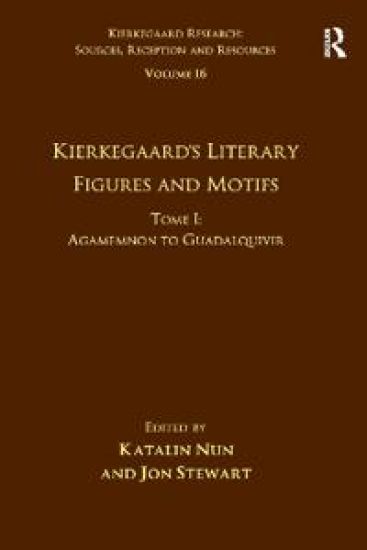
Volume 16, Tome I: Kierkegaard's Literary Figures and Motifs

Volume 16, Tome I: Kierkegaard's Literary Figures and Motifs

Katalin Nun; Jon Stewart

Taylor Francis Ltd
2021
nidottu
While Kierkegaard is perhaps known best as a religious thinker and philosopher, there is an unmistakable literary element in his writings. He often explains complex concepts and ideas by using literary figures and motifs that he could assume his readers would have some familiarity with. This dimension of his thought has served to make his writings far more popular than those of other philosophers and theologians, but at the same time it has made their interpretation more complex. Kierkegaard readers are generally aware of his interest in figures such as Faust or the Wandering Jew, but they rarely have a full appreciation of the vast extent of his use of characters from different literary periods and traditions. The present volume is dedicated to the treatment of the variety of literary figures and motifs used by Kierkegaard. The volume is arranged alphabetically by name, with Tome I covering figures and motifs from Agamemnon to Guadalquivir.
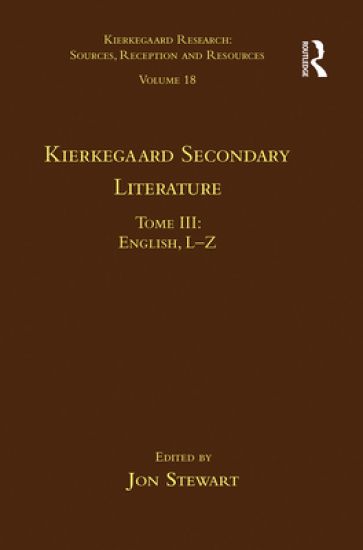
Volume 18, Tome III: Kierkegaard Secondary Literature
In recent years interest in the thought of Kierkegaard has grown dramatically, and with it the body of secondary literature has expanded so quickly that it has become impossible for even the most conscientious scholar to keep pace. The problem of the explosion of secondary literature is made more acute by the fact that much of what is written about Kierkegaard appears in languages that most Kierkegaard scholars do not know. Kierkegaard has become a global phenomenon, and new research traditions have emerged in different languages, countries and regions. The present volume is dedicated to trying to help to resolve these two problems in Kierkegaard studies. Its purpose is, first, to provide book reviews of some of the leading monographic studies in the Kierkegaard secondary literature so as to assist the community of scholars to become familiar with the works that they have not read for themselves. The aim is thus to offer students and scholars of Kierkegaard a comprehensive survey of works that have played a more or less significant role in the research. Second, the present volume also tries to make accessible many works in the Kierkegaard secondary literature that are written in different languages and thus to give a glimpse into various and lesser-known research traditions. The six tomes of the present volume present reviews of works written in Catalan, Chinese, Czech, Danish, Dutch, English, Finnish, French, Galician, German, Greek, Hebrew, Hungarian, Italian, Japanese, Norwegian, Polish, Portuguese, Romanian, Russian, Slovak, Spanish, and Swedish.
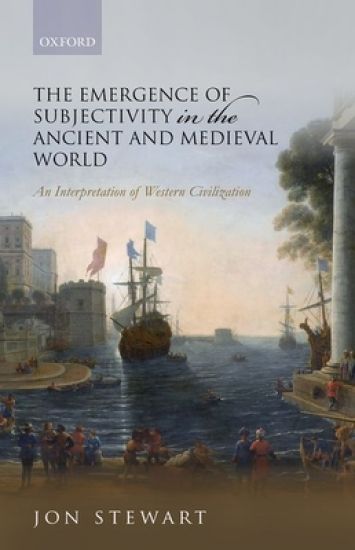
The Emergence of Subjectivity in the Ancient and Medieval World
The Emergence of Subjectivity in the Ancient and Medieval World: An Interpretation of Western Civilization represents a combination of different genres: cultural history, philosophical anthropology, and textbook. It follows a handful of different but interrelated themes through more than a dozen texts that were written over a period of several millennia and, by means of an analysis of these texts, presents a theory of the development of Western civilization from antiquity to the Middle Ages. The main line of argument traces the various self-conceptions of different cultures as they developed historically, reflecting different views of what it is to be human. The thesis of the volume is that through examination of these changes we can discern the gradual emergence of what we today call inwardness, subjectivity, and individual freedom. As human civilization took its first tenuous steps, it had a very limited conception of the individual. Instead, the dominant principle was that of the wider group: the family, clan, or people. Only in the course of history did the idea of what we now know as individuality begin to emerge, and it took millennia for this idea to be fully recognized and developed. The conception of human beings as having a sphere of inwardness and subjectivity subsequently had a sweeping impact on all aspects of culture, including philosophy, religion, law, and art: indeed, this notion largely constitutes what is today referred to as modernity. It is easy to lose sight of the fact that this modern conception of human subjectivity was not simply something given, but rather the result of a long process of historical and cultural development.