Kirjojen hintavertailu. Mukana 12 292 806 kirjaa ja 12 kauppaa.

Kirjailija

Jon Stobart

Kirjat ja teokset yhdessä paikassa: 13 kirjaa, julkaisuja vuosilta 2000-2026, suosituimpien joukossa Sugar and Spice. Vertaile teosten hintoja ja tarkista saatavuus suomalaisista kirjakaupoista.

13 kirjaa

Kirjojen julkaisuhaarukka 2000-2026.

Auctions and the Consumption of Second-Hand Goods in Georgian England

Auctions and the Consumption of Second-Hand Goods in Georgian England

Sara Pennell; Jon Stobart

BLOOMSBURY PUBLISHING PLC
2026
sidottu
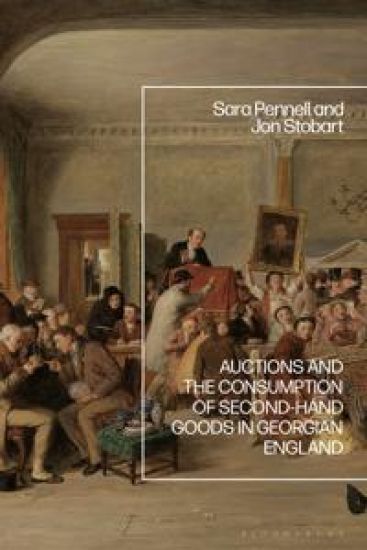
This book provides the first comprehensive examination of household auctions as the key mechanism for recirculating household goods through the 18th and early 19th century. In focusing on household auctions, Sara Pennell and Jon Stobart contextualise and historicise the importance of used goods to consumer choices, experiences and identities. They tell the stories of the people and things, as well as the broader processes, practices and attitudes that were bound up in the commercial recirculation of used goods through auctions. Auctions and the Consumption of Used Goods in Georgian England rebalances the historiography of second-hand consumption – currently dominated by used clothing on the one hand, and the sale of books, art and antiques on the other – and brings second-hand into the mainstream of household consumption. It also explodes the twin myths that second-hand was the last resort of the poor and that it declined rapidly as Britain industrialised and the supply of new consumer goods increased; in reality, household auctions remained vibrant and important mechanisms of supply. Finally, the book demonstrates that consumer motivations were far more complex than simple financial necessity; the reasons for buying second-hand varied between households and according to the type of goods being bought – thrift, utility and the construction of identity all played a part. Household auctions did not fade to the margins; they remained an important part of how households acquired a wide variety of goods and fulfilled a variety of consumer needs.
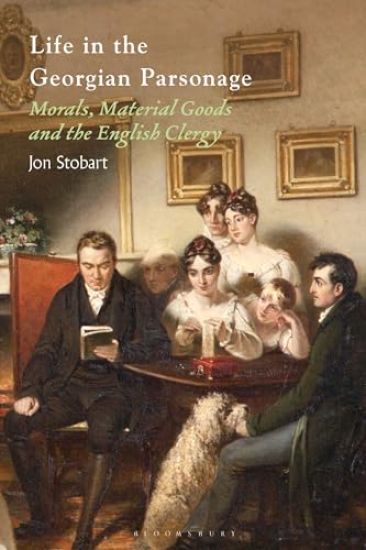
Life in the Georgian Parsonage

Life in the Georgian Parsonage

Jon Stobart

BLOOMSBURY PUBLISHING PLC
2025
sidottu
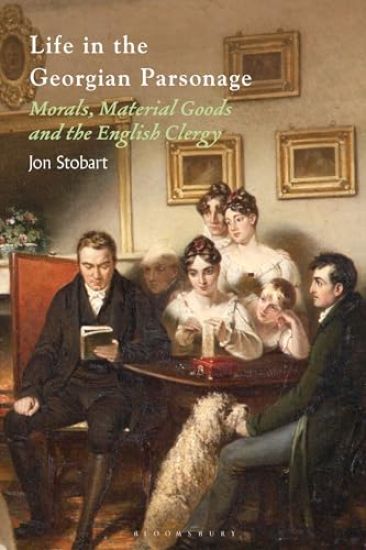
An innovative approach in the field of material culture and consumption studies, Life in the Georgian Parsonage looks at the houses, consumption and lifestyle of Church of England clergy in the long 18th century, linking moral debates and popular representations of the clergy to the material culture of their houses and their motivations as consumers. By focusing on ethical and moral dimensions of consumer practices, it challenges established readings of consumption in the long 18th century as an essentially secular process in which goods were markers of wealth, status and taste, by bringing the clergyman into the frame – their lives, their habits and their homes. Cross-disciplinary in its approach, combining material culture and religious and social history and sitting at the intersection of these fields, Life in the Georgian Parsonage fills a significant gap, enhancing in important ways our knowledge of this group as a crucial but understudied set of 18th-century consumers, while also contributing to understanding the parish clergy of England in the context of 18th-century society and culture. Bringing together a wide range of source material – from probate inventories to personal account books, satirical prints to sermons, diaries to designs for parsonages – the author reconstructs the material lives and household arrangements of the Georgian clergy in glorious detail. Examining the parish clergy over this period of profound social and religious change through the lens of consumption, and consumption through the lives of these clergymen, has a transformative impact both on these areas of enquiry and on our understanding of English society in the 18th century.
Life in the Georgian Parsonage

Life in the Georgian Parsonage

Jon Stobart

BLOOMSBURY PUBLISHING PLC
2025
nidottu
An innovative approach in the field of material culture and consumption studies, Life in the Georgian Parsonage looks at the houses, consumption and lifestyle of Church of England clergy in the long 18th century, linking moral debates and popular representations of the clergy to the material culture of their houses and their motivations as consumers. By focusing on ethical and moral dimensions of consumer practices, it challenges established readings of consumption in the long 18th century as an essentially secular process in which goods were markers of wealth, status and taste, by bringing the clergyman into the frame – their lives, their habits and their homes. Cross-disciplinary in its approach, combining material culture and religious and social history and sitting at the intersection of these fields, Life in the Georgian Parsonage fills a significant gap, enhancing in important ways our knowledge of this group as a crucial but understudied set of 18th-century consumers, while also contributing to understanding the parish clergy of England in the context of 18th-century society and culture. Bringing together a wide range of source material – from probate inventories to personal account books, satirical prints to sermons, diaries to designs for parsonages – the author reconstructs the material lives and household arrangements of the Georgian clergy in glorious detail. Examining the parish clergy over this period of profound social and religious change through the lens of consumption, and consumption through the lives of these clergymen, has a transformative impact both on these areas of enquiry and on our understanding of English society in the 18th century.
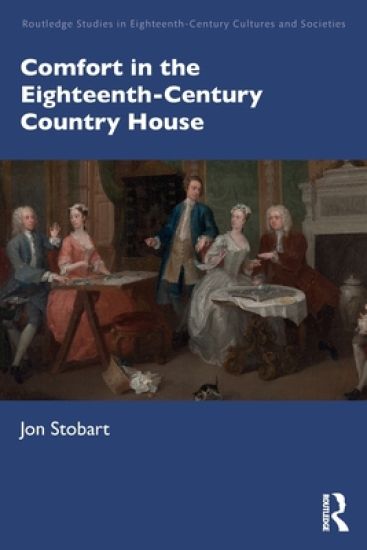
Comfort in the Eighteenth-Century Country House
Country houses were grand statements of power and status, but they were also places where people lived. This book traces the changes in layout, the new technologies, and the innovations in furniture that made them more convenient and comfortable. It argues that these material changes were just one aspect of comfort in the country house: feeling comfortable was just as important as being comfortable. Achieving this involved the comfort and solace to be found in daily routines, religious faith and, above all, relationships with family and friends. Such emotional comforts, and the attachment to things and places that embodied and memorialized them, made country houses into homes.
Comfort in the Eighteenth-Century Country House
Country houses were grand statements of power and status, but they were also places where people lived. This book traces the changes in layout, the new technologies, and the innovations in furniture that made them more convenient and comfortable. It argues that these material changes were just one aspect of comfort in the country house: feeling comfortable was just as important as being comfortable. Achieving this involved the comfort and solace to be found in daily routines, religious faith and, above all, relationships with family and friends. Such emotional comforts, and the attachment to things and places that embodied and memorialized them, made country houses into homes.
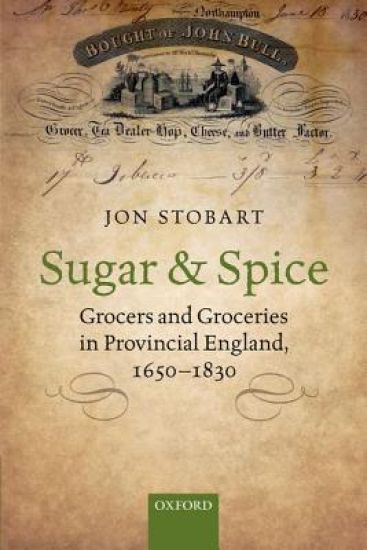
Sugar and Spice

Sugar and Spice

Jon Stobart

Oxford University Press
2016
nidottu
Consumers in eighteenth-century England were firmly embedded in an expanding world of goods, one that incorporated a range of novel foods (tobacco, chocolate, coffee, and tea) and new supplies of more established commodities, including sugar, spices, and dried fruits. Much has been written about the attraction of these goods, which went from being novelties or expensive luxuries in the mid-seventeenth century to central elements of the British diet a century or so later. They have been linked to the rise of Britain as a commercial and imperial power, whilst their consumption is seen as transforming many aspects of British society and culture, from mealtimes to gender identity. Despite this huge significance to ideas of consumer change, we know remarkably little about the everyday processes through which groceries were sold, bought, and consumed. In tracing the lines of supply that carried groceries from merchants to consumers, Sugar and Spice reveals not only how changes in retailing and shopping were central to the broader transformation of consumption and consumer practices, but also questions established ideas about the motivations underpinning consumer choices. It demonstrates the dynamic nature of eighteenth-century retailing; the importance of advertisements in promoting sales and shaping consumer perceptions, and the role of groceries in making shopping an everyday activity. At the same time, it shows how both retailers and their customers were influenced by the practicalities and pleasures of consumption. They were active agents in consumer change, shaping their own practices rather than caught up in a single socially-inclusive cultural project such as politeness or respectability.
Urban Fortunes

Urban Fortunes

Jon Stobart; Alastair Owens

Routledge
2016
nidottu
Property is central to any historical analyses of production, reproduction and consumption. It lies at the heart of discussions of material culture, class relations and the household economy. Recent work has begun to look beyond the acquisition and possession of goods to examine what the disposal, transmission and giving of property might tell us about changing society and culture. This landmark collection of articles represents a wide range of approaches to and perspectives on the ownership, use and transmission of property in eighteenth and nineteenth-century towns. An introductory essay highlights the importance of property and inheritance in shaping social, cultural, economic and political structures and interactions within and between towns and cities. Writing from a variety of disciplinary backgrounds, the contributors then explore in detail the changing meaning of property to households and individuals; the social, economic and geographical contexts of inheritance practices; the geography of wealth; the role of gender in shaping property relations and, perhaps above all, the enduring link between property, the family and the household in urban contexts.
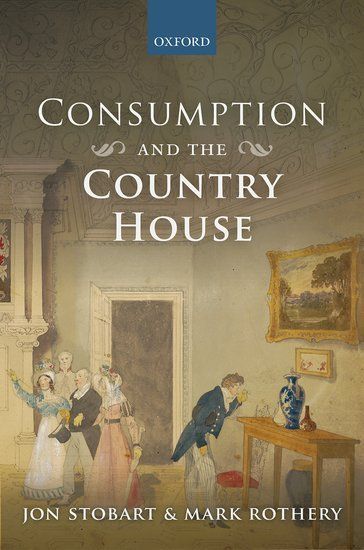
Consumption and the Country House

Consumption and the Country House

Jon Stobart; Mark Rothery

Oxford University Press
2016
sidottu
This study explores the consumption practices of the landed aristocracy of Georgian England. Focussing on three families and drawing on detailed analysis of account books, receipted bills, household inventories, diaries and correspondence, Consumption and the Country House charts the spending patterns of this elite group during the so-called consumer revolution of the eighteenth century. Generally examined through the lens of middling families, homes and motivations, this book explores the ways in which the aristocracy were engaged in this wider transformation of English society. Analysis centres on the goods that the aristocracy purchased, both luxurious and mundane; the extent to which they pursued fashionable modes and goods; the role that family and friends played in shaping notions of taste; the influence of gender on taste and refinement; the geographical reach of provisioning and the networks that lay behind this consumer activity, and the way this all contributed to the construction of the country house. The country house thus emerges as much more than a repository of luxury and splendour; it lay at the heart of complex networks of exchange, sociability, demand, and supply. Exploring these processes and relationships serves to reanimate the country house, making it an active site of consumption rather than simply an expression of power and taste, and drawing it into the mainstream of consumption histories. At the same time, the landed aristocracy are shown to be rounded consumers, driven by values of thrift and restraint as much as extravagant desires, and valuing the old as well as the new, not least as markers of their pedigree and heritance.
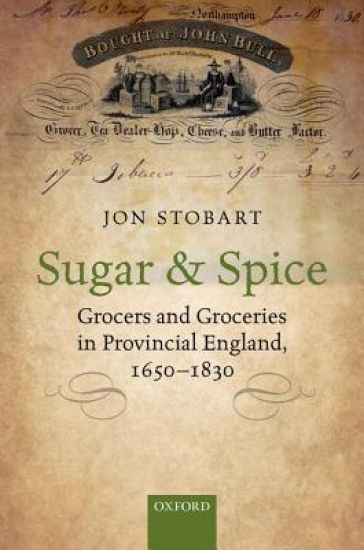
Sugar and Spice

Sugar and Spice

Jon Stobart

Oxford University Press
2012
sidottu
Consumers in eighteenth-century England were firmly embedded in an expanding world of goods, one that incorporated a range of novel foods (tobacco, chocolate, coffee, and tea) and new supplies of more established commodities, including sugar, spices, and dried fruits. Much has been written about the attraction of these goods, which went from being novelties or expensive luxuries in the mid-seventeenth century to central elements of the British diet a century or so later. They have been linked to the rise of Britain as a commercial and imperial power, whilst their consumption is seen as transforming many aspects of British society and culture, from mealtimes to gender identity. Despite this huge significance to ideas of consumer change, we know remarkably little about the everyday processes through which groceries were sold, bought, and consumed. In tracing the lines of supply that carried groceries from merchants to consumers, Sugar and Spice reveals how changes in retailing and shopping were central to the broader transformation of consumption and consumer practices, but also questions established ideas about the motivations underpinning consumer choices. It demonstrates the dynamic nature of eighteenth-century retailing; the importance of advertisements in promoting sales and shaping consumer perceptions, and the role of groceries in making shopping an everyday activity. At the same time, it shows how both retailers and their customers were influenced by the practicalities and pleasures of consumption. They were active agents in consumer change, shaping their own practices rather than caught up in a single socially-inclusive cultural project such as politeness or respectability.
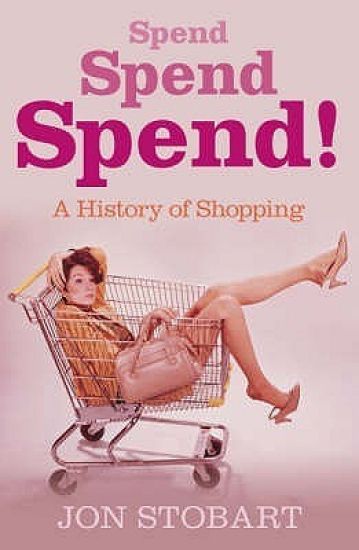
Spend Spend Spend

Spend Spend Spend

Jon Stobart

The History Press Ltd
2008
sidottu
In 1961, Viv Nicholson, a Yorkshire housewife, won £152,319 on the Pools. Asked what she would do with the money, her answer was simple: ‘I’m going to spend, spend, spend!’ The speed with which she got through the money – buying sports cars, furs and jewellery, and getting through five husbands – before spiralling downwards through alcoholism and bankruptcy, is often seen as a modern parable about the evils of consumerism. Yet what is it that makes us a nation of shoppers? How did the high street originate? What and where was the very first shop? What is the role of the supermarket and how has it affected the way we buy? All these questions and more are answered in Jon Stobart’s fascinating new book on the history of shopping, from the Middle Ages to the present day. Delving into the history of Britons as shoppers, Spend, Spend, Spend is a must-read for all self-confessed shopaholics.
Spaces of Consumption

Spaces of Consumption

Jon Stobart; Andrew Hann; Victoria Morgan

Routledge
2007
sidottu
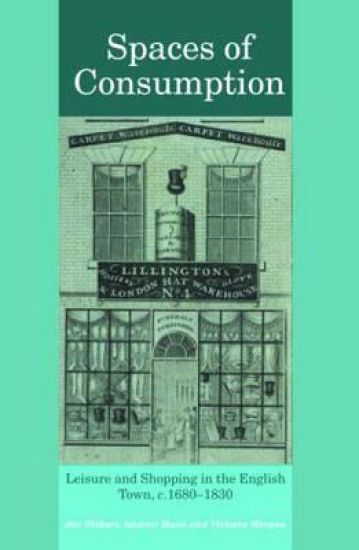
Consumption is well established as a key theme in the study of the eighteenth century. Spaces of Consumption brings a new dimension to this subject by looking at it spatially. Taking English towns as its scene, this inspiring study focuses on moments of consumption – selecting and purchasing goods, attending plays, promenading – and explores the ways in which these were related together through the spaces of the town: the shop, the theatre and the street. Using this fresh form of analysis, it has much to say about sociability, politeness and respectability in the eighteenth century.
Spaces of Consumption

Spaces of Consumption

Jon Stobart; Andrew Hann; Victoria Morgan

Routledge
2007
nidottu
Consumption is well established as a key theme in the study of the eighteenth century. Spaces of Consumption brings a new dimension to this subject by looking at it spatially. Taking English towns as its scene, this inspiring study focuses on moments of consumption – selecting and purchasing goods, attending plays, promenading – and explores the ways in which these were related together through the spaces of the town: the shop, the theatre and the street. Using this fresh form of analysis, it has much to say about sociability, politeness and respectability in the eighteenth century.
Urban Fortunes

Urban Fortunes

Jon Stobart; Alastair Owens

Ashgate Publishing Limited
2000
sidottu
Property is central to any historical analyses of production, reproduction and consumption. It lies at the heart of discussions of material culture, class relations and the household economy. Recent work has begun to look beyond the acquisition and possession of goods to examine what the disposal, transmission and giving of property might tell us about changing society and culture. This landmark collection of articles represents a wide range of approaches to and perspectives on the ownership, use and transmission of property in eighteenth and nineteenth-century towns. An introductory essay highlights the importance of property and inheritance in shaping social, cultural, economic and political structures and interactions within and between towns and cities. Writing from a variety of disciplinary backgrounds, the contributors then explore in detail the changing meaning of property to households and individuals; the social, economic and geographical contexts of inheritance practices; the geography of wealth; the role of gender in shaping property relations and, perhaps above all, the enduring link between property, the family and the household in urban contexts.