Kirjojen hintavertailu. Mukana 12 595 353 kirjaa ja 12 kauppaa.

Kirjailija

Jon Sundbo

Kirjat ja teokset yhdessä paikassa: 6 kirjaa, julkaisuja vuosilta 1998-2021, suosituimpien joukossa Service Management. Vertaile teosten hintoja ja tarkista saatavuus suomalaisista kirjakaupoista.

6 kirjaa

Kirjojen julkaisuhaarukka 1998-2021.

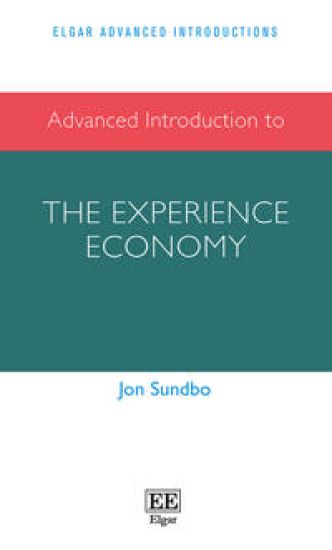
Advanced Introduction to the Experience Economy

Advanced Introduction to the Experience Economy

Jon Sundbo

Edward Elgar Publishing Ltd
2021
sidottu
Elgar Advanced Introductions are stimulating and thoughtful introductions to major fields in the social sciences, business and law, expertly written by the world’s leading scholars. Designed to be accessible yet rigorous, they offer concise and lucid surveys of the substantive and policy issues associated with discrete subject areas.Offering an extensive and coherent presentation of theory on the experience economy, this stimulating Advanced Introduction discusses what experiencing is and why people are seeking experiences. Jon Sundbo defines the experience concept in contrast to similar concepts such as culture and creative economies, and presents measurements of the value of the experience economy.Key features include:Analysis of how experiences are replacing services and knowledge as a key driver for the economyDiscussion of the future of the experience economy and the impacts Covid-19 may have on thisDifferent perspectives on the experience economy including ones from: evolutionary economics, micro-economics, psychology, marketing, innovation and production, sociology and digitalization.Concise and invigorating, this Advanced Introduction will be a helpful read for marketing, economics, tourism, culture studies and management scholars looking for a stronger theoretical understanding of the experience economy. It will also be interesting to data science scholars, including those focusing on web and social media construction.
Advanced Introduction to the Experience Economy

Advanced Introduction to the Experience Economy

Jon Sundbo

Edward Elgar Publishing Ltd
2021
nidottu
Elgar Advanced Introductions are stimulating and thoughtful introductions to major fields in the social sciences, business and law, expertly written by the world’s leading scholars. Designed to be accessible yet rigorous, they offer concise and lucid surveys of the substantive and policy issues associated with discrete subject areas.Offering an extensive and coherent presentation of theory on the experience economy, this stimulating Advanced Introduction discusses what experiencing is and why people are seeking experiences. Jon Sundbo defines the experience concept in contrast to similar concepts such as culture and creative economies, and presents measurements of the value of the experience economy.Key features include:Analysis of how experiences are replacing services and knowledge as a key driver for the economyDiscussion of the future of the experience economy and the impacts Covid-19 may have on thisDifferent perspectives on the experience economy including ones from: evolutionary economics, micro-economics, psychology, marketing, innovation and production, sociology and digitalization.Concise and invigorating, this Advanced Introduction will be a helpful read for marketing, economics, tourism, culture studies and management scholars looking for a stronger theoretical understanding of the experience economy. It will also be interesting to data science scholars, including those focusing on web and social media construction.
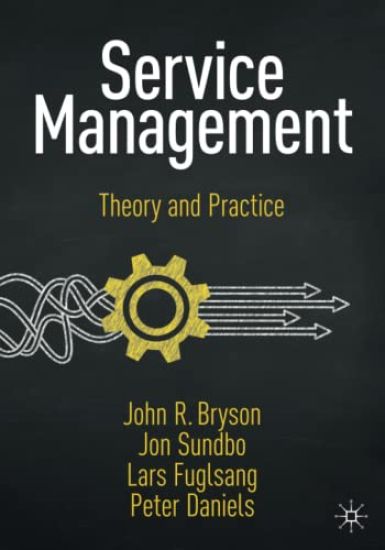
Service Management

Service Management

John R. Bryson; Jon Sundbo; Lars Fuglsang; Peter Daniels

Springer Nature Switzerland AG
2020
nidottu
This textbook offers a fully integrated approach to the theory and practice of service management, exploring the operational dynamics, management issues and business models deployed by service firms. It builds on recent developments in service science as an interdisciplinary research area with emphasis on integration, adaptability, optimization, sustainability and rapid technological adoption. The book explores seven fundamental processes that are key to successfully managing service businesses, helping students gain insights into: how to manage service businesses, with coverage of both small firms and large transnationalsservice business models, operations and productivitymanaging service employeeshow service firms engage in product and process innovationmarketing, customers and service experiencesinternationalization of service businessesthe ongoing servitization of manufacturing This unique textbook is an ideal resource for upper undergraduate and postgraduate students studying service businesses and practitioners.
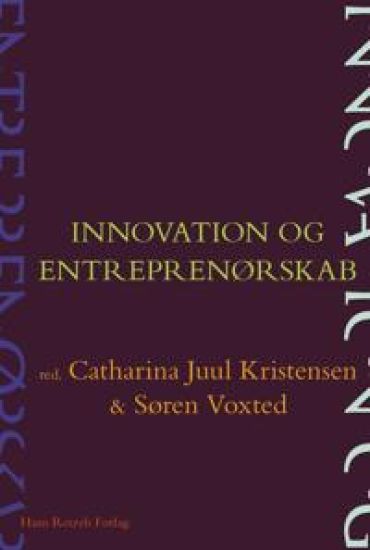
Innovation og entreprenørskab

Innovation og entreprenørskab

Annemette Digmann; Jon Sundbo; Søren Voxted; Catharina Juul Kristensen; Lene Tanggaard Pedersen; Annabeth Aagaard; Martin Senderovitz; Jesper Piihl; Kim Haugbølle; Marianne Forman; Kristian Nagel Delica; Birgit Jæger

Gyldendal
2011
sidottu
Innovation og entreprenørskab er i høj grad modebegreber, men det er også begreber, som bliver mere og mere indarbejdede i den private, offentlige og tredje sektor. Begreberne bruges også anvendelsesorienteret, bl.a. som egentlige styrings- og forandringsteknologier. Bogens forfattere bidrager med kapitler til den teoretiske nytænkning inden for forskningen i innovation og entreprenørskab. Innovationsprocesser, udnyttelse af innovative ideer og entreprenørielle muligheder undersøges på ny, og begreber redefineres. Bogens målgruppe er studerende på mellemlange og lange videregående uddannelser inden for innovation, kreativitet og entreprenørskab. Catharina Juul Kristensen er cand.scient.adm., ph.d. og lektor på Institut for Samfund og Globalisering, RUC. Søren Voxted er cand.merc., ph.d. og lektor på Institut for Ledelse og Virksomhedsstrategi, Syddansk Universitet.
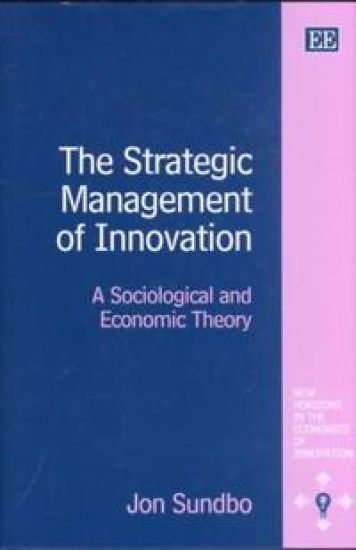
The Strategic Management of Innovation

The Strategic Management of Innovation

Jon Sundbo

Edward Elgar Publishing Ltd
2001
sidottu
This book deals with the complex social process of managing an innovative organization. Jon Sundbo presents an original sociology-based theory of innovation in firms which combines developments in markets and other environments with internal organizational processes. The fundamental concept of this theory is understanding innovation processes in the context of strategy. The author regards strategy as both an interpretation of environmental developments and an instrument for managing the innovation process. The book takes an evolutionary perspective and combines an 'out-in' approach (the market situation determines innovations) with an 'in-out' approach (internal organizational processes and entrepreneurship determine innovations). In both cases the implementation of strategy is closely studied and its role as a social process within the firm is emphasised. Significantly, the author combines economic and sociological factors and presents a series of models of the innovation process which are based on empirical studies. The book concludes with a model of macro-innovation factors.Presenting an original theory of innovation within a strategic paradigm, this book will be required reading for all students and academics of economics and business, as well as management consultants and those interested in industrial organization.
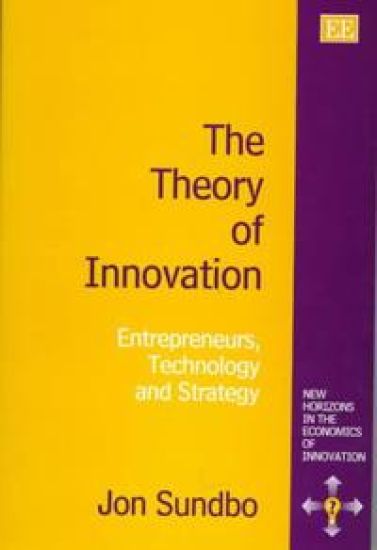
The Theory of Innovation

The Theory of Innovation

Jon Sundbo

Edward Elgar Publishing Ltd
1998
sidottu
This important book presents for the first time a coherent analysis of the development of innovation theory from the nineteenth century to the present day. It examines the emergence of different theories of innovation in different periods, and how they compete for dominance today. Specifically, it looks at three paradigms within innovation theory - entrepreneurship, the rise of technology, and strategic behaviour.The book begins by discussing what innovation is and how innovation processes are to be understood within the historical perspective of long wave theory. Jon Sundbo then investigates the contribution of each of the following three paradigms, their inter-relationships and implications at the micro level. He considers entrepreneurs as individuals who have implemented or gained independence through their ideas. Historically, these would be the founders of enterprises, while the modern counterparts may be in companies that already exist. Secondly he addresses technology as a determinant of innovation, emphasizing the relations technology has with organizational and social factors. Thirdly, the author looks at strategic behaviour and the ability to recognize market opportunities and management processes for business strategies. Finally, he discusses the possibility of the three paradigms merging, how they differentiate and how they may be used in future innovation research.This important book will be essential reading for academics interested in innovation, technology and industrial organization.