
Kirjailija
Jon Wood
Kirjat ja teokset yhdessä paikassa: 8 kirjaa, julkaisuja vuosilta 2020-2025, suosituimpien joukossa Tony Cragg: Points of View. Vertaile teosten hintoja ja tarkista saatavuus suomalaisista kirjakaupoista.
8 kirjaa
Kirjojen julkaisuhaarukka 2020-2025.
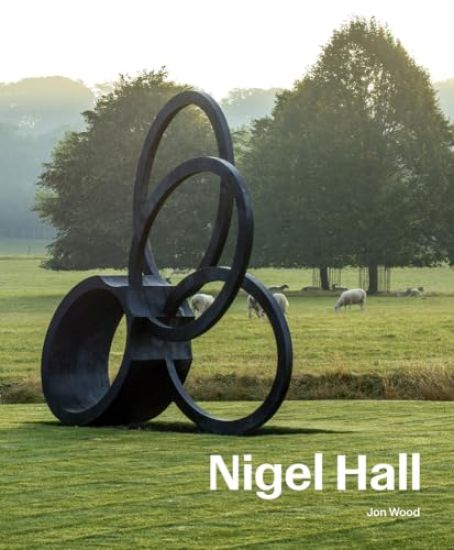
Nigel Hall: Sculpture & Drawings is an ambitious monograph which looks at his work in relation to sculptural developments in Britain, Europe and North America. It presents the two main strands of Hall's practice - sculpture and drawing - as distinct but also interrelated. Line and space are central to Hall's work, with the artist creating highly refined two- and three-dimensional works that deploy a range of geometrical forms. The works he makes are always meticulous and measured, whilst offering intuitive visual conundrums that encourage looking and thinking. Unpicking the complexities of Hall's work and its display both indoors and outdoors, Wood provides the definitive narrative of one of Britain's most accomplished sculptors working today.
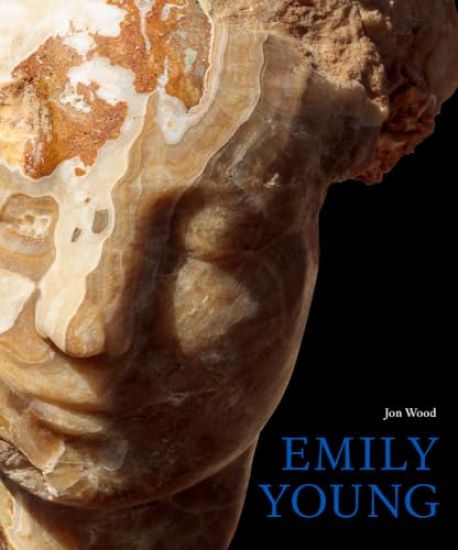
Exploring Emily Young’s carved works from the 1980s to the present, Jon Wood’s thoughtful survey places her sculpture within its resonant contexts, both art historical and more broadly cultural. In doing so, it draws attention to the richness of her sculptural imagination and the issues that charge it, from ecology and environmentalism to poetry and philosophy. The inclusion of Young's early paintings also draws out her long-standing preoccupation with narrative. Probing the relationship between the artist's sculpture and the material life of things, Young's original way of thinking, seeing and feeling is skilfully presented, so enriching our understanding of this important contemporary figure.

The artist Michael Sandle (b. 1936) is well known for his powerful and uncompromising sculptures such as A Twentieth Century Memorial (1971-78), The Drummer (1985) and Iraq: The Sound of Your Silence (2009). Sandle has also been a very prolific draughtsman over the years, making a large number of prints and drawings, both in relation to his sculpture and also apart from it. This new publication looks closely at his works on paper across his whole career. It presents his two-dimensional work from his early years whilst training at Douglas School of Art (1951-54), at the Slade School of Art (1956-59), where he studied painting and printing, and at the Atelier Patris in Paris (1960), right up to the present day. Alongside lithographs and etchings, it shows pages from his sketchbooks and many medium and larger format drawings. The book begins with a new and extensive ‘in conversation’ conducted between Sandle and the art historian and curator Jon Wood that looks in detail at the interconnected lives led by his prints, drawings and sculptures over the last sixty years. Their discussion focusses on the materials and techniques the artist has used, as well as on the subjects, concerns and contexts of this extraordinary body of work.
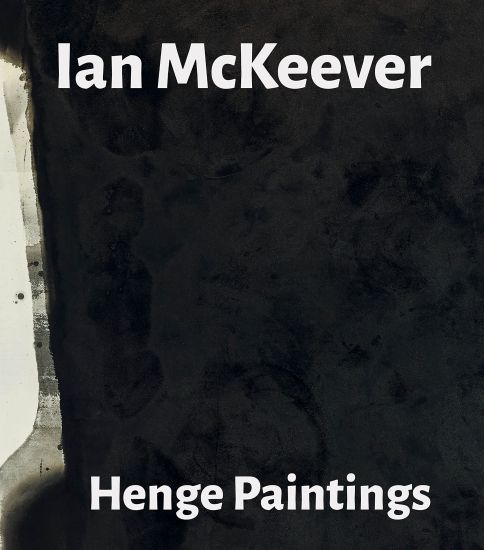
Ian McKeever – Henge Paintings
Ian McKeever; Paul Moorhouse; Jon Wood
Anomie Publishing
2022
nidottu
With a career spanning more than five decades, Ian McKeever is one of Britain’s most senior artists working on the international stage. This publication documents the Henge paintings – a series started in 2017 and completed over the course of five years, inspired by prehistoric standing stones in the county of Wiltshire, England, and continuing the artist’s long-standing investigation into the languages and possibilities of abstract painting.Comprising thirty paintings along with numerous works on paper, the genesis of the series was a visit by McKeever to the world-famous neolithic site in the village of Avebury in 2016, where he took black and white photographs of the large stones that form three discrete circles: two smaller ones contained within the largest. Erected some 4500 years ago, Avebury is the largest stone circle in Britain, and forms part of what English Heritage asserts to be ‘a set of neolithic and Bronze Age ceremonial sites that seemingly formed a vast sacred landscape.’Art historian and curator Paul Moorhouse, in his essay commissioned for the publication, describes how McKeever ‘framed each megalith in close-up, their edges visible at the extremity of the resulting images,’ explaining how ‘the experience of moving around Avebury and responding to the huge stones’ monumental presence made an abiding impression that resonated with deep-seated preoccupations.’ McKeever’s resulting body of work is an earnest and considered exploration into how paint can convey universal forces and properties such as mass, gravity and time, and how colour, texture and abstraction can converse with three-dimensional space, form and materiality. The relationship between painting and sculpture in McKeever’s work is discussed by means of an in-conversation between the artist and Dr Jon Wood. ‘My interest in alluding to early megalithic sites in titling the group of paintings Henge paintings,’ says McKeever, ‘was in touching that deeper sense of time, time’s weight, so to speak. How to imbue a painting with its own weight of time, forsake the immediacy of the here and now.’Designed and produced by Tim Harvey, the publication has been printed by Narayana Press in Odder, Denmark. It is published by Anomie, London, with support from Galleri Susanne Ottesen, Copenhagen, and Heather Gaudio Fine Art, New Canaan, Connecticut. The publication accompanies exhibitions of selected works from the Henge paintings at both galleries in 2022.Ian McKeever was born 1946, Withernsea, Yorkshire, UK. He lives and works in Hartgrove, Dorset. McKeever has received numerous awards including the prestigious DAAD scholarship in Berlin 1989/90 and was elected a Royal Academician in 2003. He has held several teaching positions including Guest Professor at the Städel Akademie der Kunst in Frankfurt, Senior Lecturer, Slade, University of London and Visiting Professor at the University of Brighton. He has also published many texts on painting.Recent public solo exhibitions include Ian McKeever / Tony Cragg – Painting and Sculpture, Skulpturenpark Waldfrieden, Wuppertal, Germany (2020); Paintings 1992–2018, Ferens Art Gallery, Hull, UK (2018); Hours of Darkness, Hours of Light, Kunstmuseet i Tønder, Denmark (2015); Between Darkness and Light, National Gallery of the Faroe Islands, Tórshavn, Faroe Islands (2015); Hours of Darkness, Hours of Light, Kunst-Station Sankt Peter Ko¨ln, Cologne, Germany (2014); and Hartgrove. Malerei und Fotografie, Josef Albers Museum, Bottrop, Germany (2012). McKeever’s work is represented in leading international public collections, including Tate, British Museum, Royal Academy of Arts, London; Museum Moderner Kunst (mumok), Vienna; Museum of Fine Arts, Budapest; Louisiana Museum of Modern Art, Humlebæk; Glyptotek, Copenhagen; Museum of Contemporary Art, Helsinki; Brooklyn Museum of Art, New York; Metropolitan Museum of Art, New York; Boston Museum of Fine Art and Yale Center for British Art, Connecticut.

Rhythm and Geometry: Constructivist art in Britain since 1951 celebrates the dynamic abstract and constructed art made and exhibited in Britain over a seventy-year period. Including constructed reliefs and sculpture, kinetic and participatory art, painting and printmaking, the publication explains the dialogue and collaboration between artists working in radical ways across the generations to continually reinvent Constructivist art.Rhythm and Geometry is drawn from the collection at the Sainsbury Centre, University of East Anglia.Featured artists include Robert Adams, Rana Begum, Charles Biederman, Lygia Clark, Natalie Dower, Stephen Gilbert, Adrian Heath, Anthony Hill, Kenneth Martin, Mary Martin, Victor Pasmore, Jean Spencer, Takis, Victor Vasarely, Mary Webb, Stephen Willats, Gillian Wise and Li Yuan-Chia.
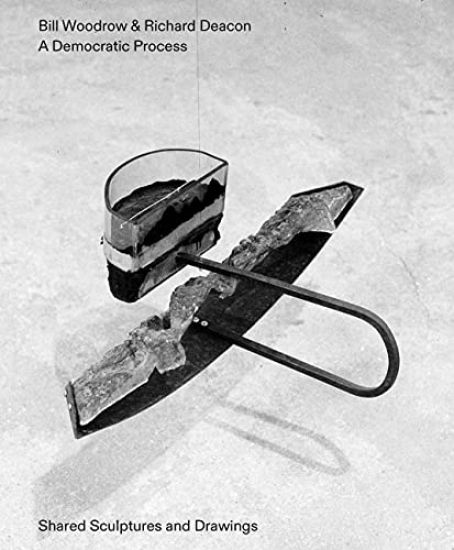
Bill Woodrow & Richard Deacon - a Democratic Process: Shared Sculptures and Drawings
Bill Woodrow; Richard Deacon; Jon Wood
Anomie Publishing
2021
nidottu
Bill Woodrow (b.1948) and Richard Deacon (b.1949) have been making sculpture together since 1990. This new book is the first to showcase the work made over this thirty-year period. They have created over sixty works altogether which they call 'shared sculptures', highlighting the important equality of authorship and responsibility at stake for both these artists.Their shared sculptures exist as five main bodies of work, which have been variously shown in exhibitions in Britain and abroad: 'Only the Lonely' (1993), 'monuments' (1999), 'Lead Astray' (2004), 'On the Rocks' (2008) and 'Don't Start' (2016). Their recent body of work, 'We Thought About It A Lot' (2021), has seen them working on paper to explore their ideas together. This new book provides a rich visual account of these works, showing new and original photographs of them individually and in their exhibition contexts. It also includes studio photographs, images of the preview cards that they have designed for exhibitions over the years and reproduces one of their earlier fax exchanges. The publication features an introductory essay by the art historian and curator Jon Wood and is released to coincide with the artists' latest two-person exhibition, 'We Thought About It A Lot, and other shared drawings' at Ikon, Birmingham, in autumn 2021.Bill Woodrow (b.1948) has exhibited internationally, representing Britain at biennales in Sydney (1982), Paris (1982, 1985) and São Paulo (1983). He was shortlisted for the Turner Prize in 1986 and participated in Documenta 8 in 1987. He was elected a RoyalAcademician in 2002 and had a major retrospective at the Royal Academy of Arts in 2013. Richard Deacon (b.1949) has exhibited internationally throughout his career. He was awarded the Turner Prize in 1987, elected to the Royal Academy in 1998 and to the Akademie der Kunste in Berlin in 2010. A large exhibition of his work was shown at Tate Britain in 2014, the same year as a selected edition of his writings was published. Dr Jon Wood (b.1970) is a writer and curator, specialising in modern and contemporary sculpture. Recent publications and exhibitions include: 'Sean Scully' (2020), 'Contemporary Sculpture: Artists' Writings and Interviews' (2020), 'Tony Cragg at the Boboli Gardens' (2019) and 'Sculpture and Film' (2018). He is a trustee of the Gabo Trust.
Dialectical Materialism: Aspects of British Sculpture Since the 1960s charts a network of relations linking the work of six sculptors: Anthony Caro, Barry Flanagan, Richard Long, William Turnbull, Rachel Whiteread and Alison Wilding. Since the 1960s, successive artists and art-critical frameworks have sought to undermine or dispense with traditional media and the boundaries between painting and sculpture, the core disciplines of modern Western art. The artists studied here are united by their commitment to sculpture as a distinct practice, but also to broadening, challenging and redefining the basis of that practice. In his essay, art historian Jonathan Vernon argues that each of these sculptors has engaged in a realignment of sculptural and material space – in removing sculpture from the disembodied, ‘disinterested’ spaces of mid-century modernism and returning it to a shared world inhabited by other objects, ourselves and our material interests. From the conflicts that inhere in this space, we may discern the outlines of a new idea of British sculpture since the 1960s – an idea by turns narrative, dramatic and dysfunctional.