

Kirjailija
Jona Tomke
Kirjat ja teokset yhdessä paikassa: 7 kirjaa, julkaisuja vuosilta 2017-2025, suosituimpien joukossa Der Kinder-Homer. Vertaile teosten hintoja ja tarkista saatavuus suomalaisista kirjakaupoista.
7 kirjaa
Kirjojen julkaisuhaarukka 2017-2025.

Dieser Blick ber die Weltanschauung der Psychoanalyse berhaupt und des Jacques Lacan im Besonderen richtet sich an Neulinge ohne Vorwissen. Lacan dr ckt sich in erst einmal unverst ndlichen Begriffen aus (objet petit a, jouissance, gebarrtes Subjekt), die seiner Lehre einen geheimnisvollen Anstrich geben. In dieser Einf hrung wird nichts von dem Fachwortschatz verwendet, seine jeweilige Bedeutung in Gemeindeutsch wiedergegeben. Im Kapitel Terminologie werden die wichtigsten Begriffe Lacans beim Namen genannt und mit Stichworten aus dem vorhergehenden Text, der daf r gelesen worden sein muss, allgemeinverst ndlichem gemacht. Der Anhang zitiert Textstellen aus den Werken klassischer Denker, die das Projekt der Psychoanalyse vorausahnen und erg nzen.

Die 90-S tze der MONADOLOGIE in Franz sisch, originalgetreuer sowie allgemeinverst ndlicher bersetzung. Zum Beispiel Satz 1: FRANZ SISCH La Monade, dont nous parlerons ici, n'est autre chose qu'une substance simple, qui entre dans les compos s; simple, c'est- -dire sans parties. ORIGINALGETREUE BERSETZUNG Die Monade, von der hier die Rede sein wird, ist nichts anderes als eine einfache Substanz, die Verbindungen eingeht; einfach bedeutet: ohne Teile. ALLGEMEINVERST NDLICHE BERSETZUNG Dieser Text handelt von Monaden. Monaden sind Einheiten. Sie verleihen Vollkommenheit. Einheiten sind ohne Teile. Weiteres Beispiel Satz 34 FRANZ SISCH C'est ainsi que chez les Math maticiens, les th or mes de sp culation et les canons de pratique sont r duits par l'analyse aux D finitions, Axiomes et Demandes. ORIGINALGETREUE BERSETZUNG So eine Zerlegung in Teile geschieht unter Mathematikern, wenn sie Lehrmeinungen und Regeln durch Analyse zur ckf hren auf Bestimmungen, Grunds tze und deren Begleiter. ALLGEMEINVERST NDLICHE BERSETZUNG Mathematiker kommen auf ihre Wahrheiten durch Zerlegung - in Bestimmungen, Grunds tze und deren Begleiter. Satz 72 FRANZ SISCH C'est ce qui fait aussi qu'il n'y a jamais ni g n ration enti re, ni mort parfaite prise la rigueur, consistant dans la s paration de l' me. Et ce que nous appelons G n rations sont des d veloppements et des accroissements; comme ce que nous appelons morts, sont des enveloppements et des dimi-nutions. ORIGINALGETREUE BERSETZUNG Aus diesem Grunde gibt es strenggenommen auch niemals eine wirkliche Zeugung oder einen vollst ndigen Tod, in dem die Monade sich von ihrem K rper trennt. Was wir Zeugung nennen, sind Entwicklungen und Wachstum - wie das, was Tod hei t, darin besteht, dass etwas abnimmt. ALLGEMEINVERST NDLICHE BERSETZUNG Da ein K rper seine Monade oder Einheit niemals verliert, kann er weder gezeugt werden noch sterben. Was wir Zeugung nennen, ist ein Zulegen der K rpermonade. Sie verdeutl


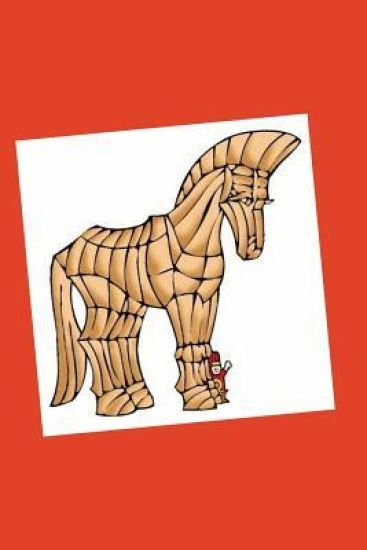
My First Homer: ILIAD and ODYSSEY renarrated for children
Jona Tomke
Independently Published
2017
nidottu
My First Homer: A Literary Gem for Both Young and Old My First Homer isn't merely a book. It's a gateway to one of humanity's most treasured literary masterpieces. Tailored specifically for elementary school children, it provides an accessible adaptation of the epic tales of the Iliad and Odyssey. Yet, it subtly resonates with adults seeking a more approachable rendition of these classic narratives. With its clear and respectful language, the storytelling genius of Homer shines through in its most authentic form. For those aiming to gift their children not just entertainment, but also a piece of "cultural capital", My First Homer stands out as the ideal choice. Tell the story, o Muse, of the sophisticated man who traveled far and roamed widely after he destroyed the famous citadel of Troy. Many countries and cities he saw, got to know their morals and customs; at sea he suffered hardship, tried to save his life and bring his men home; but whatever he did, he couldn't help his companions, for they committed an outrage and devoured the cattle of Helios. Therefore, the god prevented them from living to see the day of their homecoming. Tell it even to us, goddess, daughter of Zeus, and just start anywhere you want. CALYPSO On the tenth night, the waves flushed him to the shore of the island Ogygia, where the little goddess Calypso lived. She took care of Odysseus, helped him regain strength, and kept him as her man in her spacious grotto. The goddess Athena observed everything from Olympus, the high mountain where all gods lived. One day, she went up to the father of the gods: "Almighty Zeus," she said. "All the Greek heroes who fought in Troy are already back home except Odysseus, who for seven years now has been stranded on a forested island in the middle of the sea, where a little goddess is in charge. It is Calypso, daughter of Atlas. With endearment and flattery, she tries to mesmerize him, so he forgets about Ithaca. He is desperate now and wishes nothing more than to see his home again in his lifetime. That is something to understand, is it not? Why do you not grant him his wish, father of the gods? Did he not bring you sacrifices whenever possible? Even back in Troy?" "Child," Zeus said, "my dear Athena, I have nothing against Odysseus; in fact, quite the opposite. It is Poseidon, the god of the sea, who haunts him with his wrath. He cannot cope with the misery caused by Odysseus, who poked out the eye of his son, Polyphemus. That is why he is chasing him and preventing him from returning home. - But we all up here want to decide now: Odysseus has suffered enough, and he can now return to Ithaca. Poseidon's anger will cool off. He is not that mighty to stand up against the will of all the other gods." "Splendid," Athena said with sparkling eyes. "Best to send the messenger of the gods, Hermes, to Ogygia right away, so that he can tell Calypso that she has to let Odysseus go." Hermes strapped on his winged shoes. He floated through the air and across the sea. When he reached the remote island, he went to the grotto in which Calypso lived by foot and passed on the decision of the gods. Calypso became very sad because she loved Odysseus. But as a little nymph, she could not disobey the order of the father of the gods. Like every day, Odysseus sat on a rock and gazed longingly out at the sea. He was not mad at Calypso, who was very beautiful and had saved his life. He was only very homesick. So Calypso stepped up to him and said what he had stopped hoping for: "You are free "