Kirjojen hintavertailu. Mukana 12 595 353 kirjaa ja 12 kauppaa.

Kirjailija

Jonardon Ganeri

Kirjat ja teokset yhdessä paikassa: 26 kirjaa, julkaisuja vuosilta 1999-2026, suosituimpien joukossa Fernando Pessoa. Vertaile teosten hintoja ja tarkista saatavuus suomalaisista kirjakaupoista.

26 kirjaa

Kirjojen julkaisuhaarukka 1999-2026.

Fernando Pessoa

Fernando Pessoa

Jonardon Ganeri

OXFORD UNIVERSITY PRESS INC
2024
sidottu
Fernando Pessoa (1888-1935) is the quintessential philosophical outsider. Affiliated to no institution, and associated with no traditional school, in his prose fiction and poetry, Pessoa invented a new philosophy of the human subject, arguing that imagination is key to human flourishing and human self-enrichment. Each of us, he claimed, can use our powers of imagination to “pluralise ourselves;” that is to say, to live, simultaneously and in sequence, as a plurality of distinct subjects. Calling these artefact minds “heteronyms”, Pessoan synthetic selves are new ways poetically to experience the world. In this study of the philosophical thought of Pessoa, philosopher Jonardon Ganeri highlights connections between Pessoa with earlier philosophical poets, from Keats to Shakespeare and from Coleridge to Whitman. Ganeri emphasises Pessoa's originality in his theory of the human subject as a radical departure from the history of Christian or Islamic thought, highlighting affinities with ideas from works of philosophical fiction in classical India through an examination of Pessoa's own engagement with Indian poetry and philosophy. Ganeri convincingly argues for the need to consider Pessoa's writings as a philosopher, both on their own terms and as in deep conversation with the tradition of Indian thought.

Seeing and Subjectivity

Seeing and Subjectivity

Jonardon Ganeri

Oxford University Press
2026
sidottu
Seeing and Subjectivity is a search for the emergence of subjectivity within our ability to see. If we are to make sense of ourselves as subjective creatures, the notion of presentation, which undergrids all our perceptual commerce with the world we inhabit, is more complicated than has hitherto been realized. On the basis of a distinction between what is presented as-present and what is presented as-absent, Jonardon Ganeri distinguishes between two types of perceptual consciousness^—^"animal" perception and "reflective" perception. As opposed to animal perception, reflective perception is a sophisticated and advantageous variety of perception, a sort of perception requiring subjectivity in the perceiver and whose most minimal form is the perception of absence. A recognition of the fundamentality of the notion of reflective perception is key to understanding our place as subjective beings in the world. Its existence is most prominently witnessed in our perception of artworks, in poetic experience, and in aesthetic emotion. This book draws on Indian theories about the nature of perceptual consciousness, on insights into aesthetic subjectivity from Sanskrit aesthetics, and from the ideas of twentieth-century Indian philosophers. The philosophical method employed in the book is an avowedly cosmopolitan one, the cosmopolitan philosopher claiming that it is essential to consider theories from a plurality of philosophical cultures if one's ambition is to discover a fundamental theory true of ourselves as human beings.
Philosophy in Classical India

Philosophy in Classical India

Jonardon Ganeri

TAYLOR FRANCIS LTD
2026
sidottu
What is the goal of the major Indian philosophers and what are the methods of rational inquiry used in their pursuit? Philosophy in Classical India is a much-needed introduction to the philosophical texts, traditions and arguments of Indian philosophy. Philosophical rather than mystical or religious in approach and assuming no prior knowledge of key texts, Jonardon Ganeri examines the following topics: the motive and method of rational inquiry: the early Nyaya rationality, emptiness and the objective view: the philosophy of Nagarjuna’s Madhyamaka Buddhism the rational basis of metaphysics: Vaise?ika metaphysics reduction, exclusion and rational reconstruction: the philosophy of Di?naga’s Yogacara Buddhism rationality, harmony and perspective: Jaina epistemology and metaphysics reason in equilibrium: Ga?gesa’s new Nyaya balance and repost: public reason in Theravada Buddhism practical reasoning in Mima?sa and the Dharmasastra This second edition has been substantially updated, with the addition of new chapters on Theravada and Mima?sa. All chapters and further reading have been updated to reflect changes in scholarship and the publication of new editions and translations of primary texts, making Philosophy in Classical India an ideal introduction to Indian philosophy from the perspective of analytical philosophy.
Philosophy in Classical India

Philosophy in Classical India

Jonardon Ganeri

TAYLOR FRANCIS LTD
2026
nidottu
What is the goal of the major Indian philosophers and what are the methods of rational inquiry used in their pursuit? Philosophy in Classical India is a much-needed introduction to the philosophical texts, traditions and arguments of Indian philosophy. Philosophical rather than mystical or religious in approach and assuming no prior knowledge of key texts, Jonardon Ganeri examines the following topics: the motive and method of rational inquiry: the early Nyaya rationality, emptiness and the objective view: the philosophy of Nagarjuna’s Madhyamaka Buddhism the rational basis of metaphysics: Vaise?ika metaphysics reduction, exclusion and rational reconstruction: the philosophy of Di?naga’s Yogacara Buddhism rationality, harmony and perspective: Jaina epistemology and metaphysics reason in equilibrium: Ga?gesa’s new Nyaya balance and repost: public reason in Theravada Buddhism practical reasoning in Mima?sa and the Dharmasastra This second edition has been substantially updated, with the addition of new chapters on Theravada and Mima?sa. All chapters and further reading have been updated to reflect changes in scholarship and the publication of new editions and translations of primary texts, making Philosophy in Classical India an ideal introduction to Indian philosophy from the perspective of analytical philosophy.
Virtual Subjects, Fugitive Selves

Virtual Subjects, Fugitive Selves

Jonardon Ganeri

Oxford University Press
2025
nidottu
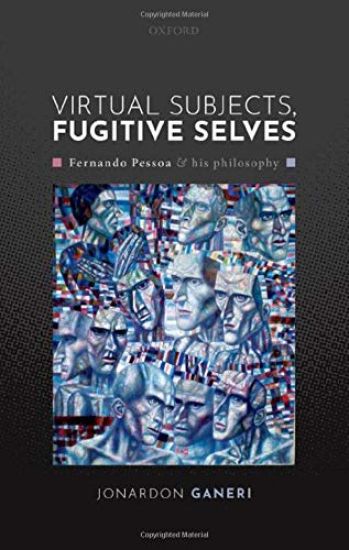
Virtual Subjects, Fugitive Selves is a sustained analytical exploration of the rich philosophy of self of the Portuguese poet Fernando Pessoa (1888-1935). Pessoa has become many things to many people in the years that have passed since his untimely death. For some, he is simply the greatest Portuguese poet of the twentieth century. For others, he has gradually emerged as a forgotten voice in 20th century modernism. And yet Pessoa was also a philosopher, and it is only very recently that the philosophical importance of his work has begun to attract the attention it deserves. Pessoa composed systematic philosophical essays in his pre-heteronymic period, defending rationalism in epistemology and sensationism in the philosophy of mind. His heteronymic work, decisively breaking with the conventional strictures of systematic philosophical writing, is a profound and exquisite exploration in the philosophy of self. In Virtual Subjects, Fugitive Selves, Jonardon Ganeri pulls together the strands of Pessoa's philosophy and rearticulates it in a way that does justice to its breathtaking originality. He reveals the extraordinary power of Pessoa's theory by applying it to the analysis of some of the trickiest and most puzzling problems about the self to have appeared in the global history of philosophy.
Filosofi i det gamla Indiens värld

Filosofi i det gamla Indiens värld

Peter Adamson; Jonardon Ganeri

Bokförlaget Thales
2022
sidottu
Filosofi i det gamla Indiens värld ger en bred överblick av tänkandet på den indiska subkontinenten, och presenterar en mångfald olika tankeskolor, i vilka religiösa och filosofiska strävanden oupplösligen sammanflätas. Utgångspunkten är hinduismen och den brahminska kulturen, med dess inriktning på förståelse av jagets natur och uttolkning av de gamla Vedaskrifterna. Den har givit oss förklarande texter som Upanishaderna men även det litterära eposet Mahabharata med dess mest berömda avsnitt Bhagavadgita. Buddhismen och jainismen växer fram som reaktioner på denna tradition, men delar samtidigt dess syn på filosofin som i första hand ett sätt att leva. För Buddha handlar det om att följa icke-jagets väg för att utsläcka begäret och uppnå befrielse från lidande (nirvana), för jainismen om praktiserandet av icke-våld (ahimsa) för att frigöras från karma och därmed undgå återfödelse.Den senare utvecklingen yttrar sig i en enormt rik litteratur på sanskrit, pali och andra språk. Med tiden ser vi en ökad fokusering på kunskapsteori och metafysik, språk och logik, men även på frågor om medvetandets och jagets existens och natur. Tanken på filosofins betydelse för livet går dock aldrig förlorad, och vi finner även praktiskt inriktade discipliner som yoga och tantra tillsammans med ayurvedisk medicin och en på dramatiken inriktad estetik. Boken ingår i serien "Filosofihistoria utan luckor" men kan även läsas självständigt. Någon liknande översikt över indisk filosofi har aldrig funnits på svenska. Peter Adamson är professor i senantik och arabisk filosofi vid Ludwig-Maximilians universitet i München och en av vår tids främsta filosofihistoriker. Denna del av "Filosofihistoria utan luckor" är skriven tillsammans med Jonardon Ganeri, professor vid Torontos universitet och specialist på sydasiatisk filosofi.
Classical Indian Philosophy

Classical Indian Philosophy

Peter Adamson; Jonardon Ganeri

Oxford University Press
2022
nidottu
Peter Adamson and Jonardon Ganeri present a lively introduction to one of the world's richest intellectual traditions: the philosophy of classical India. They begin with the earliest extant literature, the Vedas, and the explanatory works that these inspired, known as Upanisads. They also discuss other famous texts of classical Vedic culture, especially the Mahabharata and its most notable section, the Bhagavad-Gita, alongside the rise of Buddhism and Jainism. In this opening section, Adamson and Ganeri emphasize the way that philosophy was practiced as a form of life in search of liberation from suffering. Next, the pair move on to the explosion of philosophical speculation devoted to foundational texts called 'sutras,' discussing such traditions as the logical and epistemological Nyaya school, the monism of Advaita Vedanta, and the spiritual discipline of Yoga. In the final section of the book, they chart further developments within Buddhism, highlighting Nagarjuna's radical critique of 'non-dependent' concepts and the no-self philosophy of mind found in authors like Dignaga, and within Jainism, focusing especially on its 'standpoint' epistemology. Unlike other introductions that cover the main schools and positions in classical Indian philosophy, Adamson and Ganeri's lively guide also pays attention to philosophical themes such as non-violence, political authority, and the status of women, while considering textual traditions typically left out of overviews of Indian thought, like the Carvaka school, Tantra, and aesthetic theory as well. Adamson and Ganeri conclude by focusing on the much-debated question of whether Indian philosophy may have influenced ancient Greek philosophy and, from there, evaluate the impact that this area of philosophy had on later Western thought.
Inwardness

Inwardness

Jonardon Ganeri

Columbia University Press
2021
pokkari
Where do we look when we look inward? In what sort of space does our inner life take place? Augustine said that to turn inward is to find oneself in a library of memories, while the Indian Buddhist tradition holds that we are self-illuminating beings casting light onto a world of shadows. And a disquieting set of dissenters has claimed that inwardness is merely an illusion—or, worse, a deceit.Jonardon Ganeri explores philosophical reflections from many of the world’s intellectual cultures, ancient and modern, on how each of us inhabits an inner world. In brief and lively chapters, he ranges across an unexpected assortment of diverse thinkers: Buddhist, Hindu, Islamic, Chinese, and Western philosophy and literature from the Upani?ads, Socrates, and Avicenna to Borges, Simone Weil, and Rashomon. Ganeri examines the various metaphors that have been employed to explain interiority—shadows and mirrors, masks and disguises, rooms and enclosed spaces—as well as the interfaces and boundaries between inner and outer worlds. Written in a cosmopolitan spirit, this book is a thought-provoking consideration of the value—or peril—of turning one’s gaze inward for all readers who have sought to map the geography of the mind.
Inwardness

Inwardness

Jonardon Ganeri

Columbia University Press
2021
sidottu
Where do we look when we look inward? In what sort of space does our inner life take place? Augustine said that to turn inward is to find oneself in a library of memories, while the Indian Buddhist tradition holds that we are self-illuminating beings casting light onto a world of shadows. And a disquieting set of dissenters has claimed that inwardness is merely an illusion—or, worse, a deceit.Jonardon Ganeri explores philosophical reflections from many of the world’s intellectual cultures, ancient and modern, on how each of us inhabits an inner world. In brief and lively chapters, he ranges across an unexpected assortment of diverse thinkers: Buddhist, Hindu, Islamic, Chinese, and Western philosophy and literature from the Upani?ads, Socrates, and Avicenna to Borges, Simone Weil, and Rashomon. Ganeri examines the various metaphors that have been employed to explain interiority—shadows and mirrors, masks and disguises, rooms and enclosed spaces—as well as the interfaces and boundaries between inner and outer worlds. Written in a cosmopolitan spirit, this book is a thought-provoking consideration of the value—or peril—of turning one’s gaze inward for all readers who have sought to map the geography of the mind.
Virtual Subjects, Fugitive Selves

Virtual Subjects, Fugitive Selves

Jonardon Ganeri

Oxford University Press
2020
sidottu
This book is a sustained analytical exploration of the rich philosophy of self of the Portuguese poet Fernando Pessoa. Fernando Pessoa (1888-1935) has become many things to many people in the years that have passed since his untimely death. For some he is simply the greatest Portuguese poet of the 20th century. For others he has gradually emerged as a forgotten voice in 20th century modernism. And yet Pessoa was also a philosopher, and it is only very recently that the philosophical importance of his work has begun to attract the attention it deserves. Pessoa composed systematic philosophical essays in his pre-heteronymic period, defending rationalism in epistemology and sensationism in the philosophy of mind. His heteronymic work, decisively breaking with the conventional strictures of systematic philosophical writing, is a profound and exquisite exploration in the philosophy of self. Virtual Subjects, Fugitive Selves pulls together the strands of this philosophy and rearticulates it in a way that does justice to its breathtaking originality. It reveals the extraordinary power of Pessoa's theory by applying it to the analysis of some of the trickiest and most puzzling problems about the self to have appeared in the global history of philosophy.
Attention, Not Self

Attention, Not Self

Jonardon Ganeri

Oxford University Press
2020
nidottu
Jonardon Ganeri presents an account of mind in which attention, not self, explains the experiential and normative situatedness of human beings in the world. Attention consists in an organisation of awareness and action at the centre of which there is neither a practical will nor a phenomenological witness. Attention performs two roles in experience, a selective role of placing and a focal role of access. Attention improves our epistemic standing, because it is in the nature of attention to settle on what is real and to shun what is not real. When attention is informed by expertise, it is sufficient for knowledge. That gives attention a reach beyond the perceptual: for attention is a determinable whose determinates include the episodic memory from which our narrative identities are made, the empathy for others that situates us in a social world, and the introspection that makes us self-aware. Empathy is other-directed attention, placed on you and focused on your states of mind; it is akin to listening. Empathetic attention is central to a range of experiences that constitutively require a contrast between oneself and others, all of which involve an awareness of oneself as the object of another's attention. An analysis of attention as mental action gainsays authorial conceptions of self, because it is the nature of intending itself, effortful attention in action, to settle on what to do and to shun what not to do. In ethics, a conception of persons as beings with a characteristic capacity for attention offers hope for resolution in the conflict between individualism and impersonalism. Attention, Not Self is a contribution to a growing body of work that studies the nature of mind from a place at the crossroads of three disciplines: philosophy in the analytical and phenomenological traditions, contemporary cognitive science and empirical work in cognitive psychology, and Buddhist theoretical literature.
Classical Indian Philosophy

Classical Indian Philosophy

Peter Adamson; Jonardon Ganeri

Oxford University Press
2020
sidottu
Peter Adamson and Jonardon Ganeri present a lively introduction to one of the world's richest intellectual traditions: the philosophy of classical India. They begin with the earliest extant literature, the Vedas, and the explanatory works that these inspired, known as Upani?ads. They also discuss other famous texts of classical Vedic culture, especially the Mahabharata and its most notable section, the Bhagavad-Gita, alongside the rise of Buddhism and Jainism. In this opening section, Adamson and Ganeri emphasize the way that philosophy was practiced as a form of life in search of liberation from suffering. Next, the pair move on to the explosion of philosophical speculation devoted to foundational texts called 'sutras,' discussing such traditions as the logical and epistemological Nyaya school, the monism of Advaita Vedanta, and the spiritual discipline of Yoga. In the final section of the book, they chart further developments within Buddhism, highlighting Nagarjuna's radical critique of 'non-dependent' concepts and the no-self philosophy of mind found in authors like Dignaga, and within Jainism, focusing especially on its 'standpoint' epistemology. Unlike other introductions that cover the main schools and positions in classical Indian philosophy, Adamson and Ganeri's lively guide also pays attention to philosophical themes such as non-violence, political authority, and the status of women, while considering textual traditions typically left out of overviews of Indian thought, like the Carvaka school, Tantra, and aesthetic theory as well. Adamson and Ganeri conclude by focusing on the much-debated question of whether Indian philosophy may have influenced ancient Greek philosophy and, from there, evaluate the impact that this area of philosophy had on later Western thought.
Attention, Not Self

Attention, Not Self

Jonardon Ganeri

Oxford University Press
2017
sidottu
Jonardon Ganeri presents an account of mind in which attention, not self, explains the experiential and normative situatedness of human beings in the world. Attention consists in an organisation of awareness and action at the centre of which there is neither a practical will nor a phenomenological witness. Attention performs two roles in experience, a selective role of placing and a focal role of access. Attention improves our epistemic standing, because it is in the nature of attention to settle on what is real and to shun what is not real. When attention is informed by expertise, it is sufficient for knowledge. That gives attention a reach beyond the perceptual: for attention is a determinable whose determinates include the episodic memory from which our narrative identities are made, the empathy for others that situates us in a social world, and the introspection that makes us self-aware. Empathy is other-directed attention, placed on you and focused on your states of mind; it is akin to listening. Empathetic attention is central to a range of experiences that constitutively require a contrast between oneself and others, all of which involve an awareness of oneself as the object of another's attention. An analysis of attention as mental action gainsays authorial conceptions of self, because it is the nature of intending itself, effortful attention in action, to settle on what to do and to shun what not to do. In ethics, a conception of persons as beings with a characteristic capacity for attention offers hope for resolution in the conflict between individualism and impersonalism. Attention, Not Self is a contribution to a growing body of work that studies the nature of mind from a place at the crossroads of three disciplines: philosophy in the analytical and phenomenological traditions, contemporary cognitive science and empirical work in cognitive psychology, and Buddhist theoretical literature.
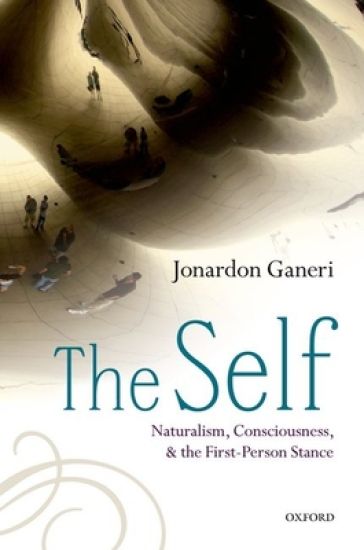
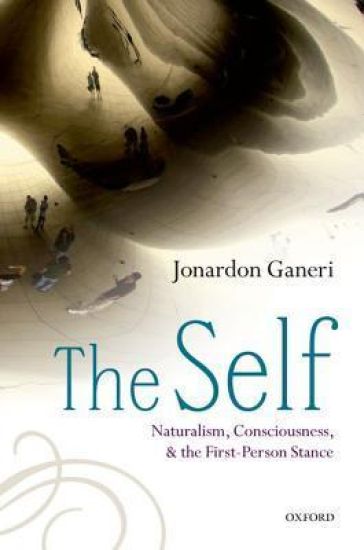
The Self

The Self

Jonardon Ganeri

Oxford University Press
2015
nidottu
What is it to occupy a first-person stance? Is the first-personal idea one has of oneself in conflict with the idea of oneself as a physical being? How, if there is a conflict, is it to be resolved? The Self recommends a new way to approach those questions, finding inspiration in theories about consciousness and mind in first millennial India. These philosophers do not regard the first-person stance as in conflict with the natural--their idea of nature is not that of scientific naturalism, but rather a liberal naturalism non-exclusive of the normative. Jonardon Ganeri explores a wide range of ideas about the self: reflexive self-representation, mental files, and quasi-subject analyses of subjective consciousness; the theory of emergence as transformation; embodiment and the idea of a bodily self; the centrality of the emotions to the unity of self. Buddhism's claim that there is no self too readily assumes an account of what a self must be. Ganeri argues instead that the self is a negotiation between self-presentation and normative avowal, a transaction grounded in unconscious mind. Immersion, participation, and coordination are jointly constitutive of self, the first-person stance at once lived, engaged, and underwritten. And all is in harmony with the idea of the natural.
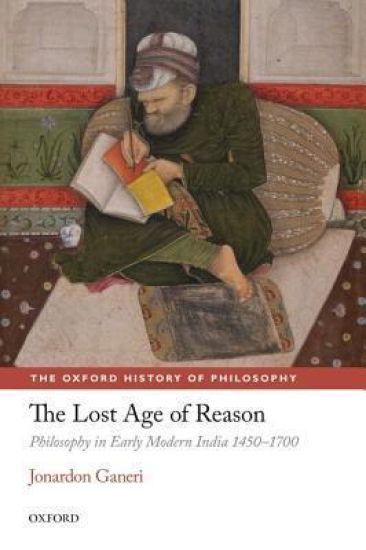
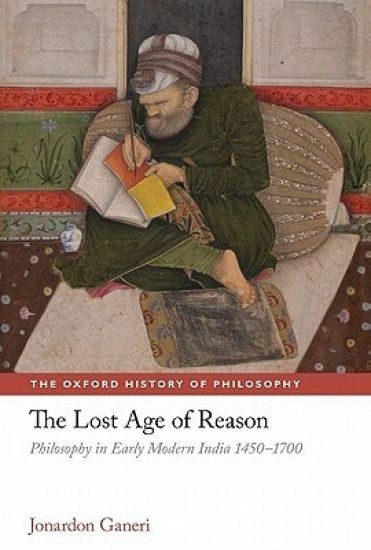
The Lost Age of Reason

The Lost Age of Reason

Jonardon Ganeri

Oxford University Press
2014
nidottu
The Lost Age of Reason deals with a fascinating and rich episode in the history of philosophy, one from which those who are interested in the nature of modernity and its global origins have a great deal to learn. Early modernity in India consists in the formation of a new philosophical self, one which makes it possible meaningfully to conceive of oneself as engaging the ancient and the alien in conversation. The ancient texts are now not thought of as authorities to which one must defer, but regarded as the source of insight in the company of which one pursues the quest for truth. This new attitude implies a change in the conception of one's duties towards the past. After reconstructing the historical intellectual context in detail, and developing a suitable methodological framework, Ganeri reviews work on the concept of knowledge, the nature of evidence, the self, the nature of the categories, mathematics, realism, and a new language for philosophy. A study of early modern philosophy in India has much to teach us today - about the nature of modernity as such, about the reform of educational institutions and its relationship to creative research, and about cosmopolitan identities in circumstances of globalisation.
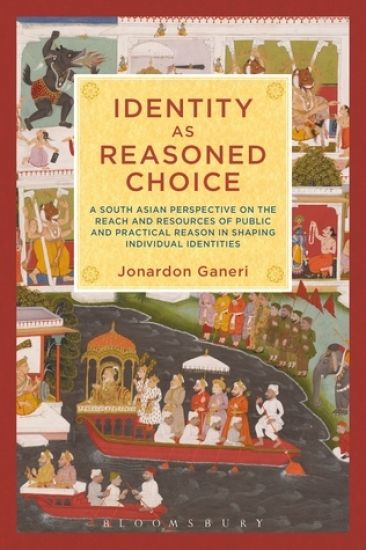
Identity as Reasoned Choice

Identity as Reasoned Choice

Jonardon Ganeri

Bloomsbury Academic USA
2013
nidottu
A companion volume to Jonardon Ganeri’s popular textbook, Philosophy in Classical India: The Proper Work of Reason, this new book surveys in a lively and accessible style the nature of practical and public reason in India. It provides what is missing in Amartya Sen’s widely admired The Argumentative Indian: detailed discussion of the thinkers—dissenters and heretics, as well as mainstream voices—whose astonishing ideas so enrich contemporary discussion.
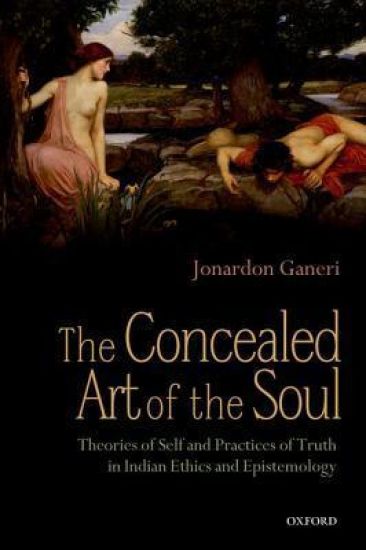
The Concealed Art of the Soul

The Concealed Art of the Soul

Jonardon Ganeri

Oxford University Press
2012
nidottu
In The Concealed Art of the Soul, Jonardon Ganeri presents a variety of perspectives on the nature of the self as seen by major schools of classical Indian philosophy. For Indian thinkers, a philosophical treatise about the self should not only reveal the truth about the nature of the soul, but should also engage the reader in a process of study and contemplation that will eventually lead to self-transformation. By combining careful attention to philosophical content and sensitivity to literary form, Ganeri deepens our understanding of some of the greatest works in Indian literary history. His magisterial survey includes the Upanisads, the Buddha's discourses, the epic Mahabharata, and the writings of Candrakirti, whose work was later to provide the foundation for Tibetan Buddhism. Ganeri argues that many Western theories of selfhood are not only present in these writings, but are developed to a high degree of sophistication, and that there are other ideas about the self found in the work of classical Indian thinkers which present-day analytic philosophers have not yet begun to explore. Scholars and students of philosophy and religious studies, particularly those with an interest in Indian and Western conceptions of the self, will find this book fascinating reading.
The Self

The Self

Jonardon Ganeri

Oxford University Press
2012
sidottu
What is it to occupy a first-person stance? Is the first-personal idea one has of oneself in conflict with the idea of oneself as a physical being? How, if there is a conflict, is it to be resolved? The Self recommends a new way to approach those questions, finding inspiration in theories about consciousness and mind in first millennial India. These philosophers do not regard the first-person stance as in conflict with the natural--their idea of nature is not that of scientific naturalism, but rather a liberal naturalism non-exclusive of the normative. Jonardon Ganeri explores a wide range of ideas about the self: reflexive self-representation, mental files, and quasi-subject analyses of subjective consciousness; the theory of emergence as transformation; embodiment and the idea of a bodily self; the centrality of the emotions to the unity of self. Buddhism's claim that there is no self too readily assumes an account of what a self must be. Ganeri argues instead that the self is a negotiation between self-presentation and normative avowal, a transaction grounded in unconscious mind. Immersion, participation, and coordination are jointly constitutive of self, the first-person stance at once lived, engaged, and underwritten. And all is in harmony with the idea of the natural.
Identity as Reasoned Choice

Identity as Reasoned Choice

Jonardon Ganeri

Continuum Publishing Corporation
2012
sidottu
In an increasingly multi-religious and multi-ethnic world, identity has become something actively chosen rather than merely acquired at birth. This book essentially analyzes the resources available to make such a choice. Looking into the world of intellectual India, this unique comparative survey focuses on the identity resources offered by India's traditions of reasoning and public debate. Arguing that identity is a formation of reason, it draws on Indian theory to claim that identities are constructed from exercises of reason as derivation from exemplary cases. The book demonstrates that contemporary debates on global governance and cosmopolitan identities can benefit from these Indian resources, which were developed within an intercultural pluralism context with an emphasis on consensual resolution of conflict. This groundbreaking work builds on themes developed by Amartya Sen to provide a creative pursuit of Indian reasoning that will appeal to anyone studying politics, philosophy, and Asian political thought.
The Lost Age of Reason

The Lost Age of Reason

Jonardon Ganeri

Oxford University Press
2011
sidottu
The Lost Age of Reason deals with a fascinating and rich episode in the history of philosophy, one from which those who are interested in the nature of modernity and its global origins have a great deal to learn. Early modernity in India consists in the formation of a new philosophical self, one which makes it possible meaningfully to conceive of oneself as engaging the ancient and the alien in conversation. The ancient texts are now not thought of as authorities to which one must defer, but regarded as the source of insight in the company of which one pursues the quest for truth. This new attitude implies a change in the conception of one's duties towards the past. After reconstructing the historical intellectual context in detail, and developing a suitable methodological framework, Ganeri reviews work on the concept of knowledge, the nature of evidence, the self, the nature of the categories, mathematics, realism, and a new language for philosophy. A study of early modern philosophy in India has much to teach us today - about the nature of modernity as such, about the reform of educational institutions and its relationship to creative research, and about cosmopolitan identities in circumstances of globalisation.