Kirjojen hintavertailu. Mukana 12 595 353 kirjaa ja 12 kauppaa.

Kirjailija

Jonathan A. Moo

Kirjat ja teokset yhdessä paikassa: 6 kirjaa, julkaisuja vuosilta 2011-2026, suosituimpien joukossa Revelation. Vertaile teosten hintoja ja tarkista saatavuus suomalaisista kirjakaupoista.

Mukana myös kirjoitusasut: Jonathan A Moo

6 kirjaa

Kirjojen julkaisuhaarukka 2011-2026.

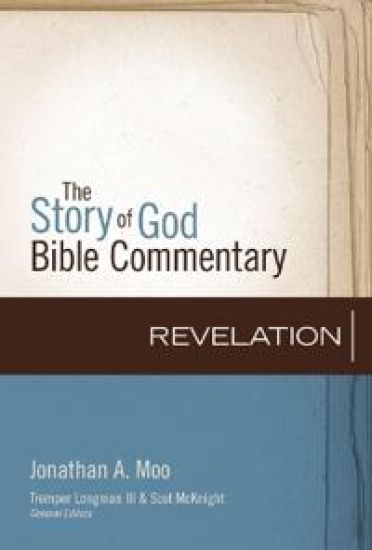
Revelation

Revelation

Jonathan A. Moo

ZONDERVAN
2026
sidottu
A new commentary for today's world, The Story of God Bible Commentary explains and illuminates each passage of Scripture in light of the Bible's grand story. The first commentary series to do so, SGBC offers a clear and compelling exposition of biblical texts, guiding everyday readers in how to creatively and faithfully live out the Bible in their own contexts. Its story-centric approach is ideal for pastors, students, Sunday school teachers, and laypeople alike. Three easy-to-use sections designed to help readers live out God's story: LISTEN to the Story: Includes complete NIV text with references to other texts at work in each passage, encouraging the reader to hear it within the Bible's grand story EXPLAIN the Story: Explores and illuminates each text as embedded in its canonical and historical setting LIVE the Story: Reflects on how each text can be lived today and includes contemporary stories and illustrations to aid preachers, teachers, and students Praise for SGBC: "Pastors and lay people will welcome this new series, which seeks to make the message of the Scriptures clear and to guide readers in appropriating biblical texts for life today." -Daniel I. Block, Wheaton College and Graduate School "An extremely valuable and long overdue series that includes comment on the cultural context of the text, careful exegesis, and guidance on reading the whole Bible as a unity that testifies to Christ as our Savior and Lord." -Graeme Goldsworthy, author of According to Plan "Engagingly readable, it not only explores the biblical text but offers a range of applications and interesting illustrations." -Craig S. Keener, Asbury Theological Seminary "A perfect tool for helping every follower of Jesus to walk in the story that God is writing for them." -Judy Douglass, Cru
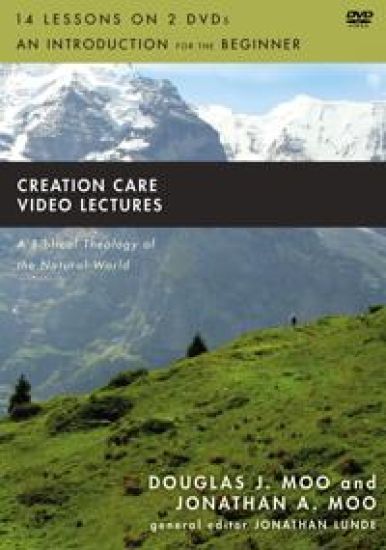
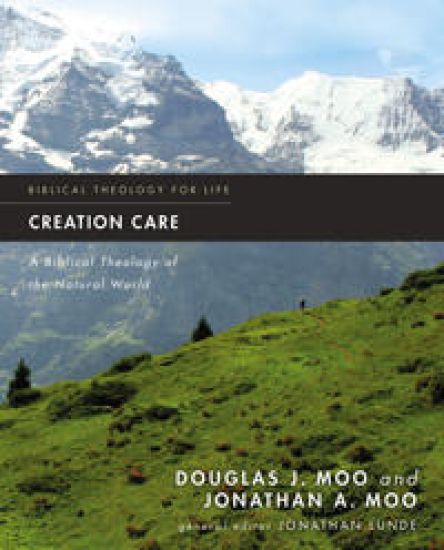
Creation Care

Creation Care

Douglas J. Moo; Jonathan A. Moo

Zondervan
2018
nidottu
What does the Bible say about the natural world and its place within God's purpose? From Genesis to Revelation, the Bible reveals a God whose creative power and loving care embrace all that exists, from earth and sky and sea to every creature. Yet the significance of the Bible's extensive teaching about the natural world is easily overlooked by Christians accustomed to focusing only on what the Bible says about God's interaction with human beings.In Creation Care, father and son team Douglas and Jonathan Moo invite readers to open their Bibles afresh to explore a comprehensive biblical theology of creation care as well as a careful analysis of the most up-to-date scientific data about the state of our world. Following the contours of the biblical storyline, they uncover answers to questions such as:What is the purpose of the non-human creation?Can a world with things like predators, parasites, and natural disasters still be the 'good' world described in Genesis 1?What difference does the narrative of the 'Fall' make for humankind’s responsibility to rule over other creatures?What difference does Jesus make for our understanding of the natural world?How does our call to care for creation fit within the hope for a new heaven and a new earth?What is unique about Christian creation care compared with other approaches to 'environmental' issues?How does creation care fit within the charge to proclaim the gospel and care for the poor? Rather than merely offering a response to environmental concerns, Creation Care invites readers into a joyful vision of the world as God's creation in which they can rediscover who they truly are as creatures called to love and serve the Creator and to delight in all he has made.____________Part of the Biblical Theology for Life series, this practical and robust book will help you develop an effective and faithful Christian response to the scriptural teaching about the created world.
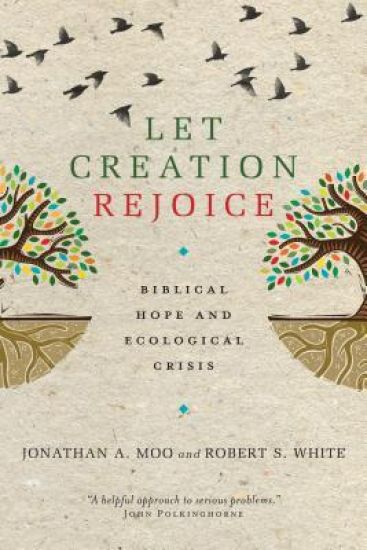
Let Creation Rejoice

Let Creation Rejoice

Jonathan A. Moo; Robert S. White

IVP Academic
2014
nidottu
"Let all creation rejoice before the LORD, for he comes." Psalm 96:13The Bible is bathed with images of God caring for his creation in all its complexity. Yet in the face of climate change and other environmental trends, philosophers, filmmakers, environmentalists, politicians and senior scientists increasingly resort to apocalyptic rhetoric to warn us that a so-called perfect storm of factors threatens the future of life on earth. Jonathan Moo and Robert White ask, "Do these dire predictions amount to nothing more than ideological scaremongering, perhaps hyped-up for political or personal ends? Or are there good reasons for thinking that we may indeed be facing a crisis unprecedented in its scale and in the severity of its effects?"The authors encourage us to assess the evidence for ourselves. Their own conclusion is that there is in fact plenty of cause for concern. Climate change, they suggest, is potentially the most far-reaching threat that our planet faces in the coming decades, and also the most publicized. But there is a wide range of much more obvious, interrelated and damaging effects that a growing number of people, consuming more and more, are having on the planet upon which we all depend.Yet if the Christian gospel fundamentally reorients us in our relationship to God and his world, then there ought to be something radically distinctive about our attitude and approach to such threats. In short, there ought to be a place for hope. And there ought to be a place for Christians to participate in that hope. Moo and White therefore reflect on the difference the Bible's vision of the future of all of creation makes.Why should creation rejoice? Because God loves and cares the world he made.
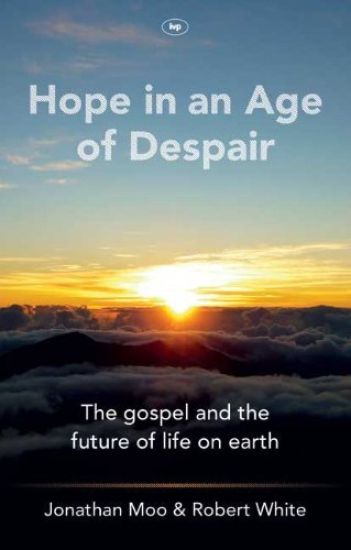
Hope in an Age of Despair

Hope in an Age of Despair

Robert S White; Jonathan A Moo

Inter-Varsity Press
2013
nidottu
In the face of climate change and other environmental trends, it is easy to be pessimistic about the future. Philosophers, film-makers, environmentalists, politicians and even senior scientists increasingly resort to apocalyptic rhetoric to warn us that a so-called 'perfect storm' of factors is coming together in a way that threatens the future of life on earth. Do these dire predictions amount to nothing more than ideological scaremongering, perhaps hyped up for political or personal ends? Or are there good reasons for thinking that we may indeed be facing a crisis unprecedented in its scale and in the severity of its effects? Jonathan Moo and Robert White encourage us to assess the evidence for ourselves. Their own conclusion is that there is in fact plenty of cause for concern.
Creation, Nature and Hope in 4 Ezra

Creation, Nature and Hope in 4 Ezra

Jonathan A. Moo

Vandenhoeck Ruprecht GmbH Co KG
2011
sidottu
This exegetical study of creation and nature in 4 Ezra argues that this first-century Jewish apocalypse's profound pessimism concerning humankind and the present age is matched by a surprisingly robust belief in the goodness of the created order. 4 Ezra presents the natural world as standing with God over and against corrupt humankind, envisions substantial elements of continuity between the ages and hints that those parts of the earth that remain unsullied by humankind still witness to God's sovereignty, love and justice and even serve as material pointers to the new creation. This study calls into question the persistent assumption that apocalypticism and the 'apocalyptic eschatology' of the historical apocalypses in particular necessarily entails a profound dualism. Emerging as it does from an experience of historical disaster and unresolved questions of theodicy, 4 Ezra especially is often considered an apocalypse in which the doctrine of the two ages has been radicalised to the extent that creation, history and life in this world have lost their meaning or significance. The results of this study, however, indicate that while 4 Ezra considers the world of humankind to be corrupted and corrupting, in the natural world the creator's sovereignty is not so obscured, and there his original intentions for creation can still be perceived. This study provides a fresh reading of 4 Ezra that takes seriously the book's unity and coherence. Its conclusions suggest that it may be best to abandon the label 'apocalyptic eschatology' given its potential mask the interesting complexities and mix of continuity and discontinuity that attend the portrayal of creation, nature and hope in an apocalypse like 4 Ezra.