

Kirjailija
Jonathan Adams
Kirjat ja teokset yhdessä paikassa: 23 kirjaa, julkaisuja vuosilta 1991-2026, suosituimpien joukossa Physics Made Easy For Kids. Vertaile teosten hintoja ja tarkista saatavuus suomalaisista kirjakaupoista.
23 kirjaa
Kirjojen julkaisuhaarukka 1991-2026.




Протилежності - Opposites
Jonathan Adams
Library for All
2022
pokkari
Do you know what the opposite of up is?Ти знаєш протилежність слова вгору? Your purchase of this book supports Library For All in its mission to make knowledge available to all, equally.

The story of Frank Lloyd Wright’s life is no less astounding than his greatest architectural works. He enmeshed himself eagerly in myth and hearsay, and revelled in the extravagance of his creative persona. Throughout his long career, Wright strongly resisted the suggestion that his accomplishments owed anything to earthly influences. As much as he wanted his achievements to be recognised, he wanted them to be unaccountable – but they are not. This book reveals for the first time how his unbreakable self-belief and startling creative defiance both originated in the liberal religious and philosophical attitudes woven into his personality during his childhood – deliberately so by his mother and by his many aunts and uncles, to honour the fierce Welsh radicalism of their ancestors.

Level 1/Level 2 Cambridge National in Engineering Design (J822): Second Edition
Jonathan Adams; Peter Valentine; Alex Reynolds
Hachette Learning
2022
nidottu
Trust highly experienced teachers and authors Jonathan Adams, Alex Reynolds and Peter Valentine, to guide your students through the redeveloped Cambridge National in Engineering Design (J822 for first teaching from September 2022). This revised and updated version of the bestselling first edition will strengthen your students' understanding of the core content and boost the skills required to tackle the NEA with confidence.Brought to you by the No.1 Engineering textbook publisher, this extensively revised and updated Student Textbook is:- Comprehensive - gain in-depth knowledge of the examined units with clear explanations of every concept and topic, plus improve understanding of all the non-examined units with in-depth and easy-to-follow chapters.- Accessible, reliable and trusted - structured to match the specification and provide the information required to build knowledge, understanding and skills.- Designed to support you - boost confidence when tackling the internal and external assessment with plenty of activities to test and consolidate knowledge.- The go-to guide - expert authors have carefully designed tasks and activities to build skillset in order to aid progression and questions to assess understanding, as well as lots of real-world examples.

Opposites (Lao edition) / ຄໍາກົງກັນຂ້າມ
Jonathan Adams
Library for All
2020
pokkari


Do you know what the opposite of up is? The opposite of big? This is a beautifully illustrated book for 4-8 year old readers. Proceeds from this sale benefit nonprofit organisation Library For All, helping children around the world learn to read.

In The Revelations of St Birgitta: A Study and Edition of the Birgittine-Norwegian Texts, Swedish National Archives, E 8902, Jonathan Adams offers a detailed analysis of the manuscript and its contents as well as a new edition of this puzzling text. The Birgittine-Norwegian texts are very distinctive from the main Birgittine vernacular corpus of literature and have taxed scholars for decades as to why and for whom they were written. The linguistic study of the manuscript is combined with contextual and historical information in order to reinforce the arguments made and offer explanations within a cultural context. This provides a welcome new dimension to earlier research that has otherwise been pursued to a large degree within a single academic discipline.



Published in 1516, Poul Raeff's "Iudeorum Secreta", a translation of Johannes Pfefferkorn's The Confession of the Jews, was a landmark in the development of anti-Jewish polemics in Denmark. For the first time, Danes were presented with descriptions of Jewish ceremonies that aimed to portray these practices as dangerously anti-Christian, superstitious and deviating from 'real' Biblical Judaism. Contemporary Judaism is described as a rabbinical construction that is worthy of nothing but ridicule and mockery. The book explores this key text that comprises a valuable source for a range of academic disciplines: the history of anti-semitism, the study of Jewish-Christian relations, social history, the history of religious culture, and medieval and early modern Danish language and literature. This book includes an outline of how Jews were portrayed in medieval Danish vernacular literature; a description of Pfefferkorn's life and works; a discussion of Raeff's translation and publication of Iudeorum Secreta; a presentation of the language and style of the Danish version, as well as an edition of the text together with the Latin original, an English translation and an extensive commentary.
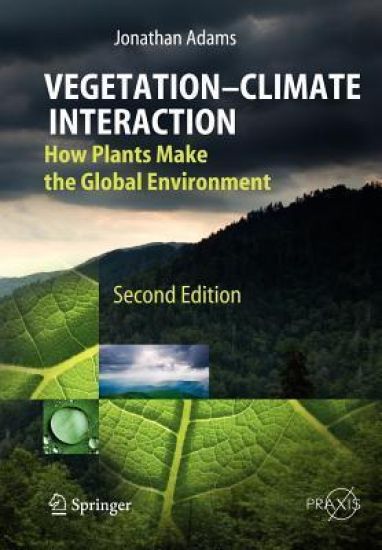
Vegetation-Climate Interaction
Jonathan Adams
Springer-Verlag Berlin and Heidelberg GmbH Co. K
2012
nidottu
This book offers a readable and accessible account of the way in which the world's plant life partly controls its own environment. Starting from the broad patterns in vegetation which have classically been seen as a passive response to climate, the authors build up from the local scale - with microclimates produced by plants - to the regional and global scale. The influence of plants (both on land and in the ocean) in making clouds, haze and rain are considered, along with plant effects on the composition of greenhouse gases in the earth's atmosphere. Broad global feedbacks that either stabilize or destabilize the earth's environment will be explored, in the context of environmental change in the recent geological past, and in the near future. Common contentions and misconceptions about the role of vegetation or forest removal in the spread of deserts will also be considered.

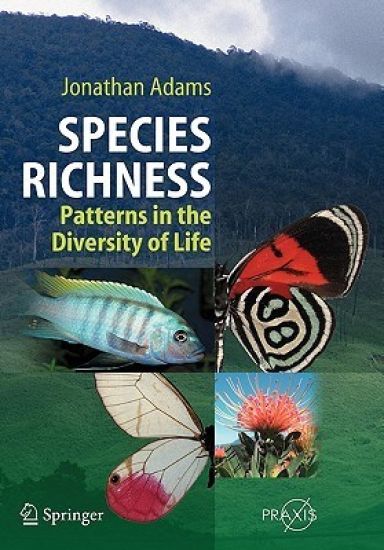
This is a readable, informative and up-to-date account of the patterns and controls on biodiversity. The author describes major trends in species richness, along with uncertainties in current knowledge. The various possible explanations for past and present species patterns are discussed and explained in an even-handed and accessible way. The implications of global climate change and habitat loss are considered, along with current strategies for preserving what we have. This book examines the state of current understanding of species richness patterns and their explanations. As well as the present day world, it deals with diversification and extinction, in the conservation of species richness, and the difficulties of assessing how many species remain to be discovered. The scientifically compelling subject of vegetation-climate interaction is considered in depth. Written in an accessible style, the author offers an up-to-date, rigorous and yet eminently comprehensible overview of the ecology and biogeography of species richness. He departs from the often heavy approach of earlier texts, without sacrificing rigor and depth of information and analysis. Prefacing with the aims of the book, Chapter 1 opens with an explanation of latitudinal gradients, including a description of major features of the striking gradients in species richness, exceptions to the rule, explanations, major theories and field and experimental tests. The following chapter plumbs the depth of time, including the nature of the fossil record, broad timescale diversity patterns, ecosystem changes during mass extinctions and glaciations and their influence on species richness. Chapters 3 and 4 consider hotspots and local scale patterns in species richness while Chapter 5 looks at the limitations and uncertainties on current estimates of richness, the last frontiers of species diversity and the process of identifying new life forms. The last three chapters cover humans and extinctions in history and prehistory, current habitat and global change, including the greenhouse effect, and the race to preserve what we still have, including parks, gene banks and laws.
Vegetation-Climate Interaction
Jonathan Adams
Springer-Verlag Berlin and Heidelberg GmbH Co. K
2009
sidottu
This book offers a readable and accessible account of the way in which the world's plant life partly controls its own environment. Starting from the broad patterns in vegetation which have classically been seen as a passive response to climate, the authors build up from the local scale - with microclimates produced by plants - to the regional and global scale. The influence of plants (both on land and in the ocean) in making clouds, haze and rain are considered, along with plant effects on the composition of greenhouse gases in the earth's atmosphere. Broad global feedbacks that either stabilize or destabilize the earth's environment will be explored, in the context of environmental change in the recent geological past, and in the near future. Common contentions and misconceptions about the role of vegetation or forest removal in the spread of deserts will also be considered.
This is a readable, informative and up-to-date account of the patterns and controls on biodiversity. The author describes major trends in species richness, along with uncertainties in current knowledge. The various possible explanations for past and present species patterns are discussed and explained in an even-handed and accessible way. The implications of global climate change and habitat loss are considered, along with current strategies for preserving what we have. This book examines the state of current understanding of species richness patterns and their explanations. As well as the present day world, it deals with diversification and extinction, in the conservation of species richness, and the difficulties of assessing how many species remain to be discovered. The scientifically compelling subject of vegetation-climate interaction is considered in depth. Written in an accessible style, the author offers an up-to-date, rigorous and yet eminently comprehensible overview of the ecology and biogeography of species richness. He departs from the often heavy approach of earlier texts, without sacrificing rigor and depth of information and analysis. Prefacing with the aims of the book, Chapter 1 opens with an explanation of latitudinal gradients, including a description of major features of the striking gradients in species richness, exceptions to the rule, explanations, major theories and field and experimental tests. The following chapter plumbs the depth of time, including the nature of the fossil record, broad timescale diversity patterns, ecosystem changes during mass extinctions and glaciations and their influence on species richness. Chapters 3 and 4 consider hotspots and local scale patterns in species richness while Chapter 5 looks at the limitations and uncertainties on current estimates of richness, the last frontiers of species diversity and the process of identifying new life forms. The last three chapters cover humans and extinctions in history and prehistory, current habitat and global change, including the greenhouse effect, and the race to preserve what we still have, including parks, gene banks and laws.
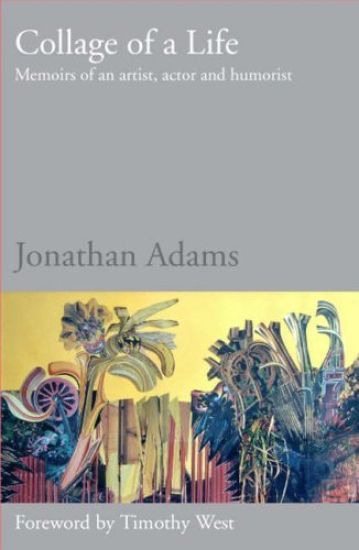
From the late 1950's, Jonathan Adams developed his talent as a surrealist artist at the Chelsea School of Art and, while studying there, sang his own songs in college shows. Later, during National Service in Penang, he painted, sketched, composed songs and put on weekly radio shows. This title presents collage of his memories with anecdotes.