
Kirjailija
Jonathan Alexander
Kirjat ja teokset yhdessä paikassa: 19 kirjaa, julkaisuja vuosilta 2002-2026, suosituimpien joukossa European Illuminated Manuscripts in the Calouste Gulbenkian Collection. Vertaile teosten hintoja ja tarkista saatavuus suomalaisista kirjakaupoista.
19 kirjaa
Kirjojen julkaisuhaarukka 2002-2026.

European Illuminated Manuscripts in the Calouste Gulbenkian Collection
Angela Bussi; Frederica Toniolo; François Avril; Giordana Canova; James Marrow; Jonathan Alexander; Lieve Kessel; Manuela Fidalgo; Nigel J Morgan; Penelope Curtis
FUNDACAO CALOUSTE GULBENKIAN, PLANO DE EDICOES
2025
sidottu
The Gulbenkian Museum published its long-awaited catalogue of Calouste Gulbenkian’s collection of illuminated manuscripts, marking the culmination of several years of research and collaboration by a group of international scholars. This group of works, which was particularly prized by the collector, was acquired for his own personal enjoyment and kept at his home in Paris before being transferred to Portugal. In the 1960s, when they were housed at the Marques de Pombal Palace in Oeiras, the codices were damaged by flooding. The restoration work that allowed these specimens to be studied and exhibited at long last was only completed in 2014. The first article, by Manuela Fidalgo, the emeritus curator of this group of works from the collection, explores the milestone moments in the creation of the collection, homing in on Gulbenkian’s choices and the way in which he sought to preserve his books. She has also written a brief account of the flooding of 1967 and the restoration of the damaged specimens. The second essay, by François Avril, former curator of the Manuscripts Department at the Bibliothèque nationale de France, an expert in medieval manuscript volumes and the scientific coordinator of this catalogue, takes an in-depth look at the specimens that make up the collection, plotting the timeline of the acquisitions and uncovering their provenance. The catalogue, which covers 27 books and 10 fragments, was coordinated by Angela Dillon Bussi, a specialist in medieval history and former assistant director of the Biblioteca nazionale Marciana, Venice and the Biblioteca Medicea-Laurenziana in Florence. The catalogue entries, which are all illustrated, divide the codices into two sections. The first puts forward a codicological study by Angela Dillon Bussi, in collaboration with Davide Baldi Bellini. The second explores the history, content and artistic importance of the pieces, with contributions from renowned experts such as Angela Dillon Bussi, Federica Toniolo, François Avril, Giordana Mariani Canova, James Marrow, Jonathan Alexander, Lieve de Kessel and Nigel J. Morgan.

An archive of personal trauma that addresses how a culture still toxic to queer people can reshape a body In the summer of 2019, Jonathan Alexander had a minor stroke, what his doctors called an "eye stroke." A small bit of cholesterol came loose from a vein in his neck and instead of shooting into his brain and causing damage, it lodged itself in a branch artery of his retina, resulting in a permanent blindspot in his right eye. In Stroke Book, Alexander recounts both the immediate aftermath of his health crisis, which marked deeper health concerns, as well as his experiences as a queer person subject to medical intervention. A pressure that the queer ill contend with is feeling at fault for their condition, of having somehow chosen illness as punishment for their queerness, however subconsciously. Queer people often experience psychic and somatic pressures that not only decrease their overall quality of life but can also lead to shorter lifespans. Emerging out of a medical emergency and a need to think and feel that crisis through the author's sexuality, changing sense of dis/ability, and experience of time, Stroke Book invites readers on a personal journey of facing a health crisis while trying to understand how one's sexual identity affects and is affected by that crisis. Pieceing and stitching together his experience in a queered diary form, Alexander's lyrical prose documents his ongoing, unfolding experience in the aftermath of the stroke. Through the fracturing of his text, which almost mirrors his fractured sight post-stroke, the author grapples with his shifted experience of time, weaving in and out, while he tracks the aftermath of what he comes to call his "incident" and meditates on how a history of homophobic encounters can manifest in embodied forms. The book situates itself within a larger queer tradition of writing—first, about the body, then about the body unbecoming, and then, yet further, about the body ongoing, even in the shadow of death. Stroke Book also documents the complexities of critique and imagination while holding open a space for dreaming, pleasure, intimacy, and the unexpected.
Writing and Desire is a sustained, multimovement exploration of how writers, particularly queer writers, think and feel through desire as central to their writing practice. In a time of political, social, global, and ecological unrest, how might we understand desire - the desire for things to be different, the desire for a better world - as a crucial dimension of contemporary human experience? What might such a recentering of desire offer us, personally and politically? And how is writing itself, as one of the primary ways through which we express and explore ourselves, central to the expression and exploration of desire? Drawing on recent theoretical work in queer theory and the new materialism, Jonathan Alexander studies a range of queer and trans writers and artists who center desire in their practice and argues that conceptualizing writing as desire allows us to reexperience both writing and our world as saturated with our dreams and wishes for change. In a book both elegant and unsettling, and by turns personal, analytic, and experimental, Alexander challenges us - and himself - to think about desire and writing as the deepest manifestation of our hopes for the future.

Rhetoric and Religion in the Twenty-First Century
Jonathan Alexander; Patricia Bizzell; John Brereton; Martin Camper; Beth Daniell; Rasha Diab; Janice W. Fernheimer; Cynthia Gannett; TJ Geiger; Andre E. Johnson; Lisa King; Beverly Moss; Laurent Pernot; Patricia Roberts-Miller; Kurt Spellmeyer; Elizabeth Vander Lei; Robert P. Yagelski; Lisa Zimmerelli
SOUTHERN ILLINOIS UNIVERSITY PRESS
2023
nidottu
Expanding the scope of religious rhetoric/B> Over the past twenty-five years, the intersection of rhetoric and religion has become one of the most dynamic areas of inquiry in rhetoric and writing studies. One of few volumes to include multiple traditions in one conversation, Rhetoric and Religion in the Twenty-First Century engages with religious discourses and issues that continue to shape public life in the United States. This collection of essays centralizes the study of religious persuasion and pluralism, considers religion’s place in U.S. society, and expands the study of rhetoric and religion in generative ways. The volume showcases a wide range of religious traditions and challenges the very concepts of rhetoric and religion. The book’s eight essays explore African American, Buddhist, Christian, Indigenous, Islamic, and Jewish rhetoric and discuss the intersection of religion with feminism, race, and queer rhetoric—along with offering reflections on how to approach religious traditions through research and teaching. In addition, the volume includes seven short interludes in which some of the field’s most accomplished scholars recount their experiences engaging with religious rhetorics and invite readers to engage these exigent lines of inquiry. By featuring these diverse religious perspectives, Rhetoric and Religion in the Twenty-First Century complicates the field’s emphasis on Western, Hellenistic, and Christian ideologies. The collection also offers teachers of writing and rhetoric a range of valuable approaches for preparing today’s students for public citizenship in our religiously diverse global context.
From 9/11 to COVID-19, the twenty-first century looks increasingly dystopian—and so do its television shows. Long-form science fiction narratives take one step further the fears of today: liberal democracy in crisis, growing economic precarity, the threat of terrorism, and omnipresent corporate control. At the same time, many of these shows attempt to visualize alternatives, using dystopian extrapolations to spotlight the possibility of building a better world.Programming the Future examines how recent speculative television takes on the contradictions of the neoliberal order. Sherryl Vint and Jonathan Alexander consider a range of popular SF narratives of the last two decades, including Battlestar Galactica, Watchmen, Colony, The Man in the High Castle, The Expanse, and Mr. Robot. They argue that science fiction television foregrounds governance as part of explaining the novel institutions and norms of its imagined futures. In so doing, SF shows allegorize and critique contemporary social, political, and economic developments, helping audiences resist the naturalization of the status quo. Vint and Alexander also draw on queer theory to explore the representation of family structures and their relationship to larger social structures. Recasting both dystopian and utopian narratives, Programming the Future shows how depictions of alternative-world political struggles speak to urgent real-world issues of identity, belonging, and social and political change.
From 9/11 to COVID-19, the twenty-first century looks increasingly dystopian—and so do its television shows. Long-form science fiction narratives take one step further the fears of today: liberal democracy in crisis, growing economic precarity, the threat of terrorism, and omnipresent corporate control. At the same time, many of these shows attempt to visualize alternatives, using dystopian extrapolations to spotlight the possibility of building a better world.Programming the Future examines how recent speculative television takes on the contradictions of the neoliberal order. Sherryl Vint and Jonathan Alexander consider a range of popular SF narratives of the last two decades, including Battlestar Galactica, Watchmen, Colony, The Man in the High Castle, The Expanse, and Mr. Robot. They argue that science fiction television foregrounds governance as part of explaining the novel institutions and norms of its imagined futures. In so doing, SF shows allegorize and critique contemporary social, political, and economic developments, helping audiences resist the naturalization of the status quo. Vint and Alexander also draw on queer theory to explore the representation of family structures and their relationship to larger social structures. Recasting both dystopian and utopian narratives, Programming the Future shows how depictions of alternative-world political struggles speak to urgent real-world issues of identity, belonging, and social and political change.
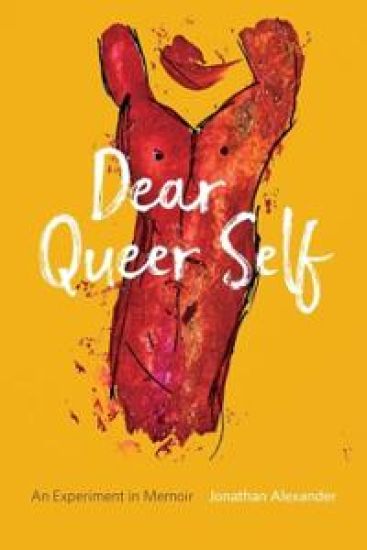
An unvarnished accounting of one man’s struggle toward sexual and emotional maturity. In this unconventional memoir, Jonathan Alexander addresses wry and affecting missives to a conflicted younger self. Focusing on three years—1989, 1993, and 1996—Dear Queer Self follows the author through the homophobic heights of the AIDS epidemic, the fall of the Berlin Wall, the election of Bill Clinton, and the steady advancements in gay rights that followed. With humor and wit afforded by hindsight, Alexander relives his closeted college years, his experiments with his sexuality in graduate school, his first marriage to a woman, and his budding career as a college professor. As he moves from tortured self-denial to hard-won self-acceptance, the author confronts the deeply uncomfortable ways he is implicated in his own story. More than just a coming-out narrative, Dear Queer Self is both an intimate psychological exploration and a cultural examination—a meshing of inner and outer realities and a personal reckoning with how we sometimes torture the truth to make a life. It is also a love letter, an homage to a decade of rapid change, and a playlist of the sounds, sights, and feelings of a difficult, but ultimately transformative, time.

An archive of personal trauma that addresses how a culture still toxic to queer people can reshape a body In the summer of 2019, Jonathan Alexander had a minor stroke, what his doctors called an "eye stroke." A small bit of cholesterol came loose from a vein in his neck and instead of shooting into his brain and causing damage, it lodged itself in a branch artery of his retina, resulting in a permanent blindspot in his right eye. In Stroke Book, Alexander recounts both the immediate aftermath of his health crisis, which marked deeper health concerns, as well as his experiences as a queer person subject to medical intervention. A pressure that the queer ill contend with is feeling at fault for their condition, of having somehow chosen illness as punishment for their queerness, however subconsciously. Queer people often experience psychic and somatic pressures that not only decrease their overall quality of life but can also lead to shorter lifespans. Emerging out of a medical emergency and a need to think and feel that crisis through the author's sexuality, changing sense of dis/ability, and experience of time, Stroke Book invites readers on a personal journey of facing a health crisis while trying to understand how one's sexual identity affects and is affected by that crisis. Pieceing and stitching together his experience in a queered diary form, Alexander's lyrical prose documents his ongoing, unfolding experience in the aftermath of the stroke. Through the fracturing of his text, which almost mirrors his fractured sight post-stroke, the author grapples with his shifted experience of time, weaving in and out, while he tracks the aftermath of what he comes to call his "incident" and meditates on how a history of homophobic encounters can manifest in embodied forms. The book situates itself within a larger queer tradition of writing—first, about the body, then about the body unbecoming, and then, yet further, about the body ongoing, even in the shadow of death. Stroke Book also documents the complexities of critique and imagination while holding open a space for dreaming, pleasure, intimacy, and the unexpected.
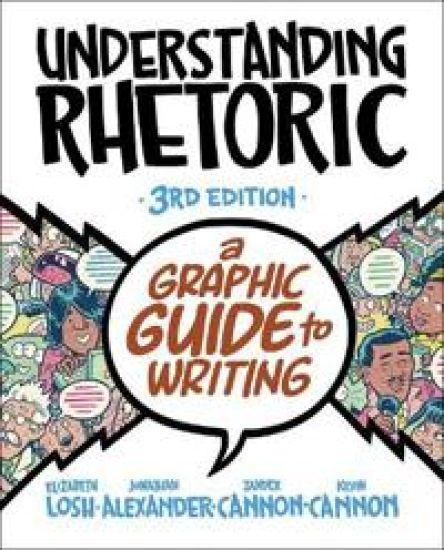
Understanding Rhetoric
Elizabeth Losh; Jonathan Alexander; Kevin Cannon; Zander Cannon
Macmillan Learning
2020
nidottu
Understanding Rhetoric is the first of its kind, illustrated guide to writing that delivers expert writing advice through engaging visuals.
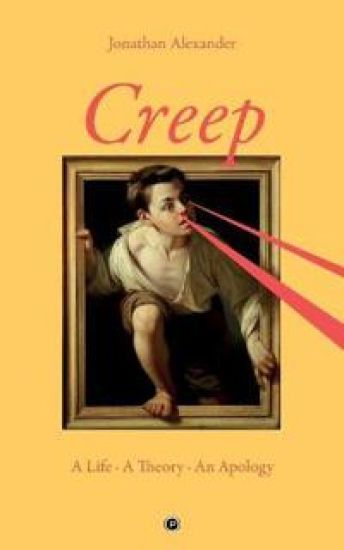
"In a remarkable study that creeps between the genres of memoir, theory, and even manifesto, Jonathan Alexander gives us a fresh perspective on creepiness. Drawing on his experience as a victim of homophobia, he suggests that labeling someone creepy may be the creepiest move of all - while at the same time practicing a vulnerable, critical, and hopeful form of creepiness all his own." (Adam Kotsko, author of Creepiness, Zero Books, 2015)"Setting out to write a memoir is already a creepy sort of impulse, but Creep, Jonathan Alexander's exploration of his inner one, solves that impulse by confronting it - theoretically and wittily and with a rhetorician's persuasive aplomb. Confronting it? Well, not exactly. He seduces the reader by seducing himself in this meta exercise in memoir writing. I've never "meta creep" I didn't finally like in some way. I certainly liked this Creep and the man and writer who, confessing to be one, created this book. (Kevin Sessums, author of I Left It on the Mountain, Picador, 2015)Creeps surround us, seemingly everywhere. People creep up on each other both on the streets and online, with digital technologies vectoring a lot of cyber-stalking. It's so easy to spy on people that "creep catching" has even become a form of news entertainment in shows such as "To Catch a Predator." But what defines a creep is so broad that nearly anyone can be a creep at times. Many of us wonder if we ourselves have been creepy, or if perhaps we engage in behavior that, if others knew, would easily earn us the title "creep." Even Donald Trump, during the raucous 2016 campaign, was called a "creep" on several occasions by various news media.Indeed, for many of us, the specter of the creep is not just threatening, but exciting - exciting perhaps in the possibility of threat. Yes, we get creeped out. But we are also fascinated by creeps, perhaps in part because we all sense the potential inside ourselves for creepy behavior.In this provocative and engaging new book, Jonathan Alexander interweaves personal narrative and cultural analyses to explore what it means to be a creep. Calling this work a critical memoir, he draws on his own experiences growing up gay in the deep south, while also interrogating examples from literature and popular film and media, to approach the figure of the creep with some sympathy. Ranging widely over contemporary culture, especially the ever-creeping presence of nearly ubiquitous surveillance, Alexander confesses his own creepiness while also explaining to us what being creepy can show us in turn about our culture. He also resurrects some famous "creeps" from the past, such as J.R. Ackerley, to explore what makes a creep creepy, and how even the best of us succumb at times to being creeps. Ultimately, Alexander argues, a study of creepiness might offer us critical insight into the fundamental perversity of how we live. Creep: A Life, A Theory, an Apology is a timely meditation for our strange and creepy times.
Writing Youth: Young Adult Fiction as Literacy Sponsorship shows how many young adult novels model for young people ways to manage the various media tools that surround them. Jonathan Alexander examines not only young adult texts and their media ecologies but also young people’s multiliterate media making in response to their favorite texts and stories. As such, this book will be of interest to anyone concerned about young people’s literacies and the relationship between literacy development and the culture industries.
On Multimodality
Jonathan Alexander; Jacqueline Rhodes
National Council of Teachers of English
2014
nidottu
This book attempts to flesh out and share some of the ideas that are not well documented, written or otherwise available regarding metrics that can be used to analyze coders and software teams. We have thoughtful books and material on interviewing, skills-testing, project management and team management, and on Agile and other methodologies that make the development process more effective. But we have never had much discussion or exploration regarding a quantitative and analytical approach to understand the work of individual coders, and to help improve software teams.
Despite its centrality to much of contemporary personal and public discourse, sexuality remains infrequently discussed in most composition courses, and in our discipline at large. Moreover, its complicated relationship to discourse, to the very languages we use to describe and define our worlds, is woefully understudied in our discipline. Discourse about sexuality, and the discourse of sexuality, surround uscirculating in the news media, on the Web, in conversations, and in the very languages we use to articulate our interactions with others and our understanding of ourselves. It forms a core set of complex discourses through which we approach, make sense of, and construct a variety of meanings, politics, and identities. In Literacy, Sexuality, Pedagogy, Jonathan Alexander argues for the development of students' 'sexual literacy.' Such a literacy is not just concerned with developing fluency with sexuality as a 'hot' topic, but with understanding the intimate interconnectedness of sexuality and literacy in Western culture.Using the work of scholars in queer theory, sexuality studies, and the New Literacy Studies, Alexander unpacks what he sees as a crucial--if often overlooked--dimension of literacy: the fundamental ways in which sexuality has become a key component of contemporary literate practice, of the stories we tell about ourselves, our communities, and our political investments. Alexander then demonstrates through a series of composition exercises and writing assignments how we might develop students' understanding of sexual literacy. Examining discourses of gender, heterosexuality, and marriage allows students (and instructors) a critical opportunity to see how the languages we use to describe ourselves and our communities are saturated with ideologies of sexuality. Understanding how sexuality is constructed and deployed as a way to 'make meaning' in our culture gives us a critical tool both to understand some of the fundamental ways in which we know ourselves and to challenge some of the norms that govern our lives.In the process, we become more fluent with the stories that we tell about ourselves and discover how normative notions of sexuality enable (and constrain) narrations of identity, culture, and politics. Such develops not only our understanding of sexuality, but of literacy, as we explore how sexuality is a vital, if vexing, part of the story of who we are.

Bisexuality and Transgenderism
Fritz Klein; Karen Yescavage; Jonathan Alexander
Routledge Member of the Taylor and Francis Group
2004
sidottu
Explore the common groundand the important differencesbetween bisexuality and transgenderism! This book, guaranteed to provoke debate and discussion of sexuality and gender, is the first devoted exclusively to the relationship between transgenderism and bisexuality. Combining the work of scholars and activists, professional writers and lay people, Bisexuality and Transgenderism: InterSEXions of the Others proesents ideas, thoughts, feelings, and insights from a variety of contributors who are committed to understandingand deepening our understanding ofgender and sexuality. You’ll find scholarly essays, narratives, poetry, and a revealing interview with four male-to-female transsexuals, two of whom are married to women who also participate in the discussion. In addition, the book includes insightful chapters by well-known advocates of transgenderism, including Jamison James Green, Coralee Drechsler, and Matthew Kailey. The editors of Bisexuality and Transgenderism: InterSEXions of the Others make the provocative but crucial claim that the larger queer community looks at B and T lives as mere add-ons to L and G. In this book they focus attention on bisexuality and transgenderismmoving the margins to center stage and exploring how sexuality, gender, desire, and intimacy are constructed and circulate in our society. The book’s inclusion of voices and scholarship from Eastern cultures challenges our understanding of sexuality and gender constructions all the more, giving this collection a global scope. Here is a sample of what Bisexuality and Transgenderism: InterSEXions of the Others examines: biphobia and transphobia within the United States’ gay and lesbian community the bi/trans and subversive aspects of the works and images of cultural icons Angelina Jolie and Sandra Bernhardt how bisexual and transgendered identities are socially constructed through relationships the false promise of pomosexual playwhy the concepts of postmodern sexuality fail to rewrite the construction of gender why swingers who practice bisexual and transgender behavior are often disdained and marginalized by other GLBT people suicidal thoughts and other mental health concerns of bisexual males and females, as well as transgender people Eastern perspectives on sexual/gender identitieswith revealing chapters on gender identity in Japan and Indonesia
Bisexuality and Transgenderism
Fritz Klein; Karen Yescavage; Jonathan Alexander
Routledge Member of the Taylor and Francis Group
2004
nidottu
Explore the common groundand the important differencesbetween bisexuality and transgenderism! This book, guaranteed to provoke debate and discussion of sexuality and gender, is the first devoted exclusively to the relationship between transgenderism and bisexuality. Combining the work of scholars and activists, professional writers and lay people, Bisexuality and Transgenderism: InterSEXions of the Others proesents ideas, thoughts, feelings, and insights from a variety of contributors who are committed to understandingand deepening our understanding ofgender and sexuality. You’ll find scholarly essays, narratives, poetry, and a revealing interview with four male-to-female transsexuals, two of whom are married to women who also participate in the discussion. In addition, the book includes insightful chapters by well-known advocates of transgenderism, including Jamison James Green, Coralee Drechsler, and Matthew Kailey. The editors of Bisexuality and Transgenderism: InterSEXions of the Others make the provocative but crucial claim that the larger queer community looks at B and T lives as mere add-ons to L and G. In this book they focus attention on bisexuality and transgenderismmoving the margins to center stage and exploring how sexuality, gender, desire, and intimacy are constructed and circulate in our society. The book’s inclusion of voices and scholarship from Eastern cultures challenges our understanding of sexuality and gender constructions all the more, giving this collection a global scope. Here is a sample of what Bisexuality and Transgenderism: InterSEXions of the Others examines: biphobia and transphobia within the United States’ gay and lesbian community the bi/trans and subversive aspects of the works and images of cultural icons Angelina Jolie and Sandra Bernhardt how bisexual and transgendered identities are socially constructed through relationships the false promise of pomosexual playwhy the concepts of postmodern sexuality fail to rewrite the construction of gender why swingers who practice bisexual and transgender behavior are often disdained and marginalized by other GLBT people suicidal thoughts and other mental health concerns of bisexual males and females, as well as transgender people Eastern perspectives on sexual/gender identitieswith revealing chapters on gender identity in Japan and Indonesia
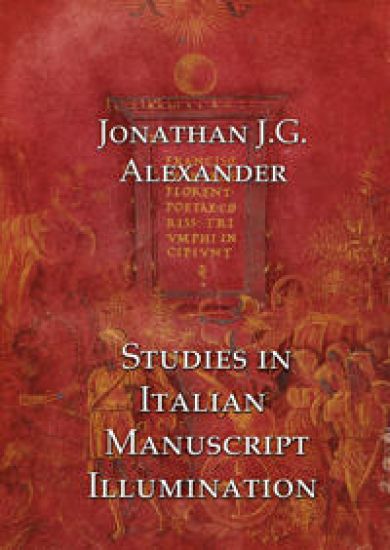
The author is Professor at the Institute of Fine Arts at New York University, and a noted authority on Italian medieval and Renaissance manuscript illumination. His numerous publications include Medieval Illuminators and Their Methods of Work, and he recently organized the exhibition The Painted Page: Italian Renaissance Book Illumination 1450-1550 at the Royal Academy of London. The present volume presents a comprehensive selection of Professor Alexander's papers on Italian manuscript illumination, from the medieval period through the Renaissance. These feature some of the most celebrated works of one of the great ages of book production. A paper on marginal illustrations in Italian manuscripts is published here for the first time, and the older studies have been extensively revised and updated. There is a comprehensive index, and a new introduction by the author.
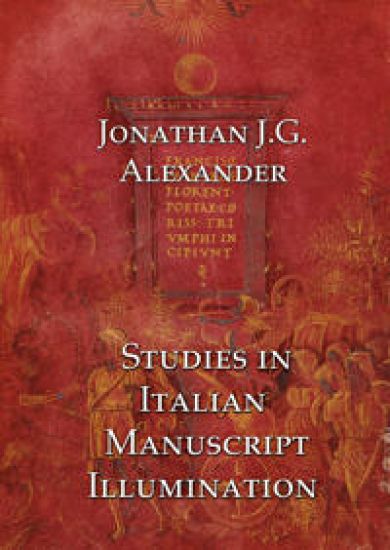
The author is Professor at the Institute of Fine Arts at New York University, and a noted authority on Italian medieval and Renaissance manuscript illumination. His numerous publications include Medieval Illuminators and Their Methods of Work, and he recently organized the exhibition The Painted Page: Italian Renaissance Book Illumination 1450-1550 at the Royal Academy of London. The present volume presents a comprehensive selection of Professor Alexander's papers on Italian manuscript illumination, from the medieval period through the Renaissance. These feature some of the most celebrated works of one of the great ages of book production. A paper on marginal illustrations in Italian manuscripts is published here for the first time, and the older studies have been extensively revised and updated. There is a comprehensive index, and a new introduction by the author.