Kirjojen hintavertailu. Mukana 12 595 353 kirjaa ja 12 kauppaa.

Kirjailija

Jonathan Crary

Kirjat ja teokset yhdessä paikassa: 12 kirjaa, julkaisuja vuosilta 1992-2025, suosituimpien joukossa Luc Tuymans: Nice. Vertaile teosten hintoja ja tarkista saatavuus suomalaisista kirjakaupoista.

12 kirjaa

Kirjojen julkaisuhaarukka 1992-2025.

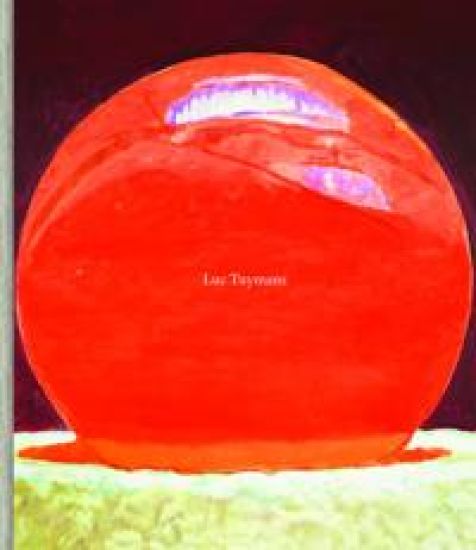
Luc Tuymans: Nice

Luc Tuymans: Nice

Luc Tuymans; Jonathan Crary

David Zwirner
2024
sidottu
Stunning translations of images from the internet and the artist’s iPhone to canvas, Luc Tuymans’s quiet paintings belie an underlying moral complexity. 'Once Tuymans's muted compositions felt fatalistic; now they appear as committed assaults on our digital fragmentation and the lies that thrive in its cracks.' — Jason Farago, The New York Times One of the most important painters working today, Luc Tuymans pioneered a distinctive figurative style beginning in the 1980s that has proven singularly influential among his peers as well as subsequent generations of artists. Tuymans’s deeply resonant compositions insist on the power of images to simultaneously convey and conceal meaning. Rendered in a restrained and muted palette, the artist’s canvases are based on preexisting imagery from a range of historical, cultural, and popular media sources. This monograph of recent work reveals how Tuymans’s paintings grasps the mystery, strangeness, and possibilities of contemporary image making. It highlights a body of work that Tuymans has been working on since 2020, bringing together three exhibitions: Good Luck, at David Zwirner, Hong Kong; Eternity, at David Zwirner, Paris; and The Barn, at David Zwirner, New York. For this trilogy, Tuymans has heightened the contrast and saturation in his paintings, underscoring the urgency of our contemporary global moment. With an introduction by Joshua Cohen, and texts by the art historians Jonathan Crary and Éric de Chassey, the writer and critic Lynne Tillman, and the writer Su Wei, this publication offers an in-depth, dimensional understanding of both Tuymans’s outlook and his assertion of the relevance of painting in our digitally saturated world.
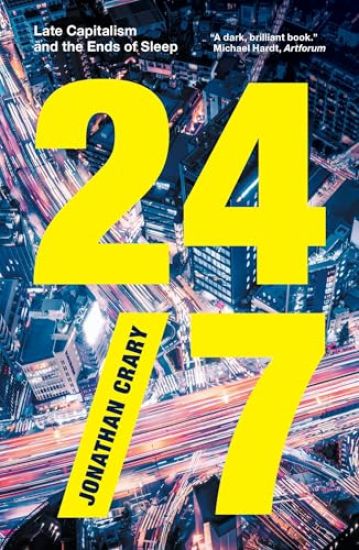
24/7

24/7

Jonathan Crary

Verso Books
2025
nidottu
The bestselling and internationally translated book 24/7: Late Capitalism and the Ends of Sleep explores some of the ruinous consequences of the expanding non-stop processes of twenty-first-century capitalism. The marketplace now operates through every hour of the clock, pushing us into constant activity and eroding forms of community and political expression, damaging the fabric of everyday life. Jonathan Crary examines how this interminable non-time blurs any separation between an intensified, ubiquitous consumerism and emerging strategies of control and surveillance.
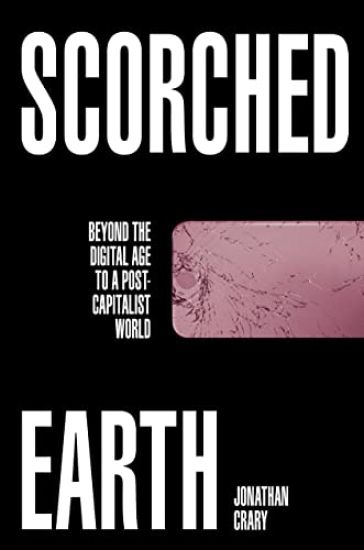
Scorched Earth

Scorched Earth

Jonathan Crary

Verso Books
2023
nidottu
Refusing the digital world of late capitalism In this uncompromising essay, Jonathan Crary presents the obvious but unsayable reality: our "digital age" is synonymous with the disastrous terminal stage of global capitalism and its financialisation of social existence, mass impoverishment, ecocide, and military terror. Scorched Earth surveys the wrecking of a living world by the internet complex and its devastation of communities and their capacities for mutual support.This polemic by the author of 24/7 dismantles the presumption that social media could be an instrument of radical change and contends that the networks and platforms of transnational corporations are intrinsically incompatible with a habitable earth or with the human interdependence needed to build egalitarian post-capitalist forms of life.
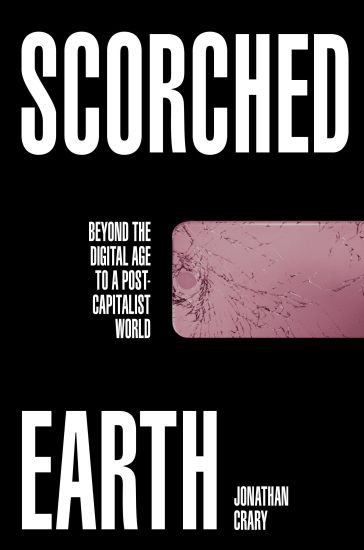
Scorched Earth

Scorched Earth

Jonathan Crary

Verso Books
2022
sidottu
Selected as one of LitHub's 38 Favorite Books of 2022Finalist for the 2022 Big Other Book Award for NonfictionIn this uncompromising essay, Jonathan Crary presents the obvious but unsayable reality: our 'digital age' is synonymous with the disastrous terminal stage of global capitalism and its financialization of social existence, mass impoverishment, ecocide, and military terror. Scorched Earth surveys the wrecking of a living world by the internet complex and its devastation of communities and their capacities for mutual support. This polemic by the author of 24/7 dismantles the presumption that social media could be instruments of radical change and contends that the networks and platforms of transnational corporations are intrinsically incompatible with a habitable earth or with the human interdependence needed to build egalitarian post-capitalist forms of life.
24/7 Senkapitalismen och sömnens slut

24/7 Senkapitalismen och sömnens slut

Jonathan Crary

OEI Editör
2016
nidottu
För den samtida kapitalismen är sömnen något outhärdligt. Jonathan Crarys 24/7 – Senkapitalismen och sömnens slut beskriver ett tillstånd där ständig aktivitet i digitala nätverk, oavbruten tillgänglighet för avreglerad just-i-tid-produktion och noggrant kartlagd dygnet runt-konsumtion håller på att bryta ned den sista naturliga barriären mot människans fullkomliga integrering i den globala marknadens aldrig vilande kretsar. Ett konstant upplyst beredskapsläge är i färd med att ersätta vardagslivets skuggzoner, avbrott och gemenskapsformer på ett sätt som stänger den politiska tankens och handlingens dimensioner.24/7 undersöker sömnens förvandlingar under skiftande historiska och materiella förutsättningar, och visar hur den samtida teknokulturens interaktiva miljöer inrättar en ny övervaknings- och kontrollregim som hotar möjligheten att ens drömma om ett annat, gemensamt, liv.
Suspensions of Perception

Suspensions of Perception

Jonathan Crary

MIT Press
2001
pokkari
Suspensions of Perception decisively relocates the problem of aesthetic contemplation within a broader collective encounter with the unstable nature of perception-in psychology, philosophy, neurology, early cinema, and photography.Suspensions of Perception is a major historical study of human attention and its volatile role in modern Western culture. It argues that the ways in which we intently look at or listen to anything result from crucial changes in the nature of perception that can be traced back to the second half of the nineteenth century.Focusing on the period from about 1880 to 1905, Jonathan Crary examines the connections between the modernization of subjectivity and the dramatic expansion and industrialization of visual/auditory culture. At the core of his project is the paradoxical nature of modern attention, which was both a fundamental condition of individual freedom, creativity, and experience and a central element in the efficient functioning of economic and disciplinary institutions as well as the emerging spaces of mass consumption and spectacle.Crary approaches these issues through multiple analyses of single works by three key modernist painters-Manet, Seurat, and Cezanne-who each engaged in a singular confrontation with the disruptions, vacancies, and rifts within a perceptual field. Each in his own way discovered that sustained attentiveness, rather than fixing or securing the world, led to perceptual disintegration and loss of presence, and each used this discovery as the basis for a reinvention of representational practices.Suspensions of Perception decisively relocates the problem of aesthetic contemplation within a broader collective encounter with the unstable nature of perception-in psychology, philosophy, neurology, early cinema, and photography. In doing so, it provides a historical framework for understanding the current social crisis of attention amid the accelerating metamorphoses of our contemporary technological culture.
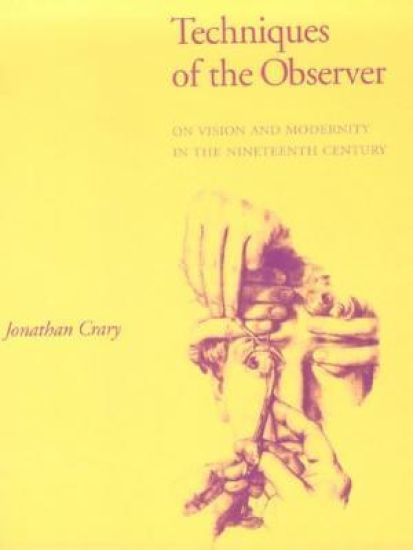
Techniques of the Observer

Techniques of the Observer

Jonathan Crary

MIT Press
1992
pokkari
Jonathan Crary's Techniques of the Observer provides a dramatically new perspective on the visual culture of the nineteenth century, reassessing problems of both visual modernism and social modernity. This analysis of the historical formation of the observer is a compelling account of the prehistory of the society of the spectacle.In Techniques of the Observer Jonathan Crary provides a dramatically new perspective on the visual culture of the nineteenth century, reassessing problems of both visual modernism and social modernity.Inverting conventional approaches, Crary considers the problem of visuality not through the study of art works and images, but by analyzing the historical construction of the observer. He insists that the problems of vision are inseparable from the operation of social power and examines how, beginning in the 1820s, the observer became the site of new discourses and practices that situated vision within the body as a physiological event. Alongside the sudden appearance of physiological optics, Crary points out, theories and models of "subjective vision" were developed that gave the observer a new autonomy and productivity while simultaneously allowing new forms of control and standardization of vision.Crary examines a range of diverse work in philosophy, in the empirical sciences, and in the elements of an emerging mass visual culture. He discusses at length the significance of optical apparatuses such as the stereoscope and of precinematic devices, detailing how they were the product of new physiological knowledge. He also shows how these forms of mass culture, usually labeled as "realist," were in fact based on abstract models of vision, and he suggests that mimetic or perspectival notions of vision and representation were initially abandoned in the first half of the nineteenth century within a variety of powerful institutions and discourses, well before the modernist painting of the 1870s and 1880s.