Kirjojen hintavertailu. Mukana 12 595 353 kirjaa ja 12 kauppaa.

Kirjailija

Jonathan Culpeper

Kirjat ja teokset yhdessä paikassa: 16 kirjaa, julkaisuja vuosilta 2010-2023, suosituimpien joukossa The Arden Encyclopedia of Shakespeare's Language. Vertaile teosten hintoja ja tarkista saatavuus suomalaisista kirjakaupoista.

16 kirjaa

Kirjojen julkaisuhaarukka 2010-2023.

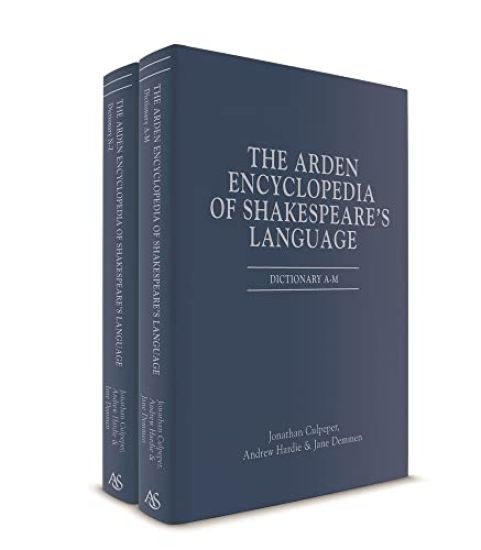
The Arden Encyclopedia of Shakespeare's Language

The Arden Encyclopedia of Shakespeare's Language

Jonathan Culpeper; Andrew Hardie; Jane Demmen

BLOOMSBURY PUBLISHING PLC
2023
muu
The Arden Encyclopedia of Shakespeare’s Language is the first comprehensive account of Shakespeare’s language to use computational methods derived from corpus linguistics – methods of choice for today’s lexicographer.These first two volumes in this growing encyclopedia together provide a non-etymological A-Z ‘dictionary’ that works through the frequency of word usage to reveal patterns of meaning and usage, and to examine what Shakespeare’s words actually do in the environments they inhabit.All words from all of Shakespeare’s plays are included – not just words judged to be ‘difficult’ – only leaving out proper names. The dictionary also covers words whose first known use is in Shakespeare (e.g. ear-piercing).Entries focus on the use and meanings of Shakespeare’s words, both in the context of what he wrote and in the context in which he wrote.Every word is compared with a 321 million word corpus comprising the work of Shakespeare’s contemporaries.Internal comparisons reveal how Shakespeare’s language varies dynamically across his works, showing, for example, whether certain words are peculiar to tragedies, comedies or histories, or to certain social groups, and whether they have a particular stylistic flavour.Definitions are kept clear and concise, making the dictionary an ideal accessible reference.Words are classified according to their frequency band: how often they occur, in comparison to other words in Shakespeare’s plays. Entries for words that occur more than 50 times contain charts showing the word’s frequency associations with:- Comedy, history or tragedy (and whether this differs from other playwrights);- Male or female characters (and whether this differs from other playwrights);- Particular social status groups of characters (and whether this differs from other playwrights)- Particular genres in published writing of the time (e.g. literary, religious, administrative, informational, instructional). The volumes together establish in detail both what is unique about Shakespeare’s language and what Shakespeare’s language meant to his contemporaries, including, for example, their attitudes towards love or death, what it meant to be Welsh or a harlot, or even the significance of eating fish as opposed to beef.This innovative reference resource is essential for English, Drama and Linguistics libraries, offering Shakespeare scholars and advanced students of Shakespeare and early modern literature fresh linguistic insights into Shakespeare’s rich language.
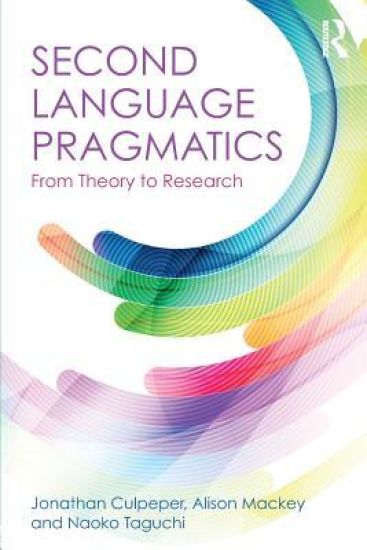
Second Language Pragmatics

Second Language Pragmatics

Jonathan Culpeper; Alison Mackey; Naoko Taguchi

Routledge
2018
nidottu
Second Language Pragmatics: From Theory to Research aims to reinvigorate this field, pointing the way forward to new methodologies that can drive, or be driven by, new theoretical developments. With a unique combination of leading international expertise in general pragmatics, L2 pragmatics, and research methodology, the authors describe in detail the methods, including the most recent techniques, by which pragmatics of all types can be pursued in L2 contexts. This volume argues that L2 pragmatics research needs to expand from its initial base by drawing from a wider range of sources, such as Corpus Linguistics and Psycholinguistics. Clear, accessible, and practical, Second Language Pragmatics will be valuable to novice and seasoned researchers alike in second language pragmatics, general pragmatics, and second language acquisition courses.
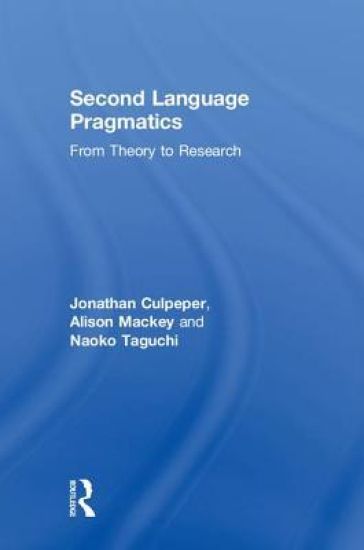
Second Language Pragmatics

Second Language Pragmatics

Jonathan Culpeper; Alison Mackey; Naoko Taguchi

Routledge
2018
sidottu
Second Language Pragmatics: From Theory to Research aims to reinvigorate this field, pointing the way forward to new methodologies that can drive, or be driven by, new theoretical developments. With a unique combination of leading international expertise in general pragmatics, L2 pragmatics, and research methodology, the authors describe in detail the methods, including the most recent techniques, by which pragmatics of all types can be pursued in L2 contexts. This volume argues that L2 pragmatics research needs to expand from its initial base by drawing from a wider range of sources, such as Corpus Linguistics and Psycholinguistics. Clear, accessible, and practical, Second Language Pragmatics will be valuable to novice and seasoned researchers alike in second language pragmatics, general pragmatics, and second language acquisition courses.
Digital Literary Studies

Digital Literary Studies

David L. Hoover; Jonathan Culpeper; Kieran O'Halloran

Routledge
2016
nidottu
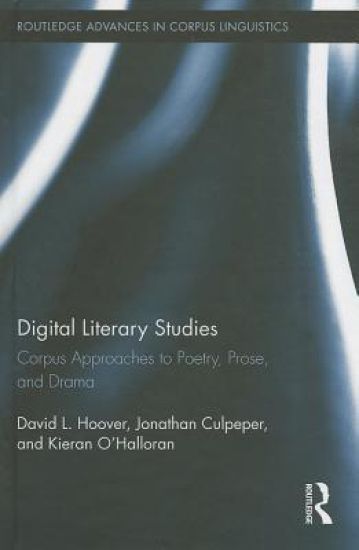
Digital Literary Studies presents a broad and varied picture of the promise and potential of methods and approaches that are crucially dependent upon the digital nature of the literary texts it studies and the texts and collections of texts with which they are compared. It focuses on style, diction, characterization, and interpretation of single works and across larger groups of texts, using both huge natural language corpora and smaller, more specialized collections of texts created for specific tasks, and applies statistical techniques used in the narrower confines of authorship attribution to broader stylistic questions. It addresses important issues in each of the three major literary genres, and intentionally applies different techniques and concepts to poetry, prose, and drama. It aims to present a provocative and suggestive sample intended to encourage the application of these and other methods to literary studies. Hoover, Culpeper, and O’Halloran push the methods, techniques, and concepts in new directions, apply them to new groups of texts or to new questions, modify their nature or method of application, and combine them in innovative ways.
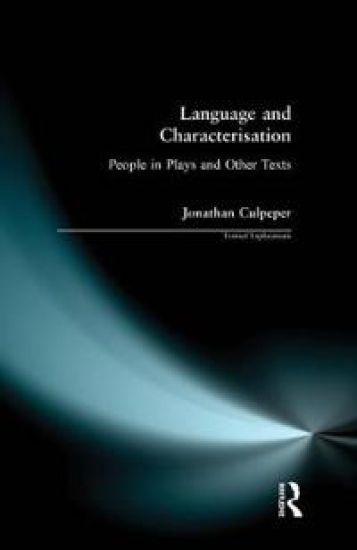
Language and Characterisation

Language and Characterisation

Jonathan Culpeper

Routledge
2016
sidottu
Textual Explorations General Editors-Mick Short, Lancaster UniversityElena Semino, Lancaster UniversityThe focus of this series is on the stylistic analysis of literary and non-literary texts, and the theoretical issues which such work raises. Textual Explorations will include books that cover studies of literary authors, genres and other groupings, stylistic studies of non-literary texts, translation study, the teaching of language and literature, the empirical study of literature, and corpus approaches to stylistics and literature study. Books in the series will centre on texts written in English. Readership of the series is mainly undergraduate and postgraduate students, although advanced sixth formers will also find the books accessible. The series will be of particular interest to those who study English language, English literature, text linguistics, discourse analysis and communication studies. Language & Characterisation- People in Plays & Other Texts explores how the words of a text create a particular impression of a character in the reader's mind. Drawing together theories from linguistics, social cognition and literary stylistics, it is the first book-length study to focus on:the role of language and characterisationcharacterisation in the dialogue of play textsContaining numerous examples from Shakespeare's plays, the book also considers a wide range of other genres, including, prose fiction, verse, films, advertisements, jokes and newspapers. Language and Characterisation is as practical as it is theoretical and equips readers with analytical frameworks to reveal and explain both the cognitive and the linguistic sides of characterisation. Clear and detailed introductions are given to the theories, and useful suggestions for further analysis are also made at the end of each part of the book. The book will be essential reading for students and researchers of language, literature and communication.
History of English

History of English

Jonathan Culpeper

Routledge
2015
sidottu
Routledge Language Workbooks provide absolute beginners with practical introductions to core areas of language study. Books in the series provide comprehensive coverage of the area as well as a basis for further investigation. Each Language Workbook guides the reader through the subject using ‘hands-on’ language analysis, equipping them with the basic analytical skills needed to handle a wide range of data. Written in a clear and simple style, with all technical concepts fully explained, Language Workbooks can be used for independent study or as part of a taught class.History of English:• examines the history of the English language in order to explain the English that is used today• introduces key linguistic concepts• provides ‘discussion points’ to generate debate• encourages readers to think critically about the subject• involves readers in collecting and analysing their own data• contains a ‘mini-corpus’ of texts, used for exercises and to illustrate points raised in the commentaryRevised throughout, this updated edition integrates the latest research on the history of English, including an additional chapter on English letters and punctuation, and an updated bibliography. History of English, 3rd edition provides an essential introduction and workbook for students coming to this subject for the first time.
History of English

History of English

Jonathan Culpeper

Routledge
2015
nidottu
Routledge Language Workbooks provide absolute beginners with practical introductions to core areas of language study. Books in the series provide comprehensive coverage of the area as well as a basis for further investigation. Each Language Workbook guides the reader through the subject using ‘hands-on’ language analysis, equipping them with the basic analytical skills needed to handle a wide range of data. Written in a clear and simple style, with all technical concepts fully explained, Language Workbooks can be used for independent study or as part of a taught class.History of English:• examines the history of the English language in order to explain the English that is used today• introduces key linguistic concepts• provides ‘discussion points’ to generate debate• encourages readers to think critically about the subject• involves readers in collecting and analysing their own data• contains a ‘mini-corpus’ of texts, used for exercises and to illustrate points raised in the commentaryRevised throughout, this updated edition integrates the latest research on the history of English, including an additional chapter on English letters and punctuation, and an updated bibliography. History of English, 3rd edition provides an essential introduction and workbook for students coming to this subject for the first time.
Pragmatics and the English Language

Pragmatics and the English Language

Jonathan Culpeper; Michael Haugh

Red Globe Press
2014
nidottu
How do we interpret language and expose its meanings? How does pragmatics describe the English language? Where can we go to acquire a deeper understanding of pragmatics?Pragmatics and the English Language is a bold new textbook that presents an innovative and exciting way of looking at the subject. This new perspective, called integrative pragmatics, steers a course between what have historically been considered irreconcilable perspectives. With an emphasis on empirical data, the book is filled with examples from cartoons, films and historical sources, as well as face-to-face and digitally-mediated interactions, all of which are used to help the reader develop a better understanding of the theory.Pragmatics and the English Language:- Focuses on both the pragmatic aspects of English and how pragmatics is shaped by English- Synthesizes traditional ideas with state-of-the-art pragmatics research- Goes far beyond the coverage found in other pragmatics textbooksShedding light on the English language in highly original ways, Pragmatics and the English Language is essential reading for advanced students of the English language and linguistics, along with anybody else who wishes to develop a more in-depth knowledge of pragmatics.
Pragmatics and the English Language

Pragmatics and the English Language

Jonathan Culpeper; Michael Haugh

Red Globe Press
2014
sidottu
How do we interpret language and expose its meanings? How does pragmatics describe the English language? Where can we go to acquire a deeper understanding of pragmatics?Pragmatics and the English Language is a bold new textbook that presents an innovative and exciting way of looking at the subject. This new perspective, called integrative pragmatics, steers a course between what have historically been considered irreconcilable perspectives. With an emphasis on empirical data, the book is filled with examples from cartoons, films and historical sources, as well as face-to-face and digitally-mediated interactions, all of which are used to help the reader develop a better understanding of the theory.Pragmatics and the English Language:- Focuses on both the pragmatic aspects of English and how pragmatics is shaped by English- Synthesizes traditional ideas with state-of-the-art pragmatics research- Goes far beyond the coverage found in other pragmatics textbooksShedding light on the English language in highly original ways, Pragmatics and the English Language is essential reading for advanced students of the English language and linguistics, along with anybody else who wishes to develop a more in-depth knowledge of pragmatics.
Early Modern English Dialogues

Early Modern English Dialogues

Jonathan Culpeper; Merja Kytö

Cambridge University Press
2014
pokkari
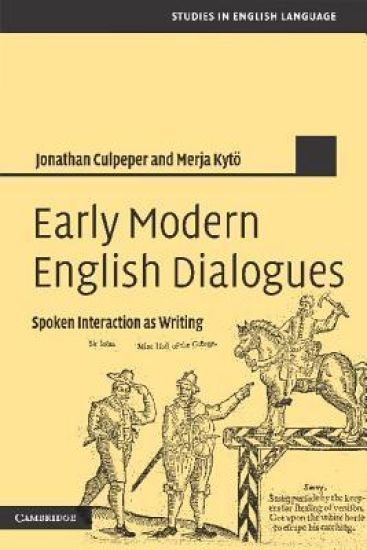
Language is largely comprised of face-to-face spoken interaction; however, the method, description and theory of traditional historical accounts of English have been largely based on scholarly and literary writings. Using the Corpus of English Dialogues 1560–1760, in this book Culpeper and Kytö offer a unique account of the linguistic features in several speech-related written genres, comprising trial proceedings, witness depositions, plays, fiction and didactic works. The volume is the first to provide innovative analyses of several neglected written genres, demonstrating how they might be researched, and highlighting the theories which are needed to underpin this research. Through this, the authors are able to create a fascinating insight into what spoken interaction in Early Modern English might have been like, providing an alternative perspective to that often presented in traditional historical accounts of English.
Digital Literary Studies

Digital Literary Studies

David L. Hoover; Jonathan Culpeper; Kieran O'Halloran

Routledge
2014
sidottu
Digital Literary Studies presents a broad and varied picture of the promise and potential of methods and approaches that are crucially dependent upon the digital nature of the literary texts it studies and the texts and collections of texts with which they are compared. It focuses on style, diction, characterization, and interpretation of single works and across larger groups of texts, using both huge natural language corpora and smaller, more specialized collections of texts created for specific tasks, and applies statistical techniques used in the narrower confines of authorship attribution to broader stylistic questions. It addresses important issues in each of the three major literary genres, and intentionally applies different techniques and concepts to poetry, prose, and drama. It aims to present a provocative and suggestive sample intended to encourage the application of these and other methods to literary studies. Hoover, Culpeper, and O’Halloran push the methods, techniques, and concepts in new directions, apply them to new groups of texts or to new questions, modify their nature or method of application, and combine them in innovative ways.
Impoliteness

Impoliteness

Jonathan Culpeper

Cambridge University Press
2011
sidottu
When is language considered 'impolite'? Is impolite language only used for anti-social purposes? Can impolite language be creative? What is the difference between 'impoliteness' and 'rudeness'? Grounded in naturally-occurring language data and drawing on findings from linguistic pragmatics and social psychology, Jonathan Culpeper provides a fascinating account of how impolite behaviour works. He examines not only its forms and functions but also people's understandings of it in both public and private contexts. He reveals, for example, the emotional consequences of impoliteness, how it shapes and is shaped by contexts, and how it is sometimes institutionalised. This book offers penetrating insights into a hitherto neglected and poorly understood phenomenon. It will be welcomed by students and researchers in linguistics and social psychology in particular.
Impoliteness

Impoliteness

Jonathan Culpeper

Cambridge University Press
2011
pokkari
When is language considered 'impolite'? Is impolite language only used for anti-social purposes? Can impolite language be creative? What is the difference between 'impoliteness' and 'rudeness'? Grounded in naturally-occurring language data and drawing on findings from linguistic pragmatics and social psychology, Jonathan Culpeper provides a fascinating account of how impolite behaviour works. He examines not only its forms and functions but also people's understandings of it in both public and private contexts. He reveals, for example, the emotional consequences of impoliteness, how it shapes and is shaped by contexts, and how it is sometimes institutionalised. This book offers penetrating insights into a hitherto neglected and poorly understood phenomenon. It will be welcomed by students and researchers in linguistics and social psychology in particular.
Early Modern English Dialogues

Early Modern English Dialogues

Jonathan Culpeper; Merja Kytö

Cambridge University Press
2010
sidottu
Language is largely comprised of face-to-face spoken interaction; however, the method, description and theory of traditional historical accounts of English have been largely based on scholarly and literary writings. Using the Corpus of English Dialogues 1560–1760, in this book Culpeper and Kytö offer a unique account of the linguistic features in several speech-related written genres, comprising trial proceedings, witness depositions, plays, fiction and didactic works. The volume is the first to provide innovative analyses of several neglected written genres, demonstrating how they might be researched, and highlighting the theories which are needed to underpin this research. Through this, the authors are able to create a fascinating insight into what spoken interaction in Early Modern English might have been like, providing an alternative perspective to that often presented in traditional historical accounts of English.