Kirjojen hintavertailu. Mukana 12 200 021 kirjaa ja 12 kauppaa.

Kirjailija

Jonathan D. Moreno

Kirjat ja teokset yhdessä paikassa: 12 kirjaa, julkaisuja vuosilta 1995-2025, suosituimpien joukossa Everybody Wants to Go to Heaven but Nobody Wants to Die. Vertaile teosten hintoja ja tarkista saatavuus suomalaisista kirjakaupoista.

12 kirjaa

Kirjojen julkaisuhaarukka 1995-2025.

Everybody Wants to Go to Heaven but Nobody Wants to Die

Everybody Wants to Go to Heaven but Nobody Wants to Die

Amy Gutmann; Jonathan D. Moreno

Liveright Publishing Corporation
2020
nidottu
An eye-opening look at the inevitable moral choices that come along with tremendous medical progress, Everybody Wants to Go to Heaven but Nobody Wants to Die is a primer for all Americans to talk more honestly about health care. Beginning in the 1950s when doctors still paid house calls but regularly withheld the truth from their patients, Amy Gutmann and Jonathan D. Moreno explore an unprecedented revolution in health care and explain the problem with Americans wanting everything that medical science has to offer without debating its merits and its limits. The result: Americans today pay far more for health care while having amongst the lowest life expectancies and highest infant mortality of any affluent nation. Gutmann and Moreno—“incisive, influential, and pragmatic thinkers” (Arthur Caplan)—demonstrate that the stakes have never been higher for prolonging and improving life. From health care reform and death-with-dignity to child vaccinations and gene editing, they explain how bioethics came to dominate the national spotlight, leading and responding to a revolution in doctor-patient relations, a burgeoning world of organ transplants and new reproductive technologies that benefit millions but create a host of legal and ethical challenges. With striking examples, the authors show how breakthroughs in cancer research, infectious disease and drug development provide Americans with exciting new alternatives, yet often painful choices. They address head-on the most fundamental challenges in American health care: Why do we pay so much for health care while still lacking universal coverage? How can medical studies adequately protect individuals who volunteer for them? What’s fair when it comes to allocating organs for transplants in truly life-and-death situations? A lucid and provocative blend of history and public policy, this urgent work exposes the American paradox of wanting to have it all without paying the price.
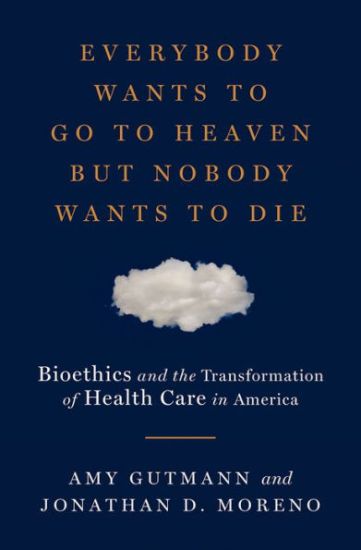
Everybody Wants to Go to Heaven but Nobody Wants to Die

Everybody Wants to Go to Heaven but Nobody Wants to Die

Amy Gutmann; Jonathan D. Moreno

Liveright Publishing Corporation
2019
sidottu
An eye-opening look at the inevitable moral choices that come along with tremendous medical progress, Everybody Wants to Go to Heaven but Nobody Wants to Die is a primer for all Americans to talk more honestly about health care. Beginning in the 1950s when doctors still paid house calls but regularly withheld the truth from their patients, Amy Gutmann and Jonathan D. Moreno explore an unprecedented revolution in health care and explain the problem with Americans wanting everything that medical science has to offer without debating its merits and its limits. The result: Americans today pay far more for health care while having amongst the lowest life expectancies and highest infant mortality of any affluent nation. Gutmann and Moreno—“incisive, influential, and pragmatic thinkers” (Arthur Caplan)—demonstrate that the stakes have never been higher for prolonging and improving life. From health care reform and death-with-dignity to child vaccinations and gene editing, they explain how bioethics came to dominate the national spotlight, leading and responding to a revolution in doctor-patient relations, a burgeoning world of organ transplants and new reproductive technologies that benefit millions but create a host of legal and ethical challenges. With striking examples, the authors show how breakthroughs in cancer research, infectious disease and drug development provide Americans with exciting new alternatives, yet often painful choices. They address head-on the most fundamental challenges in American health care: Why do we pay so much for health care while still lacking universal coverage? How can medical studies adequately protect individuals who volunteer for them? What’s fair when it comes to allocating organs for transplants in truly life-and-death situations? A lucid and provocative blend of history and public policy, this urgent work exposes the American paradox of wanting to have it all without paying the price.

Absolutely Essential

Absolutely Essential

Jonathan D. Moreno

MIT PRESS LTD
2025
nidottu
What the end of the post-World War II global political system means for bioethics and beyond. In Absolutely Essential, Jonathan Moreno explores the field of bioethics as both a creature and a key element of the post-World War II rules-based order. According to the rules-based order, international relations are to be organized according to principles of open markets, liberal democracy, and multilateral organizations. Drawing on the author's four decades of experience in the field, the book raises key questions about the future of bioethics in a changed world order, while also theorizing new ways to think about bioethics after the COVID-19 pandemic and the reordering of global alliances. For bioethicists, this book will contextualize the field in an entirely new light, while readers unfamiliar with bioethics will appreciate that this seemingly esoteric field is in fact a paradigmatic creation of the global system now undergoing sweeping change.
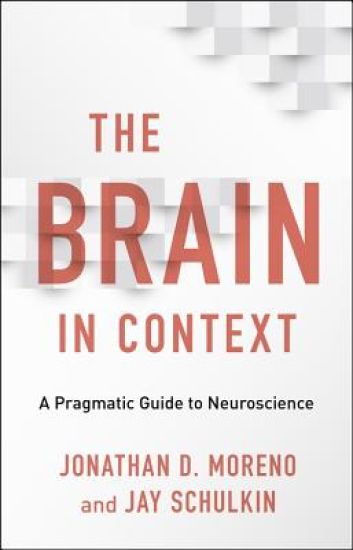
The Brain in Context

The Brain in Context

Jonathan D. Moreno; Jay Schulkin

Columbia University Press
2019
sidottu
The human brain is the most complex object in the known universe. The field of neuroscience has made remarkable strides in recent years in understanding aspects of the brain, yet we still struggle with seemingly fundamental questions about how the brain works. What lessons can we learn from neuroscience’s successes and failures? What kinds of questions can neuroscience answer, and what will remain out of reach?In The Brain in Context, the bioethicist Jonathan D. Moreno and the neuroscientist Jay Schulkin provide an accessible and thought-provoking account of the evolution of neuroscience and the neuroscience of evolution. They emphasize that the brain is not an isolated organ—it extends into every part of the body and every aspect of human life. Understanding the brain requires studying the environmental, biological, chemical, genetic, and social factors that continue to shape it. Moreno and Schulkin describe today’s transformative devices, theories, and methods, including technologies like fMRI and optogenetics as well as massive whole-brain activity maps and the attempt to create a digital simulation of the brain. They show how theorizing about the brain and experimenting with it often go hand in hand, and they raise cautions about unintended consequences of technological interventions. The Brain in Context is a stimulating and even-handed assessment of the scope and limits of what we know about how we think.
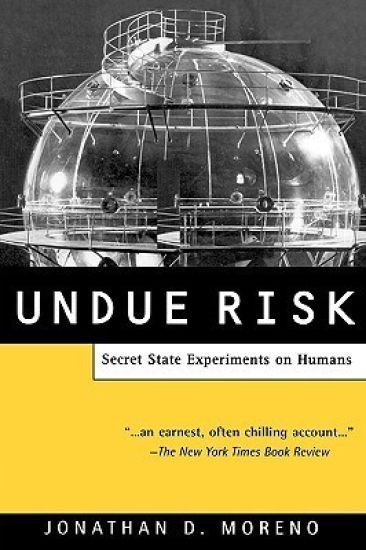
Undue Risk

Undue Risk

Jonathan D. Moreno

Routledge
2016
sidottu
From the courtrooms of Nuremberg to the battlefields of the Gulf War, Undue Risk exposes a variety of government policies and specific cases, includingplutonium injections to unwilling hospital patients, and even the attempted recruitment of Nazi medical scientists bythe U.S. government after World War II.
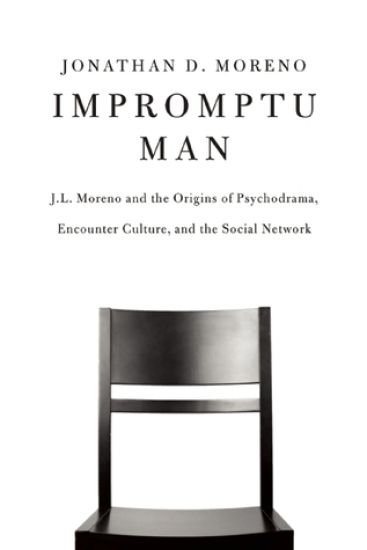
Impromptu Man

Impromptu Man

Jonathan D. Moreno

Bellevue Literary Press
2014
pokkari
"Impromptu Man captures the remarkable impact of a singular genius, J.L. Moreno, whose creations--the best-known being psychodrama--have shaped our culture in myriad ways, many unrecognized. The record will be set straight for all time by this can't-put-down biography, a tribute by Jonathan D. Moreno to his father's masterly legacy." --DANIEL GOLEMAN, author of Emotional Intelligence: Why It Can Matter More Than IQ J.L. Moreno (1889-1974), the father of psychodrama, was an early critic of Sigmund Freud, wrote landmark works of Viennese expressionism, founded an experimental theater where he discovered Peter Lorre, influenced Martin Buber, and became one of the most important psychiatrists and social scientists of his time. A mystic, theater impresario and inventor in his youth, Moreno immigrated to America in 1926, where he trained famous actors, introduced group therapy, and was a forerunner of humanistic psychology. As a social reformer, he reorganized schools and prisons, and designed New Deal planned communities for workers and farmers. Moreno's methods have been adopted by improvisational theater groups, military organizations, educators, business leaders, and trial lawyers. His studies of social networks laid the groundwork for social media like Twitter and Facebook. Featuring interviews with Clay Shirky, Gloria Steinem, and Werner Erhard, among others, original documentary research, and the author's own perspective growing up as the son of an innovative genius, Impromptu Man is both the study of a great and largely unsung figure of the last century and an epic history, taking readers from the creative chaos of early twentieth-century Vienna to the wired world of Silicon Valley. Jonathan D. Moreno, called the "most interesting bioethicist of our time" by the American Journal of Bioethics, is a professor at the University of Pennsylvania and a Senior Fellow at the Center for American Progress.
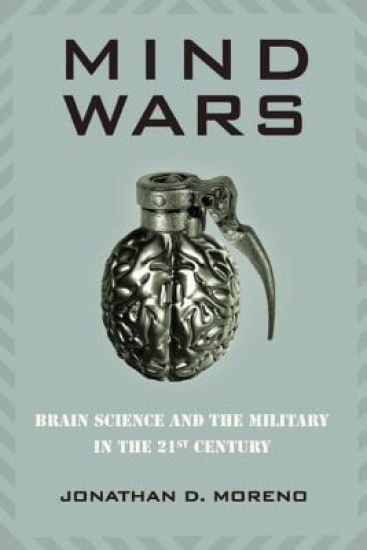
Mind Wars

Mind Wars

Jonathan D. Moreno

Bellevue Literary Press
2012
pokkari
"One of the most important thinkers describes the literally mind-boggling possibilities that modern brain science could present for national security." --LAWRENCE J. KORB, former US Assistant Secretary of Defense "Fascinating and frightening." --Bulletin of the Atomic Scientists The first book of its kind, Mind Wars covers the ethical dilemmas and bizarre history of cutting-edge technology and neuroscience developed for military applications. As the author discusses the innovative Defense Advanced Research Projects Agency (DARPA) and the role of the intelligence community and countless university science departments in preparing the military and intelligence services for the twenty-first century, he also charts the future of national security. Fully updated and revised, this edition features new material on deep brain stimulation, neuro hormones, and enhanced interrogation. With in-depth discussions of "psyops" mind control experiments, drugs that erase both fear and the need to sleep, microchip brain implants and advanced prosthetics, supersoldiers and robot armies, Mind Wars may read like science fiction or the latest conspiracy thriller, but its subjects are very real and changing the course of modern warfare. Jonathan D. Moreno has been a senior staff member for three presidential advisory commissions and has served on a number of Pentagon advisory committees. He is an ethics professor at the University of Pennsylvania and the editor-in-chief of the Center for American Progress' online magazine Science Progress.
The Body Politic

The Body Politic

Jonathan D. Moreno

Bellevue Literary Press
2011
pokkari
A Kirkus Reviews Best Book of the Year and Scientific American Book Club selection "Moreno pulls apart the debates on eugenics, abortion, end-of-life decisions, embryonic stem-cell research, reproductive cloning, chimeras and synthetic biology, among others, carefully reassembling what's at stake for each side. In graceful, sparkling prose, he illuminates intricate threads of history and complex philosophical arguments...Highly recommended for anyone interested in the[se] vital issues." --Kirkus Reviews (starred review) We have entered what is called the "biological century" and a new biopolitics has emerged to address the implications for America's collective value system, our well-being, and ultimately, our future. The Body Politic is the first book to recognize and assess this new force in our political landscape--one that fuels today's culture wars and has motivated politicians of all stripes to reexamine their platforms. As Moreno explains the most contentious issues, he also offers an engaging history of the intersection between science and democracy in American life, a reasoned (and often surprising) analysis of how different political ideologies view scientific controversies, and a vision for how the new biopolitics can help shape the quality of our lives. Jonathan D. Moreno is the David and Lyn Silfen University Professor at the University of Pennsylvania and the editor-in-chief for the Center for American Progress' online magazine, Science Progress. He divides his time between Philadelphia and Washington, DC.
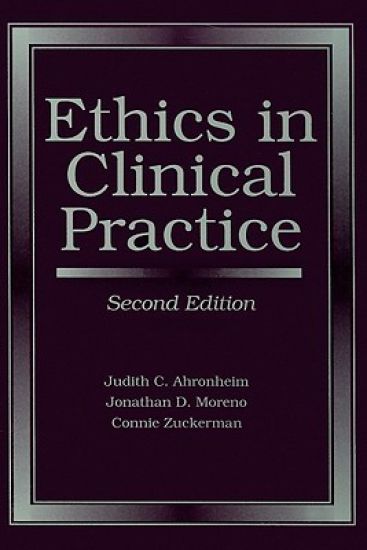
Ethics in Clinical Practice

Ethics in Clinical Practice

Judith C. Ahronheim; Jonathan D. Moreno; Connie Zuckerman

Jones and Bartlett Publishers, Inc
2004
nidottu
Ethics in Clinical Practice, Second Edition continues to focus on multidisciplinary medicine and how ethical dilemmas affect not only doctors and patients, but also nurses, social workers, members of ethics committees, hospital attorneys, administrators, and others. Greater attention is given to care in a variety of settings and across settings. Cases reflect the managed care phenomenon and cost containment, demographic changes, the electronic revolution, and the ethical dilemmas resulting from this new climate. The revised edition discusses advances in palliative medicine and its availability, and includes new data regarding attitudes and prevalence of physician-assisted suicide. Attention is given to how issues of cost containment might directly or indirectly influence patients' end-of-life treatment options. Cases are updated to include pertinent information about medical advances and legal developments, and how ethical analysis reflects these new developments.
Undue Risk

Undue Risk

Jonathan D. Moreno

Routledge
2000
nidottu
From the courtrooms of Nuremberg to the battlefields of the Gulf War, Undue Risk exposes a variety of government policies and specific cases, includingplutonium injections to unwilling hospital patients, and even the attempted recruitment of Nazi medical scientists bythe U.S. government after World War II.