Kirjojen hintavertailu. Mukana 12 390 323 kirjaa ja 12 kauppaa.

Kirjailija

Jonathan D. Quick

Kirjat ja teokset yhdessä paikassa: 5 kirjaa, julkaisuja vuosilta 2008-2021, suosituimpien joukossa The End of Epidemics. Vertaile teosten hintoja ja tarkista saatavuus suomalaisista kirjakaupoista.

Mukana myös kirjoitusasut: Jonathan D Quick

5 kirjaa

Kirjojen julkaisuhaarukka 2008-2021.

The End of Epidemics

The End of Epidemics

Jonathan D. Quick; David Heymann

Scribe Publications
2021
pokkari
COVID-19 was the dystopian nightmare pandemic experts warned us about. How do we stop it from ever happening again? COVID-19 catapulted us into a science-fiction scenario: seemingly overnight, literally billions of people around the globe had their lives upended by fear, uncertainty, bankruptcy, illness, or death. It killed millions of people, and cost the global economy trillions of dollars. An outbreak of a new, deadly, highly contagious virus was inevitable. But an explosive global pandemic was not. There is hope, and as this book explains, a pandemic-free world is possible. In The End of Epidemics, leading public health authority Dr Jonathan D. Quick tells the stories of the heroes, past and present, who have succeeded in their fights to stop the spread of illness and death. He explains the science and the politics of combatting epidemics. And he provides a detailed seven-part plan showing exactly how world leaders, health professionals, the business community, media, and ordinary citizens can work together to prevent epidemics, saving millions of lives and safeguarding our future.
The End of Epidemics

The End of Epidemics

Jonathan D Quick; Bronwyn Fryer

St. Martin's Press
2018
sidottu
"Jonathan Quick offers a compelling and intensely readable plan to prevent worldwide infectious outbreaks. The End of Epidemics is essential reading for those who might be affected by a future pandemic--that is, just about everyone."--Sandeep Jauhar, bestselling author of Heart: A History The 2020 outbreak of coronavirus has terrified the world--and revealed how unprepared we are for the next outbreak of an infectious disease. Somewhere in nature, a killer virus is boiling up in the bloodstream of a bird, bat, monkey, or pig, preparing to jump to a human being. This not-yet-detected germ has the potential to wipe out millions of lives over a matter of weeks or months. That risk makes the threat posed by ISIS, a ground war, a massive climate event, or even the dropping of a nuclear bomb on a major city pale in comparison. In The End of Epidemics, Duke Global Health Institute faculty member and past Chair of the Global Health Council Dr. Jonathan D. Quick examines the eradication of smallpox and devastating effects of influenza, AIDS, SARS, Ebola, and other viral diseases . Analyzing local and global efforts to contain these diseases and citing firsthand accounts of failure and success, Dr. Quick proposes a new set of actions which he has coined The Power of Seven, to end epidemics before they can begin. These actions include: - Spending prudently to prevent disease before an epidemic strikes, rather than spending too little, too late- Ensuring prompt, open, and accurate communication between nations and aid agencies, instead of secrecy and territorial disputes- Fighting disease and preventing panic with innovation and good science Practical and urgent, The End of Epidemics is crucial reading for citizens, health professionals, and policy makers alike. "Dr. Quick's urgent message makes one hope that this book will reach a huge audience and that its exhortations will be acted on everywhere."--The Wall Street Journal
Preventive Stress Management in Organizations

Preventive Stress Management in Organizations

James Campbell Quick; Thomas A. Wright; Joyce A. Adkins; Debra L. Nelson; Jonathan D. Quick

American Psychological Association
2012
sidottu
Preventive Stress Management in Organizations, Second Edition offers a comprehensive framework for creating healthy workplaces. Chapters examine individual and organizational sources of stress and their consequences methods and instruments for diagnosing organizational and individual stress ways to redesign work and improve professional relationships and methods for managing demands and stressors. New findings from positive psychology are woven in. Methods designed to proactively enhance health and performance at work while averting the costs and discomfort of distress are explored and illustrated by examples drawn from healthy organizations. Preventive stress management is a philosophy and set of principles grounded in public health, which organizational leaders and consultants can use to help their organization operate to its fullest potential. The approaches outlined in this book may be implemented by leaders in any organization.
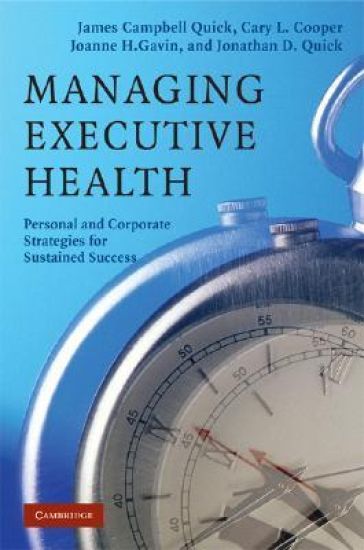
Managing Executive Health

Managing Executive Health

James Campbell Quick; Cary L. Cooper; Joanne H. Gavin; Jonathan D. Quick

Cambridge University Press
2008
sidottu
The health of managers, executives, and business leaders has a massive impact on the performance and prospects of modern organizations. If health problems are not tackled, people become less productive, less effective, and more destructive. It is clear that business leaders and human resource professionals cannot afford to ignore the impact of work-related health issues on company performance. Yet even acknowledging this fact still leaves us with a choice over how to proceed. Should we try to minimize those risks that typically lead to health problems or seek to strengthen executive health? While recognising that identifying health risks is the first step in any preventive health program, Managing Executive Health argues for a positive approach, which emphasizes physical vigour, psychological well-being, spiritual vitality, and ethical integrity. Key issues are illustrated throughout with case studies of high-profile figures from the worlds of business and politics.
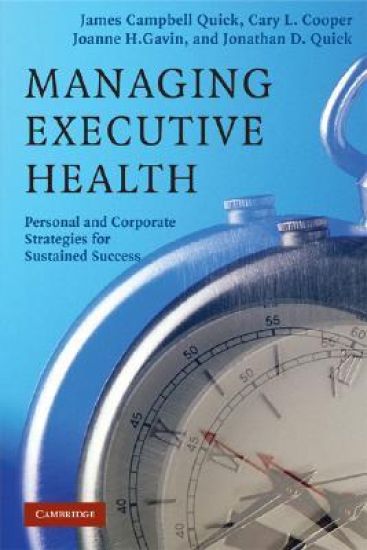
Managing Executive Health

Managing Executive Health

James Campbell Quick; Cary L. Cooper; Joanne H. Gavin; Jonathan D. Quick

Cambridge University Press
2008
pokkari
The health of managers, executives, and business leaders has a massive impact on the performance and prospects of modern organizations. If health problems are not tackled, people become less productive, less effective, and more destructive. It is clear that business leaders and human resource professionals cannot afford to ignore the impact of work-related health issues on company performance. Yet even acknowledging this fact still leaves us with a choice over how to proceed. Should we try to minimize those risks that typically lead to health problems or seek to strengthen executive health? While recognising that identifying health risks is the first step in any preventive health program, Managing Executive Health argues for a positive approach, which emphasizes physical vigour, psychological well-being, spiritual vitality, and ethical integrity. Key issues are illustrated throughout with case studies of high-profile figures from the worlds of business and politics.