Kirjailija
Jonathan Edwards
Kirjat ja teokset yhdessä paikassa: 373 kirjaa, julkaisuja vuosilta 1754-2026, suosituimpien joukossa An Account Of The Life Of Mr. David Brainerd, Missionary From The Society For Propagating Christian Knowledge. Vertaile teosten hintoja ja tarkista saatavuus suomalaisista kirjakaupoista.
373 kirjaa
Kirjojen julkaisuhaarukka 1754-2026.
Delivered 250 years ago, this is the most famous sermon ever preached in the history of America emphasizing God's wrath upon unbelievers after death to a very real, horrific, and fiery Hell.. The preaching of this sermon was the catalyst for the First Great Awakening. Like Edwards' other works, it combines vivid imagery of Hell with observations of the world and citations of Biblical scripture. It is Edwards' most famous written work, and a fitting representation of his preaching style. It is widely studied by Christians and historians.
Selections from the Unpublished Writings of Jonathan Edwards, of America
Jonathan Edwards
Salzwasser-Verlag
2022
sidottu
Selections from the Unpublished Writings of Jonathan Edwards, of America
Jonathan Edwards
Salzwasser-Verlag
2022
pokkari
Written in 1746, "Religious Affections" is the widely influential work by Jonathan Edwards, one of America's most important religious leaders and theologians. Edwards was a significant force in the rise of religious devotion in the United States in the 1730s known as the First Great Awakening and became a popular American revivalist preacher. His "Sinners in the Hands of an Angry God" is one of the most famous sermons ever given and remains a widely read classic of American literature. In "Religious Affections", Edwards examines how a true conversion to Christianity occurs and sets out in detail how to test if one is converted in earnest. Edwards argues that while both emotion and intellect are involved when a person converts, it is the grace of Christ that allows one to truly awaken to the Christian faith. The "Religious Affections" referenced in the title are described by Edwards as the fruit of the Spirit and it is from these fruits, with love being the chief among them, that all other Christian graces and virtues grow. Edwards' powerful treatise remains an essential and informative read for all divinity students and devout Christians seeking a better understanding of their faith. This edition is printed on premium acid-free paper.
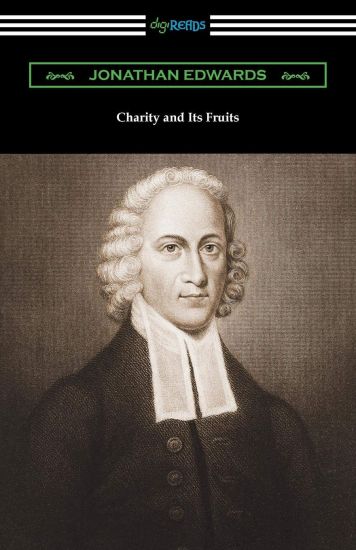
"Charity and Its Fruits" is a collection of sermons by Jonathan Edwards, one of America's most important religious leaders and theologians. Edwards was a significant force in the rise of religious devotion in the United States in the 1730s known as the First Great Awakening and became a popular American revivalist preacher. His "Sinners in the Hands of an Angry God" is one of the most famous sermons ever given and remains a widely read classic of American literature. "Charity and Its Fruits" is one of Edwards' earlier collections of sermons and the works are concerned with the topics of charity, Christian love, and devotion to God. These inspiring and comforting sermons show what is possible when the faithful act with a charitable spirit rather than with an envious or selfish one. Edwards preached a life of humility, good deeds, and quiet devotion. His discussion of 1 Corinthians 13 remains one of the most powerful ever written. "Charity and Its Fruits" is a reassuring and accessible introduction to one of America's most famous religious figures. This edition is printed on premium acid-free paper.
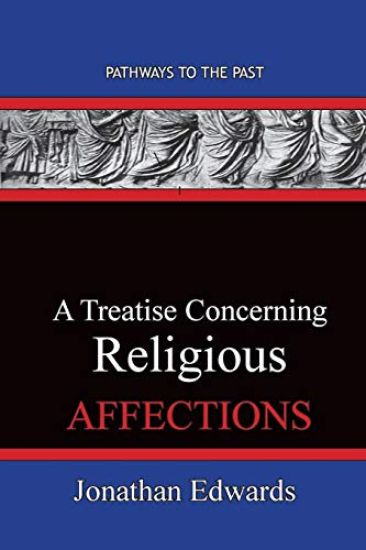
A Treatise Concerning Religious Affections is a famous publication written in 1746 by Jonathan Edwards describing his philosophy about the process of Christian conversion in Northampton, Massachusetts, during the First Great Awakening, which emanated from Edwards' congregation starting in 1734. Edwards wrote the Treatise to explain how true religious conversion to Christianity occurs. Edwards describes how emotion and intellect both play a role, but "converting grace" is what causes Christians to "awaken" to see that forgiveness is available to all who have faith that Jesus' sacrifice atones for all sins.
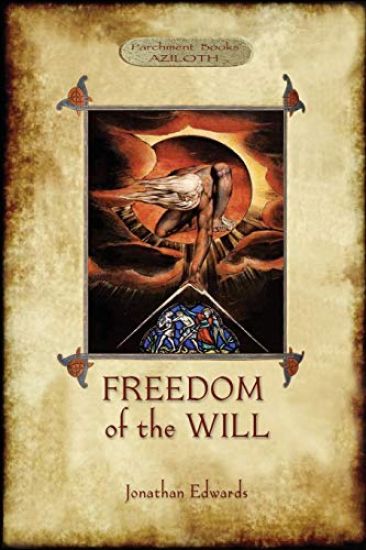
The Freedom of the Will is a work by Christian reformer, theologian, and author Jonathan Edwards which uses the text of Romans 9:16 as its basis. It was first published in 1754 and examines the nature and the status of humanity's will. The book takes the classic Calvinist viewpoint on total depravity of the will and the need of humanity for God's grace in salvation. Although written long before the modern introduction and debate over Open Theism, Edwards' work addresses many of the concerns that have been raised today over this view. Edwards responded that a person may freely choose whatever seems good, but that whatever it is that seems good is based on an inherent predisposition that has been foreordained by God.
In this classic exposition of 1 Corinthians 13:8–10, Jonathan Edwards exhorts Christians to ponder the love of God—both here in the world and in expectation of heaven. The things of this world are temporary, but “love never ends” (1 Cor. 13:8). God’s love is a foretaste of future glory, made available through communion with the Holy Spirit. Each page is rich with pastoral insights that will leave readers hungry to experience more of God’s love in eager anticipation of heaven.
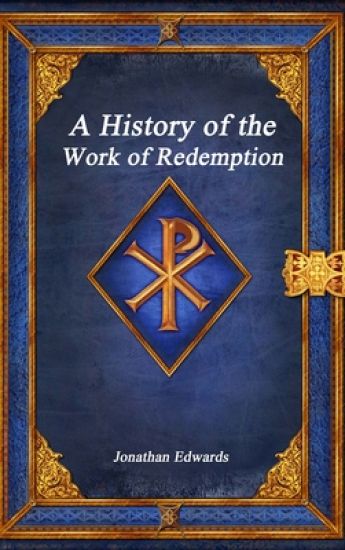
A benchmark work in the field of Puritan theology on the topic of Postmillennialism. Edwards goes through the entire history of the Bible and current age to explain how God in the fullness of the Trinity took care of the people of Israel and the current church in order to protect them and bring about the plan of redemption. Once he goes over the whole history of the Bible, Middle Ages and days of the time of Edwards he then goes into the days to come when Christ will return and what the world will look like, what will happen, what the Church will accomplish and what the times will look like when Christ will finally return
Edwards beschreibt in seiner Predigt Jesus w hrend Seines Gebets in Gethsemane. Von allen Gebeten Jesu untersuchte er das Gebet am gr ndlichsten, in dem Jesus seinen Vater bittet, diesen bitteren Kelch von ihm zu nehmen. Nie zuvor habe ich so eine brillante Predigt geh rt. Es kam mir so vor, als ob sich die Ereignisse in Gethsemane wie in Zeitlupe vor meinem inneren Auge abgespielt hatten. Edwards gelang es, wie Paulus und Petrus und vielen anderen Predigern, das Wort Gottes f rmlich auf eine Leinwand zu projizieren und anschaulich dem Zuh rer zu pr sentieren.
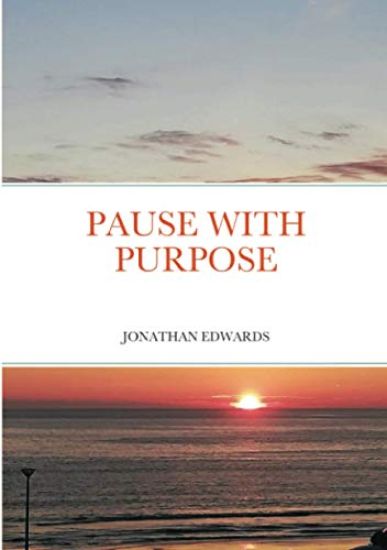
Pause with Purpose is a daily devotional, this book has been written to give you an overview of key aspects of truth, that will help to transform your life. God created us for fellowship with him, each day we have an opportunity to be transformed by his word. Life can be so demanding with many distractions, but making time for God each day, will change you from the inside, out. Pause with Purpose reveals spiritual, and practical truths from the bible. Each reading will equip you to grow spiritually, and live the abundant life that God has purposed for you. Jonathan Edwards is an international speaker, author, Bible teacher and well-loved communicator. Jonathan has a deep love for Gods word and a passion to see the next generation lead the lives God created for them. Jonathan has also written Healing Flows, and Soul Control.
A Treatise Concerning Religious Affections is a famous publication written in 1746 by Jonathan Edwards describing his philosophy about the process of Christian conversion.Edwards wrote the Treatise to explain how true religious conversion to Christianity occurs. Edwards describes how emotion and intellect both play a role, but "converting grace" is what causes Christians to "awaken" to see that forgiveness is available to all who have faith that Jesus' sacrifice atones for all sins. This salvation is not possible through believers' imperfect good works which are simply evidence of faith, only through Christ's sacrifice which is free to all. Edwards describes the importance of testing new faith and discerning whether it is legitimate. He lays out twelve tests of true conversion, including ways of measuring allegedly fruitful works.
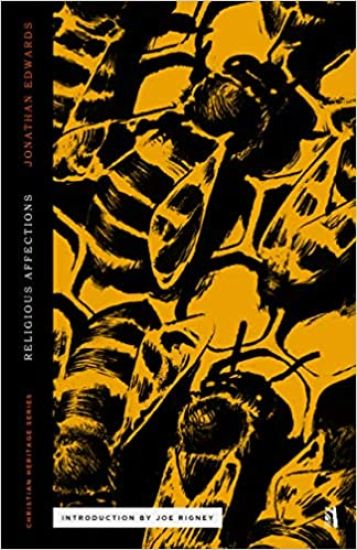
"The way to grow in assurance is to kill sin, seek God's grace, and exercise it as much as you can. Assurance comes not by looking inward, but by action, by looking to Christ and living out of what you see." from Joe Rigney's IntroductionDue to the shallowness of much modern Christian worship and life, we can often think of the display of intense religious emotions as a hypocritical outward show. And we are right to be suspicious, since "the heart is deceitful above all things and desperately wicked" (Jer. 17:9). Nevertheless, emotions are a gift from God and are part of what God redeems.When the First Great Awakening was breaking out in New England in the 1700s, pastor Jonathan Edwards approved of it and prayed for great revival. However, as a man who suffered from depression and melancholy, Edwards also warned people of the dangers of relying alone on such intense emotions.The center of the Christian religion is not our emotions, but Christ and His goodness. This classic will inspire you to consider both your life and your emotions and to follow Christ in love."The essence of all true religion lies in holy love; and in this divine affection, and an habitual disposition to it, and that light which is the foundation of it, and those things which are the fruits of it, consists the whole of religion." Jonathan Edwards