Kirjojen hintavertailu. Mukana 12 595 353 kirjaa ja 12 kauppaa.

Kirjailija

Jonathan Elmer

Kirjat ja teokset yhdessä paikassa: 7 kirjaa, julkaisuja vuosilta 1995-2024, suosituimpien joukossa An Eulogium, on the Character of Gen. George Washington, Late President of the United States. Vertaile teosten hintoja ja tarkista saatavuus suomalaisista kirjakaupoista.

7 kirjaa

Kirjojen julkaisuhaarukka 1995-2024.

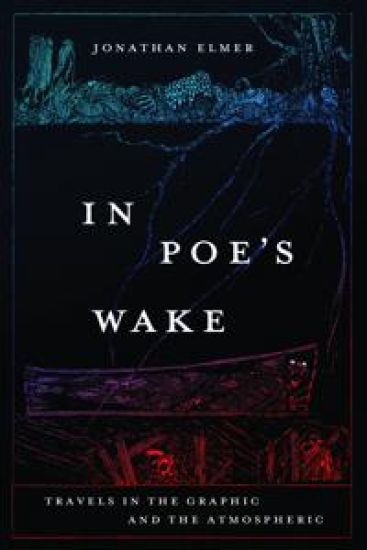
In Poe's Wake

In Poe's Wake

Jonathan Elmer

THE UNIVERSITY OF CHICAGO PRESS
2024
sidottu
Explores how Edgar Allan Poe has become a household name, as much a brand as an author. You’ll find his face everywhere, from coffee mugs, bobbleheads, and T-shirts to the cover of the Beatles’ Sergeant Pepper’s Lonely Hearts Club Band. Edgar Allan Poe is one of American culture’s most recognizable literary figures, his life and works inspiring countless derivations beyond the literary realm. Poe’s likeness and influence have been found in commercial illustration and kitsch, art installations, films, radio plays, children’s cartoons, and video games. What makes Poe so hugely influential in media other than his own? What do filmmakers, composers, and other artists find in Poe that suits their purposes so often and so variously? In Poe’s Wake locates the source of the writer’s enduring legacy in two vernacular aesthetic categories: the graphic and the atmospheric. Jonathan Elmer uses Poe to explore these two terms and track some deep patterns in their use, not through theoretical labor but through close encounters with a wide sampling of aesthetic objects that avail themselves of Poe’s work. Poe’s writings are violent and macabre, memorable both for certain grisly images and for certain prevailing moods or atmospheres—dread, creepiness, and mournfulness. Furthermore, a bundle of Poe traits—his thematic emphasis on extreme sensation, his flexible sense of form, his experimental and modular method, and his iconic visage—amount to what could be called a Poe “brand,” one as likely to be found in music videos or comics as in novels and stories. Encompassing René Magritte, Claude Debussy, Lou Reed, Roger Corman, Spongebob Squarepants, and many others, Elmer’s book shows how the Poe brand opens trunk lines to aesthetic experiences fundamental to a multi-media world.

In Poe's Wake

In Poe's Wake

Jonathan Elmer

THE UNIVERSITY OF CHICAGO PRESS
2024
nidottu
Explores how Edgar Allan Poe has become a household name, as much a brand as an author. You’ll find his face everywhere, from coffee mugs, bobbleheads, and T-shirts to the cover of the Beatles’ Sergeant Pepper’s Lonely Hearts Club Band. Edgar Allan Poe is one of American culture’s most recognizable literary figures, his life and works inspiring countless derivations beyond the literary realm. Poe’s likeness and influence have been found in commercial illustration and kitsch, art installations, films, radio plays, children’s cartoons, and video games. What makes Poe so hugely influential in media other than his own? What do filmmakers, composers, and other artists find in Poe that suits their purposes so often and so variously? In Poe’s Wake locates the source of the writer’s enduring legacy in two vernacular aesthetic categories: the graphic and the atmospheric. Jonathan Elmer uses Poe to explore these two terms and track some deep patterns in their use, not through theoretical labor but through close encounters with a wide sampling of aesthetic objects that avail themselves of Poe’s work. Poe’s writings are violent and macabre, memorable both for certain grisly images and for certain prevailing moods or atmospheres—dread, creepiness, and mournfulness. Furthermore, a bundle of Poe traits—his thematic emphasis on extreme sensation, his flexible sense of form, his experimental and modular method, and his iconic visage—amount to what could be called a Poe “brand,” one as likely to be found in music videos or comics as in novels and stories. Encompassing René Magritte, Claude Debussy, Lou Reed, Roger Corman, Spongebob Squarepants, and many others, Elmer’s book shows how the Poe brand opens trunk lines to aesthetic experiences fundamental to a multi-media world.
An Eulogium, on the Character of Gen. George Washington, Late President of the United States
The 18th century was a wealth of knowledge, exploration and rapidly growing technology and expanding record-keeping made possible by advances in the printing press. In its determination to preserve the century of revolution, Gale initiated a revolution of its own: digitization of epic proportions to preserve these invaluable works in the largest archive of its kind. Now for the first time these high-quality digital copies of original 18th century manuscripts are available in print, making them highly accessible to libraries, undergraduate students, and independent scholars.Delve into what it was like to live during the eighteenth century by reading the first-hand accounts of everyday people, including city dwellers and farmers, businessmen and bankers, artisans and merchants, artists and their patrons, politicians and their constituents. Original texts make the American, French, and Industrial revolutions vividly contemporary.++++The below data was compiled from various identification fields in the bibliographic record of this title. This data is provided as an additional tool in helping to insure edition identification: ++++Library of CongressW024189Trenton: Printed by G. Craft, MDCCC. 1800]. 25, 1]p., 1]leaf of plate: 1 port.; 22 cm
On Lingering and Being Last

On Lingering and Being Last

Jonathan Elmer

Fordham University Press
2008
sidottu
What are we talking about when we talk about sovereignty? Is it about formal legitimacy or practical authority? Does it require the ability to control the flow of people or goods across a border; is it primarily a principle of international recognition; or does its essence lie in the power to regulate the lives of a state's citizens? Political theorists, historians, scholars of international relations, lawyers, anthropologists, literary critics—all approach the dilemmas of sovereign power with a mixture of urgency and frustration. In On Lingering and Being Last, Jonathan Elmer argues that the logic of sovereignty that emerged in early modern Europe and that limits our thinking today must be understood as a fundamentally racialized logic, first visible in the New World. The modern concept of sovereignty is based on a trope of personification, the conjunction of individual and collective identities. In Grotius, Hobbes, and others, a fiction of sovereign autonomy enabled states to be personified as individuals, as bodies politic, even as individual humans could be imagined as miniature states. The contradictions of this logic were fully revealed only in the New World, as writers ranging from Aphra Behn to Thomas Jefferson and Herman Melville demonstrate. The racialized sovereign figures examined in On Lingering and Being Last—the slave king Oroonoko, the last chief Logan, and their avatars—are always at once a person and a people. They embody the connection between the individual and the collectivity, and thereby reveal that the volatile work of sovereign personification takes place in a new world constituted both by concepts of equality, homogeneity, and symmetry—by an ideal of liberal individualism—and by the realities of racial domination and ideology in the era of colonial expansion. The conjunction of the individual, race, and New World territorialization, Elmer argues, is key to understanding the deepest strata in the political imagination of Atlantic modernity.
On Lingering and Being Last

On Lingering and Being Last

Jonathan Elmer

Fordham University Press
2008
pokkari
What are we talking about when we talk about sovereignty? Is it about formal legitimacy or practical authority? Does it require the ability to control the flow of people or goods across a border; is it primarily a principle of international recognition; or does its essence lie in the power to regulate the lives of a state's citizens? Political theorists, historians, scholars of international relations, lawyers, anthropologists, literary critics—all approach the dilemmas of sovereign power with a mixture of urgency and frustration. In On Lingering and Being Last, Jonathan Elmer argues that the logic of sovereignty that emerged in early modern Europe and that limits our thinking today must be understood as a fundamentally racialized logic, first visible in the New World. The modern concept of sovereignty is based on a trope of personification, the conjunction of individual and collective identities. In Grotius, Hobbes, and others, a fiction of sovereign autonomy enabled states to be personified as individuals, as bodies politic, even as individual humans could be imagined as miniature states. The contradictions of this logic were fully revealed only in the New World, as writers ranging from Aphra Behn to Thomas Jefferson and Herman Melville demonstrate. The racialized sovereign figures examined in On Lingering and Being Last—the slave king Oroonoko, the last chief Logan, and their avatars—are always at once a person and a people. They embody the connection between the individual and the collectivity, and thereby reveal that the volatile work of sovereign personification takes place in a new world constituted both by concepts of equality, homogeneity, and symmetry—by an ideal of liberal individualism—and by the realities of racial domination and ideology in the era of colonial expansion. The conjunction of the individual, race, and New World territorialization, Elmer argues, is key to understanding the deepest strata in the political imagination of Atlantic modernity.