Kirjailija
Jonathan Fox
Kirjat ja teokset yhdessä paikassa: 30 kirjaa, julkaisuja vuosilta 1990-2026, suosituimpien joukossa The Unexpected Consequences of State Support for Religion. Vertaile teosten hintoja ja tarkista saatavuus suomalaisista kirjakaupoista.
30 kirjaa
Kirjojen julkaisuhaarukka 1990-2026.
Narrative Reticulation explores how personal storytelling in community settings creates meaningful connections that benefit society. Drawing on 50 years of experience with Playback Theatre across educational, community, and organizational contexts, Jonathan Fox introduces the innovative theory of narrative reticulation, which describes the spontaneous interconnection of shared stories and its role in relieving stress, creating connection, and building group identity. The theory is supported by vivid examples from diverse settings including post-Hurricane Katrina New Orleans, a teacher conference, a Nepali village, and a Japanese theatre. Fox articulates the essential elements needed for successful story events: spontaneity, positive atmosphere, clear structure, and thoughtful guidance. He offers a compelling framework for understanding how shared narratives can build empathy, encourage innovation, and create communities of memory in our increasingly polarized world. This engaging, accessible book is an essential read for Playback Theatre and applied theatre practitioners and scholars. Its invaluable insights will also be useful for education and community work professionals, drama therapists, and mental health practitioners.
The Unexpected Consequences of State Support for Religion
Jonathan Fox; Marie Eisenstein; Ariel Zellman
TAYLOR FRANCIS LTD
2026
sidottu
The Unexpected Consequences of State Support for Religion: An Empirical Analysis of Christian Majority addresses the consequences of one of the most basic decisions a government must make when dealing with religion: the decision to support a state religion or to provide separation of religion and state and religious freedom. Drawing on the rational choice literature on religion and politics as well as the broader literature on religion in the social sciences, this book takes the perspective that politicians and governments decide on government religion policy based on their own interests. It tests five potential consequences of supporting a state religion in Christina-majority countries: religiosity (how religious are people in the country?), governmental legitimacy, levels of both public and private morality in a country, social trust, and patterns of violence and social unrest. Many of the empirical analyses reveal unexpected costs and benefits to supporting a state religion. For example, while most assume that when governments support a religion it is at least in part because they believe it will increase their legitimacy, this book finds, with some exceptions, that it accomplishes the opposite. Similarly, it finds an incentive structure that perversely incentivizes increased discrimination against religious minorities. The Unexpected Consequences of State Support for Religion will appeal to scholars and students of Politics, Religion and Sociology, particularly those interested in Christian Nationalism, and Government and state politics.
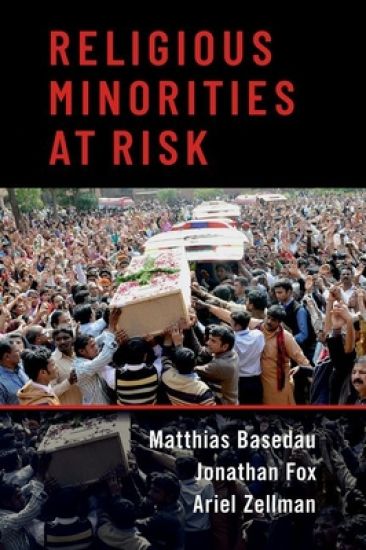
Religious Minorities at Risk
Matthias Basedau; Jonathan Fox; Ariel Zellman
OXFORD UNIVERSITY PRESS INC
2023
sidottu
To what extent do minority grievances contribute to intrastate conflict? Against the backdrop of rising discrimination against religious minorities worldwide, Religious Minorities at Risk offers new insights into classic debates on the influences of discrimination, deprivation, and inequality (DDI) on minority grievances and conflict behavior. It does so by utilizing original data on 771 religious minorities in 183 countries between 2000 and 2014. The book demonstrates that DDI is a significant cause of minority grievances which, in turn, deeply influence their conflict behaviors. It also shows the different effects of governmental and societal religious discrimination versus political and economic and marginalization. Religious, political, and economic grievances each escalate conflict intensity by aggrieved minorities in different ways. Ultimately, the book shows that collective grievances remain a powerful explanation for minorities' conflict behaviors; although influenced by DDI, they are not reducible to them. Second, while religious factors, including religious discrimination and grievances, uniquely contribute to minority conflict behavior, the overall patterns observed for religious minorities closely mirror those typically theorized for other minority groups. Finally, minority conflict intensity reflects the difficulties states encounter in accommodating them. Whereas religious grievances are relatively easily accommodated and therefore rarely escalate beyond rioting, political grievances influence a wider range, from non-violent protest to violence against civilians. Economic grievances, which demand costly systemic reforms, more often escalate to rebellion. An essential work on the causes of intercommunal and intrastate conflict, this will assist policymakers dealing with these issues.
Discover the keys to personal financial management with the practical introduction in Garman/Fox's market-leading PERSONAL FINANCE, 14th EDITION. The step-by-step approach gives you a set of actionable items on how to save and invest, manage financial risk, plan for taxes, decrease credit card debt and reduce financial stress throughout your lifetime. Financial planning sounds easy but has proven difficult for far too many. Throughout the book you will find many "notes from our future selves", which are based on decades of research in personal finance where the authors have come to understand the cognitive and implicit biases that influence our financial decisions. All too often, these biases distract people from a more direct path to financial goals. Many math-based examples allow you to get your hands on the ideas behind trading present consumption for that planned in the future. With the latest updates and learning tools, this edition prepares you for personal financial success.
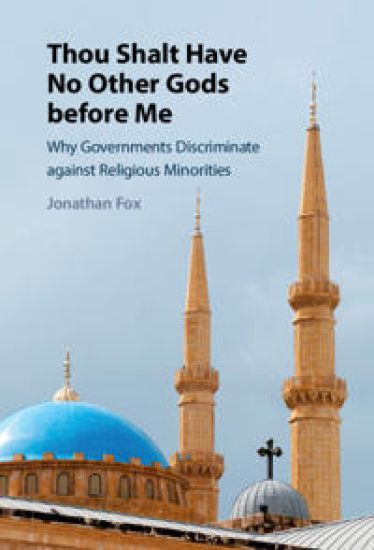
This book is among the most thorough and comprehensive analysis of the causes of religious discrimination to date, complete with detailed illustrations and anecdotes. Jonathan Fox examines the causes of government-based religious discrimination (GRD) against 771 minorities in 183 countries over the course of twenty-five years, while offering possible reasons for why some minorities are discriminated against more than others. Fox illustrates the complexities inherent in the causes of GRD, which can emerge from secular ideologies, religious monopolies, anti-cult policies, security concerns and more. Western democracies tend to discriminate more than Christian-majority countries in the developing world, whether they are democratic or not. While the causes of GRD are ubiquitous, they play out in vastly different ways across world regions and religious traditions. This book serves as a method for better understanding this particular form of discrimination, so that we may have the tools to better combat it and foster compassion across people of different religions and cultures.
Why Do People Discriminate against Jews?
Jonathan Fox; Lev Topor
Oxford University Press Inc
2021
sidottu
A novel analysis that combines traditional theories on anti-Semitism with evidence from 76 nations to explain the determinants that drive discrimination against Jews. Why Do People Discriminate against Jews? provides a data-rich analysis of the causes of discrimination against Jews across the globe. Using the tools of comparative political science, Jonathan Fox and Lev Topor examine the causes of both government-based and societal discrimination against Jews in 76 countries. As they stress, anti-Semitism is an attitude, but discrimination is an action. In examining anti-Jewish discrimination, they combine ideas and theories from classic studies of anti-Semitism with social science theories on the causes of discrimination. On the one hand, conspiracy theories, a major topic in the anti-Semitism literature, are relatively unexplored in the social science literature as a potential instigator of discrimination. On the other, social science theories developed to explain how governments justify discrimination against Muslims are rarely formally applied to the processes that lead to discrimination against Jews. Fox and Topor conclude by identifying three potential causes of discrimination: religious causes, anti-Zionism, and belief in conspiracy theories about Jewish power and world domination. They conclude that while all three influence discrimination against Jews, belief in conspiracy theories is the strongest determinant. The most rigorous and geographically wide-ranging analysis of discrimination against Jews to date, this book reshapes our understanding of the persecution of religious minorities in general and the Jewish people in particular.
Why Do People Discriminate against Jews?
Jonathan Fox; Lev Topor
Oxford University Press Inc
2021
nidottu
A novel analysis that combines traditional theories on anti-Semitism with evidence from 76 nations to explain the determinants that drive discrimination against Jews. Why Do People Discriminate against Jews? provides a data-rich analysis of the causes of discrimination against Jews across the globe. Using the tools of comparative political science, Jonathan Fox and Lev Topor examine the causes of both government-based and societal discrimination against Jews in 76 countries. As they stress, anti-Semitism is an attitude, but discrimination is an action. In examining anti-Jewish discrimination, they combine ideas and theories from classic studies of anti-Semitism with social science theories on the causes of discrimination. On the one hand, conspiracy theories, a major topic in the anti-Semitism literature, are relatively unexplored in the social science literature as a potential instigator of discrimination. On the other, social science theories developed to explain how governments justify discrimination against Muslims are rarely formally applied to the processes that lead to discrimination against Jews. Fox and Topor conclude by identifying three potential causes of discrimination: religious causes, anti-Zionism, and belief in conspiracy theories about Jewish power and world domination. They conclude that while all three influence discrimination against Jews, belief in conspiracy theories is the strongest determinant. The most rigorous and geographically wide-ranging analysis of discrimination against Jews to date, this book reshapes our understanding of the persecution of religious minorities in general and the Jewish people in particular.
Playback Theatre is a form of interactive performance and community engagement created in 1975 in the Mid Hudson Valley of New York, and now practiced in 70 countries in a wide range of contexts. Teams of actors and musicians listen to stories told by audience members then act them out without script, score, or rehearsal, building dialogue and connection.PERSONAL STORIES IN PUBLIC SPACES: Essays on Playback Theatre by Its Founders gathers together, for the first time in one place, key essays, articles, talks, and reminiscences by Playback Theatre's founders, Jonathan Fox and Jo Salas. Covering a body of work that spans almost five decades and locations from war zones to great cities, this anthology takes the reader on a journey from the earliest days of Playback Theatre to the present day, and includes several essays written specifically for this collection.
This book is among the most thorough and comprehensive analysis of the causes of religious discrimination to date, complete with detailed illustrations and anecdotes. Jonathan Fox examines the causes of government-based religious discrimination (GRD) against 771 minorities in 183 countries over the course of twenty-five years, while offering possible reasons for why some minorities are discriminated against more than others. Fox illustrates the complexities inherent in the causes of GRD, which can emerge from secular ideologies, religious monopolies, anti-cult policies, security concerns and more. Western democracies tend to discriminate more than Christian-majority countries in the developing world, whether they are democratic or not. While the causes of GRD are ubiquitous, they play out in vastly different ways across world regions and religious traditions. This book serves as a method for better understanding this particular form of discrimination, so that we may have the tools to better combat it and foster compassion across people of different religions and cultures.
Everything I Did Good Was All Bad
Jonathan Fox
Createspace Independent Publishing Platform
2018
nidottu
Growing up in a poor economy youth always became a product of their environment. This story is based on a misguided youth who tells it through his eyes and experiences growing up.
Religious discrimination is the norm in many countries around the world, and the rate is rising. Nearly every country which discriminates does so unequally, singling out some religious minorities for more discrimination than others. Religious tradition does not explain this complex issue. For example, Muslim majority states include both the most discriminatory and tolerant states in the world, as is also the case with Christian majority states. Religious ideologies, nationalism, regime, culture, security issues, and political issues are also all part of the answer. In The Unfree Exercise of Religion Jonathan Fox examines how we understand concepts like religious discrimination and religious freedom, and why countries discriminate. He makes a study of religious discrimination against 597 religious minorities in 177 countries between 1990 and 2008. While 29 types of discrimination are discussed in this book, the most common include restrictions in places of worship, proselytizing, and religious education.
This fully revised edition offers a comprehensive overview of the many theories of religion and politics and provides students with an accessible, in-depth guide to the subject’s most significant debates, issues, and methodologies. It begins by asking the basic questions of how social scientists see religion and why religion remains relevant to politics in the modern era. Fox examines the influence of religious identity, beliefs, institutions and legitimacy on politics, and surveys important approaches and issues found in the literature on religion and politics. Four new chapters on religious policy around the world, political secularism, and religious freedom and human rights have been added to fully revised content covering religious identity, rational choice approaches to religious politics worldviews, beliefs, doctrines, ideologies, institutions and political mobilization, fundamentalism, secularization, and religion and conflict.This work will be essential reading for all students of religion and politics, comparative politics, international relations, and security studies.
Religious discrimination is the norm in many countries around the world, and the rate is rising. Nearly every country which discriminates does so unequally, singling out some religious minorities for more discrimination than others. Religious tradition does not explain this complex issue. For example, Muslim majority states include both the most discriminatory and tolerant states in the world, as is also the case with Christian majority states. Religious ideologies, nationalism, regime, culture, security issues, and political issues are also all part of the answer. In The Unfree Exercise of Religion Jonathan Fox examines how we understand concepts like religious discrimination and religious freedom, and why countries discriminate. He makes a study of religious discrimination against 597 religious minorities in 177 countries between 1990 and 2008. While 29 types of discrimination are discussed in this book, the most common include restrictions in places of worship, proselytizing, and religious education.
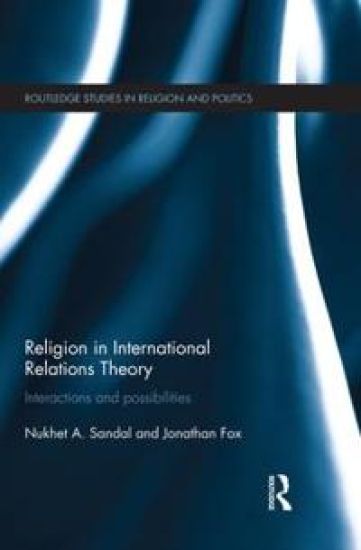
There is a growing realization among international relations scholars and practitioners that religion is a critical factor in global politics. The Iranian Revolution, the September 11 attacks, the ethno-religious conflicts such as the ones in the former Yugoslavia and Sri Lanka are among the many reasons for this increased focus on religion in international affairs. The rise of religious political parties across the world ranging from the Christian Democrats in Europe to Bharatiya Janata Party in India similarly illustrated religion's heightened international profile. Despite all this attention, it is challenging to situate religion within a discipline which has been dominantly secular from its inception. Only a few existent works have ventured to integrate religion into core international relations theories such as Classical Realism, Neorealism, Neoliberalism, Constructivism and the English school. This work is the first systematic attempt to comparatively assess the place of religion in the aforementioned theoretical strands of international relations with contemporary examples from around the world.Written in an accessible and systematic fashion, this book will be an important addition to the fields of both religion and international relations. Nukhet A. Sandal is Assistant Professor in the Political Science Department at Ohio University.Jonathan Fox is Professor in the Department of Political Studies at Bar Ilan University, Israel.
This book examines 111 types of state religion policy in 177 countries between 1990 and 2008. Jonathan Fox argues that policy is largely a result of the competition between political secular actors and religious actors, both of which try to influence state religion policy. While there are other factors that influence state religion policy and both the secular and religious camps are divided, Fox offers that the secular-religious competition perspective provides critical insight into the nature of religious politics across the globe. While many states have both increased and decreased their involvement in religion, Fox demonstrates that states which have become more involved in religion are far more common.