Kirjojen hintavertailu. Mukana 12 595 353 kirjaa ja 12 kauppaa.

Kirjailija

Jonathan Goodhand

Kirjat ja teokset yhdessä paikassa: 3 kirjaa, julkaisuja vuosilta 2006-2014, suosituimpien joukossa Checkpoint, Temple, Church and Mosque. Vertaile teosten hintoja ja tarkista saatavuus suomalaisista kirjakaupoista.

3 kirjaa

Kirjojen julkaisuhaarukka 2006-2014.

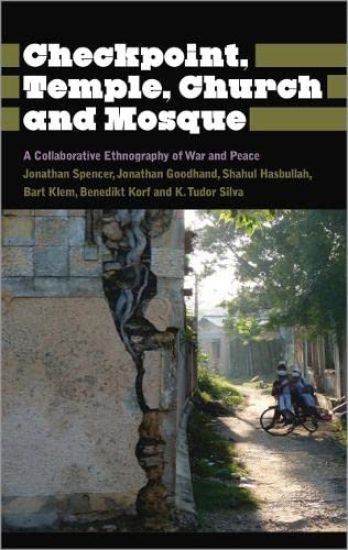
Checkpoint, Temple, Church and Mosque

Checkpoint, Temple, Church and Mosque

Jonathan Spencer; Jonathan Goodhand; Shahul Hasbullah; Bart Klem; Benedikt Korf; Kalinga Tudor Silva

Pluto Press
2014
sidottu
Is religion best seen as only a cause of war, or is it a source of comfort for those caught up in conflict? In Checkpoint, Temple, Church and Mosque six senior figures in Anthropology, Sociology, Geography and Development Studies set out to answer this question. Based on fieldwork conducted in Sri Lanka's most religiously diverse and politically troubled region during the country's civil war (1983-2009), it provides a series of new and provocative arguments about the promise of a religiously based civil society, and the strengths and weaknesses of religious organisations and religious leaders in conflict mediation. The authors argue that for people trapped in long and violent conflicts, religion ultimately plays a contradictory role, and that its institutions are themselves profoundly affected by war - producing a complex picture in which Catholic priests engage with Buddhist monks and new Muslim leaders, and where Hindu temples and Pentecostal churches offer the promise of healing.
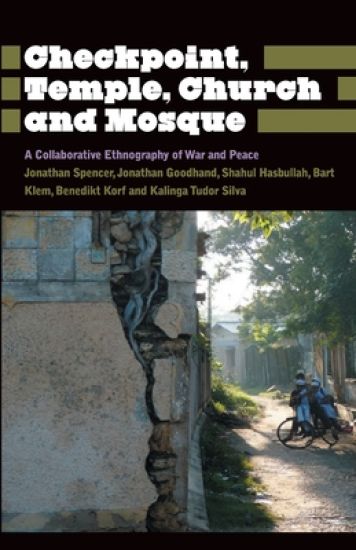
Checkpoint, Temple, Church and Mosque

Checkpoint, Temple, Church and Mosque

Jonathan Spencer; Jonathan Goodhand; Shahul Hasbullah; Bart Klem; Benedikt Korf; Kalinga Tudor Silva

Pluto Press
2014
pokkari
Is religion best seen as only a cause of war, or is it a source of comfort for those caught up in conflict? In Checkpoint, Temple, Church and Mosque six senior figures in Anthropology, Sociology, Geography and Development Studies set out to answer this question. Based on fieldwork conducted in Sri Lanka's most religiously diverse and politically troubled region during the country's civil war (1983-2009), it provides a series of new and provocative arguments about the promise of a religiously based civil society, and the strengths and weaknesses of religious organisations and religious leaders in conflict mediation. The authors argue that for people trapped in long and violent conflicts, religion ultimately plays a contradictory role, and that its institutions are themselves profoundly affected by war - producing a complex picture in which Catholic priests engage with Buddhist monks and new Muslim leaders, and where Hindu temples and Pentecostal churches offer the promise of healing.
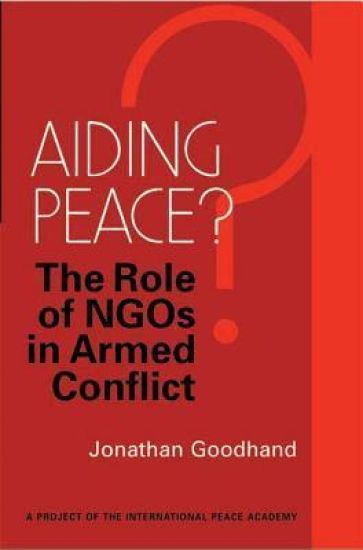
Aiding Peace?

Aiding Peace?

Jonathan Goodhand

Practical Action Publishing
2006
nidottu
While NGOs' role in advocacy and agendasetting is fairly widely accepted, their peacebuilding activities are more controversial and have come under increasing scrutiny-not least from the NGOs themselves. As the number of NGOs, and their role in conflict situations, has grown exponentially, they have found themselves increasingly strained to find an appropriate balance between competing demands for relief, development, human rights and peace work, and between their own roles and that of other international and national actors. In this important study, which is firmly grounded in seven case studies, Goodhand ably situates the role of NGOs in peacebuilding within the dynamics of contemporary conflicts and the evolving complexities of international peacebuilding. His study promises to become a valuable resource for the Peacebuilding Commission and other practitioners in their interaction with civil society. It also stands to make a significant contribution to current debates about the appropriate role of external actors in peacebuilding and our collective understanding of what it genuinely takes to build peace.