Kirjojen hintavertailu. Mukana 12 595 353 kirjaa ja 12 kauppaa.

Kirjailija

Jonathan H. Grossman

Kirjat ja teokset yhdessä paikassa: 5 kirjaa, julkaisuja vuosilta 2002-2026, suosituimpien joukossa Charles Dickens's Networks. Vertaile teosten hintoja ja tarkista saatavuus suomalaisista kirjakaupoista.

5 kirjaa

Kirjojen julkaisuhaarukka 2002-2026.

Charles Dickens's Networks

Charles Dickens's Networks

Jonathan H. Grossman

Oxford University Press
2013
nidottu
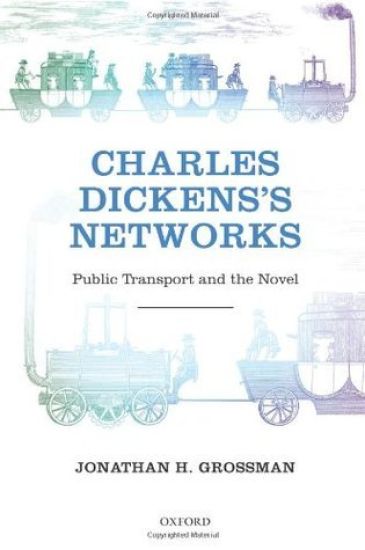
The same week in February 1836 that Charles Dickens was hired to write his first novel, The Pickwick Papers, the first railway line in London opened. Charles Dickens's Networks explores the rise of the global, high-speed passenger transport network in the nineteenth century and the indelible impact it made on Dickens's work. The advent first of stage coaches, then of railways and transoceanic steam ships made unprecedented round-trip journeys across once seemingly far distances seem ordinary and systematic. Time itself was changed. The Victorians overran the separate, local times kept in each town, establishing instead the synchronized, 'standard' time, which now ticks on our clocks. Jonathan Grossman examines the history of public transport's systematic networking of people and how this revolutionized perceptions of time, space, and community, and how the art form of the novel played a special role in synthesizing and understanding it all. Focusing on a trio of road novels by Charles Dickens, he looks first at a key historical moment in the networked community's coming together, then at a subsequent recognition of its tragic limits, and, finally, at the construction of a revised view that expressed the precarious, limited omniscient perspective by which passengers came to imagine their journeying in the network.
Standardization (Standardisation)

Standardization (Standardisation)

Jonathan H. Grossman

THE UNIVERSITY OF CHICAGO PRESS
2026
nidottu
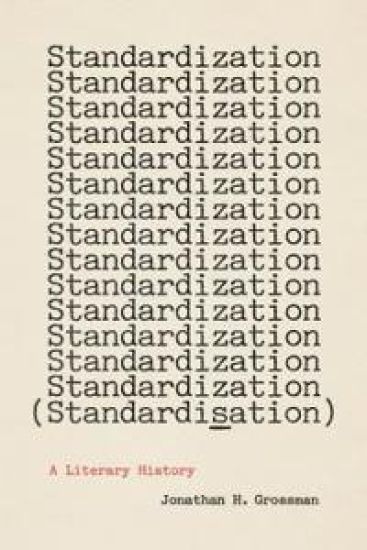
An innovative study of the history of standardization that draws on both technical documents and novels. Jonathan H. Grossman’s elegant analysis of standardization approaches the topic by exploring how institutions create standards. Grossman tracks how published standards documents became the dominant means of homogenizing durable objects during the nineteenth century’s industrialization of manufacturing, including printing. Examining these documents as a genre, he reconstructs the nineteenth-century history of published standards documents and shows how they evolved to produce uniformity across manufactured objects. Shifting focus from the standardized creation of objects to their use by subjects, Grossman then probes how people reimagined, through print, the ways in which their subjectivity combined with identical, interchangeable manufactured objects. To understand that relation, he looks to nineteenth-century novels by Charles Dickens, Mark Twain, and Elizabeth Gaskell, revealing how these books depicted the interchangeability of the subjects implied by this production of identical objects. The novels do not merely observe the interplay between subjects and standardized objects; they materialize it in the assemblage of readers holding their industrially manufactured, print copy.
Standardization (Standardisation)

Standardization (Standardisation)

Jonathan H. Grossman

THE UNIVERSITY OF CHICAGO PRESS
2026
sidottu
An innovative study of the history of standardization that draws on both technical documents and novels. Jonathan H. Grossman’s elegant analysis of standardization approaches the topic by exploring how institutions create standards. Grossman tracks how published standards documents became the dominant means of homogenizing durable objects during the nineteenth century’s industrialization of manufacturing, including printing. Examining these documents as a genre, he reconstructs the nineteenth-century history of published standards documents and shows how they evolved to produce uniformity across manufactured objects. Shifting focus from the standardized creation of objects to their use by subjects, Grossman then probes how people reimagined, through print, the ways in which their subjectivity combined with identical, interchangeable manufactured objects. To understand that relation, he looks to nineteenth-century novels by Charles Dickens, Mark Twain, and Elizabeth Gaskell, revealing how these books depicted the interchangeability of the subjects implied by this production of identical objects. The novels do not merely observe the interplay between subjects and standardized objects; they materialize it in the assemblage of readers holding their industrially manufactured, print copy.
Charles Dickens's Networks

Charles Dickens's Networks

Jonathan H. Grossman

Oxford University Press
2012
sidottu
The same week in February 1836 that Charles Dickens was hired to write his first novel, The Pickwick Papers, the first railway line in London opened. Charles Dickens's Networks explores the rise of the global, high-speed passenger transport network in the nineteenth century and the indelible impact it made on Dickens's work. The advent first of stage coaches, then of railways and transoceanic steam ships made unprecedented round-trip journeys across once seemingly far distances seem ordinary and systematic. Time itself was changed. The Victorians overran the separate, local times kept in each town, establishing instead the synchronized, 'standard' time, which now ticks on our clocks. Jonathan Grossman examines the history of public transport's systematic networking of people and how this revolutionized perceptions of time, space, and community, and how the art form of the novel played a special role in synthesizing and understanding it all. Focusing on a trio of road novels by Charles Dickens, he looks first at a key historical moment in the networked community's coming together, then at a subsequent recognition of its tragic limits, and, finally, at the construction of a revised view that expressed the precarious, limited omniscient perspective by which passengers came to imagine their journeying in the network.

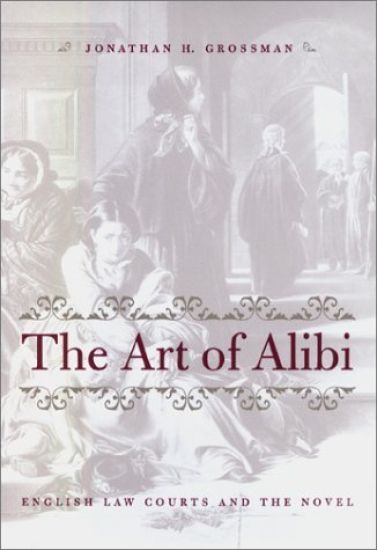
The Art of Alibi

The Art of Alibi

Jonathan H. Grossman

Johns Hopkins University Press
2002
sidottu
In The Art of Alibi, Jonathan Grossman reconstructs the relation of the novel to nineteenth-century law courts. During the Romantic era, courthouses and trial scenes frequently found their way into the plots of English novels. As Grossman states, "by the Victorian period, these scenes represented a powerful intersection of narrative form with a complementary and competing structure for storytelling." He argues that the courts, newly fashioned as a site in which to orchestrate voices and reconstruct stories, arose as a cultural presence influencing the shape of the English novel. Weaving examinations of novels such as William Godwin's Caleb Williams, Mary Shelley's Frankenstein, and Charles Dickens's The Pickwick Papers and Oliver Twist, along with a reading of the new Royal Courts of Justice, Grossman charts the exciting changes occurring within the novel, especially crime fiction, that preceded and led to the invention of the detective mystery in the 1840s.