

Kirjailija
Jonathan Harris
Kirjat ja teokset yhdessä paikassa: 40 kirjaa, julkaisuja vuosilta 1994-2025, suosituimpien joukossa Oscar Wilde. Vertaile teosten hintoja ja tarkista saatavuus suomalaisista kirjakaupoista.
40 kirjaa
Kirjojen julkaisuhaarukka 1994-2025.
This new edition of Byzantium and the Crusades provides a fully-revised and updated version of Jonathan Harris's landmark text in the field of Byzantine and crusader history.The book offers a chronological exploration of Byzantium and the outlook of its rulers during the time of the Crusades. It argues that one of the main keys to Byzantine interaction with Western Europe, the Crusades and the crusader states can be found in the nature of the Byzantine Empire and the ideology which underpinned it, rather than in any generalised hostility between the peoples.Taking recent scholarship into account, this new edition includes an updated notes section and bibliography, as well as significant additions to the text:- New material on the role of religious differences after 1100- A detailed discussion of economic, social and religious changes that took place in 12th-century Byzantine relations with the west- In-depth coverage of Byzantium and the Crusades during the 13th century- New maps, illustrations, genealogical tables and a timeline of key datesByzantium and the Crusades is an important contribution to the historiography by a major scholar in the field that should be read by anyone interested in Byzantine and crusader history.
This new edition of Byzantium and the Crusades provides a fully-revised and updated version of Jonathan Harris's landmark text in the field of Byzantine and crusader history.The book offers a chronological exploration of Byzantium and the outlook of its rulers during the time of the Crusades. It argues that one of the main keys to Byzantine interaction with Western Europe, the Crusades and the crusader states can be found in the nature of the Byzantine Empire and the ideology which underpinned it, rather than in any generalised hostility between the peoples.Taking recent scholarship into account, this new edition includes an updated notes section and bibliography, as well as significant additions to the text:- New material on the role of religious differences after 1100- A detailed discussion of economic, social and religious changes that took place in 12th-century Byzantine relations with the west- In-depth coverage of Byzantium and the Crusades during the 13th century- New maps, illustrations, genealogical tables and a timeline of key datesByzantium and the Crusades is an important contribution to the historiography by a major scholar in the field that should be read by anyone interested in Byzantine and crusader history.
The Utopian Globalists
Jonathan Harris
Wiley-Blackwell (an imprint of John Wiley Sons Ltd)
2013
sidottu
THE UTOPIAN GLOBALISTS “Crossing continents, historical periods and cultural genres, Jonathan Harris skilfully traces the evolution of utopian ideals from early modernism to the spectacularised and biennialised (or banalised as some would say) contemporary art world of today.” Michael Asbury, University of the Arts, London The Utopian Globalists is the second in a trilogy of books by Jonathan Harris examining the contours, forces, materials and meanings of the global art world, along with its contexts of emergence since the early twentieth century. The first of the three studies, Globalization and Contemporary Art (Wiley-Blackwell, 2011), anatomized the global art system through an extensive anthology of over 30 essays contextualized through multiple thematic introductions. The final book in the series, Contemporary Art in a Globalized World (forthcoming, Wiley-Blackwell), combines the historical and contemporary perspectives of the first and second books in an account focused on the ‘mediatizations’ shaping and representing contemporary art and its circuits of global production, dissemination and consumption. This innovative and revealing history examines artists whose work embodies notions of revolution and human social transformation. The clearly structured historical narrative takes the reader on a cultural odyssey that begins with Vladimir Tatlin’s constructivist model for a ‘Monument to the Third International’ (1919), a statement of utopian globalist intent, via Picasso’s 1940s commitment to Soviet communism and John and Yoko’s Montreal ‘Bedin’, to what the author calls the ‘late globalism’ of the Unilever Series at London’s Tate Modern. The book maps the ways artists and their work engaged with, and offered commentary on, modern spectacle in both capitalist and socialist modernism, throughout the eras of the Russian Revolution, the Cold War and the increasingly globalized world of the past 20 years. In doing so, Harris explores the idea that the utopian -globalist lineage in art remains torn between its yearning for freedom and a deepening identification with spectacle as a media commodity to be traded and consumed.
"Globalized Art", offers a first-ever sustained and coherent history of the subject in twentieth century art in Europe and North America. Through analyses of a series of key examples - artists, artefacts and what he calls 'globalist moments' - Harris make the case that globalization didn't just 'happen' to art as a recent occurrence. "Globalized Art" examines a potpourri of key modernist producers and artworks from the first six decades of the twentieth century to later postmodernist artists and artefacts from c 1970-2006. Beginning with Vladmir Tatlin's attempt to combine painting, sculpture and architecture in his "Monument" in 1917, the volume traces 'globalizing impulses' through a variety of artists, media, and historical periods - Picacco's overtly political canvasses of the inter-war and Cold War periods; Joeseph Beuys utopian objects and actions; Guy DuBord's "Spectacle"; pop art 'happenings'; Christo's 'wrapped' projects of the mid-l970s-l990s; and the contemporary and commercial initiatives of the Tate Modern at the dawn of a most globalized 21st century. "Globalizing Art" demonstrates that the varying and evolving 'globalist' appeals that key artists and artworks have made to publics, values and futures over the last hundred years define globalization far more deeply and thoroughly than ever imagined. Not a mere construct of contemporary life and parlance, it is a long-standing pre-occupation that has played a determining role in what we understand to be Western art history.

By 1400, the once-mighty Byzantine Empire stood on the verge of destruction. Most of its territories had been lost to the Ottoman Turks, and Constantinople was under close blockade. Against all odds, Byzantium lingered on for another fifty years until 1453, when the Ottomans dramatically toppled the capital’s walls. During this bleak and uncertain time, ordinary Byzantines faced difficult decisions to protect their livelihoods and families against the death throes of their homeland. In this evocative and moving book, Jonathan Harris explores individual stories of diplomatic maneuverings, covert defiance, and sheer luck against a backdrop of major historical currents and offers a new perspective on the real reasons behind the fall of this extraordinarily fascinating empire.

Jonathan Harris demonstrates that the leaders of Stalin's Secretariat clashed sharply over the nature of the Communist party's 'leadership' of the Soviet state in the period between 1939 and 1948. The term 'party leadership' is generally misunderstood; it does not refer to the activities of the party as a whole, but to the efforts of its full time officials (the 'inner party') to direct the activities of the members of the party who manned the Soviet state (the 'outer party'). This study argues that A. Zhdanov and G. Malenkov, the two junior Secretaries of the CC/VKP(B) who directed the two major bureaucratic divisions of the Secretariat for most of the period under review, supported diametrically opposed conceptions of the leadership to be provided by the party's officials. A. Zhdanov argued that they should give priority to the ideological education of all members of the party and should allow the Communists who manned the state considerable autonomy in their administration of the five-year plans. In direct contrast, G. Malenkov, who directed the cadres directorate for most of the period under review, had little sympathy for ideological education and urged party officials to engage in close and detailed direction of the Communists who directly administered the five-year plans. This study contends that it is possible to illustrate this never-ending conflict by a careful examination of the public discussion of this issue in the various publications controlled by the major divisions of the Secretariat. When examined in conjunction with recently published archival materials, it is possible to pinpoint the linkages between the leadership conflict within the Secretariat, the shifts in the ongoing public discussion, and Stalin's role as the final arbiter in the dispute.
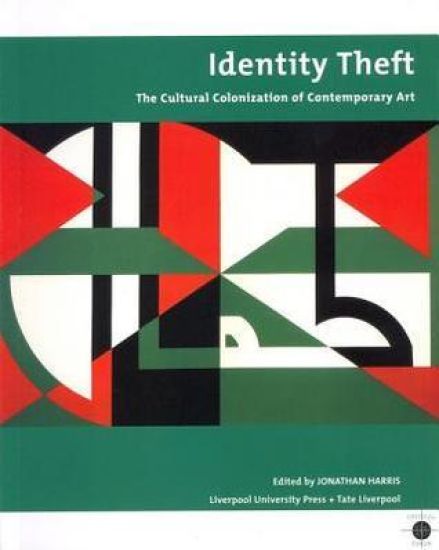
Identity Theft examines the complex socio-political forces that powerfully influence the production of visual art in our postcolonial and globalised world. Offering multiple and detailed case-studies drawn from around the world – the work of exiled Iranian and Palestinian artists, contemporary art in Turkey, the architectural reconstruction of Berlin since World War Two, hybrid urban development in Latin American countries, recent film in India, modern art in Nigeria, and wood sculpture in New Guinea commissioned by multinational mining companies – this collection of essays asks questions about the transformed meanings of ‘art’ and ‘identity’ in an era dominated by a hyperinternationalisation of cultural production. Identity Theft is intended for all students and academics interested in the fate of modern art and the prospects for future cultural production in a globalised art world economy.
Identity Theft examines the complex socio-political forces that powerfully influence the production of visual art in our postcolonial and globalised world. Offering multiple and detailed case-studies drawn from around the world – the work of exiled Iranian and Palestinian artists, contemporary art in Turkey, the architectural reconstruction of Berlin since World War Two, hybrid urban development in Latin American countries, recent film in India, modern art in Nigeria, and wood sculpture in New Guinea commissioned by multinational mining companies – this collection of essays asks questions about the transformed meanings of ‘art’ and ‘identity’ in an era dominated by a hyperinternationalisation of cultural production. Identity Theft is intended for all students and academics interested in the fate of modern art and the prospects for future cultural production in a globalised art world economy.

Jonathan Harris demonstrates that the leaders of Stalin's Secretariat clashed sharply over the nature of the Communist party's "leadership" of the Soviet state in the period between 1939 and 1948. The term "party leadership" is generally misunderstood; it does not refer to the activities of the party as a whole, but to the efforts of its full time officials (the "inner party") to direct the activities of the members of the party who manned the Soviet state (the "outer party"). This study argues that A. Zhdanov and G. Malenkov, the two junior Secretaries of the CC/VKP(B) who directed the two major bureaucratic divisions of the Secretariat for most of the period under review, supported diametrically opposed conceptions of the leadership to be provided by the party's officials. A. Zhdanov argued that they should give priority to the ideological education of all members of the party and should allow the Communists who manned the state considerable autonomy in their administration of the five-year plans. In direct contrast, G. Malenkov, who directed the cadres directorate for most of the period under review, had little sympathy for ideological education and urged party officials to engage in close and detailed direction of the Communists who directly administered the five-year plans. This study contends that it is possible to illustrate this never-ending conflict by a careful examination of the public discussion of this issue in the various publications controlled by the major divisions of the Secretariat. When examined in conjunction with recently published archival materials, it is possible to pinpoint the linkages between the leadership conflict within the Secretariat, the shifts in the ongoing public discussion, and Stalin's role as the final arbiter in the dispute.
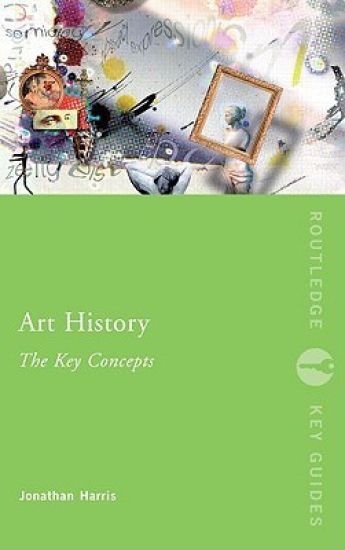
Art History: The Key Concepts is a systematic, reliable and accessible reference guide to the disciplines of art history and visual culture. Containing entries on over 200 terms integral to the historical and theoretical study of art, design and culture in general, it is an indispensable source of knowledge for all students, scholars and teachers. Covering the development, present status and future direction of art history, entries span a wide variety of terms and concepts such as abstract expressionism, epoch, hybridity, semiology and zeitgeist.Key features include:a user-friendly A-Z formatfully cross-referenced entriessuggestions for further reading.Engaging and insightful, as well as easy to follow and use, Art History: The Key Concepts builds a radical intellectual synthesis for understanding and teaching art, art history and visual culture.

Art History: The Key Concepts is a systematic, reliable and accessible reference guide to the disciplines of art history and visual culture. Containing entries on over 200 terms integral to the historical and theoretical study of art, design and culture in general, it is an indispensable source of knowledge for all students, scholars and teachers. Covering the development, present status and future direction of art history, entries span a wide variety of terms and concepts such as abstract expressionism, epoch, hybridity, semiology and zeitgeist.Key features include:a user-friendly A-Z formatfully cross-referenced entriessuggestions for further reading.Engaging and insightful, as well as easy to follow and use, Art History: The Key Concepts builds a radical intellectual synthesis for understanding and teaching art, art history and visual culture.
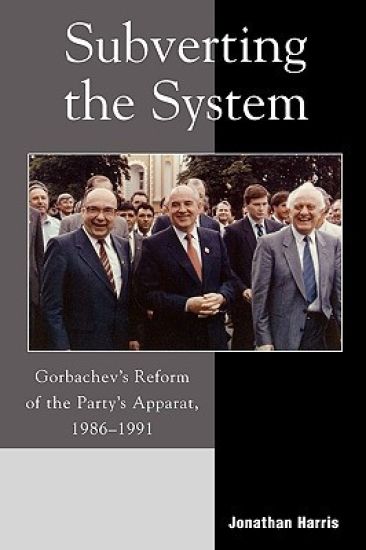
This book analyzes the efforts by Mikhail Gorbachev, the General Secretary of the Central Committee of the Communist Party of the Soviet Union (CPSU), to transform the relationship between the bureaucratic core of full-time party officials (the "inner party") and the Communists who manned the Soviet state (the "outer party"). Jonathan Harris argues that the efforts of party officials, headed by the secretariat of the CPSU Central Committee, to direct members of the "outer party" were the essence of so-called party leadership of the entire political system, and that Gorbachev's reforms destroyed the basis of this leadership. Finally, Subverting the System shows how orthodox party officials not only directly challenged Gorbachev's definitions but worked vigorously to restore their own authority during the last years of Gorbachev's reign; opposition contributed significantly to the attempted coup against him in 1991.
Here for the first time is a full-length study of the 'critical modernisms' of the three leading art writers of the second half of the twentieth century, which helps us build a better understanding of the development of modern art writing and its relation to the 'post-modern' in art and society since the 1970s.Focusing on canonical modern artists such as Manet, Cezanne, Picasso and Pollock, this book provides an important understanding of writing and criticism in modern art for all students and scholars of art theory and art history. Mainstay issues discussed include aesthetic evaluation, subjectivity and meaning in art and art writing. Jonathan Harris examines key discourses and identifies points of significant overlap as well as sharp disjunction between the critics. Developing the notions of 'good' and 'bad' complexity in modernist criticism, Writing Back to Modern Art creates ways for us to think outside of these discourses of value and meaning and helps us to look at the place that art writing holds in the latter twentieth century and beyond.
Here for the first time is a full-length study of the 'critical modernisms' of the three leading art writers of the second half of the twentieth century, which helps us build a better understanding of the development of modern art writing and its relation to the 'post-modern' in art and society since the 1970s.Focusing on canonical modern artists such as Manet, Cezanne, Picasso and Pollock, this book provides an important understanding of writing and criticism in modern art for all students and scholars of art theory and art history. Mainstay issues discussed include aesthetic evaluation, subjectivity and meaning in art and art writing. Jonathan Harris examines key discourses and identifies points of significant overlap as well as sharp disjunction between the critics. Developing the notions of 'good' and 'bad' complexity in modernist criticism, Writing Back to Modern Art creates ways for us to think outside of these discourses of value and meaning and helps us to look at the place that art writing holds in the latter twentieth century and beyond.

International Sale of Goods in the Conflict of Laws
James Fawcett; Jonathan Harris; Michael Bridge
Oxford University Press
2005
sidottu
This book is the first one in English to focus in depth upon the private international law problems raised by the sale of goods. It begins with the substantive law and practice, and uses this as the basis for a comparative and critical discussion of the private international law issues. Examples of the typical obligations of the buyer and seller are also provided. International Sale of Goods in the Conflict of Laws is a strong new addition to the Oxford Private International Law Series and covers everything from torts to e-commerce. Contracts of sale with a cross-border element are an everyday occurrence and one which is becoming ever more common with the advent of modern communications technology. For example, where, for jurisdictional purposes, is the place or performance of the obligation to pay for goods? Where software is sold over the Internet, is this a sale of goods contract and, if so, where are the goods delivered? Foreign judgments as to title raise complex questions as to enforcement, recognition and res judicata. As regards choice of law, sales-specific problems arise to a large extent from the interaction of contractual obligations and title matters which are central to the sale contract and the complex characterisation questions which ensue. They arise from the enactment in many countries of the Vienna Convention, from the complex inter-relationship between buyer, seller and third parties and from sales-specific domestic legislation which may be mandatory irrespective of the applicable law. The book is concerned not only with contractual disputes that can arise out of the international sale of goods but also with torts, such as conversion and negligent misstatement, that can arise out of this type of contract. Restitutionary and proprietary claims can also arise. Special attention is paid to both the jurisdictional and choice of law problems that occur in cases of business to business e-commerce.

Trusts cross borders. When they do,real difficulties may arise. Will the understanding of what a trust is be different in a foreign state? Will the rights, powers and duties of the trustee and settlor be the same? What rights will the beneficiary be able to assert? To what extent will the trust assets be safe from the claims of creditors, forced heirs, or third parties? Which legal system will be applied to the trust? Within what limits? What if the trust needs to be recognised in a state which does not have the institution of the trust in its domestic law? The Hague Trusts Convention, enacted into English law by the Recognition of Trusts Act 1987, seeks to ameliorate the situation by providing harmonised choice of law rules for "trusts created voluntarily and evidenced in writing." It also provides for the recognition of trusts in Contracting States. Those Contracting States should recognise the trust, even if they do not have the institution in their domestic law. This book is the first published in England to devote itself to a detailed analysis of the Convention. It is aimed at academics and practitioners; at private international lawyers and at trust lawyers. Frequent reference is made to the position in civil law states (especially in the Contracting States of Italy and the Netherlands) and in other trust states, both offshore and onshore. The Hague Trusts Convention deals with the operation of the trust itself. It does not deal with the preliminary steps needed to create a trust. These preliminary matters raise highly complex and uncharted choice of law issues. Detailed discussion of these matters is also provided, and appropriate solutions suggested.
The New Art History provides a comprehensive introduction to the fundamental changes which have occurred in both the institutions and practice of art history over the last thirty years. Jonathan Harris examines and accounts for the new approaches to the study of art which have been grouped loosely under the term 'the new art history'. He distinguishes between these and earlier forms of 'radical' or 'critical' analysis, explores the influence of other disciplines and traditions on art history, and relates art historical ideas and values to social change. Structured around an examination of key texts by major contemporary critics, including Tim Clarke, Griselda Pollock, Fred Orton, Albert Boime, Alan Wallach and Laura Mulvey, each chapter discusses a key moment in the discipline of art history, tracing the development and interaction of Marxist, feminist and psychoanalytic critical theories. Individual chapters include: * Capitalist Modernity, the Nation-State and Visual Representation * Feminism, Art, and Art History * Subjects, Identities and Visual Ideology * Structures and Meanings in Art and Society * The Representation of Sexuality
The New Art History provides a comprehensive introduction to the fundamental changes which have occurred in both the institutions and practice of art history over the last thirty years. Jonathan Harris examines and accounts for the new approaches to the study of art which have been grouped loosely under the term 'the new art history'. He distinguishes between these and earlier forms of 'radical' or 'critical' analysis, explores the influence of other disciplines and traditions on art history, and relates art historical ideas and values to social change. Structured around an examination of key texts by major contemporary critics, including Tim Clarke, Griselda Pollock, Fred Orton, Albert Boime, Alan Wallach and Laura Mulvey, each chapter discusses a key moment in the discipline of art history, tracing the development and interaction of Marxist, feminist and psychoanalytic critical theories. Individual chapters include: * Capitalist Modernity, the Nation-State and Visual Representation * Feminism, Art, and Art History * Subjects, Identities and Visual Ideology * Structures and Meanings in Art and Society * The Representation of Sexuality
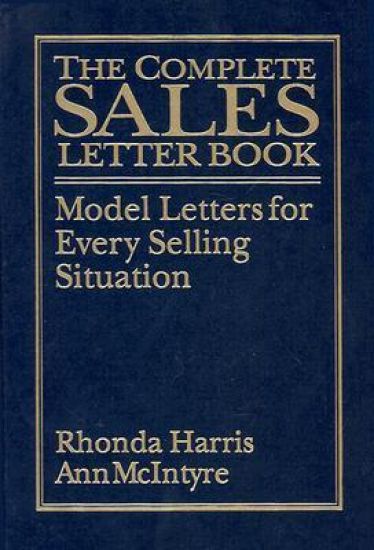
The Complete Sales Letter Book: Model Letters for Every Selling Situation
Jonathan Harris; Ann McIntyre
Routledge
1997
sidottu
Hundreds of ready-to-use model letters for handling various sales situations. Aimed at the busy sales rep, each letter can be used as it is or can be quickly modified to suit. The chapters follow the progression of the sales cycle.