Kirjojen hintavertailu. Mukana 12 657 676 kirjaa ja 12 kauppaa.

Kirjailija

Jonathan Hart

Kirjat ja teokset yhdessä paikassa: 19 kirjaa, julkaisuja vuosilta 1994-2026, suosituimpien joukossa Artefact. Vertaile teosten hintoja ja tarkista saatavuus suomalaisista kirjakaupoista.

19 kirjaa

Kirjojen julkaisuhaarukka 1994-2026.

Artefact

Artefact

Amaris Chase; Lucy Dalgleish; Andrew Donaldson; Chloe Hall; Jonathan Hart; Chloe Headdon; Venetia Johannas; Rebecca McDowall; Margaret Royall; Graham Powell

Crumps Barn Studio
2024
pokkari
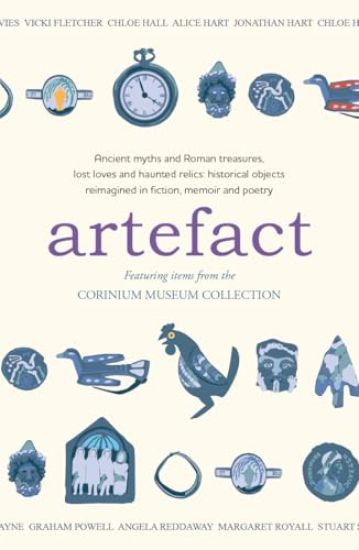
Ancient myths and Roman treasures, lost loves and haunted relics: historical objects are reimagined in fiction, memoir and poetry - featuring items from the Corinium Museum collection. Coins and weapons, lost jewels and carved faces. A watch with a secret inscription. An Iron Age horse bridle whispers of old battles, while a Roman god fumes about unfair treatment. Then a medieval grotesque wreaks havoc with a curse, before an eighteenth century ring reveals its heartbreak, and a painting draws visitors into danger ... Full of archaeology and history, mystery and surprises: museum treasures and ancient discoveries inspire this stunning new collection of short stories and poetry Illustrated with photographs from the Corinium Museum collection. With a foreword by Emma Stuart, Museum Director. **READER REVIEWS**‘From humorous and relatable themes to haunting and lyrical explorations of human experiences across time, this curious collection is a delight to dip into; reading its eclectic entries feels like browsing a display case packed with intriguing objects’ – CURRENT ARCHAEOLOGY MAGAZINE, ISSUE 418 ‘Wonderful book! There are so many evocative stories here’ – Five stars ‘So beautiful written … gives visit at the museum a new meaning’ – Five stars Featuring the work of:Carlos Almonacid Rosamund Brown Amaris Chase Hilda Cochrane Lucy Dalgleish Henry Davies Andrew Donaldson Vicki Fletcher Chloe Hall Jonathan Hart Alice Hart Chloe Headdon Heidi Howarth Venetia Johannes Rose Leicester Rose Lennard Harriet McDonald Rebecca McDowall Mary Moore Rosalind Newton Charlotte Payne Graham Powell Angela Reddaway Margaret Royall Stuart Samuel Sharon Webster Julie Wiltshire
Living and working in a medieval and later Bristol suburb

Living and working in a medieval and later Bristol suburb

Jonathan Hart; Simon Sworn; Andrew Mudd; Abby Antrobus

Cotswold Archaeology
2025
sidottu
Excavations were undertaken ahead of redevelopment at Redcliff Quarter in Bristol between 2016 and 2018, enabling the investigation of medieval and later properties along Redcliff Street and St Thomas Street. A sequence of archaeological remains survived from the early 12th century to the modern period, providing detailed information, complemented by documentary research, about the lives, diets and trades of the suburb’s inhabitants. The results indicate that some belonged to Bristol’s prosperous mercantile class, while others were probably labourers or worked in trades such as butchery, dyeing and bell-founding. During the Georgian period, the character of both streets changed, as St Thomas Street became primarily residential and Redcliff Street was occupied by industrial concerns. The excavations detailed in this volume provide fascinating and often unexpected insights into the lives of those who lived and worked in the Redcliffe suburb of Bristol between the early 12th and early 20th centuries. This report presents the finds and environmental evidence recovered from the excavations.
On the Edge, Above the Vale

On the Edge, Above the Vale

Jonathan Hart; Clare Randall; Alistair J. Barclay

Cotswold Archaeology
2025
nidottu
Archaeological investigations by Cotswold Archaeology on behalf of the Science Museum Group ahead of the construction of the Collection Management Facility, Science and Innovation Park at the former site of RAF Wroughton, a Royal Airforce airfield that opened in 1940, produced evidence for a double pit alignment, an open settlement of Iron Age date, and a series of Roman enclosures and a small Late Roman cemetery. The site lies on a raised chalkland plateau, part of the North Wessex Downs, and overlooks Swindon, the Thames Valley and the Cotswolds to the north with the higher chalk downs, the Ridgeway and Barbury Castle just to the south. The earliest evidence for human activity included an isolated Beaker pit and a small number of worked flints of Neolithic and Bronze Age date. However, the first substantial evidence for activity on the plateau was a pair of converging pit alignments that crossed the north western part of the site. This arrangement may have been designed to funnel people and animals up onto the chalk plateau. The more eastern alignment may have acted, at least initially, as a boundary to an otherwise extensive open settlement made up of roundhouses and pits that was only partially revealed by the excavation. The pit alignments are very poorly dated but their spatial location with the settlement of Iron Age date indicates they are certainly of preIron Age or earliest Iron Age date. The Iron Age settlement was made up of at least 11 roundhouses, a Cshaped ditched enclosure, over 150 pits, and a series of inhumation burials some of which were made in flat graves and others that were made within pits and more rarely a ditch. All the prehistoric burials were radiocarbon dated, which indicated that burial took place during the Early to Middle Iron Age. Some of the earliest burials appeared to have been bound and therefore possibly stored prior to burial within the settlement – suggesting that they were already old and had died sometime before the foundation of the settlement. In addition, to the occurrence of the presence of human remains some of the pits contained more unusual deposits, combinations of material, charcoal or burned deposits, notable dumps of chalk or sarsen. Amongst the material from the pits were groups of associated animal bone, some articulated, animal skulls, various objects including some of more unusual type and more mundane settlement refuse. The open settlement was replaced by a system of ditches and enclosures in the Late Iron Age and Early Roman period and this reorganisation of the immediate landscape also saw the construction of a droveway where the much earlier pit alignments had once converged and reestablished this area of the site as a routeway onto the plateau. In contrast, by the Late Roman period the site was mostly used for burial with the creation of a small Roman rural cemetery in an area between two large enclosures of earlier Roman date. The Cshaped enclosure of Iron Age date was also reused as a focus for more isolated burial and to house an oven. After the Roman period, the use of this site was abandoned as a place of settlement and burial and primarily only used for cultivation until the construction of the airfield during the Second World War.
The Archaeology of Hinkley Point C Nuclear Power Station, Somerset. Excavations in 2012-16

The Archaeology of Hinkley Point C Nuclear Power Station, Somerset. Excavations in 2012-16

Andrew Mudd; Jonathan Hart; Stephen Rippon

Cotswold Archaeology
2024
sidottu
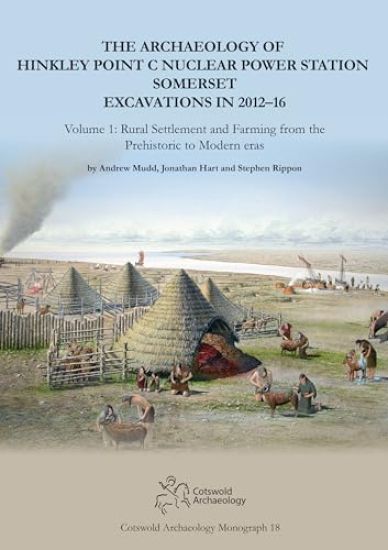
Early Neolithic occupation (from about 3600 BC) was represented by small groups of pits which were partly contemporary with a well-known round barrow – a protected monument called Wick Barrow or Pixies’ Mound – lying just outside the development site. Later prehistoric remains included Bronze Age burnt mounds, boundary ditches, a Late Bronze Age enclosure, and an Early Iron Age midden. There was more widespread Late Iron Age and Roman settlement, including a seasonally occupied linear settlement with evidence of salt-making. Contemporary activity included a nearby late Roman settlement. On another site a sequence of occupation from the late Iron Age to modern eras was examined. Here historical documents add to the account of the site and preserved the names of some of the farm’s recent inhabitants.
Theater and World

Theater and World

Jonathan Hart

TAYLOR FRANCIS LTD
2023
nidottu
First published in 1992, Theater and World is a detailed exploration of Shakespeare’s representation of history and how it affects the relation between theatre and world. The book focuses primarily on the Second Tetralogy (Richard II, Henry IV Part I, Henry IV Part II, and Henry V) and includes a wealth of analysis and interpretation of the plays. In doing so, it explores a wide range of topics, including the relation between literary and theatrical representations and the world; the nature of illusion and reality; genre; the connection between history and fiction (especially plays); historiography and literary criticism or theory; poetry and philosophy; and irony, both rhetorical and philosophical.Theater and World continues to have lasting relevance for anyone with an interest in Shakespeare’s words and his representation of history in particular.
Evolution of a Romano-British Courtyard Villa

Evolution of a Romano-British Courtyard Villa

Tom Brindle; Mark Brett; Jonathan Hart

Cotswold Archaeology
2023
sidottu
Excavations between 2016–2018 revealed a series of structures that were re-organised and rebuilt over time, which culminated in a stone-built winged corridor villa in the mid to late 4th century AD. Wings were added to the buildings and a portico at the front opened out onto a courtyard. The outer courtyard was flanked by ancillary buildings, one of which contained a hypocaust and another a small bath suite. Finds included a rare copper alloy figurative lamp with probable foreign origins, a lion mask and a range of pottery, glass worked stone and bone. Environmental remains indicate a mixed arable and pastoral agricultural economy that supported its inhabitants and may have produced a surplus. Wood for fuel and other purposes was obtained from surrounding hedges and copses.
Theater and World

Theater and World

Jonathan Hart

Taylor Francis Ltd
2021
sidottu
First published in 1992, Theater and World is a detailed exploration of Shakespeare’s representation of history and how it affects the relation between theatre and world. The book focuses primarily on the Second Tetralogy (Richard II, Henry IV Part I, Henry IV Part II, and Henry V) and includes a wealth of analysis and interpretation of the plays. In doing so, it explores a wide range of topics, including the relation between literary and theatrical representations and the world; the nature of illusion and reality; genre; the connection between history and fiction (especially plays); historiography and literary criticism or theory; poetry and philosophy; and irony, both rhetorical and philosophical.Theater and World continues to have lasting relevance for anyone with an interest in Shakespeare’s words and his representation of history in particular.
Timeline. The Archaeology of the South Wales Gas Pipeline

Timeline. The Archaeology of the South Wales Gas Pipeline

Timothy Darvill; Andrew David; Seren Griffiths; Jonathan Hart; Heather James; James Rackham

Cotswold Archaeological Trust Ltd
2021
sidottu
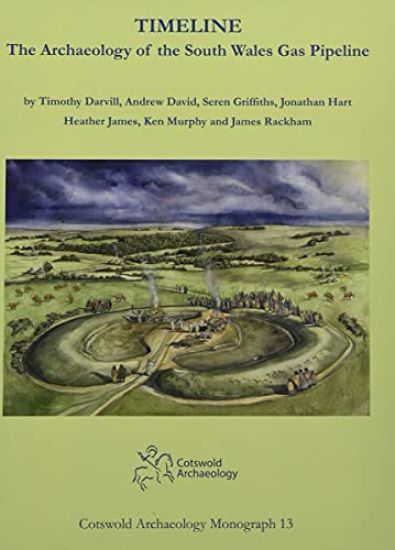
The construction of a natural gas pipeline across southern Wales and into Herefordshire and Gloucestershire between 2005 and 2007 resulted in numerous archaeological discoveries, including sites of national significance. The project not only produced a wealth of new archaeological sites, it also generated important radiocarbon and environmental datasets for the region.The earliest activity is indicated by worked flint of Mesolithic (or earlier) date, with the earliest Neolithic communities represented by pits, evidence for occasional timber houses, and the discovery of a previously unknown henge. Beaker and Bronze Age settlement and burial remains were found too, including a rare copper halberd. The excavations also produced evidence for Early Bronze Age houses and numerous examples of burnt mounds.Other discoveries comprised much new evidence for Iron Age settlement (including some in areas of upland), Roman roads, crop-processing ovens, and ironworking. Rare evidence for the early medieval period was also found, along with the remains of later farmsteads and field systems. Moves towards industrialisation were reflected in the discovery of a brick kiln and charcoal-burning platforms.
Value in Healthcare

Value in Healthcare

Jonathan Hart

Value in Healthcare, Inc
2020
pokkari
Value is created in an industry when quality and experience are balanced with an appropriate cost. Until recently, though, value creation through improved quality and/or experience has not been an intentional priority of healthcare. A major cause of our misguided efforts is our disconnected volume-based, fee for service healthcare model, paid by a third party that is not the actual consumer of the services and that only incentivizes price and volume. This disconnect of purpose and priorities leaves patients, providers, and staff to feel like widgets, commodities, and cogs in the healthcare delivery machine we have operated since the early 20th century. As the healthcare costs in the US continue to go up without an offsetting rise in quality outcomes or patient (or provider) experience, the quest for value has begun. This book explores the key differences between a volume-based health system versus one focused on value, and it offers a framework for value creation, based on the principles of Population Health Management. Patient risks need to be identified, individualized plans of care must be built, and the execution of the plan must be performed in a communicative and collaborative manner, longitudinally supporting and guiding the patient using an appropriate application of relationship and technology. By active creation of value in healthcare, we can rein in costs while improving quality outcomes and experience of the patients and providers. Such a system will allow patients to feel cared for as we guide them on their path toward the optimization of their health and well-being.
Value in Healthcare

Value in Healthcare

Jonathan Hart

Value in Healthcare, Inc
2020
sidottu
Value is created in an industry when quality and experience are balanced with an appropriate cost. Until recently, though, value creation through improved quality and/or experience has not been an intentional priority of healthcare. A major cause of our misguided efforts is our disconnected volume-based, fee for service healthcare model, paid by a third party that is not the actual consumer of the services and that only incentivizes price and volume. This disconnect of purpose and priorities leaves patients, providers, and staff to feel like widgets, commodities, and cogs in the healthcare delivery machine we have operated since the early 20th century. As the healthcare costs in the US continue to go up without an offsetting rise in quality outcomes or patient (or provider) experience, the quest for value has begun. This book explores the key differences between a volume-based health system versus one focused on value, and it offers a framework for value creation, based on the principles of Population Health Management. Patient risks need to be identified, individualized plans of care must be built, and the execution of the plan must be performed in a communicative and collaborative manner, longitudinally supporting and guiding the patient using an appropriate application of relationship and technology. By active creation of value in healthcare, we can rein in costs while improving quality outcomes and experience of the patients and providers. Such a system will allow patients to feel cared for as we guide them on their path toward the optimization of their health and well-being.
Cannington Bypass, Somerset: Excavations in 2014

Cannington Bypass, Somerset: Excavations in 2014

Jonathan Hart; Andrew Mudd

Cotswold Archaeological Trust Ltd
2018
sidottu
Two enclosures were recorded – near Rodway was discovered a small Middle Bronze Age farmstead containing evidence of two roundhouses, with associated pottery and plant remains; and at Sandy Lane a Roman villa was shown to have developed from a Late Iron Age ridge-top settlement.
Northrop Frye

Northrop Frye

Jonathan Hart

Routledge
2016
sidottu
An indispensable introduction to one of the great critics of the twentieth century, whose work on ideology, aesthetics and social criticism has ensured his place at the centre of cultural studies and contemporary theoretical debates.
Living Near the Edge

Living Near the Edge

Andrew Mudd; E.R. McSloy; Mark Brett; Jonathan Hart

Cotswold Archaeological Trust Ltd
2016
sidottu
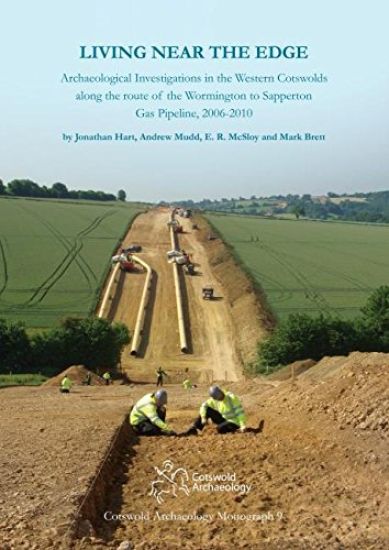
Archaeological surveys and excavations were carried out between 2006 and 2010 in advance of the construction of a gas pipeline in the Gloucestershire Cotswolds. They resulted in the discovery of many new sites and the investigation of eighteen of them dating from the prehistoric to medieval periods. Early Neolithic and Beaker/Early Bronze Age pits in the southern part of the route near Winstone, suggest transitory occupation in early prehistoric times. Early Bronze Age cremation graves on lower ground near Stanway were associated with two slightly later ring-ditches, and another Bronze Age ring-ditch was excavated at Foxcote Hill. A segmented boundary ditch near Winstone was also the location of Iron Age and Roman activity. An Iron Age settlement on Salter’s Hill, Winchcombe, included an Early Iron Age roundhouse, while Middle Iron Age grain-storage pits here and elsewhere indicated other farming settlements. Late Iron Age and Roman occupations in the high Wolds showed a range of remains, including unusual deposits of artefacts, animal bones and burials. A fragmentary sequence of Anglo-Saxon boundary burials was found at the southern end of the route near Sapperton. In the same area, two 12th- to 13th-century buildings near Overley Wood may have been part of the medieval settlement of Pinbury. Trackways revealed near Coberley, Foxcote and Hailes linked rural settlements in historical times. The range of sites and finds from these investigations provide important new information on the human past across parts of a landscape in many respects considered to be marginal.
Reading the Renaissance (Routledge Revivals)
Reading the Renaissance, first published in 1996, is a collection of essays discussing the literature, drama, poetics and culture of the Renaissance period. The Renaissance, which extends from about 1300 to 1700 depending on the country, was originally a rebirth of the arts but has also come to apply to the wider cultural change in the face of modernization. The essays represent a plural Renaissance and explore the boundaries between genre and gender, languages and literatures, reading and criticism, the Renaissance and the medieval, the early modern and the postmodern, world and theatre. There is also a plurality of methods that is fitting for the variety of topics and the richness of the Renaissance. This book is ideal for students of literature and theatre studies.
Empires and Colonies

Empires and Colonies

Jonathan Hart

Polity Press
2007
sidottu
Empires and Colonies provides a thoroughgoing and lively exploration of the expansion of the seaborne empires of western Europe from the fifteenth century and how that process of expansion affected the world, including its successor, the United States. Whilst providing special attention to Europe, the book is careful to highlight the ambivalence and contradiction of that expansion. The book also illuminates connections between empires and colonies as a theme in history, concentrating on culture while also discussing the rich social, economic and political dimensions of the story. Furthermore, Empires and Colonies recognizes that whilst a study of the expansion of Europe is an important part of world history, it is not a history of the world per se. The focus on culture is used to assert that areas and peoples that lack great economic power at any given time also deserve attention. These alternative voices of slaves, indigenous peoples and critics of empire and colonization are an important and compelling element of the book. Empires and Colonies will be essential reading not only for students of imperial history, but also for anyone interested in the makings of our modern world.
Empires and Colonies

Empires and Colonies

Jonathan Hart

Polity Press
2007
nidottu
Empires and Colonies provides a thoroughgoing and lively exploration of the expansion of the seaborne empires of western Europe from the fifteenth century and how that process of expansion affected the world, including its successor, the United States. Whilst providing special attention to Europe, the book is careful to highlight the ambivalence and contradiction of that expansion. The book also illuminates connections between empires and colonies as a theme in history, concentrating on culture while also discussing the rich social, economic and political dimensions of the story. Furthermore, Empires and Colonies recognizes that whilst a study of the expansion of Europe is an important part of world history, it is not a history of the world per se. The focus on culture is used to assert that areas and peoples that lack great economic power at any given time also deserve attention. These alternative voices of slaves, indigenous peoples and critics of empire and colonization are an important and compelling element of the book. Empires and Colonies will be essential reading not only for students of imperial history, but also for anyone interested in the makings of our modern world.
Northrop Frye

Northrop Frye

Jonathan Hart

Routledge
1994
nidottu
An indispensable introduction to one of the great critics of the twentieth century, whose work on ideology, aesthetics and social criticism has ensured his place at the centre of cultural studies and contemporary theoretical debates.