Kirjojen hintavertailu. Mukana 12 536 368 kirjaa ja 12 kauppaa.

Kirjailija

Jonathan Hill

Kirjat ja teokset yhdessä paikassa: 47 kirjaa, julkaisuja vuosilta 2003-2025, suosituimpien joukossa Immaterial Architecture. Vertaile teosten hintoja ja tarkista saatavuus suomalaisista kirjakaupoista.

47 kirjaa

Kirjojen julkaisuhaarukka 2003-2025.

The History of Christian Thought

The History of Christian Thought

Jonathan Hill

INTERVARSITY PRESS
2007
nidottu
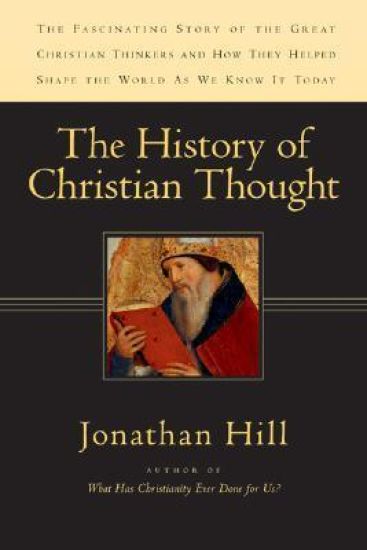
Why read about the history of Christian thought? Because, if you are Christian yourself, it helps you to understand the faith--addressing everything from where Christians got their ideas of the Trinity and how Christ can be both human and divine to what they think about issues like feminism, globalization and social justice. And because, even if you are not, all Western society has been shaped by the influence of thinkers like Augustine, Aquinas and Luther. You can't understand the world as it is without knowing something about Christian thought.Jonathan Hill has the uncanny ability to sketch portraits of his subjects--whether early church apologists, medieval doctors of the church, Reformation giants, nineteenth-century philosophical behemoths or contemporary feminist scholars--that are simultaneously lively, brief and revealing. Similarly, he ably penetrates to the nub of their thought, combining apt description with pithy quotations from their work. Significant events, councils, movements and terms are introduced and explained, which put the cast of characters in context and illumine their place within the development of Christian thought. Not content to merely describe, Hill offers pertinent assessments that highlight the strengths and weaknesses of his subjects' contributions to Christian thinking and spurs you to reflect on significant issues for yourself.A society with no grasp of its history is like a person without a memory. So Hill, in this lively and accessible introduction, offers you a wealth of insight on the history of Christian thought and the colorful personalities of those who gave it shape and form.

Immaterial Architecture

Immaterial Architecture

Jonathan Hill

Routledge
2006
nidottu
This fascinating argument from Jonathan Hill presents the case for the significance and importance of the immaterial in architecture.Architecture is generally perceived as the solid, physical matter that it unarguably creates, but what of the spaces it creates? This issue drives Hill's explorative look at the immaterial aspects of architecture. The book discusses the pressures on architecture and the architectural profession to be respectively solid matter and solid practice and considers concepts that align architecture with the immaterial, such as the superiority of ideas over matter, command of drawing and design of spaces and surfaces.Focusing on immaterial architecture as the perceived absence of matter, Hill devises new means to explore the creativity of both the user and the architect, advocating an architecture that fuses the immaterial and the material and considers its consequences, challenging preconceptions about architecture, its practice, purpose, matter and use.This is a useful and innovative read that encourages architects and students to think beyond established theory and practice.
Immaterial Architecture

Immaterial Architecture

Jonathan Hill

Routledge
2006
sidottu
This fascinating argument from Jonathan Hill presents the case for the significance and importance of the immaterial in architecture.Architecture is generally perceived as the solid, physical matter that it unarguably creates, but what of the spaces it creates? This issue drives Hill's explorative look at the immaterial aspects of architecture. The book discusses the pressures on architecture and the architectural profession to be respectively solid matter and solid practice and considers concepts that align architecture with the immaterial, such as the superiority of ideas over matter, command of drawing and design of spaces and surfaces.Focusing on immaterial architecture as the perceived absence of matter, Hill devises new means to explore the creativity of both the user and the architect, advocating an architecture that fuses the immaterial and the material and considers its consequences, challenging preconceptions about architecture, its practice, purpose, matter and use.This is a useful and innovative read that encourages architects and students to think beyond established theory and practice.
Mind, Meaning and Mental Disorder

Mind, Meaning and Mental Disorder

Derek Bolton; Jonathan Hill

Oxford University Press
2004
nidottu
Philosophical ideas about the mind, brain, and behaviour can seem theoretical and unimportant when placed alongside the urgent questions of mental distress and disorder. However, there is a need to give direction to attempts to answer these questions. On the one hand a substantial research effort is going into the investigation of brain processes and the development of drug treatments for psychiatric disorders, and on the other, a wide range of psychotherapies is becoming available to adults and children with mental health problems. These two strands reflect traditional distinctions between mind and body, and causal as opposed to meaningful explanations of behaviour. In this book, which has been written for psychiatrists, psychologists, philosophers, and others in related fields, the authors propose a radical re-interpretation of these traditional distinctions. Throughout the discussions philosophical theories are brought to bear on the particular questions of the explanation of behaviours, the nature of mental causation, and eventually the origins of major disorders including depression, anxiety disorders, schizophrenia, and personality disorder. First published in 1996, this volume played an important role in bridging the gap between philosophy and psychiatry, and introducing those in psychiatry to philosophical ideas somewhat neglected in their field. Completely updated, the new edition of this acclaimed volume draws on the strengths of the first edition, and will be a central text in the burgeoning field of philosophy of psychiatry.
The History of Christian Thought

The History of Christian Thought

Jonathan Hill

Lion Books
2003
nidottu
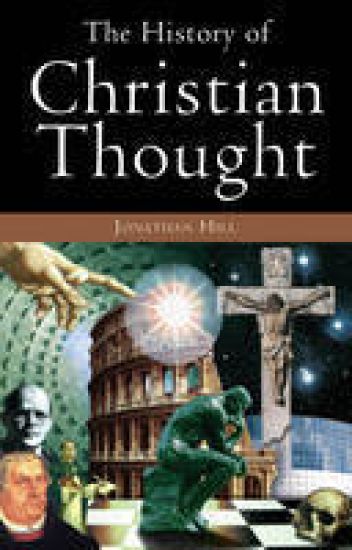
A society with no grasp of its history is like a person without a memory. This is particularly true of the history of ideas. This book is an ideal introduction to the thinkers who have shaped Christian history and the culture of much of the world. Writing in a lively, accessible style, Jonathan Hill takes us on an enlightening journey from the first to the twenty first centuries. He shows us the key Christian thinkers through the ages - ranging from Irenaeus, Origen, Augustine and Aquinas through to Luther, Wesley, Kierkegaard and Barth - placing them in their historical context and assessing their contribution to the development of Christianity.
Actions of Architecture

Actions of Architecture

Jonathan Hill

Routledge
2003
sidottu
Drawing on the work of a wide range of architects, artists and writers, this book considers the relations between the architect and the user, which it compares to the relations between the artist and viewer and the author and reader. The book's thesis is informed by the text 'The Death of the Author', in which Roland Barthes argues for a writer aware of the creativity of the reader. Actions of Architecture begins with a critique of strategies that define the user as passive and predictable, such as contemplation and functionalism. Subsequently it considers how an awareness of user creativity informs architecture, architects and concepts of authorship in architectural design. Identifying strategies that recognize user creativity, such as appropriation, collaboration, disjunction, DIY, montage, polyvalence and uselessness, Actions of Architecture states that the creative user should be the central concern of architectural design.
Actions of Architecture

Actions of Architecture

Jonathan Hill

Routledge
2003
nidottu
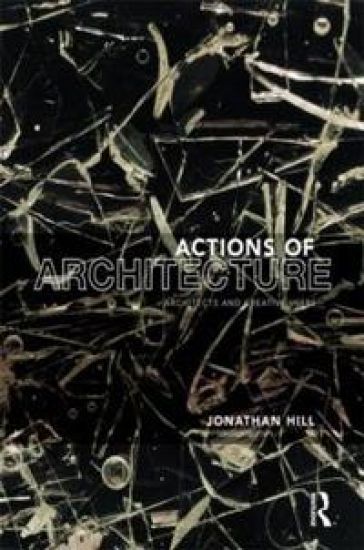
Drawing on the work of a wide range of architects, artists and writers, this book considers the relations between the architect and the user, which it compares to the relations between the artist and viewer and the author and reader. The book's thesis is informed by the text 'The Death of the Author', in which Roland Barthes argues for a writer aware of the creativity of the reader. Actions of Architecture begins with a critique of strategies that define the user as passive and predictable, such as contemplation and functionalism. Subsequently it considers how an awareness of user creativity informs architecture, architects and concepts of authorship in architectural design. Identifying strategies that recognize user creativity, such as appropriation, collaboration, disjunction, DIY, montage, polyvalence and uselessness, Actions of Architecture states that the creative user should be the central concern of architectural design.