Kirjojen hintavertailu. Mukana 12 390 323 kirjaa ja 12 kauppaa.

Kirjailija

Jonathan Oates

Kirjat ja teokset yhdessä paikassa: 33 kirjaa, julkaisuja vuosilta 2001-2026, suosituimpien joukossa London Serial Killers. Vertaile teosten hintoja ja tarkista saatavuus suomalaisista kirjakaupoista.

33 kirjaa

Kirjojen julkaisuhaarukka 2001-2026.

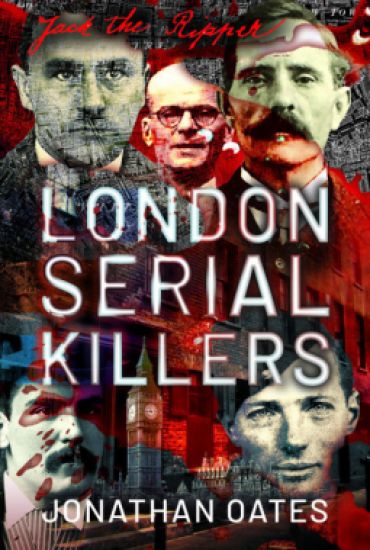
London Serial Killers

London Serial Killers

Jonathan Oates

PEN SWORD BOOKS LTD
2022
sidottu
Murders and murderers fascinate us - and perhaps serial killers fascinate us most of all. In the twentieth century the term came to be used to describe murders committed by the same person, often with similar methods. But, as Jonathan Oates demonstrates in this selection of cases from London, this category of crime has existed for centuries, though it may have become more common in modern times. Using police and pathologists' reports, Home Office and prison files, trial transcripts and lurid accounts in contemporary newspapers, he reconstructs these cases in order to explain how they took place, who the killers were, what motivated them, and how for a while they got away with their crimes. He does not neglect the victims and provides a revealing analysis of the killers, their circumstances and their actions. Among the nineteenth-century cases are the infamous killings of Jack the Ripper and the less-well-known but terrifying crimes of the only female killer, the Deptford Poisoner. Twentieth-century cases covered in forensic detail include the Black-out Ripper of 1942, the Thames Nude Murders of the 1960s and the multiple killings of Joseph Smith, John Christie and John George Haigh. There is also one especially troubling unsolved case - the notorious Soho prostitute killings of the 1930s and 1940s, which may be the work of one man. Jonathan Oates's gripping accounts of this wide range of serial killings gives us a powerful insight into the nature of these crimes, the characters of the killers and the police methods of the period.
Tracing Your Victorian Ancestors

Tracing Your Victorian Ancestors

Jonathan Oates

PEN SWORD BOOKS LTD
2026
nidottu
The Victorian era was a time of dramatic change. An age of industry, democracy, mass literacy, expanding towns, and a rapidly growing Empire. It was also a period that generated an unprecedented wealth of records, leaving today’s family historians with a rich paper trail to explore. Building on the foundation of civil registration and the national census records (both first introduced in this era), Tracing Your Victorian Ancestors takes you far beyond the familiar sources. From military and employment records to religious archives, property documents, school logs, workhouse files, and the rich world of Victorian newspapers. Whether you are tracing your family tree or simply fascinated by social history, you’ll gain insight into the daily lives of Victorians: how they worked, worshipped, travelled, learned, and entertained themselves. Clear, accessible, and packed with research tips, this book is an essential companion for anyone tracing their roots through Victorian Britain.
Titus Oates and the Popish Plot to Kill King Charles II
Reviled by his contemporaries and historians alike, 'the monstrous Titus Oates' masterminded the fabricated Popish Plot of 1678–1681, a conspiracy that led to the wrongful execution of 27 Catholics. His story is one of staggering ambition, lies, and betrayal. Yet Oates’ life also opens a window into an age of religious tension, political intrigue, and moral complexity. Was he truly 'the vilest liar in the world,' or has his story been shaped by the biases of his time? Drawing on a wealth of contemporary sources, from state papers to private letters and trial records, Jonathan Oates untangles fact from fiction, uncovering the truth about Oates’ character, his actions, and his legacy. By exploring his life in its full context, the author reveals a fascinating portrait of a man who played a pivotal role in shaping the political landscape of Britain. The Catholic Conspiracy to Kill King Charles II is essential reading for anyone seeking to understand the turbulent world of Restoration England, and the shadow cast by one of its most controversial figures.
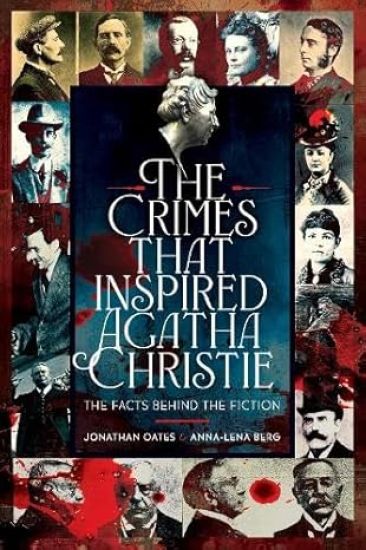
The Crimes That Inspired Agatha Christie

The Crimes That Inspired Agatha Christie

Jonathan Oates; Anna-Lena Berg

PEN SWORD BOOKS LTD
2025
sidottu
Did you know that many of Agatha Christie’s best-selling detective stories have their basis in reality? ‘Who killed Charles Bravo and why?’ asks retired Superintendent Spence in Elephants Can Remember. He refers to an unsolved Victorian murder mystery, one of many allusions to real life crime and criminals in Agatha Christie’s fiction. The infamous Dr Crippen, Jack the Ripper, John George Haigh, and many other real killers, fraudsters and spies, figure prominently in her plots, both explicitly and implicitly. Many of these cases belong to British criminal history, others originate from the USA and France. They cover a time frame from the eighteenth century to the 1960s, showing that Agatha Christie was not only an inspired writer of fiction but had a knowledge of true crime as well. There are even instances where she seems to have anticipated real life crimes, as in the case of the infamous poisoner Graham Young. This book explains the reality of these criminals and their crimes - some of which are well known, others largely forgotten - and how they are utilised in Agatha Christie’s stories. Armed with this book, fans of the author’s work will be able to gain new insights when reading her books either for the first time or on a repeat reading.
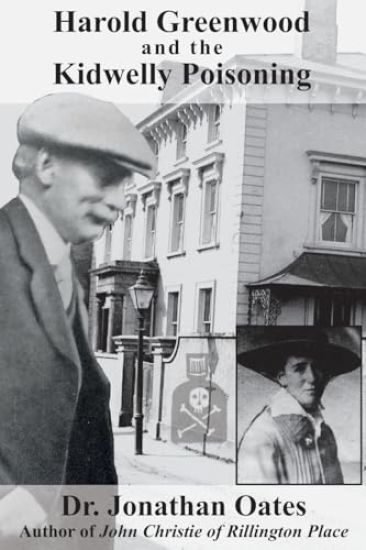
Harold Greenwood and the Kidwelly Poisoning

Harold Greenwood and the Kidwelly Poisoning

Jonathan Oates

Baker Street Studios
2024
pokkari
In 1919 Mrs. Greenwood died in her home in Kidwelly. It was sudden, but the doctor put it down to heart failure. The nurse thought otherwise.A few months later, Harold Greenwood, her husband, married a much younger woman. Tongues began to wag. The police investigated.Arsenic was found in the corpse. Greenwood had the means, opportunity and motive. The jury at the inquest found him guilty. He was put on trial for the murder of his wife.But was he guilty? Did a flawed investigation lead to a miscarriage of justice?This is the first full length meticulously researched book about this mystery, set in the 1920s in the social world that could have been that of an Agatha Christie story.
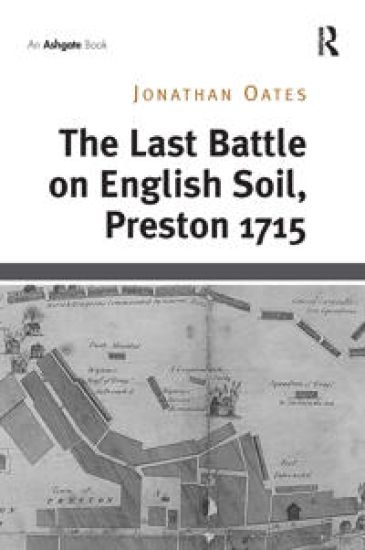
The Last Battle on English Soil, Preston 1715

The Last Battle on English Soil, Preston 1715

Jonathan Oates

TAYLOR FRANCIS LTD
2024
nidottu
Whilst much has been written about the Jacobites, most works have tended to look at the Rebellion of 1745, rather than the earlier attempt to reinstate the Stuart dynasty. As such this book provides a welcome focus on events in 1715, when Jacobites in both England and Scotland tried to oust George I and to replace him with James Stuart. In particular it provides a detailed narrative and analysis of the campaign in the Lowlands of Scotland and in the north of England that led to the decisive battle at Preston and ended the immediate prospects of the Jacobite cause. Drawing upon a wealth of under-utilised sources, the work builds on existing research into the period to give weight to the community and individual dimensions of the crisis as well as to the military ones. Contrary to popular myth, the Jacobite army contained both English and Scots, and because it surrendered almost intact, an analysis of the surviving list of Jacobite prisoners captured in the North West England reveals much information about their origins, occupations, unit structure and, sometimes, religion, as well as the quality of the soldiers’ arms and equipment, their experience and that of their leaders. Through this study of the last major battle to be fought on English soil, a clearer picture emerges of the individuals and groups who sought to mould the direction of the freshly created British state and the dynasty that should rule it.
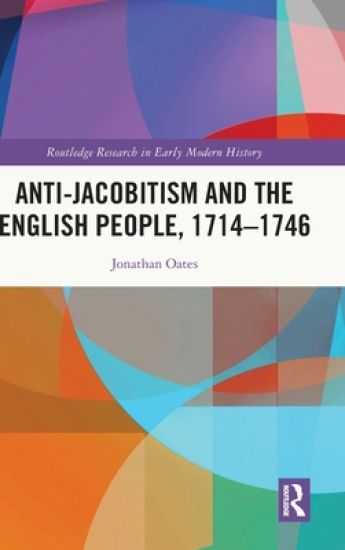
Anti-Jacobitism and the English People, 1714–1746
In both 1715 and 1745 there was a major military challenge in Britain to the thrones of George I and George II, posed by Jacobite supporters of the exiled Stuart claimant. This book examines the responses of those loyal to the Hanoverian dynasty, whose efforts have been ignored or disparaged compared to the military perspective or that of the Jacobites.These efforts included those of the clergy who gave loyalist sermons, accompanied the volunteer forces against the Jacobites and even stood up to the Jacobite forces in person. The lords lieutenant organized militia and volunteer forces to support the status quo. Official bodies, such as the corporations, parishes, quarter sessions and sheriffs, organized events to celebrate loyalist occasions and dealt with local Jacobite sympathisers. The press, both national and regional, was uniformly loyal. Finally, both the middling and common people acted, often violently, against those thought to be hostile towards the status quo. The effectiveness of these bodies had limits, but was at times decisive, and showed that the dynasty was not without popular support in its hours of crisis.This volume is essential reading for all those interested in the Jacobite rebellions and the early English Georgian state, church and society.
The Murders of Annie Hearn

The Murders of Annie Hearn

Jonathan Oates

PEN SWORD BOOKS LTD
2024
sidottu
In the quaint seaside town of Bude, Cornwall, a seemingly innocent afternoon tea in 1930 unravels into a sinister tale of arsenic poisoning and mysterious disappearances. When one of the three tea companions succumbs to the deadly toxin, suspicions arose, and the plot thickens as Annie Hearn, one of the remaining survivors, vanished without a trace. As the press dug into Annie's enigmatic past, unsettling stories emerged. In the backdrop of this gripping mystery, doctors grow wary of a peculiar pattern—multiple deaths within the same house, all linked by the insidious presence of arsenic. This book delves into the heart of the investigation, unraveling the intricate web of deceit, betrayal, and murder. Who committed these heinous crimes, and why? The answers lie shrouded in the secrets of a Cornish village, in this case that was later adapted by the legendary Agatha Christie in her Hercule Poirot novel, "Sad Cypress." Prepare for a journey through the dark alleys of a bygone era, where every sip of tea holds the potential for deadly secrets.
Crucible of the Jacobite '15

Crucible of the Jacobite '15

Jonathan Oates

HELION COMPANY
2023
nidottu
Just over three centuries ago, there was a major battle in Scotland that was to decide the fate of the newly established - and bitterly contested - union of England and Scotland. On one hand there was a numerically superior army, trained and armed but officered by men of varying experience. Facing them was a small, but better experienced and officered British Army. Both armies; one entirely Scottish and the other a mixture of Scots, English and Irish were led by Scottish noblemen. Victory to either side meant control of the gateway from the Highlands to the Lowlands and then England, where the political prize awaited. The battle's importance can only be appreciated by an examination of its context, in what happened in the campaign before the crucial clash of arms and in the months that followed it. Furthermore, an examination of the officers and men who made up the two armies is made in order to evaluate the human material without which there would have been no battle. Although the book covers the campaigning in the decisive theatre of central Scotland, it does not neglect the wider strategic concerns of both the Jacobite court and the British government, nor the international aspects of the rising.
Dick Turpin

Dick Turpin

Jonathan Oates

PEN SWORD BOOKS LTD
2023
sidottu
Why does the notorious highwayman Dick Turpin have such an extraordinary reputation today? How come his criminal career has inspired a profusion of often misleading literature and film? This eighteenth-century villain is often portrayed as a hero - dashing, sinister, romantic, daring, a Robin Hood of his times. The reality, as Jonathan Oates reveals in this perceptive, carefully researched study, was radically different. He was a robber, torturer and killer, a gangster whose posthumous reputation has eclipsed the truth about his life. In the early 1700s Turpin progressed from butcher's apprentice and poacher to become a member of the Gregory gang which terrorized householders around London by robbery and violence. Then came his two-year career as a highwayman robbing travellers, his partnership with Matthew King whom he may have killed in Whitechapel, his murder Thomas Morris in Epping Forest, and his eventual capture and execution. Jonathan Oates recounts the episodes in Turpin's short, brutal life in dramatic detail, basing his narrative on contemporary sources - trial records and newspapers in particular - and he traces the development of the Turpin legend over 250 years through novels, ballads, plays, television and film. The Dick Turpin who emerges from this rigorous and scholarly biography is in many ways a more interesting man than the legend suggests.
Anti-Jacobitism and the English People, 1714–1746
In both 1715 and 1745 there was a major military challenge in Britain to the thrones of George I and George II, posed by Jacobite supporters of the exiled Stuart claimant. This book examines the responses of those loyal to the Hanoverian dynasty, whose efforts have been ignored or disparaged compared to the military perspective or that of the Jacobites.These efforts included those of the clergy who gave loyalist sermons, accompanied the volunteer forces against the Jacobites and even stood up to the Jacobite forces in person. The lords lieutenant organized militia and volunteer forces to support the status quo. Official bodies, such as the corporations, parishes, quarter sessions and sheriffs, organized events to celebrate loyalist occasions and dealt with local Jacobite sympathisers. The press, both national and regional, was uniformly loyal. Finally, both the middling and common people acted, often violently, against those thought to be hostile towards the status quo. The effectiveness of these bodies had limits, but was at times decisive, and showed that the dynasty was not without popular support in its hours of crisis.This volume is essential reading for all those interested in the Jacobite rebellions and the early English Georgian state, church and society.
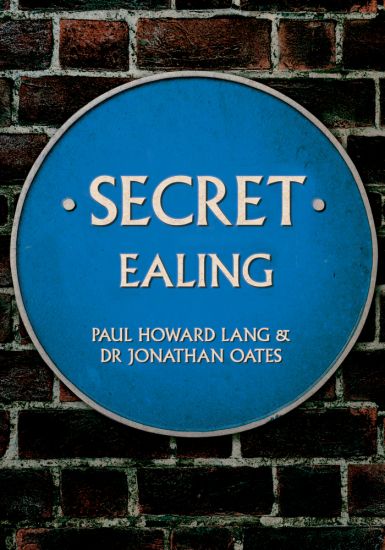
Secret Ealing

Secret Ealing

Paul Howard Lang; Jonathan Oates

Amberley Publishing
2021
nidottu
Originally a county town in Middlesex, Ealing became known as the ‘Queen of the Suburbs’ at the beginning of the last century. Famous for the Ealing Studios, the oldest film studios in the world, in this book authors Paul Lang and Dr Jonathan Oates delve into the fascinating but often lesser-known history of this district. Characters associated with Ealing include Olga Grey, hockey player and MI5 agent, and Ealing’s pro-Hitler MP, and other links with espionage and political extremism include suspected Soviet spies and a Communist cell in nineteenth-century Hanwell. Crime has stalked the streets of Ealing with the tale of the disappearance of Peregrine Henniker-Heaton and dissent when the borough was home to anti-German riots in 1915 and the Sunday Opening controversy in the 1930s. Alongside these tales the authors uncover stories of sports stars, film studios, wartime and ancient Ealing. Secret Ealing explores the lesser-known episodes and characters in the history of the borough through the years. With tales of remarkable characters, unusual events and tucked-away or disappeared historical buildings and locations, it will appeal to all those with an interest in the history of this West London district.
Unsolved London Murders: The 1920s & 1930s

Unsolved London Murders: The 1920s & 1930s

Jonathan Oates

Pen Sword True Crime
2020
nidottu
Unsolved crimes have a special fascination, none more so than unsolved murders. The shock of the crime itself and the mystery surrounding it, the fear generated by the awareness a killer on the loose, the insight the cases give into outdated police methods, and the chance to speculate about the identity of the killer after so many years have passed - all these aspects of unsolved murder cases make them compelling reading. In this companion volume to his bestselling Unsolved Murders of Victorian and Edwardian London, Jonathan Oates has selected over 20 haunting, sometimes shocking cases from the period between the two world wars. Included are the shooting of PC James Kelly in Gunnersbury, violent deaths associated with Fenian Conspiracies, the stabbing of the French acrobat Martial Lechevalier in Piccadilly, the strychnine poisoning of egg-seller Kusel Behr, the killing by arsenic of three members of a Croydon family, and, perhaps most gruesome of all, the case of the unidentified body parts found at Waterloo Station. Jonathan Oates describes each of these crimes in precise, forensic detail. His case studies shed light on the lives of the victims and summon up the ruthless, sometimes lethal character of London itself.
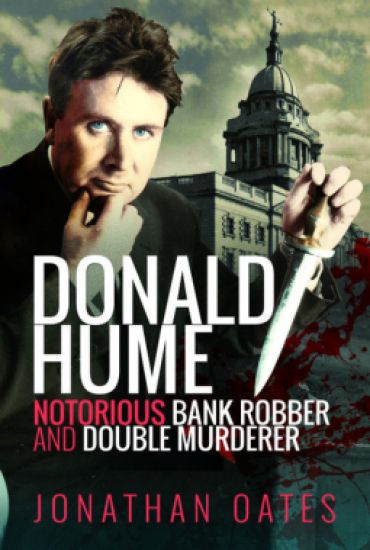
Donald Hume

Donald Hume

Jonathan Oates

Pen Sword True Crime
2020
nidottu
The trial of the year in 1950 was of Donald Hume, a North London petty thief accused of stabbing car dealer Stanley Setty to death, of cutting up his corpse and dropping his body parts from an aeroplane. The press and public were horrified and fascinated by the details. But Hume was convicted and gaoled as an accessory - he later claimed his wife was guilty of the crime. He then fled Switzerland, taking up with a Swiss woman in Zurich, but he needed money to finance his lavish lifestyle and he returned to robbery. He carried out two armed robberies, shooting a member of the bank staff, but getting clean away. Then in 1959 his attempt to rob a bank failed and he shot dead a bystander. Arrested, he stood trial and was sentenced to life, but was later deemed criminally insane and was returned to Britain and to Broadmoor. Jonathan Oates's compelling account of Hume's notorious life of crime is based on extensive primary research. It sheds new light on Hume and his crimes, especially the murder of Setty, and gives the reader a rare insight into the criminal underworld of the time.
Battles of the Jacobite Rebellions

Battles of the Jacobite Rebellions

Jonathan Oates

Pen Sword Military
2019
sidottu
Many books have been written about the Jacobite rebellions - the armed attempts made by the Stuarts to regain the British throne between 1689 and 1746 - and in particular about the risings of 1689, 1715, 1719 and 1745. The key battles have been described in graphic detail. Yet no previous book has given a comprehensive military account of the campaigns in their entirety - and that is the purpose of Jonathan Oates's new history. For over fifty years the Jacobites posed a serious threat to the governments of William and Mary, Queen Anne and George I and II. But they were unable to follow up their victories at Killiecrankie, Prestonpans and Falkirk, and the overwhelming defeat suffered by Bonnie Prince Charlie's army when it confronted the Duke of Cumberland's forces at Culloden in 1746 was decisive. The author uses vivid eyewitness testimony and contemporary sources, as well as the latest archaeological evidence, to trace the course of the conflict, and offers an absorbing insight into the makeup of the opposing sides, their leadership, their troops and the strategy and tactics they employed. His distinctive approach gives the reader a long perspective on a conflict which is often viewed more narrowly in terms of famous episodes and the careers of the leading men.
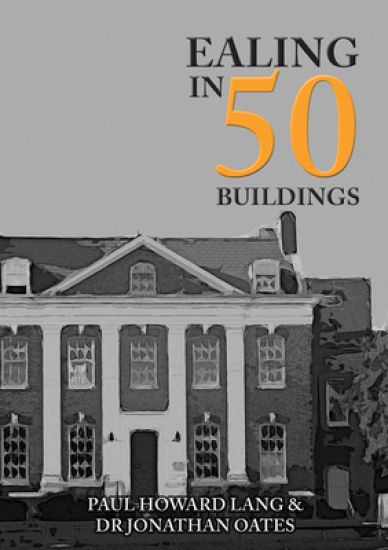
Ealing in 50 Buildings

Ealing in 50 Buildings

Paul Howard Lang; Jonathan Oates

Amberley Publishing
2019
nidottu
Known as the 'Queen of the Suburbs', Ealing is best known as being home to the world-famous Ealing Studios, the oldest film studios still in operation. However, there's much more to Ealing’s historical and architectural heritage than this. Ealing in 50 Buildings explores the history of this West London borough through a selection of its greatest architectural treasures, from the Grade I listed medieval St Mary’s Church in Perivale to the twenty-first-century gurdwara in Havelock Road, the biggest Sikh temple outside India. There are buildings associated with famous people, such as the Poor Law school, which was attended by Charlie Chaplin; public buildings such as St Bernard’s Hospital, where reforming surgeon Dr John Conolly worked; as well as mansions designed by John Soane. Local authors and historians Paul Howard Lang and Dr Jonathan Oates celebrate Ealing's architectural heritage in a new and accessible way as they guide the reader around the borough's historic and modern buildings.
Chesney

Chesney

Jonathan Oates

Mango Books
2019
pokkari
RONALD CHESNEY could have been a fictional criminal character. Educated at public school, attended a top British university and fought as a naval officer in World War Two, Ronald Chesney could have been a character out of an Agatha Christie novel. Furthermore, he devised a 'perfect murder' to enable him to have a strong alibi. His criminal career harked back to his teenage years, when he literally got away with murder. Running through his inherited wealth he became a professional criminal; mainly indulging in fraud and smuggling until his luck and money ran out. A despicable man in many ways, yet highly attractive to women throughout his life. This new study presents an account of a career criminal from the 1920s to the 1950s, through war and peace. JONATHAN OATES obtained a PhD from Reading University in History in 2001. Apart from being Ealing's Borough Archivist since 1999 he has had 26 books and over 30 articles published on a wide variety of historical subjects; criminal, military, local and genealogical. He has a particular interest in 1940s and 1950s crime. This book is his third biography of a major post war British murderer.
Chesney

Chesney

Jonathan Oates

Mango Books
2019
sidottu
RONALD CHESNEY could have been a fictional criminal character. Educated at public school, attended a top British university and fought as a naval officer in World War Two, Ronald Chesney could have been a character out of an Agatha Christie novel. Furthermore, he devised a 'perfect murder' to enable him to have a strong alibi. His criminal career harked back to his teenage years, when he literally got away with murder. Running through his inherited wealth he became a professional criminal; mainly indulging in fraud and smuggling until his luck and money ran out. A despicable man in many ways, yet highly attractive to women throughout his life. This new study presents an account of a career criminal from the 1920s to the 1950s, through war and peace. JONATHAN OATES obtained a PhD from Reading University in History in 2001. Apart from being Ealing's Borough Archivist since 1999 he has had 26 books and over 30 articles published on a wide variety of historical subjects; criminal, military, local and genealogical. He has a particular interest in 1940s and 1950s crime. This book is his third biography of a major post war British murderer.