Kirjojen hintavertailu. Mukana 12 293 493 kirjaa ja 12 kauppaa.

Kirjailija

Jonathan P. A. Sell

Kirjat ja teokset yhdessä paikassa: 6 kirjaa, julkaisuja vuosilta 2006-2023, suosituimpien joukossa Shakespeare's Sublime Ethos. Vertaile teosten hintoja ja tarkista saatavuus suomalaisista kirjakaupoista.

Mukana myös kirjoitusasut: Jonathan P.A. Sell

6 kirjaa

Kirjojen julkaisuhaarukka 2006-2023.

Shakespeare's Sublime Ethos

Shakespeare's Sublime Ethos

Jonathan P. A. Sell

TAYLOR FRANCIS LTD
2023
nidottu
Winner of the AEDEAN "Enrique García Díez" Literature Research Award 2023Winner of the European Society for the Study of English Book Award 2024Shakespeare’s Sublime Ethos: Matter, Stage, Form breaks new ground in providing a sustained, demystifying treatment of its subject and looking for answers to basic questions regarding the creation, experience, aesthetics and philosophy of Shakespearean sublimity. More specifically, it explores how Shakespeare generates a sublime mood or ethos which predisposes audiences intellectually and emotionally for the full experience of sublime pathos, explored in the companion volume, Shakespeare’s Sublime Pathos. To do so, it examines Shakespeare’s invention of sublime matter, his exploitation of the special characteristics of the Elizabethan stage, and his dramaturgical and formal simulacra of absolute space and time. In the process, it considers Shakespeare’s conception of the universe and man’s place in it and uncovers the epistemological and existential implications of key aspects of his art. As the argument unfolds, a case is made for a transhistorically baroque Shakespeare whose "bastard art" enables the dramatic restoration of an original innocence where ignorance really is bliss. Taken together, Shakespeare’s Sublime Ethos and Shakespeare’s Sublime Pathos show how Shakespearean drama integrates matter and spirit on hierarchical planes of cognition and argue that, ultimately, his is an immanent sublimity of the here-and-now enfolding a transcendence which may be imagined, simulated or evoked, but never achieved.
Shakespeare's Sublime Pathos

Shakespeare's Sublime Pathos

Jonathan P. A. Sell

TAYLOR FRANCIS LTD
2023
nidottu
Winner of the AEDEAN "Enrique García Díez" Literature Research Award 2023Winner of the European Society for the Study of English Book Award 2024Shakespeare’s Sublime Pathos: Person, Audience, Language breaks new ground in providing a sustained, demystifying treatment of its subject and looking for answers to basic questions regarding the creation, experience, aesthetics and philosophy of Shakespearean sublimity. More specifically, it explores how Shakespeare generates experiences of sublime pathos, for which audiences have been prepared by the sublime ethos described in the companion volume, Shakespeare’s Sublime Ethos. To do so, it examines Shakespeare’s model of mutualistic character, in which "entangled" language brokers a psychic communion between fictive persons and real-life audiences and readers. In the process, Sublime Critical platitudes regarding Shakespeare’s liberating ambiguity and invention of the human are challenged, while the sympathetic imagination is reinstated as the linchpin of the playwright’s sublime effects. As the argument develops, the Shakespearean sublime emerges as an emotional state of vulnerable exhilaration leading to an ethically uplifting openness towards others and an epistemologically bracing awareness of human unknowability. Taken together, Shakespeare’s Sublime Pathos and Shakespeare’s Sublime Ethos show how Shakespearean drama integrates matter and spirit on hierarchical planes of cognition and argue that, ultimately, his is an immanent sublimity of the here-and-now enfolding a transcendence which may be imagined, simulated or evoked, but never achieved.
Shakespeare's Sublime Pathos

Shakespeare's Sublime Pathos

Jonathan P. A. Sell

Taylor Francis Ltd
2021
sidottu
Winner of the AEDEAN "Enrique García Díez" Literature Research Award 2023Winner of the European Society for the Study of English Book Award 2024Shakespeare’s Sublime Pathos: Person, Audience, Language breaks new ground in providing a sustained, demystifying treatment of its subject and looking for answers to basic questions regarding the creation, experience, aesthetics and philosophy of Shakespearean sublimity. More specifically, it explores how Shakespeare generates experiences of sublime pathos, for which audiences have been prepared by the sublime ethos described in the companion volume, Shakespeare’s Sublime Ethos. To do so, it examines Shakespeare’s model of mutualistic character, in which "entangled" language brokers a psychic communion between fictive persons and real-life audiences and readers. In the process, Sublime Critical platitudes regarding Shakespeare’s liberating ambiguity and invention of the human are challenged, while the sympathetic imagination is reinstated as the linchpin of the playwright’s sublime effects. As the argument develops, the Shakespearean sublime emerges as an emotional state of vulnerable exhilaration leading to an ethically uplifting openness towards others and an epistemologically bracing awareness of human unknowability. Taken together, Shakespeare’s Sublime Pathos and Shakespeare’s Sublime Ethos show how Shakespearean drama integrates matter and spirit on hierarchical planes of cognition and argue that, ultimately, his is an immanent sublimity of the here-and-now enfolding a transcendence which may be imagined, simulated or evoked, but never achieved.
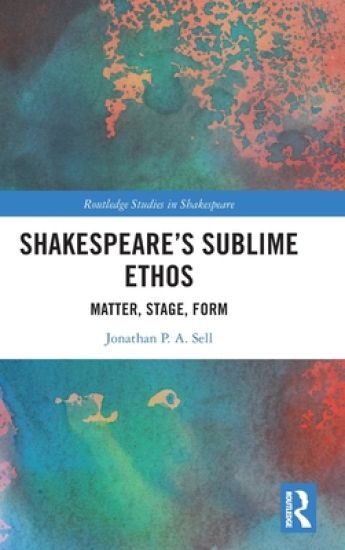
Shakespeare's Sublime Ethos

Shakespeare's Sublime Ethos

Jonathan P. A. Sell

Taylor Francis Ltd
2021
sidottu
Winner of the AEDEAN "Enrique García Díez" Literature Research Award 2023Winner of the European Society for the Study of English Book Award 2024Shakespeare’s Sublime Ethos: Matter, Stage, Form breaks new ground in providing a sustained, demystifying treatment of its subject and looking for answers to basic questions regarding the creation, experience, aesthetics and philosophy of Shakespearean sublimity. More specifically, it explores how Shakespeare generates a sublime mood or ethos which predisposes audiences intellectually and emotionally for the full experience of sublime pathos, explored in the companion volume, Shakespeare’s Sublime Pathos. To do so, it examines Shakespeare’s invention of sublime matter, his exploitation of the special characteristics of the Elizabethan stage, and his dramaturgical and formal simulacra of absolute space and time. In the process, it considers Shakespeare’s conception of the universe and man’s place in it and uncovers the epistemological and existential implications of key aspects of his art. As the argument unfolds, a case is made for a transhistorically baroque Shakespeare whose "bastard art" enables the dramatic restoration of an original innocence where ignorance really is bliss. Taken together, Shakespeare’s Sublime Ethos and Shakespeare’s Sublime Pathos show how Shakespearean drama integrates matter and spirit on hierarchical planes of cognition and argue that, ultimately, his is an immanent sublimity of the here-and-now enfolding a transcendence which may be imagined, simulated or evoked, but never achieved.
Rhetoric and Wonder in English Travel Writing, 1560-1613
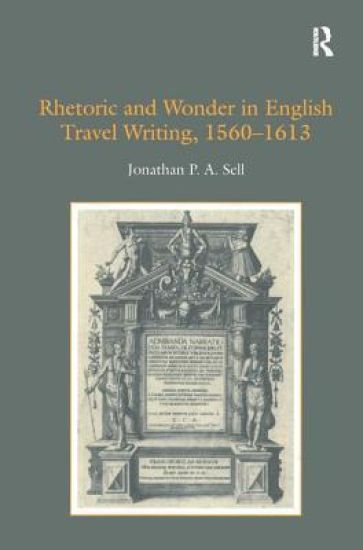
Rhetoric and Wonder in English Travel Writing, 1560-1613, shows how rhetorical invention, elocution and ethos combined to create plausible representations by generating intellectual and emotional significances which, meaningful in consensual terms, were 'consensually' true. However, some traveller-writers betrayed an unease with such representation, rooted as it was in a metaphorical epistemology out of kilter with an increasingly empiricist age. This book throws new light onto the episteme shift that ushered in modernity with its distrust of metaphor in particular and rhetoric's 'wordish descriptions' in general. In response to the empirical desiderata of scientific rationalism, traveller-writers textually or physically made their own bodies available as evidence of their encounters with wonder, thus transforming themselves into wonderful objects. The irony is that, far from dispensing with rhetoric, they merely put the accent on its more dramatic arts of gesture and action. The body's evidence could still be doctored, but its illusory truths were better able to satisfy the empirical demand for 'ocular proof'. The author's main purposes here are to complement, and sometimes counter, recent work on early modern travel literature by concentrating on its use of rhetoric to communicate meaning; and to suggest how familiarity with the workings of rhetoric and its communicative and epistemological premises may enhance readings of early modern English literature generally.
Rhetoric and Wonder in English Travel Writing, 1560-1613

Rhetoric and Wonder in English Travel Writing, 1560-1613

Jonathan P.A. Sell

Ashgate Publishing Limited
2006
sidottu
Rhetoric and Wonder in English Travel Writing, 1560-1613, shows how rhetorical invention, elocution and ethos combined to create plausible representations by generating intellectual and emotional significances which, meaningful in consensual terms, were 'consensually' true. However, some traveller-writers betrayed an unease with such representation, rooted as it was in a metaphorical epistemology out of kilter with an increasingly empiricist age. This book throws new light onto the episteme shift that ushered in modernity with its distrust of metaphor in particular and rhetoric's 'wordish descriptions' in general. In response to the empirical desiderata of scientific rationalism, traveller-writers textually or physically made their own bodies available as evidence of their encounters with wonder, thus transforming themselves into wonderful objects. The irony is that, far from dispensing with rhetoric, they merely put the accent on its more dramatic arts of gesture and action. The body's evidence could still be doctored, but its illusory truths were better able to satisfy the empirical demand for 'ocular proof'. The author's main purposes here are to complement, and sometimes counter, recent work on early modern travel literature by concentrating on its use of rhetoric to communicate meaning; and to suggest how familiarity with the workings of rhetoric and its communicative and epistemological premises may enhance readings of early modern English literature generally.