Kirjojen hintavertailu. Mukana 12 595 353 kirjaa ja 12 kauppaa.
Kirjailija
Jonathan P. Caulkins
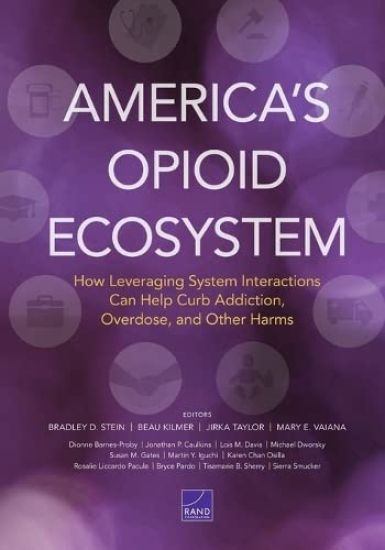
Kirjat ja teokset yhdessä paikassa: 18 kirjaa, julkaisuja vuosilta 1997-2023, suosituimpien joukossa America's Opioid Ecosystem. Vertaile teosten hintoja ja tarkista saatavuus suomalaisista kirjakaupoista.
Bradley D Stein; Beau Kilmer; Jirka Taylor; Mary E Vaiana; Dionne Barnes-Proby; Jonathan P Caulkins; Lois M Davis; Michael Dworsky; Susan M Gates; Martin Y Iguchi; Karen Chan Osilla; Rosalie Liccardo Pacula; Bryce Pardo; Tisamarie B Sherry; Sierra Smucker
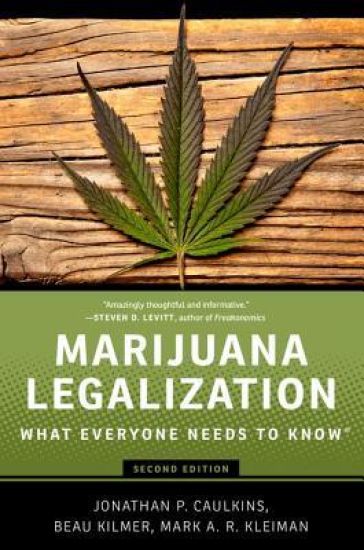
Should marijuana be legalized? Since 2012 four US states have legalized commercial for-profit marijuana production and use, while Washington DC has legalized possession, growth and gifting of limited amounts of the plant. Other states, and even cities, have decriminalized possession, allowed for medical use, or reduced possession to a misdemeanor. While marijuana is forbidden by international treaties and by national and local laws across the globe, polls show that public support for legalization has continued to increase steadily over time. So why does the issue of marijuana legalization continue to be so controversial? One short answer is that it is an extremely complicated business, with approaches toward legalization just within the United States varying widely. What's more, not all supporters of "legalization " agree on what it is they want to legalize: Just using marijuana? Growing it? Selling it? Advertising it? If sales are to be legal, what regulations and taxes should apply? Different forms of legalization have demonstrated very different results. This second edition of Marijuana Legalization: What Everyone Needs to Know® provides readers with a non-partisan primer covering everything from the risks and benefits of using marijuana to what is happening with marijuana policy in the United States and abroad. The authors discuss the costs and benefits of legalization at the state and national levels and explore the "middle ground " of policy options between prohibition and commercialized production. The book also considers the personal impact of marijuana legalization on parents, heavy users, medical users, employers, and even drug traffickers.
Should we legalize marijuana? If we legalize, what in particular should be legal? Just possessing marijuana and growing your own? Selling and advertising? If selling becomes legal, who gets to sell? Corporations? Co-ops? The government? What regulations should apply? How high should taxes be? Different forms of legalization could bring very different results. This second edition of Marijuana Legalization: What Everyone Needs to Know discusses what is happening with marijuana policy, describing both the risks and the benefits of using marijuana, without taking sides in the legalization debate. The book details the potential gains and losses from legalization, explores the middle ground options between prohibition and commercialized production, and considers the likely impacts of legal marijuana on occasional users, daily users, patients, parents, and employersand even on drug traffickers.
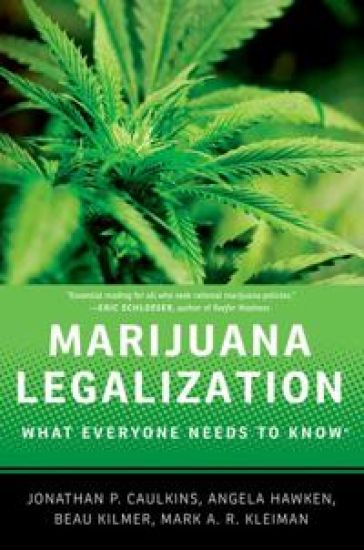
Should marijuana be legalized? The latest Gallup poll reports that exactly half of Americans say "yes"; opinion couldn't be more evenly divided. Marijuana is forbidden by international treaties and by national and local laws across the globe. But those laws are under challenge in several countries. In the U.S., there is no short-term prospect for changes in federal law, but sixteen states allow medical use and recent initiatives to legalize production and non-medical use garnered more than 40% support in four states. California's Proposition 19 nearly passed in 2010, and multiple states are expected to consider similar measures in the years to come. The debate and media coverage surrounding Proposition 19 reflected profound confusion, both about the current state of the world and about the likely effects of changes in the law. In addition, not all supporters of "legalization" agree on what it is they want to legalize: Just using marijuana? Growing it? Selling it? Advertising it? If sales are to be legal, what regulations and taxes should apply? Different forms of legalization might have very different results. Marijuana Legalization: What Everyone Needs to Know will provide readers with a non-partisan primer about the topic, covering everything from the risks and benefits of using marijuana, to describing the current laws around the drug in the U.S. and abroad. The authors discuss the likely costs and benefits of legalization at the state and national levels and walk readers through the "middle ground" of policy options between prohibition and commercialized production. The authors also consider how marijuana legalization could personally impact parents, heavy users, medical users, drug traffickers, and employers.
Discussions about reducing the harms associated with drug use and antidrug policies are often politicized, infused with questionable data, and unproductive. This paper provides a nonpartisan primer on drug use and drug policy in the United States. It aims to bring those new to drug policy up to speed and provide ideas to researchers and potential research funders about how they could make strong contributions to the field.
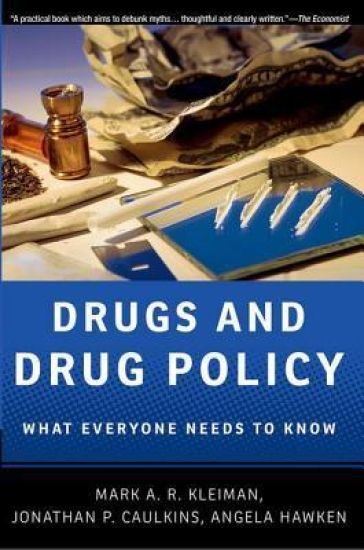
While there have always been norms and customs around the use of drugs, explicit public policies--regulations, taxes, and prohibitions--designed to control drug abuse are a more recent phenomenon. Those policies sometimes have terrible side-effects: most prominently the development of criminal enterprises dealing in forbidden (or untaxed) drugs and the use of the profits of drug-dealing to finance insurgency and terrorism. Neither a drug-free world nor a world of free drugs seems to be on offer, leaving citizens and officials to face the age-old problem: What are we going to do about drugs? In Drugs and Drug Policy, three noted authorities survey the subject with exceptional clarity, in this addition to the acclaimed series, What Everyone Needs to Know. They begin by, defining "drugs, " examining how they work in the brain, discussing the nature of addiction, and exploring the damage they do to users. The book moves on to policy, answering questions about legalization, the role of criminal prohibitions, and the relative legal tolerance for alcohol and tobacco. The authors then dissect the illicit trade, from street dealers to the flow of money to the effect of catching kingpins, and show the precise nature of the relationship between drugs and crime. They examine treatment, both its effectiveness and the role of public policy, and discuss the beneficial effects of some abusable substances. Finally they move outward to look at the role of drugs in our foreign policy, their relationship to terrorism, and the ugly politics that surround the issue. Crisp, clear, and comprehensive, this is a handy and up-to-date overview of one of the most pressing topics in today's world.
While there have always been norms and customs around the use of drugs, explicit public policies--regulations, taxes, and prohibitions--designed to control drug abuse are a more recent phenomenon. Those policies sometimes have terrible side-effects: most prominently the development of criminal enterprises dealing in forbidden (or untaxed) drugs and the use of the profits of drug-dealing to finance insurgency and terrorism. Neither a drug-free world nor a world of free drugs seems to be on offer, leaving citizens and officials to face the age-old problem: What are we going to do about drugs? In Drugs and Drug Policy, three noted authorities survey the subject with exceptional clarity, in this addition to the acclaimed series, What Everyone Needs to Know. They begin by, defining "drugs, " examining how they work in the brain, discussing the nature of addiction, and exploring the damage they do to users. The book moves on to policy, answering questions about legalization, the role of criminal prohibitions, and the relative legal tolerance for alcohol and tobacco. The authors then dissect the illicit trade, from street dealers to the flow of money to the effect of catching kingpins, and show the precise nature of the relationship between drugs and crime. They examine treatment, both its effectiveness and the role of public policy, and discuss the beneficial effects of some abusable substances. Finally they move outward to look at the role of drugs in our foreign policy, their relationship to terrorism, and the ugly politics that surround the issue. Crisp, clear, and comprehensive, this is a handy and up-to-date overview of one of the most pressing topics in today's world.
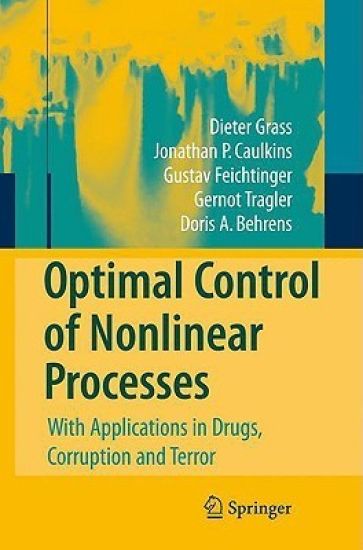
Dynamic optimization is rocket science – and more. This volume teaches how to harness the modern theory of dynamic optimization to solve practical problems, not only from space flight but also in emerging social applications such as the control of drugs, corruption, and terror. These innovative domains are usefully thought about in terms of populations, incentives, and interventions, concepts which map well into the framework of optimal dynamic control. This volume is designed to be a lively introduction to the mathematics and a bridge to these hot topics in the economics of crime for current scholars. We celebrate Pontryagin’s Maximum Principle – that crowning intellectual achievement of human understanding – and push its frontiers by exploring models that display multiple equilibria whose basins of attraction are separated by higher-dimensional DNSS "tipping points". That rich theory is complemented by numerical methods available through a companion web site.
Legalizing marijuana in California would lead to a major decline in the pretax price, but the price for consumers will depend heavily on taxes, the regulatory regime structure, and how taxes and regulations are enforced. The lower price and nonprice effects will increase consumption, but it is unclear by how much. There is much uncertainty about the effect on public budgets; even minor changes in assumptions lead to major differences in outcomes.
Dynamic optimization is rocket science – and more. This volume teaches how to harness the modern theory of dynamic optimization to solve practical problems, not only from space flight but also in emerging social applications such as the control of drugs, corruption, and terror. These innovative domains are usefully thought about in terms of populations, incentives, and interventions, concepts which map well into the framework of optimal dynamic control. This volume is designed to be a lively introduction to the mathematics and a bridge to these hot topics in the economics of crime for current scholars. We celebrate Pontryagin’s Maximum Principle – that crowning intellectual achievement of human understanding – and push its frontiers by exploring models that display multiple equilibria whose basins of attraction are separated by higher-dimensional DNSS "tipping points". That rich theory is complemented by numerical methods available through a companion web site.
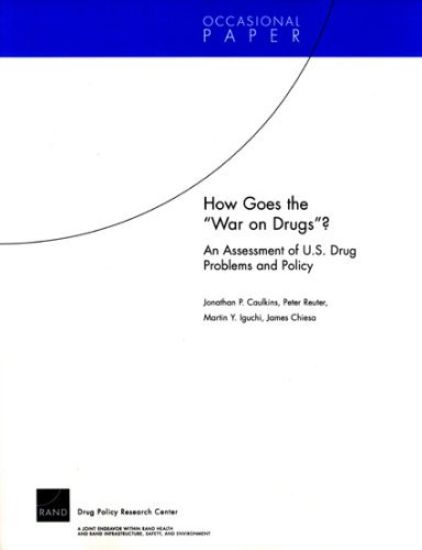
Presents a concise, accessible, objective view of where the United States has been, now stands, and is going in the future in its long "war on drugs." The authors assess the success of drug policies to date and review possible reasons why they have not been more successful. They recommend management of the drug problem for the long term, use of different policy levers depending on the situation, and tolerance of cross-state policy variation.
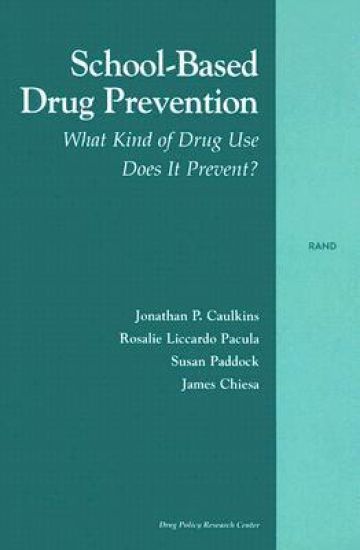
Estimates the amount of social benefit that prevention programs generate through reductions in the use of cocaine, marijuana, alcohol, and tobacco; Unlike drug enforcement, school-based prevention programs reduce the use of licit substances, as well as illicit ones. The authors examine which substances are principally responsible for prevention's benefits by estimating how much benefit is generated from reduced use of cocaine, marijuana, alcohol, and tobacco. They find that the benefits of prevention programs outweigh their costs, with alcohol and tobacco accounting for about two-thirds of prevention's drug-use reduction benefits.
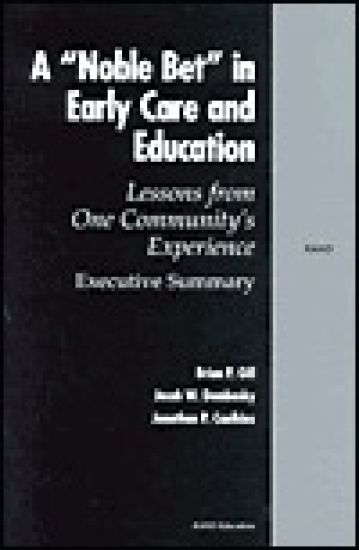
Lessons learned from Pittsburgh's bold but troubled Early Childhood Initiative; The Early Childhood Initiative (ECI), an ambitious effort to provide high-quality early care and education services to at-risk children, failed to achieve its goals, although participating children may have derived substantial benefits from it. This report summarizes ECI's organizational history, analyzes and explains its critical weaknesses, and articulates lessons to inform the design and implementation of future large-scale reform initiatives.
Lessons learned from Pittsburgh's bold but troubled Early Childhood Initiative The Early Childhood Initiative (ECI), an ambitious effort launched in Pittsburgh in 1996 to provide high-quality early care and education services to at-risk children, failed to achieve its goals, although participating children may have derived substantial benefits from it. This report summarizes ECI's organizational history, analyzes and explains its critical weaknesses, and articulates lessons to inform the design and implementation of future large-scale reform initiatives. The Early Childhood Initiative (ECI) was an ambitious effort launched in Pittsburgh in 1996 to provide high-quality early care and education services to at-risk children, on a countywide scale and under the direction of local neighborhood agencies. Its goal was to improve the preparation of these children for kindergarten, promote their long-term educational attainment, and give them the early tools to help them become productive, successful members of society.Initially funded by foundations and private donors, ECI planned to become financially sustainable over the long term by persuading the state of Pennsylvania to commit to funding the program at the end of a startup period. Four years after its launch, ECI was far short of its enrollment targets, the cost per child was significantly higher than expected, and the effort to secure a commitment of state funding had failed. ECI was therefore converted to a small-scale demonstration program, leaving a residue of disappointment in many communities around the county. Although findings from a parallel study suggest that participating children may have derived substantial benefits from ECI, it failed to achieve its goals in terms of scale and sustainability. In the aftermath of ECI's scale-down, RAND was commissioned by the Heinz Endowments (ECI's largest funder) to study why ECI fell short of its objectives and to learn from its mistakes.The findings of the study are presented in this report, which summarizes ECI's organizational history, analyzes and explains critical weaknesses that hindered ECI's ability to succeed, and articulates lessons to inform the design and implementation of future large-scale reform initiatives, whether in early care and education or in other areas of social services. (JDL)
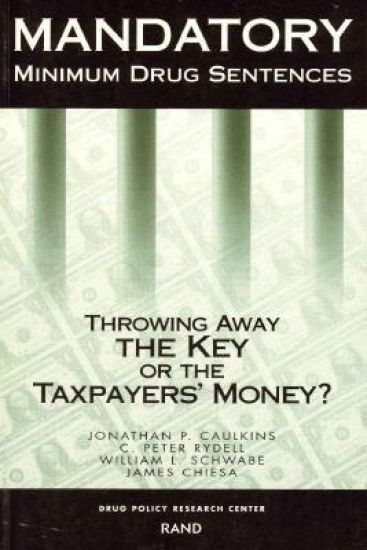
Laws requiring minimum sentences for certain crimes have become increasingly popular, and the most frequently applied of these mandatory minimums are those pertaining to drug offenders. Proponents and opponents of mandatory minimums generally argue over issues of punishment, deterrence, justice, and fairness. The authors of the current study examine mandatory minimum drug sentences from the viewpoint of cost-effectiveness at achieving such national drug control objectives as reducing cocaine consumption and cocaine-related crime. They conduct their analysis with the help of mathematical models estimating the response of cocaine supply and demand to changes in levels of enforcement and treatment. The authors find that a million dollars spent extending sentences to mandatory minimum lengths would reduce cocaine consumption less than would a million dollars spent on the pre-mandatory-minimum mix of arrests, prosecution, and sentencing. Neither would reduce cocaine consumption or cocaine-related crime as much as spending a million dollars treating heavy users. These conclusions are robust to changes in various assumptions underlying the analysis.