

Kirjailija
Jonathan Raban
Kirjat ja teokset yhdessä paikassa: 28 kirjaa, julkaisuja vuosilta 1995-2026, suosituimpien joukossa Here There Nowhere. Vertaile teosten hintoja ja tarkista saatavuus suomalaisista kirjakaupoista.
28 kirjaa
Kirjojen julkaisuhaarukka 1995-2026.

An extraordinary memoir about family, the past and mortality, and the final work from the peerless Jonathan Raban.

A NEW YORKER BEST BOOK OF THE YEAR - A poignant memoir of love, trauma, and recovery after a life-changing stroke, twinned to a powerful account of his father's experience in World War II, by a winner of the National Book Critics Circle Award. "A beautiful, compelling memoir...Raban's final work is a gorgeous achievement." --Ian McEwan, New York Times best-selling author of Lessons In June 2011, just days before his sixty-ninth birthday, Jonathan Raban was sitting down to dinner with his daughter when he found he couldn't move his knife to his plate. Later that night, at the hospital, doctors confirmed what all had suspected: that he had suffered a massive hemorrhagic stroke, paralyzing the right side of his body. Once he became stable, Raban embarked on an extended stay at a rehabilitation center, where he became acquainted with, and struggled to accept, the limitations of his new body--learning again how to walk and climb stairs, attempting to bathe and dress himself, and rethinking how to write and even read. Woven into these pages is an account of a second battle, one that his own father faced in the trenches during World War II. With intimate letters that his parents exchanged at the time, Raban places the budding love of two young people within the tumultuous landscape of the war's various fronts, from the munition-strewn beaches of Dunkirk to blood-soaked streets of Anzio. Moving between narratives, his and theirs, Raban artfully explores the human capacity to adapt to trauma, as well as the warmth, strength, and humor that persist despite it. The result is Father and Son, a powerful story of mourning, but also one of resilience.

A beautiful, compelling memoir. ... Father and Son is an exquisite, sometimes lunatic tension between powerful emotions and carnage on one side, and on the other, the conventional codes of what must remain unsaid. This, Rabans final work, is a gorgeous achievement" – Ian McEwanOn 11 June 2011, three days short of his sixty-ninth birthday, Jonathan Raban suffered a stroke which left him unable to use the right side of his body, wheelchair-bound in a rehab facility and endlessly frustrated by his newfound physical limitations. As he resisted the overbearing ministrations of the nurses helping him along the road to recovery, Raban began to reflect not only on the measure of his own life but the extraordinary story of his parents’ early marriage, conducted for three years by letter while his father fought in the Second World War.Jonathan Raban engages profoundly and honestly with the biggest questions at the heart of what it means to be alive, laying bare the human capacity to adapt to trauma, as well as the warmth, strength, and humour that persist despite it. The result is Father and Son, a tremendous story of resilience in the face of loss.
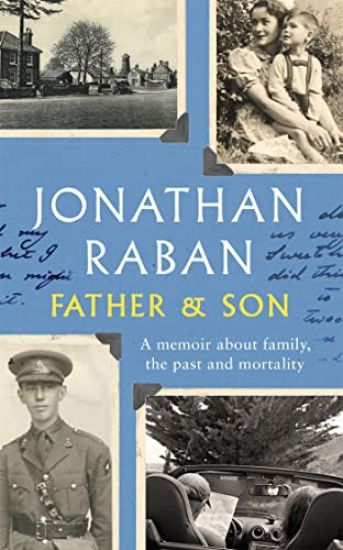
A NEW YORKER BEST BOOK OF 2023'A beautiful, compelling memoir . . . Father and Son is an exquisite, sometimes lunatic tension between powerful emotions and carnage on one side, and on the other, the conventional codes of what must remain unsaid. This, Raban's final work, is a gorgeous achievement" – Ian McEwanOn 11 June 2011, three days short of his sixty-ninth birthday, Jonathan Raban suffered a stroke which left him unable to use the right side of his body. Learning to use a wheelchair in a rehab facility outside Seattle and resisting the ministrations of the nurses overseeing his recovery, Raban began to reflect upon the measure of his own life in the face of his own mortality. Together with the chronicle of his recovery is the extraordinary story of his parents’ marriage, the early years of which were conducted by letter while his father fought in the Second World War.Jonathan Raban engages profoundly and candidly with some of the biggest questions at the heart of what it means to be alive, laying bare the human capacity to withstand trauma, as well as the warmth, strength, and humour that persist despite it. Father and Son, the final work from the peerless man of letters, is a tremendous, continent-sweeping story of love and resilience in the face of immense loss.

'His erudition is enorous, his prose as beautiful and clear as the blue ocean on a crisp morning . . . Passage to Juneau is a wonderfully fluid read' – Sunday Times Passage to Juneau is an account of Raban's voyage from Seattle to the Alaskan capital by boat, and the devastating news that awaits him when he returns to dry land. In Raban's capable hands, the passage from Seattle to Alaska is less a journey than a backdrop for musings on history, art, myth, and philosophy.Reissued with a new introduction from Robert Macfarlane, author of Underland: A Deep Time Journey, this is extraordinary travel writing, defying at every turns the constrains of genre.'Raban at his best' – Ian McEwan

Jonathan Raban's enthralling journey into the history of the Great Plains of Montana – the least populated, most uncharted region of the United States – to uncover the heart and soul of the country.Bringing to life the extraordinary landscape of the prairie and the homesteaders whose dreams foundered there, and reaching through history to the present day, Bad Land uncovers the dangerous legacy of American innocence gone sour. Reissued with a new introduction from Jane Smiley, author of the Pulitzer Prize-winning A Thousand Acres, this is Jonathan Raban at his finest.'Bad Land should be recognized as a blazing classic' – Sunday Telegraph
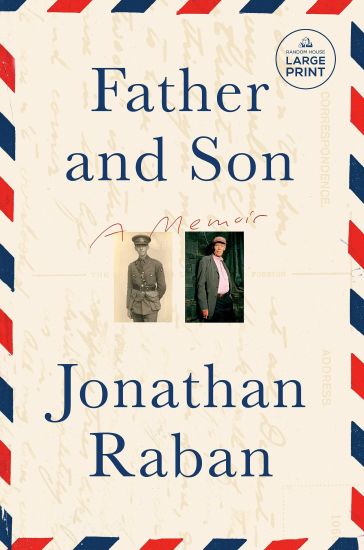
A NEW YORKER BEST BOOK OF THE YEAR - A poignant memoir of love, trauma, and recovery after a life-changing stroke, twinned to a powerful account of his father's experience in World War II, by a winner of the National Book Critics Circle Award. "A beautiful, compelling memoir...Raban's final work is a gorgeous achievement." --Ian McEwan, New York Times best-selling author of Lessons In June 2011, just days before his sixty-ninth birthday, Jonathan Raban was sitting down to dinner with his daughter when he found he couldn't move his knife to his plate. Later that night, at the hospital, doctors confirmed what all had suspected: that he had suffered a massive hemorrhagic stroke, paralyzing the right side of his body. Once he became stable, Raban embarked on an extended stay at a rehabilitation center, where he became acquainted with, and struggled to accept, the limitations of his new body--learning again how to walk and climb stairs, attempting to bathe and dress himself, and rethinking how to write and even read. Woven into these pages is an account of a second battle, one that his own father faced in the trenches during World War II. With intimate letters that his parents exchanged at the time, Raban places the budding love of two young people within the tumultuous landscape of the war's various fronts, from the munition-strewn beaches of Dunkirk to blood-soaked streets of Anzio. Moving between narratives, his and theirs, Raban artfully explores the human capacity to adapt to trauma, as well as the warmth, strength, and humor that persist despite it. The result is Father and Son, a powerful story of mourning, but also one of resilience.
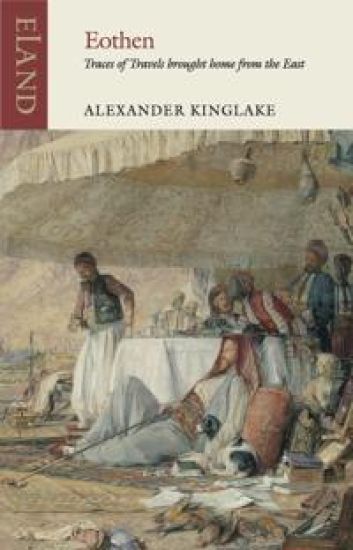
It took Kinglake seven years before he had finished crafting this `lively, brilliant and rather insolent tale. The physical details of the journey, undertaken in 1834 across the Balkan frontiers of the Ottoman Empire, through Constantinople, Smyrna, Cyprus into the Near eastern cities of Jerusalem, Cairo and Damascus, are never as significant as the conversations, chance encounters and attitudes of the author. Packed full of an infectious charm and a youthful delight at the world, it is above all things funny as it lampoons the pomposity of earnest, middle?aged travellers seeking to establish themselves as professional authorities.

'A valuable book and a necessary one. One of the funniest and cleverest voyages on record.' Christopher Hitchens, New Statesman'The finest writer afloat since Conrad.' Geoffrey Moorhouse, The Guardian'Unfailingly witty and entertaining.' Salman RushdieCoasting round Britain single-handed in an antique two-masted sailing boat, Jonathan Raban conducts a masterly exploration of England and the English at the time of Margaret Thatcher and the Falklands War. He moves seamlessly between awkward memories of childhood as the son of a vicar, a vivid chronicle of the shape-shifting sea and incisive descriptions of the people and communities he encounters. As he faces his terror of racing water, eddies, offshore sandbars and ferries on a collision course, so he navigates the complex and turbulent waters of his own middle age. Coasting is a fearless attempt to discover the meaning of belonging and of his English homeland.
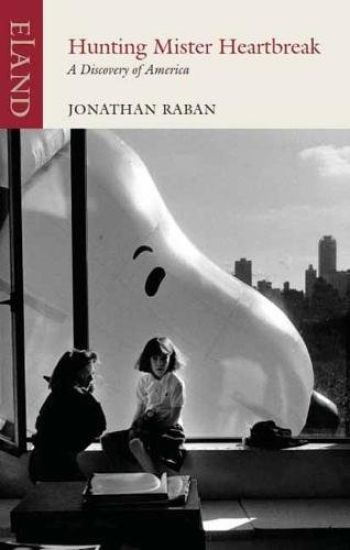
'Jonathan Raban is simply one of the great writers of nonfiction at work today. I hold his work in awe.' Robert Macfarlane'Unfailingly witty and entertaining.' Salman RushdieFollowing in the footsteps of countless emigrants, Jonathan Raban takes ship for New York from Liverpool, to explore how succeeding generations of newcomers have fared in America. He finds a country of massive contrasts, between the Street People and the Air People in New York, between small town and big city, between thrusting immigrants and down-at-heel native Americans.Having outgrown his minute rented New York apartment, he heads for Guntersville, Alabama, where he settles for a few months as a good ol' boy in a cabin on the lake with a 'rented' elderly lab. From there he flies to the promise of Seattle, discovering its thrusting but alienated Asian community and thence to the watery lowlife of Key West. The result is a breathtaking observation of the States a travelogue, a social history and a love letter in one.

'Of all his generation's travellers, Jonathan Raban is the most sophisticated, writing with a subtle and imaginative brilliance.' Colin Thubron'One of the most humane and visionary of all travel writers.' Jeremy SealInto Jonathan Raban's familiar Earls Court neighbourhood after the 1970s oil boom came new visitors from the Arab world, dressed in floor-length robes and yashmaks. A people apart, little known, Raban wanted to get behind the myth and the rumour to discover the reality of their lives and world. His journey took him through Bahrain, Qatar, Abu Dhabi, Yemen, Egypt and Jordan. What he discovered was a far cry from the camel, tent and sand dune archetypes of early European explorers. Oil wealth had seeped into almost every corner, and Bedouin encampments had been replaced by cosmopolitan boomtowns, camels by Range Rovers. The sons of Bedouin nomads were now studying medicine in Europe and engineering in New York. Yet in this fast-moving world, old certainties remained and cultural innovation lagged miles behind economic change.Raban's gift for friendship introduces us to a series of memorable individuals rich and poor set against the feel, the smells, the sounds and the nuances of Arabia.
'Jonathan Raban is one of the world's greatest living travel writers.' William Dalrymple'The best book of travel ever written by an Englishman about the United States' Jan Morris, IndependentNavigating the Mississippi River from Minneapolis to New Orleans, Raban opens himself to experience the river in all her turbulent and unpredictable old glory. Going wherever the current takes him, he joins a coon-hunt in Savana, falls for a girl in St Louis, worships with black Baptists in Memphis, hangs out with the housewives of Pemiscot and the hog-king of Dubuque. Through tears of laughter, we are led into the heartland of America with its hunger and hospitality, its inventive energy and its charming lethargy and come to know something of its soul.The journey is as much the story of Raban as it is of the Mississippi. Navigating the dangerous, ever-changing waters in an unsuitably fragile aluminium skiff, he immerses himself with an irresistible emotional intensity as he tries to give shape to the river and the story finding himself by turns vulnerable, curious, angry and, like all of us, sometimes foolishly in love.
'Jonathan Raban is the only person I listen to in matters of travel and books and writing in general. Reading him, talking to him as I have over fifty years, he has made my work better and me happier.' Paul Theroux'For Love and Money ... is as good a book as there is about the writing life. Delighted that it will be safeguarded in print by Eland.' Tim HanniganThis collection of writing undertaken for love and money is about books and travel, and makes for an engrossing and candid exploration of what it means to live from writing. Jonathan Raban weighs up the advantages of maintaining an independent spirit against problems of insolvency and self-worth, confesses to travel as an escape from the blank page, ponders the true art of the book review, admires the role of the literary editor and remembers with affection and hilarity events from his eccentric life at the heart of literary London. Reading it is like embarking on a humane, rigorous and witty conversation.
Jonathan Raban's Soft City is a compelling exploration of urban life: a classic in the literature of the city. First published in the 1970s, it is now more relevant to today’s overcrowded planet than ever.With an introduction by Iain Sinclair.In the city we can live deliberately: inventing and renewing ourselves, carving out journeys, creating private spaces. But in the city we are also afraid of being alone, clinging to the structures of daily life to ward off the chaos around us.How is it that the noisy, jostling, overwhelming metropolis leaves us at once so energized and so fragile? In Soft City, Jonathan Raban, one of our most acclaimed novelists and travel writers seeks to find out.'A psychological handbook for urban survival' – Sunday Telegraph

What does America’s ‘war on terror’ and new era of religious and patriotic intensity look like to an Englishman living in Seattle?
Michael Brophy has painted the Pacific Northwest landscape for over two decades, from sumptuously rendered panoramas of clearcuts and slag heaps to comic-book-scaled noir tableaus of the characters who reshaped the region 150 years ago. This large-scale monograph brings 15 of his most historically expansive paintings to date together with writings on the artistic and cultural history of the Northwest landscape by essayist Jonathan Raban and historian William L. Lang. The influences on Brophy's painting stretch from Goya and Velasquez to Robert Colescott and Georg Baselitz. He has riffed on everything from obscure Wobbly songs to Chinook jargon dictionaries to the writings of Stewart Holbrook. But Here There Nowhere marks a bold new direction in Brophy's work. More sweeping in scope and minimalist in style, the paintings portray what he calls the Big Empty, the dramatic, vacant spaces of the Northwest's eastern deserts and western coast but with an eye toward the coming endgame of Manifest Destiny. Raban's essay, Battleground of the Eye, traces two centuries of artistic conflict between the verdant, people-free Northwest most painters chose to portray vs. the fully populated and exploited landscape that actually existed. Lang's essay, An Insatiable Hunger: The Consuming Myth of the Northwest, probes the changing mythology of Pacific Northwest landscape as it has progressed from an apparently infinite resource for extractive industries to a playground for an expanding consumer class. Designer John Laursen has translated the sweeping power of Brophy's work to the scale of a 12-by-12-inch book with the 200-line reproductions imaged direct to plate and printed by Portland's award-winningMillcross Litho.

At the turn of the millennium, two immigrants are drawn to the United States by their own versions of the American Dream.For Tom Janeway - a Hungarian-born English intellectual most at home with his books - it's the family he thought he'd never have. For Chick - an illegal alien newly escaped from a cargo container - it's the land of plenty he imagined back in China.But as the stock market hits a new high, anti-globalist riots break out in the streets, a terrorist is arrested and a child disappears, the two men's dreams collide in a way neither could have anticipated. Unjustly accused of a horrific crime, estranged from his wife and his beloved young son, Tom's life is rapidly unravelling. Chick, meanwhile, has a burgeoning business by day but no safe place to lay his bed at night. For both, the New World proves surprisingly full of old ways.Moving, funny and hugely entertaining, Jonathan Raban's Waxwings brilliantly captures the landscape and life of contemporary America.
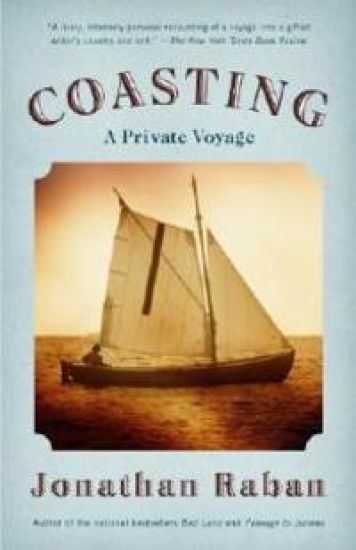
From the national bestselling, National Book Critics Circle Award-winning author of Bad Land comes "a lively, intensely personal recounting of a voyage into a gifted writer's country and self" (The New York Times Book Review). Put Jonathan Raban on a boat and the results will be fascinating, and never more so than when he's sailing around the serpentine, 2,000-mile coast of his native England. In this acutely perceived and beautifully written book, the bestselling author of Bad Land turns that voyage-which coincided with the Falklands war of 1982-into an occasion for meditations on his country, his childhood, and the elusive notion of home. Whether he's chatting with bored tax exiles on the Isle of Man, wrestling down a mainsail during a titanic gale, or crashing a Scottish house party where the kilted guests turn out to be Americans, Raban is alert to the slightest nuance of meaning. One can read Coasting for his precise naturalistic descriptions or his mordant comments on the new England, where the principal industry seems to be the marketing of Englishness. But one always reads it with pleasure.
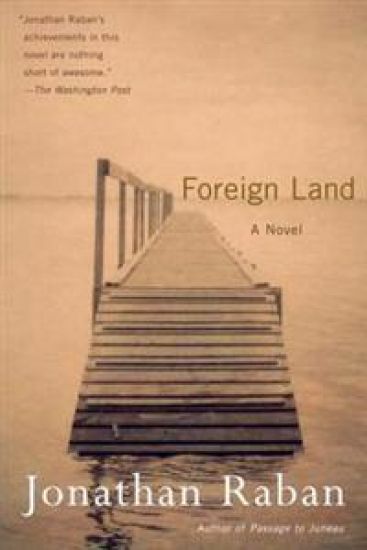
From the bestselling, award-winning author of Bad Land comes a quirky and insightful novel of what can happen when one can and does go home again."Raban's achievements in this novel are nothing short of awesome." --The Washington PostFor the past thirty years, George Grey has been a ship bunker in the fictional west African nation of Montedor, but now he's returning home to England--to a daughter who's a famous author he barely knows, to a peculiar new friend who back in the sixties was one of England's more famous singers, and to the long and empty days of retirement during which he's easy prey to the melancholy of memories, all the more acute since the woman he loves is still back in Africa. Witty, charming and masterly crafted, Foreign Land is an exquisitely moving tale of awkward relationships and quiet redemption.