Kirjojen hintavertailu. Mukana 12 390 323 kirjaa ja 12 kauppaa.

Kirjailija

Jonathan S. Fish

Kirjat ja teokset yhdessä paikassa: 2 kirjaa, julkaisuja vuosilta 2005-2020, suosituimpien joukossa Defending the Durkheimian Tradition. Vertaile teosten hintoja ja tarkista saatavuus suomalaisista kirjakaupoista.

2 kirjaa

Kirjojen julkaisuhaarukka 2005-2020.

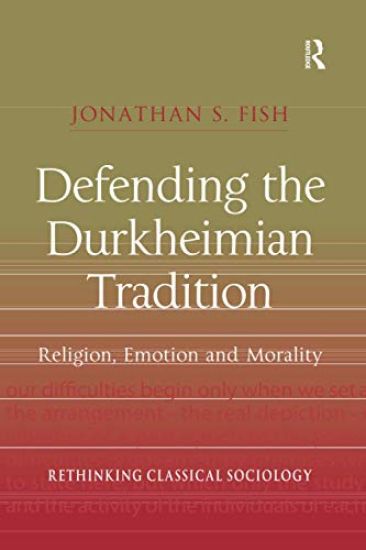
Defending the Durkheimian Tradition

Defending the Durkheimian Tradition

Jonathan S. Fish

Routledge
2020
nidottu
This book provides an exciting, accessible and wide-ranging guide to the development of classical and contemporary Durkheimian thought. Jonathan Fish offers a re-reading of the writings of Emile Durkheim and Talcott Parsons on religion. He aims to move beyond rationalistic readings which have neglected the key significance of collective human emotion in Durkheim's accounts of the link between society, religion and morality. He goes on to look at the development of these ideas in the work of Parsons and more recent Durkheimian thinkers. Making an important contribution both to studies of Durkheim and the Durkheimian tradition and to the sociology of emotion, the book is distinctive in arguing that religion is an essential backdrop for understanding emotion. In making this claim the author provides a key to re-establishing links between the sociology of religion and the wider discipline of sociology.

Defending the Durkheimian Tradition

Defending the Durkheimian Tradition

Jonathan S. Fish

Ashgate Publishing Limited
2005
sidottu
This book provides an exciting, accessible and wide-ranging guide to the development of classical and contemporary Durkheimian thought. Jonathan Fish offers a re-reading of the writings of Emile Durkheim and Talcott Parsons on religion. He aims to move beyond rationalistic readings which have neglected the key significance of collective human emotion in Durkheim's accounts of the link between society, religion and morality. He goes on to look at the development of these ideas in the work of Parsons and more recent Durkheimian thinkers. Making an important contribution both to studies of Durkheim and the Durkheimian tradition and to the sociology of emotion, the book is distinctive in arguing that religion is an essential backdrop for understanding emotion. In making this claim the author provides a key to re-establishing links between the sociology of religion and the wider discipline of sociology.