Kirjojen hintavertailu. Mukana 12 390 323 kirjaa ja 12 kauppaa.

Kirjailija

Jonathan Simon

Kirjat ja teokset yhdessä paikassa: 19 kirjaa, julkaisuja vuosilta 1993-2023, suosituimpien joukossa Mass Incarceration On Trial. Vertaile teosten hintoja ja tarkista saatavuus suomalaisista kirjakaupoista.

19 kirjaa

Kirjojen julkaisuhaarukka 1993-2023.

Nanomedicine

Nanomedicine

Jonathan Simon; Bertrand H. Rihn

TAYLOR FRANCIS LTD
2023
sidottu
The book is an introduction to nanomedicine informed by a philosophical reflection about the domain and recent developments. It is an overview of the field, sketching out the main areas of current investment and research. The authors present some case-studies illustrating the different areas of research (nanopharmacy, theranostics and patient monitoring) as well as reflecting on the risks that accompany it, such as unanticipated impacts on human health and environmental toxicity. This introduction to a fast-growing field in modern medical research is of great interest to researchers working in many disciplines as well as the general public. In addition to an overview of the work currently ongoing, the authors critically assess these projects from an ethical and philosophical perspective.Key Features Provides an overview of nanomedicine Employs a reflective and coherent critical evaluation of the benefits and risks of nanomedicine Written in an accessible manner intended for a wide audienceRelated TitlesHehenberger, M. Nanomedicine: Science, Business, and impact (ISBN 978-9-8146-1376-7).Beg, S., et al. Nanomedicine for the treatment of Disease: From Concept to Application (ISBN 978-1-7746-3443-1)Brenner, S. The Clinical Nanomedicine Handbook (ISBN 978-1-1380-7578-8)

Nanomedicine

Nanomedicine

Jonathan Simon; Bertrand H. Rihn

TAYLOR FRANCIS LTD
2023
nidottu
The book is an introduction to nanomedicine informed by a philosophical reflection about the domain and recent developments. It is an overview of the field, sketching out the main areas of current investment and research. The authors present some case-studies illustrating the different areas of research (nanopharmacy, theranostics and patient monitoring) as well as reflecting on the risks that accompany it, such as unanticipated impacts on human health and environmental toxicity. This introduction to a fast-growing field in modern medical research is of great interest to researchers working in many disciplines as well as the general public. In addition to an overview of the work currently ongoing, the authors critically assess these projects from an ethical and philosophical perspective.Key Features Provides an overview of nanomedicine Employs a reflective and coherent critical evaluation of the benefits and risks of nanomedicine Written in an accessible manner intended for a wide audienceRelated TitlesHehenberger, M. Nanomedicine: Science, Business, and impact (ISBN 978-9-8146-1376-7).Beg, S., et al. Nanomedicine for the treatment of Disease: From Concept to Application (ISBN 978-1-7746-3443-1)Brenner, S. The Clinical Nanomedicine Handbook (ISBN 978-1-1380-7578-8)
SchVG

SchVG

Kai Birke; Thomas Hoffmann; Julian Schulze de la Cruz; Jonathan Simon; Thorsten Reinhard; Alexander Schall

De Gruyter
2020
sidottu
Das SchVG regelt mit den Schuldverschreibungen aus Gesamtemissionen eine wertpapierrechtliche Materie von großem wirtschaftlichem Gewicht und mit engen Bezügen zum Aktienrecht (v.a. in der HV). Besondere Relevanz entfaltet es bei der Restrukturierung von Anleihen. Die Bearbeiter sind profilierte Experten, die die Materie im Rahmen ihrer anwaltlichen Praxis in aller wissenschaftlichen Tiefe durchdrungen haben.
Chemistry, Pharmacy and Revolution in France, 1777-1809
This book explores the history of pharmacy in France and its relationship to the discipline of chemistry as it emerged at the beginning of the nineteenth century. It argues that an appreciation of the history of pharmacy is essential to a full understanding of the constitution of modern science, in particular the discipline of chemistry. As such, it provides a novel interpretation of the chemical revolution (c.1770-1789) that will, no doubt, generate much debate on the place of the chemical arts in this story, a question that has hitherto lacked sufficient scholarly reflection. Furthermore, the book situates this analysis within the broader context of the French Revolution, arguing that an intimate and direct link can be drawn between the political upheavals and our vision of the chemical revolution. The story of the chemical revolution has usually been told by focusing on the small group of French chemists who championed Lavoisier's oxygen theory, or else his opponents. Such a perspective emphasises competing theories and interpretations of critical experiments, but neglects the challenging issue of who could be understood as practising chemistry in the eighteenth century. In contrast, this study traces the tradition of pharmacy as a professional pursuit that relied on chemical techniques to prepare medicines, and shows how one of the central elements of the chemical revolution was the more or less conscious disassociation of the new chemistry from this ancient chemical art.
Diphtheria Serum as a Technological Object

Diphtheria Serum as a Technological Object

Jonathan Simon

Lexington Books
2016
sidottu
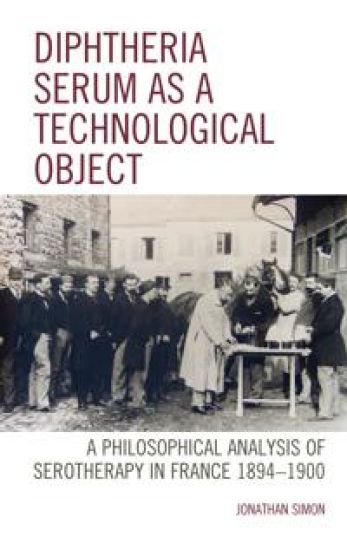
Introduced in 1894 as a treatment for a deadly childhood disease, the diphtheria serum stands as a milestone in pharmaceutical history. Diphtheria Serum as a Technological Object: A Philosophical Analysis of Serotherapy in France 1894-1900 considers the production and use of this serum in France, analyzing the drug in terms of a technological object. To do this, Jonathan Simon draws on the philosophy of technology, exploring the application of this approach to medical drugs and suggesting how such an analysis can in turn contribute to this domain of philosophy. Starting with the manufacture of the serum from horses’ blood, Simon then considers the processes involved in transforming the blood serum into a legal medical drug and establishing its efficacy as a treatment against diphtheria. The book looks at the place the drug assumed in French society at the time, as well as the legal and political implications of its manufacture and use. All these elements are deployed to characterize a specifically French serum, as the author argues that the constitution of the drug in its full sense is not only technical but also social, political, and legal. Considering the serum as technological object facilitates a philosophical reflection on the nature of medical drugs in general by means of a thorough analysis of this particular historical example. The insights offered in this book will be of interest to students and scholars working on the philosophy of technology, particularly the medical sciences, as well as to historians of medicine, particularly those interested in the history of pharmacy.
Mass Incarceration On Trial

Mass Incarceration On Trial

Jonathan Simon

The New Press
2016
nidottu
For nearly 40 years the United States has been gripped by policies that have placed more than 2.5 million Americans in jails and prisons designed to hold a fraction of that number of inmates. Our prisons are not only vast and overcrowded, they are degrading. Mass Incarceration on Trial examines a series of landmark decisions about prison conditions that has opened an unexpected escape route from this trap of 'tough on crime' politics. This set of rulings points toward values that could restore legitimate order to American prisons and lead to the end of mass incarceration.
Architecture and Justice

Architecture and Justice

Jonathan Simon

Routledge
2016
nidottu
Bringing together leading scholars in the fields of criminology, international law, philosophy and architectural history and theory, this book examines the interrelationships between architecture and justice, highlighting the provocative and curiously ambiguous juncture between the two. Illustrated by a range of disparate and diverse case studies, it draws out the formal language of justice, and extends the effects that architecture has on both the place of, and the individuals subject to, justice. With its multi-disciplinary perspective, the study serves as a platform on which to debate the relationships between the ceremonial, legalistic, administrative and penal aspects of justice, and the spaces that constitute their settings. The structure of the book develops from the particular to the universal, from local situations to the larger city, and thereby examines the role that architecture and urban space play in the deliberations of justice. At the same time, contributors to the volume remind us of the potential impact the built environment can have in undermining the proper juridical processes of a socio-political system. Hence, the book provides both wise counsel and warnings of the role of public/civic space in affirming our sense of a just or unjust society.
The Jail

The Jail

John Irwin; Jonathan Simon

University of California Press
2013
pokkari
The path away from America's prison crisis may lead through the jail. While there may be many positive aspects of jails as sites of confinement, especially when compared with the prisons of mass incarceration, Irwin's analysis pointed to features that could make the new jail-based version of mass incarceration even worse. The local nature and relative obscurity of jails means that the level of legal review and due process obtainable in prisons through the persistent efforts of civil rights lawyers may be even harder to maintain in jails. The historic focus of jails on what Irwin called "rabble management" threatens to undermine the opportunity presented by the present prison crisis to rethink America's overreliance on confinement of all kinds (whether prisons, jails, or immigration detention centers). If so, it is vital that those of us committed to reversing the destructive effects of mass incarceration on American democracy and social equality expand our concern and our research from prisons to the jails that may replace them. The re-publication of John Irwin's The Jail: Managing the Underclass in American Society is a most timely aid to that mission. --From the foreword by Jonathan Simon
Architecture and Justice

Architecture and Justice

Jonathan Simon

Ashgate Publishing Limited
2013
sidottu
Bringing together leading scholars in the fields of criminology, international law, philosophy and architectural history and theory, this book examines the interrelationships between architecture and justice, highlighting the provocative and curiously ambiguous juncture between the two. Illustrated by a range of disparate and diverse case studies, it draws out the formal language of justice, and extends the effects that architecture has on both the place of, and the individuals subject to, justice. With its multi-disciplinary perspective, the study serves as a platform on which to debate the relationships between the ceremonial, legalistic, administrative and penal aspects of justice, and the spaces that constitute their settings. The structure of the book develops from the particular to the universal, from local situations to the larger city, and thereby examines the role that architecture and urban space play in the deliberations of justice. At the same time, contributors to the volume remind us of the potential impact the built environment can have in undermining the proper juridical processes of a socio-political system. Hence, the book provides both wise counsel and warnings of the role of public/civic space in affirming our sense of a just or unjust society.
Chemistry: The Impure Science (2nd Edition)

Chemistry: The Impure Science (2nd Edition)

Jonathan Simon; Bernadette Bensaude-vincent

Imperial College Press
2012
sidottu
What do you associate with chemistry? Explosions, innovative materials, plastics, pollution? The public's confused and contradictory conception of chemistry as basic science, industrial producer and polluter contributes to what we present in this book as chemistry's image as an impure science. Historically, chemistry has always been viewed as impure both in terms of its academic status and its role in transforming modern society. While exploring the history of this science we argue for a characteristic philosophical approach that distinguishes chemistry from physics. This reflection leads us to a philosophical stance that we characterise as operational realism. In this new expanded edition we delve deeper into the questions of properties and potentials that are so important for this philosophy that is based on the manipulation of matter rather than the construction of theories.
International Human Rights and Humanitarian Law

International Human Rights and Humanitarian Law

Martin Francisco Forrest; Schnably Stephen J.; Richard Wilson; Jonathan Simon; Tushnet Mark

Cambridge University Press
2011
pokkari
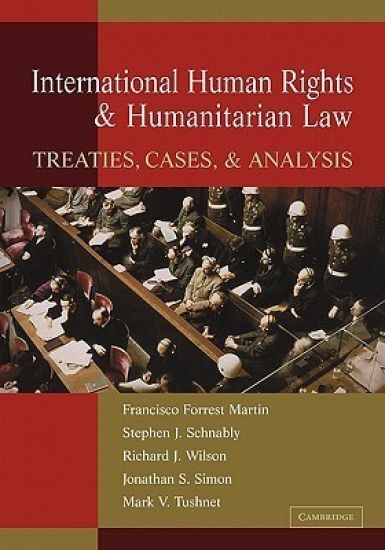
International Human Rights and Humanitarian Law: Treaties, Cases, and Analysis introduces the reader to the international legal instruments and case law governing the substantive and procedural dimensions of international human rights and humanitarian law, including economic, social, and cultural rights. The book, which was originally published in 2006, also discusses the history and organisational structure of human rights and humanitarian law enforcement mechanisms. A chapter is devoted a chapter to the issues surrounding the incorporation of international law into U.S. law, including principles of constitutional and statutory interpretation, conflict rules, and the self-execution doctrine. Questions and comments sections provide critical analyses of issues raised in the materials. The last chapter addresses theoretical issues facing contemporary international human rights and humanitarian law and its enforcement.
Chemistry: The Impure Science

Chemistry: The Impure Science

Bernadette Bensaude-vincent; Jonathan Simon

Imperial College Press
2008
sidottu
This book uses history to introduce central issues in the philosophy of chemistry. Mobilizing the theme of impurity, it explores the tradition of chemistry's negative image. It then argues for the positive philosophical value of chemistry, reflecting its characteristic practical engagement with the material world. The book concludes with some ethical reflections concerning chemistry's orientations in the twenty-first century.The authors have previously both offered significant contributions to the history and philosophy of chemistry.
International Human Rights and Humanitarian Law

International Human Rights and Humanitarian Law

Francisco Forrest Martin; Stephen J. Schnably; Richard Wilson; Jonathan Simon; Mark Tushnet

Cambridge University Press
2006
sidottu
International Human Rights and Humanitarian Law: Treaties, Cases, and Analysis introduces the reader to the international legal instruments and case law governing the substantive and procedural dimensions of international human rights and humanitarian law, including economic, social, and cultural rights. The book, which was originally published in 2006, also discusses the history and organisational structure of human rights and humanitarian law enforcement mechanisms. A chapter is devoted a chapter to the issues surrounding the incorporation of international law into U.S. law, including principles of constitutional and statutory interpretation, conflict rules, and the self-execution doctrine. Questions and comments sections provide critical analyses of issues raised in the materials. The last chapter addresses theoretical issues facing contemporary international human rights and humanitarian law and its enforcement.
Chemistry, Pharmacy and Revolution in France, 1777-1809

Chemistry, Pharmacy and Revolution in France, 1777-1809

Jonathan Simon

Ashgate Publishing Limited
2005
sidottu
This book explores the history of pharmacy in France and its relationship to the discipline of chemistry as it emerged at the beginning of the nineteenth century. It argues that an appreciation of the history of pharmacy is essential to a full understanding of the constitution of modern science, in particular the discipline of chemistry. As such, it provides a novel interpretation of the chemical revolution (c.1770-1789) that will, no doubt, generate much debate on the place of the chemical arts in this story, a question that has hitherto lacked sufficient scholarly reflection. Furthermore, the book situates this analysis within the broader context of the French Revolution, arguing that an intimate and direct link can be drawn between the political upheavals and our vision of the chemical revolution. The story of the chemical revolution has usually been told by focusing on the small group of French chemists who championed Lavoisier's oxygen theory, or else his opponents. Such a perspective emphasises competing theories and interpretations of critical experiments, but neglects the challenging issue of who could be understood as practising chemistry in the eighteenth century. In contrast, this study traces the tradition of pharmacy as a professional pursuit that relied on chemical techniques to prepare medicines, and shows how one of the central elements of the chemical revolution was the more or less conscious disassociation of the new chemistry from this ancient chemical art.
Poor Discipline

Poor Discipline

Jonathan Simon

University of Chicago Press
1997
nidottu
This book reveals how modern strategies of punishment - and, by all accounts, their failure - relate to political and economic transformations in society at large. Jonathan Simon uses the practice of parole in California as a window to the changing historical understanding of what a corrections system does and how it works. When parole first emerged as a corrections strategy in the 19th century, work was supposed to keep ex-prisoners out of trouble. What followed was a rehabilitative strategy, where the clinical expertise of the parole agent replaced the discipline of the industrial labour market in controlling criminal deviance. Today, Simon argues, as the economy has virtually locked out an entire class, rehabilitation has given way to mere management. The result is an escalating cycle of imprisonment, destabilization, and insecurity. No improvement in the current penal crisis can be expected until we better understand the relationship between punishment and social order, which this book explores in theoretical, historical, and practical detail.
Poor Discipline

Poor Discipline

Jonathan Simon

University of Chicago Press
1993
sidottu
This book reveals how modern strategies of punishment - and, by all accounts, their failure - relate to political and economic transformations in society at large. Jonathan Simon uses the practice of parole in California as a window to the changing historical understanding of what a corrections system does and how it works. When parole first emerged as a corrections strategy in the 19th century, work was supposed to keep ex-prisoners out of trouble. What followed was a rehabilitative strategy, where the clinical expertise of the parole agent replaced the discipline of the industrial labour market in controlling criminal deviance. Today, Simon argues, as the economy has virtually locked out an entire class, rehabilitation has given way to mere management. The result is an escalating cycle of imprisonment, destabilization, and insecurity. No improvement in the current penal crisis can be expected until we better understand the relationship between punishment and social order, which this book explores in theoretical, historical, and practical detail.