Kirjojen hintavertailu. Mukana 12 152 606 kirjaa ja 12 kauppaa.

Kirjailija

Jonathan Turner

Kirjat ja teokset yhdessä paikassa: 29 kirjaa, julkaisuja vuosilta 1998-2023, suosituimpien joukossa Jasper Krabbe: 100 Selfportraits. Vertaile teosten hintoja ja tarkista saatavuus suomalaisista kirjakaupoista.

29 kirjaa

Kirjojen julkaisuhaarukka 1998-2023.

Jasper Krabbe: 100 Selfportraits

Jasper Krabbe: 100 Selfportraits

Rudi Fuchs; Wim Van Der Beek; Jonathan Turner

Waanders BV, Uitgeverij
2007
sidottu
"Jasper Krabbe - 100 Selfportraits" includes an impressive number of self-portraits made in the period between the Summer of 2004 and the Summer of 2005. The portraits' formats have been determined by the measurements of an old bookkeeping book in which Krabbe made his self-portraits - one dating from the nineteen-fifties with squared and blank pages. Even the paint he uses for this project is from the same period. This corresponds with the idea that the self-portrait is a typical nineteenth-century activity. The book has been reproduced as a facsimile, which means that the reader has the feeling of looking at the original sketchbook of the artist. Krabbe wanted to explore what the self-portrait can still be in today's age. He wanted to gauge changing emotions, capture a moment and find the right tone. The selection in the book shows the diversity of solutions and styles he used. The self-portraits reveal there is no such thing as a fixed identity but maybe rather a 'core', a soul that is unchangeable. The text is in Dutch and English.

Coming Home

Coming Home

Jonathan Turner

Fig Press
2023
pokkari
In 1975 there was nothing reasonable about the road-trip Dad proposed. Much of it would be on rugged, unpaved tracks where services and spare parts were unavailable. If we had mechanical trouble we would, for the most part, have to deal with it ourselves. Should we have an accident or become ill, medical facilities were few and far between. We would have no way to communicate with family or friends except by letter - and, in many places, mail service was iffy. We would be driving through parts of the world where the population, if not actually hostile to Americans, had no great love for them. People, by the way, whose language we could not understand or speak. Unreasonable though it was, the window of opportunity to make such a trip was rapidly coming to an end. Soon, revolutions and wars would close some of the countries we traveled through. Many of the historical sites we saw would be destroyed. So, in retrospect, we made the trip at the right time.We also made the trip at the right time in my life. I was impressionable. I was immature for my age. I was still trying to figure out who I am and what God wanted me to do with myself. It is no exaggeration to say that the trip was formative and had a major impact on my faith. It was one of the highlights of my life. I look back on it with nostalgia. I hope that you enjoy reading about it as much as I enjoyed living it. To illustrate the tale, I've included 14 maps and over 120 photographs.
The First Institutional Spheres in Human Societies

The First Institutional Spheres in Human Societies

Seth Abrutyn; Jonathan Turner

Taylor Francis Ltd
2022
sidottu
Few concepts are as central to sociology as institutions. Yet, like so many sociological concepts, institutions remain vaguely defined. This book expands a foundational definition of the institution, one which locates them as the basic building blocks of human societies—as structural and cultural machines for survival that make it possible to pass precious knowledge from one generation to the next, ensuring the survival of our species. The book extends this classic tradition by, first, applying advances in biological evolution, neuroscience, and primatology to explain the origins of human societies and, in particular, the first institutional sphere: kinship. The authors incorporate insights from natural sciences often marginalized in sociology, while highlighting the limitations of purely biogenetic, Darwinian explanations. Secondly, they build a vivid conceptual model of institutions and their central dynamics as the book charts the chronological evolution of kinship, polity, religion, law, and economy, discussing the biological evidence for the ubiquity of these institutions as evolutionary adaptations themselves.
The First Institutional Spheres in Human Societies

The First Institutional Spheres in Human Societies

Seth Abrutyn; Jonathan Turner

Taylor Francis Ltd
2022
nidottu
Few concepts are as central to sociology as institutions. Yet, like so many sociological concepts, institutions remain vaguely defined. This book expands a foundational definition of the institution, one which locates them as the basic building blocks of human societies—as structural and cultural machines for survival that make it possible to pass precious knowledge from one generation to the next, ensuring the survival of our species. The book extends this classic tradition by, first, applying advances in biological evolution, neuroscience, and primatology to explain the origins of human societies and, in particular, the first institutional sphere: kinship. The authors incorporate insights from natural sciences often marginalized in sociology, while highlighting the limitations of purely biogenetic, Darwinian explanations. Secondly, they build a vivid conceptual model of institutions and their central dynamics as the book charts the chronological evolution of kinship, polity, religion, law, and economy, discussing the biological evidence for the ubiquity of these institutions as evolutionary adaptations themselves.
Technology and the Blue Economy

Technology and the Blue Economy

Nick Lambert; Jonathan Turner; Andy Hamflett

Kogan Page Ltd
2019
sidottu
70 per cent of the planet is covered by water, and 90 per cent of global economic trade is transported by sea. The world's seas and oceans are big business. Based on gross marine product, the ocean can be considered the world's seventh-largest economy, with the total global value of the Blue Economy predicted to rise to $3 trillion by 2030. Grounded in detailed market research, and brought to life through over 250 meticulously researched case studies, Technology and the Blue Economy presents a compelling overview of an inspiring and innovative sector that includes offshore renewable energy, ports and harbours, shipping, maritime surveillance, cyber security, aquaculture and ocean conservation. It tackles questions like these: · With Earth observation satellites providing unprecedented levels of data about the ocean, can machine learning capabilities develop at pace to make sense of all this new information? · How can ships protect themselves when one shipping firm alone records 50,000 daily attempts to breach its cyber security systems? · With floating wind farms now pushing further out to sea to convert natural energy, what role do robots have in managing essential maintenance in these more remote environments? · When passenger ferries are already sailing themselves and self-docking in port without human intervention, are we entering an age where human error is eradicated? · With fish farming predicted to account for 62 per cent of all the seafood consumed globally by 2030, how can 3D imaging cameras and net-cleaning robots help to stop mass deaths of fish that can run into millions in a single incident? · In the age of smartphone ubiquity, how important a role might social media and citizen science play in ocean conservation? · With luxury cruise ships now marketing themselves as 'smart, connected cities', crunching passenger data in real-time, do they now provide the gold standard of customer experience within the tourist industry? · Is optical scanning technology the solution to countering slavery at sea, a real concern in the south-east Asian fishing industry? · Can satellite-enabled tracking and autonomous clean-up systems help to counter one of the greatest conservation issues of the day - the fight against ocean plastic pollution? Technology and the Blue Economy explores how innovators can develop the right business models to capitalize on growth opportunities, and analyses the critical success factors for emerging technologies.
Technology and the Blue Economy

Technology and the Blue Economy

Nick Lambert; Jonathan Turner; Andy Hamflett

Kogan Page Ltd
2019
nidottu
70 per cent of the planet is covered by water, and 90 per cent of global economic trade is transported by sea. The world's seas and oceans are big business. Based on gross marine product, the ocean can be considered the world's seventh-largest economy, with the total global value of the Blue Economy predicted to rise to $3 trillion by 2030. Grounded in detailed market research, and brought to life through over 250 meticulously researched case studies, Technology and the Blue Economy presents a compelling overview of an inspiring and innovative sector that includes offshore renewable energy, ports and harbours, shipping, maritime surveillance, cyber security, aquaculture and ocean conservation. It tackles questions like these: · With Earth observation satellites providing unprecedented levels of data about the ocean, can machine learning capabilities develop at pace to make sense of all this new information? · How can ships protect themselves when one shipping firm alone records 50,000 daily attempts to breach its cyber security systems? · With floating wind farms now pushing further out to sea to convert natural energy, what role do robots have in managing essential maintenance in these more remote environments? · When passenger ferries are already sailing themselves and self-docking in port without human intervention, are we entering an age where human error is eradicated? · With fish farming predicted to account for 62 per cent of all the seafood consumed globally by 2030, how can 3D imaging cameras and net-cleaning robots help to stop mass deaths of fish that can run into millions in a single incident? · In the age of smartphone ubiquity, how important a role might social media and citizen science play in ocean conservation? · With luxury cruise ships now marketing themselves as 'smart, connected cities', crunching passenger data in real-time, do they now provide the gold standard of customer experience within the tourist industry? · Is optical scanning technology the solution to countering slavery at sea, a real concern in the south-east Asian fishing industry? · Can satellite-enabled tracking and autonomous clean-up systems help to counter one of the greatest conservation issues of the day - the fight against ocean plastic pollution? Technology and the Blue Economy explores how innovators can develop the right business models to capitalize on growth opportunities, and analyses the critical success factors for emerging technologies.
Strangers and Aliens

Strangers and Aliens

Jonathan Turner

Independently Published
2019
pokkari
He never imagined that banter with friends was a federal offense...Condemned to internal exile for saying the wrong thing, Carl Thompson finds himself fighting for survival. He and his new Tribe of misfits must overcome privation, the extremes of nature and the malfeasance of petty bureaucrats. Not to mention those who have decided the Tribe is fair game. Carl must defend the Tribe against all threats, both internal and external while remaining true to the moral compass which cost him his old life.
Exile and Return

Exile and Return

Jonathan Turner

Createspace Independent Publishing Platform
2018
pokkari
Exile and Return is the seventh and last volume of a survey course on Old Testament history. The lessons are deep enough to hold the interest of those who are already familiar with the Bible, yet simple enough for people who are new to the Bible to understand.Because they turned from their Covenant with God and embraced idolatry, God banished His "Chosen People" from the land He promised to give them. For 70 long years the Jews remained in exile, separated from the land they loved.The generations which grew up away from Israel and Judah might have lost their connection to the land and, more importantly, their ties to the Covenant. Instead, the exile had its intended effect of purifying and refining. The people's hearts once again sought God. The return and restoration of the Jews is important for it points to the much greater restoration which Christ makes possible for all people.The 18 classroom-tested studies in this volume span the period from the beginning of the exile to the last recorded prophecy in the Old Testament. Each lesson includes at least one application which is relevant to us today.
Judah Alone

Judah Alone

Jonathan Turner

Createspace Independent Publishing Platform
2018
nidottu
After the fall of Samaria and the deportation of the Israelites from their land, only the citizens of Judah and Jerusalem remained of God's covenant people. The question was whether they would follow the example of their relatives by adopting idolatry or whether they would remain true to the Covenant. The prophets presented the options as a choice between death and life.Though they lived thousands of years ago, the people of that era have much to teach us. Many of the choices they faced still confront us today. Among the lessons we can learn from them are: God is faithful even when everything is falling apart around us - His promises are always true; God restores as well as punishes; Even the most vile and wicked can be forgiven if they repent.The 29 classroom-tested studies in this volume cover the period from the resettlement of Israel to the prophet Jeremiah's involuntary exile. Every lesson includes at least one application which is relevant to us today.
The New Evolutionary Sociology

The New Evolutionary Sociology

Jonathan Turner; Richard Machalek

CRC Press Inc
2018
sidottu
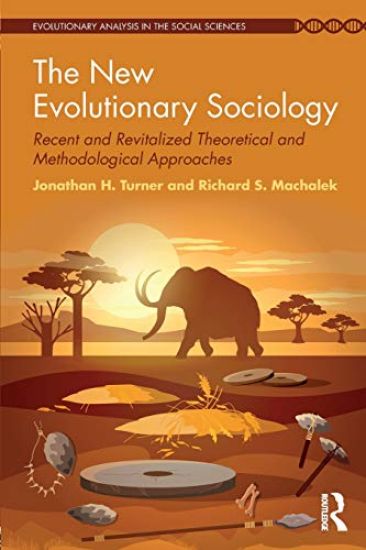
For decades, evolutionary analysis was overlooked or altogether ignored by sociologists. Fears and biases persisted nearly a century after Auguste Comte gave the discipline its name, as did concerns that its effect would only reduce sociology to another discipline – whether biology, psychology, or economics. Worse, apprehension that the application of evolutionary theory would encourage heightened perceptions of racism, sexism, ethnocentrism and reductionism pervaded. Turner and Machalek argue instead for a new embrace of biology and evolutionary analysis. Sociology, from its very beginnings in the early 19th century, has always been concerned with the study of evolution, particularly the transformation of societies from simple to ever-more complex forms. By comprehensively reviewing the original ways that sociologists applied evolutionary theory and examining the recent renewal and expansion of these early approaches, the authors confront the challenges posed by biology, neuroscience, and psychology to distinct evolutionary approaches within sociology. They emerge with key theoretical and methodological discoveries that demonstrate the critical – and compelling – case for a dramatically enriched sociology that incorporates all forms of comparative evolutionary analysis to its canon and study of sociocultural phenomena.
The New Evolutionary Sociology

The New Evolutionary Sociology

Jonathan Turner; Richard Machalek

CRC Press Inc
2018
nidottu
For decades, evolutionary analysis was overlooked or altogether ignored by sociologists. Fears and biases persisted nearly a century after Auguste Comte gave the discipline its name, as did concerns that its effect would only reduce sociology to another discipline – whether biology, psychology, or economics. Worse, apprehension that the application of evolutionary theory would encourage heightened perceptions of racism, sexism, ethnocentrism and reductionism pervaded. Turner and Machalek argue instead for a new embrace of biology and evolutionary analysis. Sociology, from its very beginnings in the early 19th century, has always been concerned with the study of evolution, particularly the transformation of societies from simple to ever-more complex forms. By comprehensively reviewing the original ways that sociologists applied evolutionary theory and examining the recent renewal and expansion of these early approaches, the authors confront the challenges posed by biology, neuroscience, and psychology to distinct evolutionary approaches within sociology. They emerge with key theoretical and methodological discoveries that demonstrate the critical – and compelling – case for a dramatically enriched sociology that incorporates all forms of comparative evolutionary analysis to its canon and study of sociocultural phenomena.
The Emergence and Evolution of Religion

The Emergence and Evolution of Religion

Jonathan Turner; Alexandra Maryanski; Anders Klostergaard Petersen; Armin W. Geertz

Routledge
2017
sidottu
Written by leading theorists and empirical researchers, this book presents new ways of addressing the old question: Why did religion first emerge and then continue to evolve in all human societies? The authors of the book—each with a different background across the social sciences and humanities—assimilate conceptual leads and empirical findings from anthropology, evolutionary biology, evolutionary sociology, neurology, primate behavioral studies, explanations of human interaction and group dynamics, and a wide range of religious scholarship to construct a deeper and more powerful explanation of the origins and subsequent evolutionary development of religions than can currently be found in what is now vast literature. While explaining religion has been a central question in many disciplines for a long time, this book draws upon a much wider array of literature to develop a robust and cross-disciplinary analysis of religion. The book remains true to its subtitle by emphasizing an array of both biological and sociocultural forms of selection dynamics that are fundamental to explaining religion as a universal institution in human societies. In addition to Darwinian selection, which can explain the biology and neurology of religion, the book outlines a set of four additional types of sociocultural natural selection that can fill out the explanation of why religion first emerged as an institutional system in human societies, and why it has continued to evolve over the last 300,000 years of societal evolution. These sociocultural forms of natural selection are labeled by the names of the early sociologists who first emphasized them, and they can be seen as a necessary supplement to the type of natural selection theorized by Charles Darwin. Explanations of religion that remain in the shadow cast by Darwin’s great insights will, it is argued, remain narrow and incomplete when explaining a robust sociocultural phenomenon like religion.
The Emergence and Evolution of Religion

The Emergence and Evolution of Religion

Jonathan Turner; Alexandra Maryanski; Anders Klostergaard Petersen; Armin W. Geertz

Routledge
2017
nidottu
Written by leading theorists and empirical researchers, this book presents new ways of addressing the old question: Why did religion first emerge and then continue to evolve in all human societies? The authors of the book—each with a different background across the social sciences and humanities—assimilate conceptual leads and empirical findings from anthropology, evolutionary biology, evolutionary sociology, neurology, primate behavioral studies, explanations of human interaction and group dynamics, and a wide range of religious scholarship to construct a deeper and more powerful explanation of the origins and subsequent evolutionary development of religions than can currently be found in what is now vast literature. While explaining religion has been a central question in many disciplines for a long time, this book draws upon a much wider array of literature to develop a robust and cross-disciplinary analysis of religion. The book remains true to its subtitle by emphasizing an array of both biological and sociocultural forms of selection dynamics that are fundamental to explaining religion as a universal institution in human societies. In addition to Darwinian selection, which can explain the biology and neurology of religion, the book outlines a set of four additional types of sociocultural natural selection that can fill out the explanation of why religion first emerged as an institutional system in human societies, and why it has continued to evolve over the last 300,000 years of societal evolution. These sociocultural forms of natural selection are labeled by the names of the early sociologists who first emphasized them, and they can be seen as a necessary supplement to the type of natural selection theorized by Charles Darwin. Explanations of religion that remain in the shadow cast by Darwin’s great insights will, it is argued, remain narrow and incomplete when explaining a robust sociocultural phenomenon like religion.
Applied Farm Management

Applied Farm Management

Jonathan Turner

Wiley-Blackwell (an imprint of John Wiley Sons Ltd)
2016
nidottu
Farm, estate and food industry managers must understand business management, finance, taxation and marketing to succeed in today's tough conditions, particularly in the light of increasing international trade between countries and the expansion of the capacity of agricultural production from previously un-developed rural economies. This third edition of Applied Farm Management has been fully updated and expanded to take account of these changes and highlights the interrelationship between these subjects. The book, which takes a more holistic view than previous editions, takes account of all recent major changes in subjects such as strategic and environmental management, global foood scares, the international impact of infectious animal diseases and so on. Applied Farm Management is an important international textbook for students studying agricultuaral sciences, farm business management, and food studies. It is also a useful reference source for all those working in farm and countryside management throughout the world. Libraries in all universities, agricultural colleges and research establishments where these subjects are studied and taught should have multiple copies of this important text on their shelves.
The Problem of Emotions in Societies

The Problem of Emotions in Societies

Jonathan Turner

Routledge
2016
sidottu
Like any other valued resource, emotions are distributed unequally. Moreover, emotions are a generalized resource because they give people the confidence, or lack of confidence, to secure additional types of resources. Thus, this distribution of emotions roughly corresponds to the shares of others kinds of resources that members of various social classes possess. The level of positive and negative emotional energy evident among members of different social classes has large consequences for the viability of human societies. When a large majority of members in diverse social classes have reservoirs of positive emotional energy, these emotions work to legitimate macrostructures and to build people’s commitments to societies. When, however, significant numbers of persons in lower social classes, and at times in middle to upper social classes as well, reveal reservoirs of negative emotional energy, they are likely to de-legitimate key institutional systems and, under specifiable conditions, mobilize collective—often with violent outcomes. Thus, emotions are at the core of both integrative and disintegrative forces in societies, and when large reservoirs of negative emotional energy exist, they pose a problem for societies. The goal of this new, unique Series is to offer readable, teachable "thinking frames" on today’s social problems and social issues by leading scholars, all in short 60 page or shorter formats, and available for view on http://routledge.customgateway.com/routledge-social-issues.html For instructors teaching a wide range of courses in the social sciences, the Routledge Social Issues Collection now offers the best of both worlds: originally written short texts that provide "overviews" to important social issues as well as teachable excerpts from larger works previously published by Routledge and other presses.
Kings and Prophets

Kings and Prophets

Jonathan Turner

Createspace Independent Publishing Platform
2016
pokkari
Following the "Golden Age" of kings David and Solomon, the nation of Israel split into two competing kingdoms. The two kingdoms represented two conflicting world-views. The northern kingdom of Israel adopted a policy of cultural accommodation. Toward the end it became virtually indistinguishable from other nations. The southern kingdom of Judah (with notable exceptions) held fast to its Covenant with God. Its citizens remained a separate people with a distinct culture.During this time, God sent many prophets as His spokesmen. As people turned away from the Covenant the prophets acted as prosecuting attorneys presenting God's case against them. However, the prophets not only brought warnings, they also gave a message of incredible hope.The 30 studies in this volume cover the period from the breakup of Solomon's empire to the destruction of the northern kingdom. Each lesson includes at least one application which is relevant to us today. The author also includes an essay on the "10 Lost Tribes" of Israel.Other titles in this survey course include: Beginnings and PatriarchsExodus and WanderingsConquest and JudgesThe United Monarchy
A Survey of New Testament History

A Survey of New Testament History

Jonathan Turner

Createspace Independent Publishing Platform
2014
pokkari
A Survey of New Testament History provides a broad, chronological overview of the events mentioned in the New Testament. It shows how the various incidents recorded in the Gospels and the book of Acts fit into God's overall plan to redeem mankind. The first chapter explores how God prepared the world for Christ's coming. Chapters 2 through 7 are a synopsis of the life, ministry and teaching of Christ. Chapters 8 through 17 are an overview of the history of the early church, the issues it faced, and the incredible growth and progress it made. They also include a brief synopsis of each of the 27 books of the New Testament. Chapter 18 provides an overview of the 4 major schools of interpretation of the book of Revelation plus a brief discussion of its meaning. A special appendix compares and contrasts the book of Revelation to the book of Genesis. The volume also contains 10 maps.The 18 chapters in this survey emphasize practical lessons and applications which are relevant to us today. Our world shares several similarities to the world into which Christ was born. An understanding of His world can give us a fresh look at our own. The church today faces many of the same stresses and challenges as the early church. Looking at how the first believers overcame their struggles and questions can encourage and inspire us.A Survey of New Testament History is suitable for use in groups as well as by individuals. Each of the studies has been tested in the classroom.