Kirjojen hintavertailu. Mukana 12 595 353 kirjaa ja 12 kauppaa.

Kirjailija

Jonathan Walker

Kirjat ja teokset yhdessä paikassa: 27 kirjaa, julkaisuja vuosilta 1999-2025, suosituimpien joukossa Aden Insurgency: The Savage War in Yemen 1962-67. Vertaile teosten hintoja ja tarkista saatavuus suomalaisista kirjakaupoista.

27 kirjaa

Kirjojen julkaisuhaarukka 1999-2025.

Aden Insurgency: The Savage War in Yemen 1962-67

Aden Insurgency: The Savage War in Yemen 1962-67

Jonathan Walker

Pen Sword Military
2015
nidottu
During the early 1960s the Cold War reached its climax. Britain's dwindling power in the Middle East was under siege from Arab nationalism, the Communist bloc and from American designs in the region. Aden, with its strategic military base and old Protectorate buffer zone, was soon the main battleground. The 1962 Egyptian-inspired coup in the neighbouring Kingdom of North Yemen further tightened the noose. So began a bitter and bloody insurgency war in South Arabia. British regular an special forces were soon pitted against growing and formidable insurgency forces, fighting both a war in the mountains and an urban conflict in the backstreets of Aden. Intelligence agencies vied for control of 'hearts and minds'. The British launched a clandestine war in Yemen to keep their enemies at bay. But still the situation in Aden spiralled out of control, culminating in a bloody slaughter in 1967. In that November, the British Army finally withdrew from South Arabia. Aden Insurgency is the extraordinary story of Britain's last colonial conflict. Using a wide range of recently released archive and eye-witness accounts, the author charts the collapse of the South Arabian state. Set against a background of ruthless political ambition, these events shaped the Yemen of today.
Churchill's Third World War

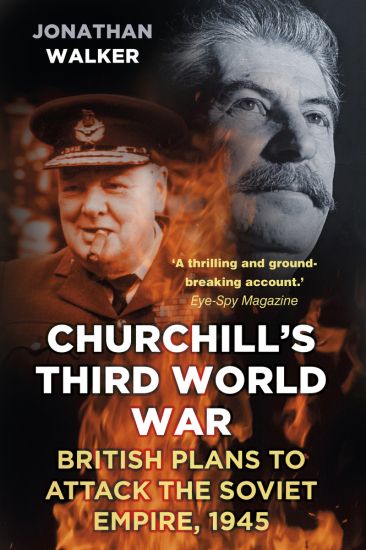
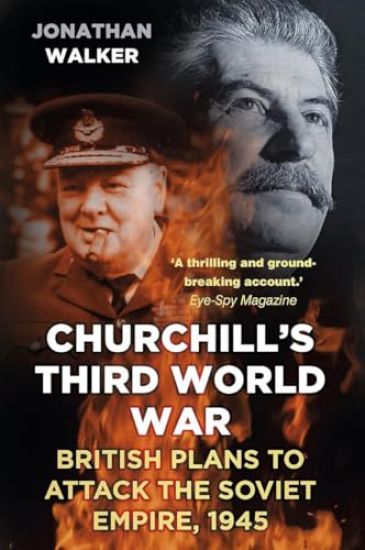
Churchill's Third World War

Jonathan Walker

THE HISTORY PRESS LTD
2025
pokkari
'A thrilling and ground-breaking account' - Eye-Spy MagazineAs the war in Europe entered its final months, the world teetered on the edge of a Third World War. While Soviet forces hammered their way into Berlin, Churchill ordered British military planners to prepare the top secret Operation Unthinkable - the plan for an Allied attack on the Soviet Union - on 1 July 1945. Using US, British and Polish forces, the invasion would reclaim Eastern Europe. The controversial plan called for the use of Nazi troops, and there was the spectre of the atomic bomb. Would yet another army make the fatal mistake of heading East?In Churchill’s Third World War Jonathan Walker presents a haunting study of the war that so nearly was. He outlines the motivations behind Churchill’s plan, the logistics of launching a vast assault against an enemy who had bested Hitler, potential sabotage by Polish communists, and he speculates whether the Allies would have succeeded had the operation gone forward.Well supported by a wide range of primary sources from the Churchill Archives Centre, Sikorski Institute, National Archives and Imperial War Museum, this is a fascinating insight into the upheaval as the Second World War drew to a close and former alliances were shattered. Operation Unthinkable became the blueprint for the Cold War.
Shostakovich's Symphony No. 5

Shostakovich's Symphony No. 5

Marina Frolova-Walker; Jonathan Walker

OXFORD UNIVERSITY PRESS INC
2024
nidottu
The book is devoted to Shostakovich's most controversial symphony, composed at the height of Stalin's Purges. It rescued Shostakovich from official disfavour and deeply moved audiences. The critics recognized it as a masterpiece, but they were perplexed by its ambiguities, especially at the end of the Symphony: some imagined it as the joyful final victory of socialism, while others heard the triumph instead of a sinister and oppressive force. The second interpretation was pushed into the background, but the controversy persisted, with the further complication of two very different tempo markings for the closing section, both of which seemed to be approved by the composer. The authors give an authoritative account of the tempo controversy and the effect of the different tempos on the reception of the work in the West. Shostakovich's Symphony No. 5 delves into the history of the work's composition, the pressures Shostakovich experienced at the time, and the cultural environment from the time the composer began work on Symphony through to the settling of its official critical reception. At the center of this exploration is the musical score itself, which is full of secrets that have taken decades to uncover, the most colorful of which is the case for Shostakovich's extensive references to Bizet's Carmen, and the connection between these and Shostakovich's lover of the mid-30s, Lala Carmen (Elena Konstantinovskaya). The authors show how Shostakovich largely (but not entirely) set aside his influences from Mahler and German modernists, and in replacement absorbed Beethoven and Tchaikovsky with the same ingenuity as his previous influences. Shostakovich decided to make a virtue of a necessity, and created one of the richest of symphonic scores, allowing himself to retain his artistic pride while winning the official approval necessary for regaining his livelihood. These events all unfolded in the atmosphere of terror created by Stalin's "Great Purge". This book is the first to be devoted to this watershed symphony, and includes secrets of the score that took decades to uncover.
Push Process

Push Process

Jonathan Walker

Ortac Press
2024
nidottu
'More speed, more light, more time. But this is the fastest possible film, pushed as hard as it can be pushed; the lens wide open to catch every drop of brightness; the slow exposure shaking the image apart. Right up at the edge. Go farther, closer.' VENICE, 2000. Richard is a postgraduate student living in the city to research its past. He's supposed to be working in the archive, but he meets Merlo and Lars, two art students who are more interested in Venice's present. He decides to pick up a camera and join them. The world comes alive for Richard through photographs: for the first time, he feels connected to a place - and other people. He's determined to continue, whatever the cost. Push Process is a novel about art, friendship and being European, illustrated with over fifty black-and-white photographs of Venice.
Shostakovich's Symphony No. 5

Shostakovich's Symphony No. 5

Marina Frolova-Walker; Jonathan Walker

OXFORD UNIVERSITY PRESS INC
2024
sidottu
The book is devoted to Shostakovich's most controversial symphony, composed at the height of Stalin's Purges. It rescued Shostakovich from official disfavour and deeply moved audiences. The critics recognized it as a masterpiece, but they were perplexed by its ambiguities, especially at the end of the Symphony: some imagined it as the joyful final victory of socialism, while others heard the triumph instead of a sinister and oppressive force. The second interpretation was pushed into the background, but the controversy persisted, with the further complication of two very different tempo markings for the closing section, both of which seemed to be approved by the composer. The authors give an authoritative account of the tempo controversy and the effect of the different tempos on the reception of the work in the West. Shostakovich's Symphony No. 5 delves into the history of the work's composition, the pressures Shostakovich experienced at the time, and the cultural environment from the time the composer began work on Symphony through to the settling of its official critical reception. At the center of this exploration is the musical score itself, which is full of secrets that have taken decades to uncover, the most colorful of which is the case for Shostakovich's extensive references to Bizet's Carmen, and the connection between these and Shostakovich's lover of the mid-30s, Lala Carmen (Elena Konstantinovskaya). The authors show how Shostakovich largely (but not entirely) set aside his influences from Mahler and German modernists, and in replacement absorbed Beethoven and Tchaikovsky with the same ingenuity as his previous influences. Shostakovich decided to make a virtue of a necessity, and created one of the richest of symphonic scores, allowing himself to retain his artistic pride while winning the official approval necessary for regaining his livelihood. These events all unfolded in the atmosphere of terror created by Stalin's "Great Purge". This book is the first to be devoted to this watershed symphony, and includes secrets of the score that took decades to uncover.
The Angels of L19

The Angels of L19

Jonathan Walker

Weatherglass Books
2021
pokkari
The Angels of L19 is a moving and entirely original story of young lives at the confluence of faith and doubt, angels and demons, life and death. And where redemption is possible, even for those we think might be lost forever.
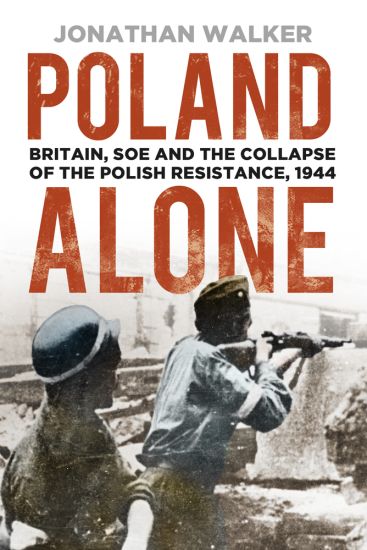
Poland Alone

Poland Alone

Jonathan Walker

The History Press Ltd
2020
nidottu
Poland was the 'tripwire' that brought Britain into the Second World War, but it was largely the fear of the new Nazi-Soviet Pact rather than the cementing of an old relationship that created the formal alliance. But neither Britain, nor Poland's older ally, France, had the material means to prevent Poland being overrun in 1939. The broadcast, 'Poland is no longer alone' had a distinctly hollow ring. During the next four years the Polish Government in exile and armed forces made a significant contribution to the allied war effort; in return the Polish Home Army received a paltry 600 tons of supplies.Poland Alone focuses on the bloody Warsaw Uprising of 1944, when the Polish Resistance attempted to gain control of their city from the German Army. They expected help from the Allies but received none, and they were left helpless as the Russians moved in. The War ended with over five million Poles dead, three million of whom died in the concentration camps.Jonathan Walker examines whether Britain could have done more to save the Polish people in their crisis year of 1944, dealing with many different aspects such as the actions of the RAF and SOE, the role of Polish Couriers, the failure of British Intelligence and the culpability of the British Press.
The Bat Cave

The Bat Cave

Jonathan Walker

Chirpy Stories
2019
sidottu
Discover how Jack the bat overcomes the biggest challenge he will ever face A story rooted in the ecology of the rare Greater Horseshoe bat in England and Wales.
The Bat Cave

The Bat Cave

Jonathan Walker

Chirpy Stories
2019
pokkari
Discover how Jack the bat overcomes the biggest challenge he will ever face! A story rooted in the ecology of the rare Greater horseshoe bat in England and Wales.
Trial and Imprisonment of Jonathan Walker, at Pensacola, Florida, for Aiding Slaves to Escape from Bondage
The books in the Florida and the Caribbean Open Books Series demonstrate the University Press of Florida’s long history of publishing Latin American and Caribbean studies titles that connect in and through Florida, highlighting the connections between the Sunshine State and its neighboring islands. Books in this series show how early explorers found and settled Florida and the Caribbean. They tell the tales of early pioneers, both foreign and domestic. They examine topics critical to the area such as travel, migration, economic opportunity, and tourism. They look at the growth of Florida and the Caribbean and the attendant pressures on the environment, culture, urban development, and the movement of peoples, both forced and voluntary. The Florida and the Caribbean Open Books Series gathers the rich data available in these architectural, archaeological, cultural, and historical works, as well as the travelogues and naturalists’ sketches of the area in prior to the twentieth century, making it accessible for scholars and the general public alike. The Florida and the Caribbean Open Books Series is made possible through a grant from the National Endowment for the Humanities and the Andrew W. Mellon Foundation, under the Humanities Open Books program.
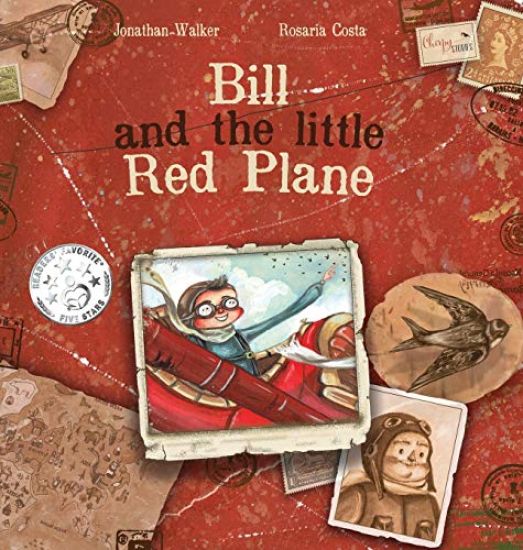
Bill and the Little Red Plane

Bill and the Little Red Plane

Jonathan Walker

Chirpy Stories
2017
sidottu
Fly away with Bill and Edward as they follow a flock of swifts into the unknown and beyond. Bill returns with a sense of wonder, before realising that swifts are even more mysterious than he first thought "Bill and Edward were now heading into unknown territory. The mystery deepened. They could see the sea, and they were moving toward it."
Bill and the Little Red Plane

Bill and the Little Red Plane

Jonathan Walker

Chirpy Stories
2017
pokkari
Fly away with Bill and Edward as they follow a flock of Swifts into the unknown and beyond Bill returns with a sense of wonder, before realising that Swifts are even more mysterious than he first thought "Bill and Edward were now heading into unknown territory. The mystery deepened. They could see the sea, and they were moving toward it."
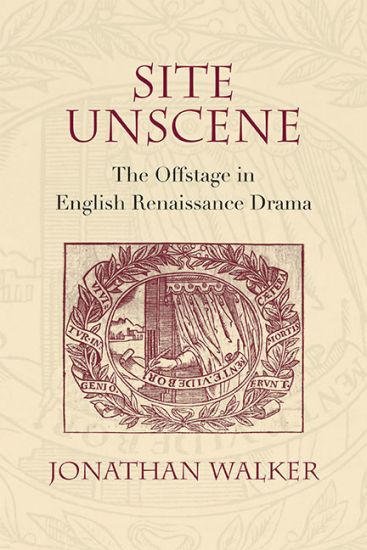
Site Unscene

Site Unscene

Jonathan Walker

Northwestern University Press
2017
sidottu
Site Unscene: The Offstage in English Renaissance Drama explores the key role of dramatic episodes that occur offstage and beyond the knowledge-generating faculty of playgoers’ sight. Does Ophelia drown? Is Desdemona unfaithful to Othello? Does Macbeth murder Duncan in his sleep? Site Unscene considers how the drama’s nonvisible and eccentric elements embellish, alter, and subvert visible action on the stage.Jonathan Walker demonstrates that by removing scenes from visible performance, playwrights take up the nondramatic mode of storytelling in order to transcend the limits of the stage. Through this technique, they present dramatic action from the subjective, self-interested, and idiosyncratic perspectives of individual characters. By recovering these offstage elements, Walker reveals the pervasive and formative dynamic between the onstage and offstage and between the seen and unseen in Renaissance drama.Examining premodern dramatic theory, Renaissance plays, period amphitheaters, and material texts, this interdisciplinary work considers woodcuts, engravings, archaeology, architecture, rhetoric, the history of the book, as well as plays by Shakespeare, Marlowe, Kyd, Ford, Middleton, and Webster, among others. It addresses readers engaged in literary criticism, dramatic theory, theater history, and textual studies.
Site Unscene

Site Unscene

Jonathan Walker

Northwestern University Press
2017
nidottu
Site Unscene: The Offstage in English Renaissance Drama explores the key role of dramatic episodes that occur offstage and beyond the knowledge-generating faculty of playgoers’ sight. Does Ophelia drown? Is Desdemona unfaithful to Othello? Does Macbeth murder Duncan in his sleep? Site Unscene considers how the drama’s nonvisible and eccentric elements embellish, alter, and subvert visible action on the stage.Jonathan Walker demonstrates that by removing scenes from visible performance, playwrights take up the nondramatic mode of storytelling in order to transcend the limits of the stage. Through this technique, they present dramatic action from the subjective, self-interested, and idiosyncratic perspectives of individual characters. By recovering these offstage elements, Walker reveals the pervasive and formative dynamic between the onstage and offstage and between the seen and unseen in Renaissance drama.Examining premodern dramatic theory, Renaissance plays, period amphitheaters, and material texts, this interdisciplinary work considers woodcuts, engravings, archaeology, architecture, rhetoric, the history of the book, as well as plays by Shakespeare, Marlowe, Kyd, Ford, Middleton, and Webster, among others. It addresses readers engaged in literary criticism, dramatic theory, theater history, and textual studies.
Churchill's Third World War

Churchill's Third World War

Jonathan Walker

The History Press Ltd
2017
nidottu
'A thrilling and ground-breaking account' - Eye-Spy MagazineAs the war in Europe entered its final months, the world teetered on the edge of a Third World War. While Soviet forces hammered their way into Berlin, Churchill ordered British military planners to prepare the top secret Operation Unthinkable - the plan for an Allied attack on the Soviet Union - on 1 July 1945. Using US, British and Polish forces, the invasion would reclaim Eastern Europe. The controversial plan called for the use of Nazi troops, and there was the spectre of the atomic bomb. Would yet another army make the fatal mistake of heading East?In Churchill’s Third World War Jonathan Walker presents a haunting study of the war that so nearly was. He outlines the motivations behind Churchill’s plan, the logistics of launching a vast assault against an enemy who had bested Hitler, potential sabotage by Polish communists, and he speculates whether the Allies would have succeeded had the operation gone forward.Well supported by a wide range of primary sources from the Churchill Archives Centre, Sikorski Institute, National Archives and Imperial War Museum, this is a fascinating insight into the upheaval as the Second World War drew to a close and former alliances were shattered. Operation Unthinkable became the blueprint for the Cold War.
Music and Soviet Power, 1917-1932

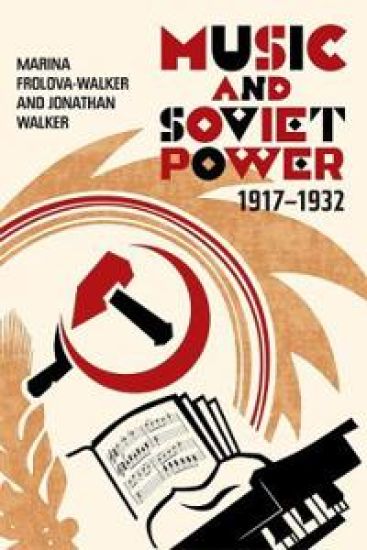
Music and Soviet Power, 1917-1932

Marina Frolova-Walker; Jonathan Walker

The Boydell Press
2017
pokkari
The book offers unprecedented access to primary sources that have been unavailable in English, or which lay unknown on archival shelves. Music and Soviet Power offers cultural history told through documents - both colourfuland representative - with an extensive commentary and annotation throughout. The October Revolution of 1917 tore the fabric of Russian musical life: institutions collapsed, and leading composers emigrated or fell into silence. But in 1932, at the outset of the 'socialist realist' period, a new Stalinist music culture was emerging. Between these two dates lies a turbulent period of change which this book charts year by year. It sheds light on the vicious power struggles and ideological wars, the birth of new aesthetic credos, and the gradual increase of Party and state control over music, in the opera houses, the concert halls, the workers' clubs, and on the streets. The book not only provides a detailed and nuanced depiction of the early Soviet musical landscape, but brings it to life by giving voice to the leading actors and commentators of the day. The vibrant public discourse on music is presented through a selection of press articles, reviews and manifestos, all suppliedwith ample commentary. These myriad sources offer a new context for our understanding of Shostakovich, Prokofiev and Myaskovsky, while also showing how Western music was received in the USSR. This, however, is only half the story.The other half emerges from the private dimension of this cultural upheaval, traced through the letters, diaries and memoirs left by composers and other major players in the music world. These materials address the beliefs, motivations and actions of the Russian musical intelligentsia during the painful period of their adjustment to the changing demands of the new state. While following the twists and turns of official policies on music, the authors also offer their own explanations for the outcomes. The book offers unprecedented access to primary sources that have been unavailable in English, or which lay unknown on archival shelves. Music and Soviet Power offers cultural history told through documents - both colourful and representative - with an extensive commentary and annotation throughout. MARINA FROLOVA-WALKER is Professor in Music History at the University of Cambridge anda Fellow of Clare College, Cambridge. JONATHAN WALKER, who has a PhD in Musicology, is a freelance writer, teacher and pianist.
The Blue Beast

The Blue Beast

Jonathan Walker

The History Press Ltd
2012
sidottu
‘The Blue Beast’—Edwardian slang for sexual passion—is the true account of the intimate lives of three extraordinary Edwardian women. Drawing on private family archives and highly revealing letters and diaries, the story examines how they became mistresses or confidantes of some of the most powerful men in Britain, men who profoundly affected the Empire’s efforts in the First World War. The wealthy and voluptuous American adventuress, Emilie Grigsby, claimed she was the ‘mascot of High Command’ – and not without good reason. She courted the press baron Lord Northcliffe, the philandering Quartermaster-General, Sir John Cowans and The Times military correspondent, Colonel Charles Repington, all of whom fell under her spell. It was manipulation on an ambitious scale, although eventually her schemes unravelled. Meanwhile, the sensuous and statuesque Winifred ‘Wendy’ Bennett launched into a passionate affair with the Commander-in-Chief, Field Marshal Sir John French. ‘The ‘Blue Beast’ uncovers how they conducted their relationship, whilst French wrestled with crisis after crisis to keep command of a vast army on the Western Front. Finally, the strong-willed and aristocratic Hon. Sylvia Henley replaced her sister Venetia Stanley as the close confidante of Prime Minister Asquith. It brought her great influence; but it was no compensation for the personal heartache that followed. Taking the reader on a journey into London’s High Society during the glittering Edwardian era and the tumult of the Great War, Jonathan Walker uncovers a story of power, passion and betrayal.
Music and Soviet Power, 1917-1932

Music and Soviet Power, 1917-1932

Marina Frolova-Walker; Jonathan Walker

The Boydell Press
2012
sidottu
The book offers unprecedented access to primary sources that have been unavailable in English, or which lay unknown on archival shelves. Music and Soviet Power offers cultural history told through documents - both colourfuland representative - with an extensive commentary and annotation throughout. The October Revolution of 1917 tore the fabric of Russian musical life: institutions collapsed, and leading composers emigrated or fell into silence. But in 1932, at the outset of the "socialist realist" period, a new Stalinist music culture was emerging. Between these two dates lies a turbulent period of change which this book charts year by year. It sheds light on the vicious power struggles and ideological wars, the birth of new aesthetic credos, and the gradual increase of Party and state control over music, in the opera houses, the concert halls, the workers' clubs, and on the streets. The book not only provides a detailed and nuanced depiction of the early Soviet musical landscape, but brings it to life by giving voice to the leading actors and commentators of the day. The vibrant public discourse on music is presented through a selection of press articles, reviews and manifestos, all suppliedwith ample commentary. These myriad sources offer a new context for our understanding of Shostakovich, Prokofiev and Myaskovsky, while also showing how Western music was received in the USSR. This, however, is only half the story.The other half emerges from the private dimension of this cultural upheaval, traced through the letters, diaries and memoirs left by composers and other major players in the music world. These materials address the beliefs, motivations and actions of the Russian musical intelligentsia during the painful period of their adjustment to the changing demands of the new state. While following the twists and turns of official policies on music, the authors also offer their own explanations for the outcomes. The book offers unprecedented access to primary sources that have been unavailable in English, or which lay unknown on archival shelves. Music and Soviet Power offers cultural history told through documents - both colourful and representative - with an extensive commentary and annotation throughout. MARINA FROLOVA-WALKER is Reader in Music History at the University of Cambridge and Fellow of Clare College, Cambridge; JONATHAN WALKER, who has a PhD in Musicology, is a freelance writer, teacher and pianist.