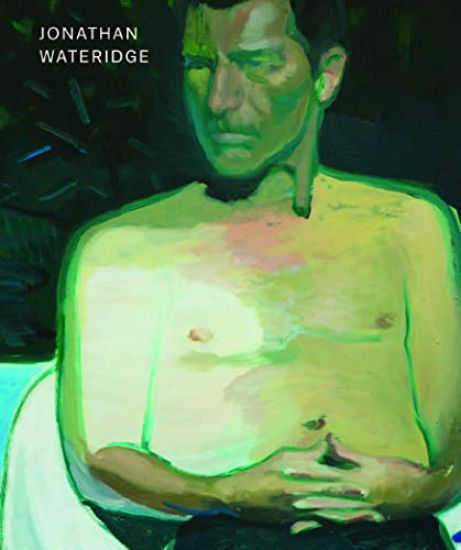
Jonathan Wateridge – Uncertain Swimmer
Jonathan Wateridge; Marco Livingstone; Caroline Walker
Anomie Publishing
2023
sidottu
_Uncertain Swimmer_ is the second monograph on the work of British artist Jonathan Wateridge (b. 1972, Lusaka, Zambia), presenting around eighty paintings and works on paper made between 2019 and 2022\. Following on from the bodies of work Enclave and Expatria (2016–18), _Uncertain Swimmer_ develops the artist’s interest in modes of representation and the legacies of twentieth-century modernist painting through a visual and social exploration of the motif of the pool, depicting swimmers and sunbathers, often by night. Far from being an escapist environment of aspiration and privilege, Wateridge imbues the pool with a disquieting atmosphere, creating a cumulative feeling of unease and ennui among those present, now seemingly unsure of their world. The publication charts a marked evolution in the artist’s style from the realism of his earlier paintings with complex multi-figure compositions to more solitary, gestural and expressive works. His masterly application of paint takes new forms in the beautiful, curious and often haunting paintings and works on paper showcased here. Art historian and curator Marco Livingstone’s essay considers the change from Wateridge’s naturalistic paintings to the flattened, reduced shapes, forms and lines of the modernism- and abstraction-infused pieces he is making today. Francis Bacon, Edvard Munch and Paul Cézanne are among numerous art historical influences cited by Livingstone, who ruminates on the identity of the people in Wateridge’s portraits and the mercurial spaces they occupy, examining how Wateridge’s current critical preoccupations have transitioned from the autobiographical to more formal concerns. In the featured conversation between Wateridge and fellow painter Caroline Walker, the two artists discuss their overlapping experiences studying painting at Glasgow, as well as Wateridge’s fourteen-year break from painting until 2005\. He eventually returned to the medium when he realised it excited him more than anything else. Wateridge elaborates on his fascinating painting process, staging shoots in studios with hired actors and using elements from the photographs in the paintings, often over a period of years. On his canvases, he will scrape back the paint and reapply it, frequently taking pictures of the paintings in their various stages; he will then print the photographs and draw over them to continue working out what he will do with the final paintings. For Wateridge, a painting works when it stops failing, and he embraces unforeseen conclusions. Jonathan Wateridge has recently exhibited with the Hayward Gallery, London; Nino Mier Gallery, Los Angeles, New York and Brussels; TJ Boulting, London; Galerie Haas, Zurich; Pace Gallery and HENI, London. Wateridge's art is in the collections of institutions worldwide, including Aïshti Foundation, Lebanon; Pinault Foundation, Venice; the Saatchi Collection, London; the Rennie Collection, Vancouver; and Simmons & Simmons, London. He has been featured in publications such as _The Sunday Times, The Independent, Fad Magazine, Artforum_ and _Artnet_. Wateridge is represented by Nino Mier Gallery.