

Kirjailija
Jonathan Wolff
Kirjat ja teokset yhdessä paikassa: 17 kirjaa, julkaisuja vuosilta 1991-2025, suosituimpien joukossa An Introduction to Political Philosophy. Vertaile teosten hintoja ja tarkista saatavuus suomalaisista kirjakaupoista.
17 kirjaa
Kirjojen julkaisuhaarukka 1991-2025.


When we think about equality in the city, we are very likely to think first of the wide and growing divide between rich and poor, in material terms. Yet when we think more about a 'city of equals' it becomes apparent that how people feel treated by the city and those around them, and whether they can live according to their values, are much more central. Accordingly, combining their own reflections, a multi-disciplinary literature review, and, distinctively, more than 180 interviews in 10 cities in 6 countries, Wolff and de Shalit have derived an account of a city of equals based on the idea that it should give each of its city-zens a secure sense of place or belonging. Four underlying values structure this account. First, access to the goods and services of the city should not be based purely on the market. Second, each person should be able to live a life they find meaningful. Third, there should be diversity and wide social mixing. Fourth, there should be 'non-deferential inclusion': each person should be able to get access to what they are entitled to without being treated as less worthy than others. They should be able to enjoy their rights without bowing and scraping, waiting longer than others, or going through special bureaucratic hurdles. In sum, in a city of equals each person is proud of their city and has the (justified) feeling that their city is proud of (people like) them. This is an open access title available under the terms of a [CC BY-NC-ND 4.0 International] licence. It is free to read at Oxford Scholarship Online and offered as a free PDF download from OUP and selected open access locations.
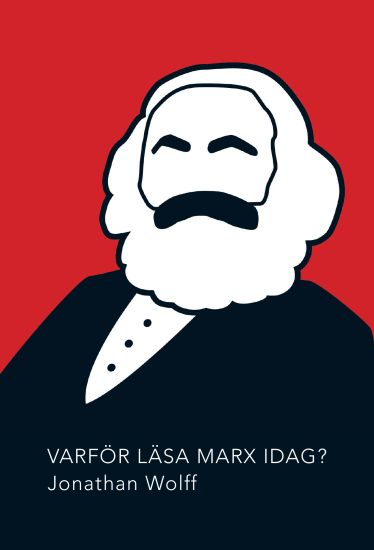
Det råder ingen brist på introduktioner till Karl Marx. Men alltför många saknar en kritisk diskussion av hans teorier eller är rentav apologetiska. I Varför läsa Marx idag? ger den engelske filosofen Jonathan Wolff inte bara en koncis och lättillgänglig presentation av Marx centrala skrifter, utan ställer också frågan om vad som är dött och vad som fortfarande är giltiga insikter hos Marx. Hur ligger det till med teorin om alienation hos den unge Marx, och med historieteorin, arbetsvärdeteorin och analysen av kapitalismen? Eller med profeten Marx som spådde om en kommunistisk framtid? Boken vänder sig till alla som önskar få en inblick i Marx tänkande. Jonathan Wolff är professor vid Oxford University.
Why should some have the right to political power? What would happen without government? How much power should the state have? This is the ideal introduction to political philosophy, combining clarity and a conversational style with a thought provoking account of the central questions in political philosophy. Wolff explores the subject through a series of enduring and timeless questions, jumping centuries and millennia to explore the most influential answers and demonstrate the relevance of political philosophy for an understanding of contemporary issues. The eagerly anticipated new edition has been updated to include the on-going developments in theorising about race, sexual orientation, disability multiculturalism and global justice.

Few topics in human rights have inspired as much debate as the right to health. Proponents would enshrine it as a fundamental right on a par with freedom of speech and freedom from torture. Detractors suggest that the movement constitutes an impractical over-reach. Jonathan Wolff cuts through the ideological stalemate to explore both views. In an accessible, persuasive voice, he explores the philosophical underpinnings of the idea of a human right, assesses whether health meets those criteria, and identifies the political and cultural realities we face in attempts to improve the health of citizens in wildly different regions. Wolff ultimately finds that there is a path forward for proponents of the right to health, but to succeed they must embrace certain intellectual and practical changes. The Human Right to Health is a powerful and important contribution to the discourse on global health.

What does it mean to be disadvantaged? Is it possible to compare different disadvantages? What should governments do to move their societies in the direction of equality, where equality is to be understood both in distributional and social terms? Linking rigorous analytical philosophical theory with broad empirical studies, including interviews conducted for the purpose of this book, Wolff and de-Shalit show how taking theory and practice together is essential if the theory is to be rich enough to be applied to the real world, and policy systematic enough to have purpose and justification. The book is in three parts. Part 1 presents a pluralist analysis of disadvantage, modifying the capability theory of Sen and Nussbaum to produce the 'genuine opportunity for secure functioning' view. This emphasises risk and insecurity as a central component of disadvantage. Part 2 shows how to identify the least advantaged in society even on a pluralist view. The authors suggest that disadvantage 'clusters' in the sense that some people are disadvantaged in several different respects. Thus identifying the least advantaged is not as problematic as it appears to be. Conversely, a society which has 'declustered disadvantaged' - in the sense that no group lacks secure functioning on a range of functionings - has made considerable progress in the direction of equality. Part 3 explores how to decluster disadvantage, by paying special attention to 'corrosive disadvantages' - those disadvantages which cause further disadvantages - and 'fertile functionings' - those which are likely to secure other functionings. In sum this book presents a refreshing new analysis of disadvantage, and puts forward proposals to help governments improve the lives of the least advantaged in their societies, thereby moving in the direction of equality. Oxford Political Theory presents the best new work in contemporary political theory. It is intended to be broad in scope, including original contributions to political philosophy, and also work in applied political theory. The series will contain works of outstanding quality with no restriction as to approach or subject matter. Series Editors: Will Kymlicka, David Miller, and Alan Ryan.

Few topics in human rights have inspired as much debate as the right to health. Proponents would enshrine it as a fundamental right on a par with freedom of speech and freedom from torture. Detractors suggest that the movement constitutes an impractical over-reach. Jonathan Wolff cuts through the ideological stalemate to explore both views. In an accessible, persuasive voice, he explores the philosophical underpinnings of the idea of a human right, assesses whether health meets those criteria, and identifies the political and cultural realities we face in attempts to improve the health of citizens in wildly different regions. Wolff ultimately finds that there is a path forward for proponents of the right to health, but to succeed they must embrace certain intellectual and practical changes. The Human Right to Health is a powerful and important contribution to the discourse on global health.

What does it mean to be disadvantaged? Is it possible to compare different disadvantages? What should governments do to move their societies in the direction of equality, where equality is to be understood both in distributional and social terms? Linking rigorous analytical philosophical theory with broad empirical studies, including interviews conducted for the purpose of this book, Wolff and de-Shalit show how taking theory and practice together is essential if the theory is to be rich enough to be applied to the real world, and policy systematic enough to have purpose and justification. The book is in three parts. Part 1 presents a pluralist analysis of disadvantage, modifying the capability theory of Sen and Nussbaum to produce the 'genuine opportunity for secure functioning' view. This emphasises risk and insecurity as a central component of disadvantage. Part 2 shows how to identify the least advantaged in society even on a pluralist view. The authors suggest that disadvantage 'clusters' in the sense that some people are disadvantaged in several different respects. Thus identifying the least advantaged is not as problematic as it appears to be. Conversely, a society which has 'declustered disadvantaged' - in the sense that no group lacks secure functioning on a range of functionings - has made considerable progress in the direction of equality. Part 3 explores how to decluster disadvantage, by paying special attention to 'corrosive disadvantages' - those disadvantages which cause further disadvantages - and 'fertile functionings' - those which are likely to secure other functionings. In sum this books presents a refreshing new analysis of disadvantage, and puts forward proposals to help governments improve the lives of the least advantaged in their societies, thereby moving in the direction of equality.

Robert Nozick's Anarchy, State, and Utopia is one of the works which dominate contemporary debate in political philosophy. Drawing on traditional assumptions associated with individualism and libertarianism, Nozick mounts a powerful argument for a minimal "night-watchman" state and challenges the views of many contemporary philosophers, most notably John Rawls. This book is the first full-length study of Nozick's work and of the debates to which it has given rise. Wolff situates Nozick's work in the context of current debates and examines the traditions which have influenced his thought. He then critically reconstructs the key arguments of Anarchy, State, and Utopia, focusing on Nozick's doctrine of rights, his derivation of the minimal state, and his Entitlement Theory of Justice. Wolff subjects Nozick's reasoning to rigorous scrutiny and argues that, despite the seductive simplicity of Nozick's libertarianism, it is, in the end, neither plausible nor wholly coherent. The book concludes by assessing Nozick's place in contemporary political philosophy.

aeo This is the first full--length study of Nozicka s political philosophy as presented in his important and influential work Anarchy, State and Utopia. aeo The author compares Nozicka s views at each stage with those of his contemporary allies and opponents.
Who should hold political power? Are there any justified limits to people's liberty? What is democracy? Is it really that attractive? An Introduction to Political Philosophy is the beginner's ideal introduction to the field, combining clarity and a conversational style with a thought-provoking account of the central questions in political philosophy. Wolff explores a series of enduring and timeless questions, spanning centuries and millennia to consider a diverse range of thinkers and their responses to those questions, and to demonstrate how political philosophy helps us understand contemporary issues. Digital formats and resources An Introduction to Political Philosophy is available for students and institutions to purchase in a variety of formats. The e-book offers a mobile experience and convenient access along with tutorial style videos by the renowned political philosopher, Jo Wolff, to help you get to grips with the central questions in political philosophy, and learn at your own pace: www.oxfordtextbooks.co.uk/ebooks
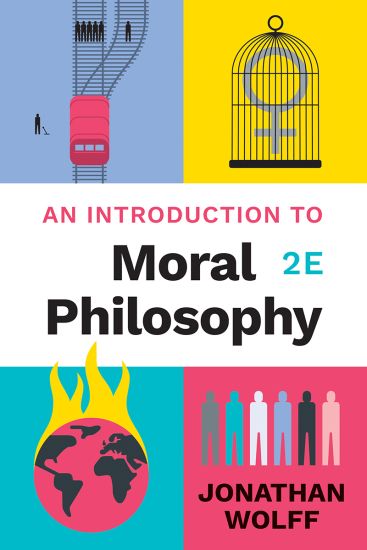
From respected philosopher and writer Jonathan Wolff, this brief introduction to ethics stimulates independent thought, emphasises real-world examples, and provides clear and engaging introductions to key moral theories and the thinkers behind them. The new Second Edition offers expanded coverage of moral reasoning, as well as two thoughtful and contemporary new chapters on applying moral philosophy and the ethics of race. A companion primary source collection, Readings in Moral Philosophy, amplifies issues discussed in the text, connecting them to problems in applied ethics.
Ethics and Public Policy: A Philosophical Inquiry, second edition subjects important and controversial areas of public policy to philosophical scrutiny. Jonathan Wolff, a renowned philosopher and veteran of many public committees, introduces and assesses core problems and controversies in public policy from a philosophical standpoint. Each chapter focuses on an important area of public policy where there is considerable moral and political disagreement. Topics discussed include:• Can we defend inflicting suffering on animals in scientific experiments for human benefit?• What limits to gambling can be achieved through legislation?• What assumptions underlie drug policy? Can we justify punishing those who engage in actions that harm only themselves?• What is so bad about crime? What is the point of punishment?Other chapters discuss health care, disability, safety, and the free market. Throughout the book, fundamental questions for both philosopher and policy maker recur: what are the best methods for connecting philosophy and public policy? Should thinking about public policy be guided by an ‘an ideal world’ or the world we live in now? If there are ‘knock down’ arguments in philosophy why are there none in public policy?Revised throughout to reflect changes in policy and research, this second edition includes four new chapters, on risky new technologies, the future of work, poverty, and immigration. Each chapter concludes with ‘Lessons for Philosophy’ making this book not only an ideal introduction for those coming to philosophy, ethics, or public policy for the first time, but also a vital resource for anyone grappling with the moral complexity underlying policy debates.

Ethics and Public Policy: A Philosophical Inquiry, second edition subjects important and controversial areas of public policy to philosophical scrutiny. Jonathan Wolff, a renowned philosopher and veteran of many public committees, introduces and assesses core problems and controversies in public policy from a philosophical standpoint. Each chapter focuses on an important area of public policy where there is considerable moral and political disagreement. Topics discussed include:• Can we defend inflicting suffering on animals in scientific experiments for human benefit?• What limits to gambling can be achieved through legislation?• What assumptions underlie drug policy? Can we justify punishing those who engage in actions that harm only themselves?• What is so bad about crime? What is the point of punishment?Other chapters discuss health care, disability, safety, and the free market. Throughout the book, fundamental questions for both philosopher and policy maker recur: what are the best methods for connecting philosophy and public policy? Should thinking about public policy be guided by an ‘an ideal world’ or the world we live in now? If there are ‘knock down’ arguments in philosophy why are there none in public policy?Revised throughout to reflect changes in policy and research, this second edition includes four new chapters, on risky new technologies, the future of work, poverty, and immigration. Each chapter concludes with ‘Lessons for Philosophy’ making this book not only an ideal introduction for those coming to philosophy, ethics, or public policy for the first time, but also a vital resource for anyone grappling with the moral complexity underlying policy debates.
Lectures on the History of Moral and Political Philosophy
Jonathan Wolff; Gerald A. Cohen
PRINCETON UNIVERSITY PRESS
2013
sidottu
G. A. Cohen was one of the leading political philosophers of recent times. He first came to wide attention in 1978 with the prize-winning book Karl Marx's Theory of History: A Defence. In subsequent decades his published writings largely turned away from the history of philosophy, focusing instead on equality, freedom, and justice. However, throughout his career he regularly lectured on a wide range of moral and political philosophers of the past. This volume collects these previously unpublished lectures. Starting with a chapter centered on Plato, but also discussing the pre-Socratics as well as Aristotle, the book moves to social contract theory as discussed by Hobbes, Locke, and Hume, and then continues with chapters on Kant, Hegel, and Nietzsche. The book also contains some previously published but uncollected papers on Marx, Hobbes, and Kant, among other figures. The collection concludes with a memoir of Cohen written by the volume editor, Jonathan Wolff, who was a student of Cohen's. A hallmark of the lectures is Cohen's engagement with the thinkers he discusses. Rather than simply trying to render their thought accessible to the modern reader, he tests whether their arguments and positions are clear, sound, and free from contradiction. Throughout, he homes in on central issues and provides fresh approaches to the philosophers he examines. Ultimately, these lectures teach us not only about some of the great thinkers in the history of moral and political philosophy, but also about one of the great thinkers of our time: Cohen himself.

Wolff sammanfattar på ett utmärkt sätt bokens huvudargument och den debatt dessa har gett upphov till. Diskussionen är kritiskt hållen, men han tar hela tiden bokens argument på allvar och hemfaller inte åt ytlig polemik. ... Boken passar utmärkt i undervisning på universitetsnivå i politisk filosofi. Sven Ove Hansson, Bibliotekstjänst