

Kirjailija
Jonathan Zimmerman
Kirjat ja teokset yhdessä paikassa: 15 kirjaa, julkaisuja vuosilta 1999-2027, suosituimpien joukossa Schooling Citizens. Vertaile teosten hintoja ja tarkista saatavuus suomalaisista kirjakaupoista.
15 kirjaa
Kirjojen julkaisuhaarukka 1999-2027.
Liberties Journal of Culture and Politics
Cass R. Sunstein; Carissa Veliz; Ekaterina Pravilova; Richard Taruskin; Claire Malroux; Richard Wolin; Mark Polizzotti; Jonathan Zimmerman; Marissa Grunes; Andrew Butterfield; Scott Spillman; Leora Batnitzky; Helen Vendler; Jared Marcel Pollen; Paula Bohince
Liberties Journal Foundation
2022
nidottu
“A Meteor of Intelligent Substance”“Something was Missing in our Culture, and Here It Is”"Invaluable""Liberties is THE place to be. Change starts in the mind.” Liberties, a journal of Culture and Politics, is essential reading for those engaged in the cultural and political issues and causes of our time. Liberties features serious, independent, stylish, and controversial essays by significant writers and leaders throughout the world; new poetry; and, introduces the next generation of writers and voices to inspire and impact the intellectual and creative lifeblood of today’s culture and politics.In this issue of Liberties: Cass R. Sunstein - The Supreme Court Gone Wrong; Carissa Veliz - Digitization is Surveillance; Ekaterina Pravilova - The Autocrat’s War; Richard Taruskin - What is Bad Taste; Jonathan Zimmerman - Memoirs of a White Savior; Richard Wolin - The Cult of Carl Schmitt; Mark Polizzotti - Surrealism and Cancellation; Andrew Butterfield - Dante During Covid; Scott Spillman - The Strange History of the Slave Songs; Leora Batnitzky - The Sacrifice of Edith Stein; Helen Vendler - Sylvia Plath on Motherhood; Jared Marcel Pollen - Was Havel Right?; Celeste Marcus - The Curse of the Radical Israeli Right; Leon Wieseltier - The Future of Nature; and new poems by Claire Malroux, Marissa Grunes, Paula Bohince.
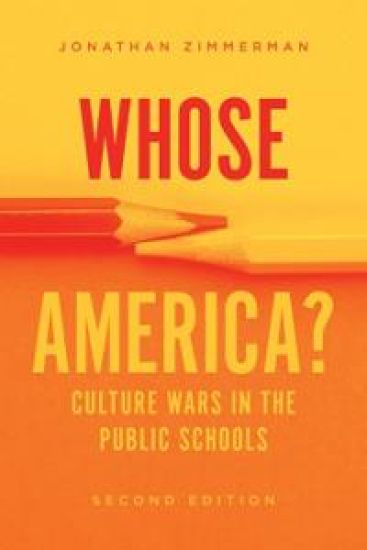
In this expanded edition of his 2002 book, Zimmerman surveys how battles over public education have become conflicts at the heart of American national identity. Critical Race Theory. The 1619 Project. Mask mandates. As the headlines remind us, American public education is still wracked by culture wars. But these conflicts have shifted sharply over the past two decades, marking larger changes in the ways that Americans imagine themselves. In his 2002 book, Whose America?, Zimmerman predicted that religious differences would continue to dominate the culture wars. Twenty years after that seminal work, Zimmerman has reconsidered: arguments over what American history is, what it means, and how it is taught have exploded with special force in recent years. In this substantially expanded new edition, Zimmerman meditates on the history of the culture wars in the classroom—and on what our inability to find common ground might mean for our future.
Liberties Journal of Culture and Politics
Mamtimin Ala; Richard Thompson Ford; Jaroslaw Anders; Sean Wilentz; Ange Mlinko; Benjamin Moser; Jonathan Zimmerman; Leonard Cohen; Cass R. Sunstein; Mark Lilla; Helen Vendler; Holly Brewer; Shaul Tchernikhovsky; David Thomson
Liberties Journal Foundation
2021
pokkari
“A Meteor of Intelligent Substance”“Something was Missing in our Culture, and Here It Is”"Liberties is THE place to be. Change starts in the mind."Liberties, a journal of Culture and Politics, is essential reading for those engaged in the cultural and political issues and causes of our time. Liberties features serious, independent, stylish, and controversial essays by significant writers and leaders throughout the world; new poetry; and, introduces the next generation of writers and voices to inspire and impact the intellectual and creative lifeblood of today’s culture and politics.This issue of Liberties includes: new work from Nobel Prize winner Mario Vargas Llosa; drawings by Leonard Cohen published for the first time; Mamtimin Ala’s essay on China’s genocide of the Uyghurs; Jaroslaw Anders’ analysis of the crisis in Belarus; Cass R. Sunstein on liberalism inebriated; Richard Thompson Ford on what slavery does and does not explain; Sean Wilentz on the historical strategy of the Republican Party; Benjamin Moser writes about translation as a form of tourism in literary life; Jonathan Zimmerman on the scandal of college teaching; Mark Lilla on cults of innocence and their victims; Helen Vendler on Adrienne Rich; Holly Brewer on race and enlightenment; David Thomson asks, What shall we watch now?; Celeste Marcus (managing editor) on the legend of Alice Neel; Leon Wieseltier (editor) on Zionism’s beautiful stubbornness of survival; and new poetry from Ange Mlinko and Shaul Tchernikhovsky, translated by Robert Alter.

In America we like to think we live in a land of liberty, where everyone can say whatever they want. Throughout our history, however, we have also been quick to censor people who offend or frighten us. We talk a good game about freedom of speech, then we turn around and deny it to others. In this brief but bracing book, historian Jonathan Zimmerman and Pulitzer Prize-winning cartoonist Signe Wilkinson tell the story of free speech in America: who established it, who has denounced it, and who has risen to its defense. They also make the case for why we should care about it today, when free speech is once again under attack.Across the political spectrum, Americans have demanded the suppression of ideas and images that allegedly threaten our nation. But the biggest danger to America comes not from speech but from censorship, which prevents us fromfreely governing ourselves. Free speech allows us to criticize our leaders. It lets us consume the art, film, and literature we prefer. And, perhaps most importantly, it allows minorities to challenge the oppression they suffer. While any of us are censored, none of us are free.

The first full-length history of college teaching in the United States from the nineteenth century to the present, this book sheds new light on the ongoing tension between the modern scholarly ideal—scientific, objective, and dispassionate—and the inevitably subjective nature of day-to-day instruction.American college teaching is in crisis, or so we are told. But we've heard that complaint for the past 150 years, as critics have denounced the poor quality of instruction in undergraduate classrooms. Students daydream in gigantic lecture halls while a professor drones on, or they meet with a teaching assistant for an hour of aimless discussion. The modern university does not reward teaching, so faculty members at every level neglect it in favor of research and publication. In the first book-length history of American college teaching, Jonathan Zimmerman confirms but also contradicts these perennial complaints. Drawing upon a wide range of previously unexamined sources, The Amateur Hour shows how generations of undergraduates indicted the weak instruction they received. But Zimmerman also chronicles institutional efforts to improve it, especially by making teaching more "personal." As higher education grew into a gigantic industry, he writes, American colleges and universities introduced small-group activities and other reforms designed to counter the anonymity of mass instruction. They also experimented with new technologies like television and computers, which promised to "personalize" teaching by tailoring it to the individual interests and abilities of each student.But, Zimmerman reveals, the emphasis on the personal inhibited the professionalization of college teaching, which remains, ultimately, an amateur enterprise. The more that Americans treated teaching as a highly personal endeavor, dependent on the idiosyncrasies of the instructor, the less they could develop shared standards for it. Nor have they rigorously documented college instruction, a highly public activity which has taken place mostly in private. Pushing open the classroom door, The Amateur Hour illuminates American college teaching and frames a fresh case for restoring intimate learning communities, especially for America's least privileged students. Anyone who wants to change college teaching will have to start here.

The Case for Contention
Jonathan Zimmerman; Emily Robertson
University of Chicago Press
2017
sidottu
From the fights about the teaching of evolution to the details of sex education, it may seem like American schools are hotbeds of controversy. But as Jonathan Zimmerman and Emily Robertson show in this insightful book, it is precisely because such topics are so inflammatory outside school walls that they are so commonly avoided within them. And this, they argue, is a tremendous disservice to our students. Armed with a detailed history of the development of American educational policy and norms and a clear philosophical analysis of the value of contention in public discourse, they show that one of the best things American schools should do is face controversial topics dead on, right in their classrooms. Zimmerman and Robertson highlight an aspect of American politics that we know all too well: We are terrible at having informed, reasonable debates. We opt instead to hurl insults and accusations at one another or, worse, sit in silence and privately ridicule the other side. Wouldn't an educational system that focuses on how to have such debates in civil and mutually respectful ways improve our public culture and help us overcome the political impasses that plague us today? To realize such a system, the authors argue that we need to not only better prepare our educators for the teaching of hot-button issues, but also provide them the professional autonomy and legal protection to do so. And we need to know exactly what constitutes a controversy, which is itself a controversial issue. The existence of climate change, for instance, should not be subject to discussion in schools: scientists overwhelmingly agree that it exists. How we prioritize it against other needs, such as economic growth, however that is worth a debate. With clarity and common-sense wisdom, Zimmerman and Robertson show that our squeamishness over controversy in the classroom has left our students woefully underserved as future citizens. But they also show that we can fix it: if we all just agree to disagree, in an atmosphere of mutual respect.

The Case for Contention
Jonathan Zimmerman; Emily Robertson
University of Chicago Press
2017
nidottu
From the fights about the teaching of evolution to the details of sex education, it may seem like American schools are hotbeds of controversy. But as Jonathan Zimmerman and Emily Robertson show in this insightful book, it is precisely because such topics are so inflammatory outside school walls that they are so commonly avoided within them. And this, they argue, is a tremendous disservice to our students. Armed with a detailed history of the development of American educational policy and norms and a clear philosophical analysis of the value of contention in public discourse, they show that one of the best things American schools should do is face controversial topics dead on, right in their classrooms. Zimmerman and Robertson highlight an aspect of American politics that we know all too well: We are terrible at having informed, reasonable debates. We opt instead to hurl insults and accusations at one another or, worse, sit in silence and privately ridicule the other side. Wouldn't an educational system that focuses on how to have such debates in civil and mutually respectful ways improve our public culture and help us overcome the political impasses that plague us today? To realize such a system, the authors argue that we need to not only better prepare our educators for the teaching of hot-button issues, but also provide them the professional autonomy and legal protection to do so. And we need to know exactly what constitutes a controversy, which is itself a controversial issue. The existence of climate change, for instance, should not be subject to discussion in schools: scientists overwhelmingly agree that it exists. How we prioritize it against other needs, such as economic growth, however that is worth a debate. With clarity and common-sense wisdom, Zimmerman and Robertson show that our squeamishness over controversy in the classroom has left our students woefully underserved as future citizens. But they also show that we can fix it: if we all just agree to disagree, in an atmosphere of mutual respect.
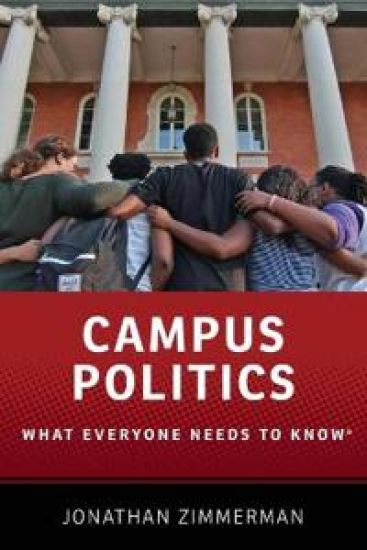
Universities are usually considered bastions of the free exchange of ideas, but a recent tide of demonstrations across college campuses has called this belief into question, and with serious consequences. Such a wave of protests hasn't been seen since the campus free speech demonstrations of the 1960s, yet this time it is the political Left, rather than the political Right, calling for restrictions on campus speech and freedom. And, as Jonathan Zimmerman suggests, recent campus controversies have pitted free speech against social justice ideals. The language of trauma--and, more generally, of psychology--has come to dominate campus politics, marking another important departure from prior eras. This trend reflects an increased awareness of mental health in American society writ large. But it has also tended to dampen exchange and discussion on our campuses, where faculty and students self-censor for fear of insulting or offending someone else. Or they attack each other in periodic bursts of invective, which run counter to the "civility" promised by new speech and conduct codes. In Campus Politics: What Everyone Needs to Know®, Jonathan Zimmerman breaks down the dynamics of what is actually driving this recent wave of discontent. After setting recent events in the context of the last half-century of free speech campus movements, Zimmerman looks at the political beliefs of the US professorate and students. He follows this with chapters on political correctness; debates over the contested curriculum; admissions, faculty hires, and affirmative action; policing students; academic freedom and censorship; in loco parentis administration; and the psychology behind demands for "trigger warnings" and "safe spaces." He concludes with the question of how to best balance the goals of social and racial justice with the commitment to free speech.
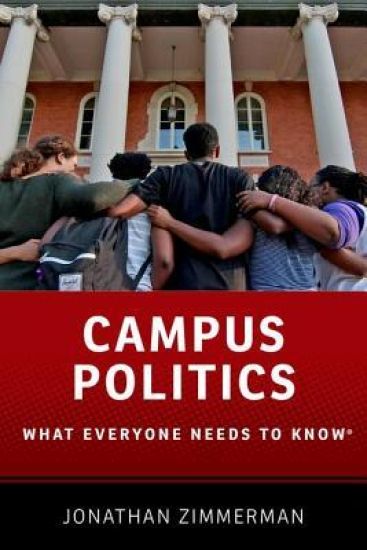
Universities are usually considered bastions of the free exchange of ideas, but a recent tide of demonstrations across college campuses has called this belief into question, and with serious consequences. Such a wave of protests hasn't been seen since the campus free speech demonstrations of the 1960s, yet this time it is the political Left, rather than the political Right, calling for restrictions on campus speech and freedom. And, as Jonathan Zimmerman suggests, recent campus controversies have pitted free speech against social justice ideals. The language of trauma--and, more generally, of psychology--has come to dominate campus politics, marking another important departure from prior eras. This trend reflects an increased awareness of mental health in American society writ large. But it has also tended to dampen exchange and discussion on our campuses, where faculty and students self-censor for fear of insulting or offending someone else. Or they attack each other in periodic bursts of invective, which run counter to the "civility" promised by new speech and conduct codes. In Campus Politics: What Everyone Needs to Know®, Jonathan Zimmerman breaks down the dynamics of what is actually driving this recent wave of discontent. After setting recent events in the context of the last half-century of free speech campus movements, Zimmerman looks at the political beliefs of the US professorate and students. He follows this with chapters on political correctness; debates over the contested curriculum; admissions, faculty hires, and affirmative action; policing students; academic freedom and censorship; in loco parentis administration; and the psychology behind demands for "trigger warnings" and "safe spaces." He concludes with the question of how to best balance the goals of social and racial justice with the commitment to free speech.
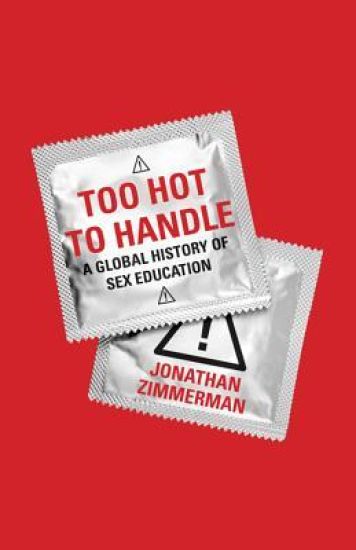
Too Hot to Handle is the first truly international history of sex education. As Jonathan Zimmerman shows, the controversial subject began in the West and spread steadily around the world over the past century. As people crossed borders, however, they joined hands to block sex education from most of their classrooms. Examining key players who supported and opposed the sex education movement, Zimmerman takes a close look at one of the most debated and divisive hallmarks of modern schooling. In the early 1900s, the United States pioneered sex education to protect citizens from venereal disease. But the American approach came under fire after World War II from European countries, which valued individual rights and pleasures over social goals and outcomes. In the so-called Third World, sex education developed in response to the deadly crisis of HIV/AIDS. By the early 2000s, nearly every country in the world addressed sex in its official school curriculum. Still, Zimmerman demonstrates that sex education never won a sustained foothold: parents and religious leaders rejected the subject as an intrusion on their authority, while teachers and principals worried that it would undermine their own tenuous powers. Despite the overall liberalization of sexual attitudes, opposition to sex education increased as the century unfolded. Into the present, it remains a subject without a home. Too Hot to Handle presents the stormy development and dilemmas of school-based sex education in the modern world.

The little red schoolhouse has all but disappeared in the United States, but its importance in national memory remains unshakable. This engaging book examines the history of the one-room school and how successive generations of Americans have remembered—and just as often misremembered—this powerful national icon. Drawing on a rich range of sources, from firsthand accounts to poems, songs, and films, Jonathan Zimmerman traces the evolution of attitudes toward the little red schoolhouse from the late nineteenth century to the present day. At times it was celebrated as a symbol of lost rural virtues or America’s democratic heritage; at others it was denounced as the epitome of inefficiency and substandard academics. And because the one-room school has been a useful emblem for liberal, conservative, and other agendas, the truth of its history has sometimes been stretched. Yet the idyllic image of the schoolhouse still unites Americans. For more than a century, it has embodied the nation’s best aspirations and—especially—its continuing faith in education itself.
Too Hot to Handle is the first truly international history of sex education. As Jonathan Zimmerman shows, the controversial subject began in the West and spread steadily around the world over the past century. As people crossed borders, however, they joined hands to block sex education from most of their classrooms. Examining key players who supported and opposed the sex education movement, Zimmerman takes a close look at one of the most debated and divisive hallmarks of modern schooling. In the early 1900s, the United States pioneered sex education to protect citizens from venereal disease. But the American approach came under fire after World War II from European countries, which valued individual rights and pleasures over social goals and outcomes. In the so-called Third World, sex education developed in response to the deadly crisis of HIV/AIDS. By the early 2000s, nearly every country in the world addressed sex in its official school curriculum. Still, Zimmerman demonstrates that sex education never won a sustained foothold: parents and religious leaders rejected the subject as an intrusion on their authority, while teachers and principals worried that it would undermine their own tenuous powers. Despite the overall liberalization of sexual attitudes, opposition to sex education increased as the century unfolded. Into the present, it remains a subject without a home. Too Hot to Handle presents the stormy development and dilemmas of school-based sex education in the modern world.

Protestant missionaries in Latin America. Colonial "civilizers" in the Pacific. Peace Corps Volunteers in Africa. Since the 1890s, thousands of American teachers--mostly young, white, middle-class, and inexperienced--have fanned out across the globe. Innocents Abroad tells the story of what they intended to teach and what lessons they learned.Drawing on extensive archives of the teachers' letters and diaries, as well as more recent accounts, Jonathan Zimmerman argues that until the early twentieth century, the teachers assumed their own superiority; they sought to bring civilization, Protestantism, and soap to their host countries. But by the mid-twentieth century, as teachers borrowed the concept of "culture" from influential anthropologists, they became far more self-questioning about their ethical and social assumptions, their educational theories, and the complexity of their role in a foreign society. Filled with anecdotes and dilemmas--often funny, always vivid--Zimmerman's narrative explores the teachers' shifting attitudes about their country and themselves, in a world that was more unexpected and unsettling than they could have imagined.
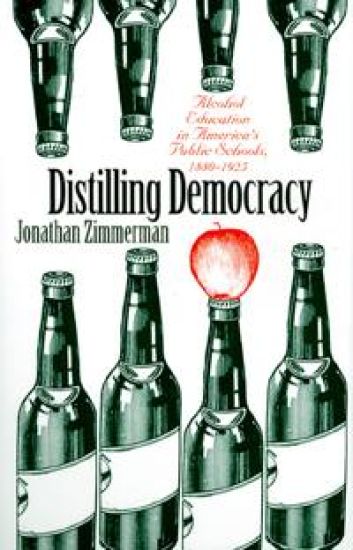
Scientific Temperance Instruction (STI) was a successful grassroots education programme in America, championed by an army of housewives in the Women's Christian Temperance Union. This text argues that the real issue surrounding STI was the struggle to reconcile democracy and expertise.