Kirjojen hintavertailu. Mukana 12 595 353 kirjaa ja 12 kauppaa.

Kirjailija

Jonathon L. Earle

Kirjat ja teokset yhdessä paikassa: 4 kirjaa, julkaisuja vuosilta 2017-2023, suosituimpien joukossa Contesting Catholics. Vertaile teosten hintoja ja tarkista saatavuus suomalaisista kirjakaupoista.

4 kirjaa

Kirjojen julkaisuhaarukka 2017-2023.

Contesting Catholics

Contesting Catholics

Jonathon L. Earle; J.J. Carney

James Currey
2023
pokkari
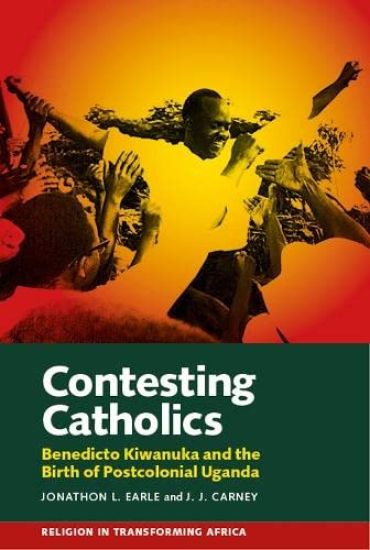
First scholarly treatment of Uganda's first elected ruler; offers new insights into the religious and political history of modern Uganda. Assassinated by Idi Amin and a democratic ally of J.F. Kennedy during the Cold War, Benedicto Kiwanuka was Uganda's most controversial and disruptive politician, and his legacy is still divisive. On the eve of independence, he led the Democratic Party (DP), a national movement of predominantly Catholic activists, to end political inequalities and religious discrimination. Along the way, he became Uganda's first prime minister and first Ugandan chief justice. Earle and Carney show how Kiwanuka and Catholic activists struggled to create an inclusive vision of the state, a vision that resulted in relentless intimidation and extra-judicial killings. Focusing closely on the competing Catholic projects that circulated throughout Uganda, this book offers new ways of thinking about the history of democratic thought, while pushing the study of Catholicism in Africa outside of the church and beyond the gaze of missionaries. Drawing on never before seen sources from Kiwanuka's personal papers, the authors upend many of the assumptions that have framed Uganda's political and religious history for over sixty years, as well as repositioning Uganda's politics within the global arena. Fountain: Uganda
Contesting Catholics

Contesting Catholics

Jonathon L. Earle; J.J. Carney

James Currey
2021
sidottu
First scholarly treatment of Uganda's first elected ruler; offers new insights into the religious and political history of modern Uganda. Assassinated by Idi Amin and a democratic ally of J.F. Kennedy during the Cold War, Benedicto Kiwanuka was Uganda's most controversial and disruptive politician, and his legacy is still divisive. On the eve of independence, he led the Democratic Party (DP), a national movement of predominantly Catholic activists, to end political inequalities and religious discrimination. Along the way, he became Uganda's first prime minister and first Ugandan chief justice. Earle and Carney show how Kiwanuka and Catholic activists struggled to create an inclusive vision of the state, a vision that resulted in relentless intimidation and extra-judicial killings. Focusing closely on the competing Catholic projects that circulated throughout Uganda, this book offers new ways of thinking about the history of democratic thought, while pushing the study of Catholicism in Africa outside of the church and beyond the gaze of missionaries. Drawing on never before seen sources from Kiwanuka's personal papers, the authors upend many of the assumptions that have framed Uganda's political and religious history for over sixty years, as well as repositioning Uganda's politics within the global arena. Fountain: Uganda
Colonial Buganda and the End of Empire

Colonial Buganda and the End of Empire

Jonathon L. Earle

Cambridge University Press
2020
pokkari
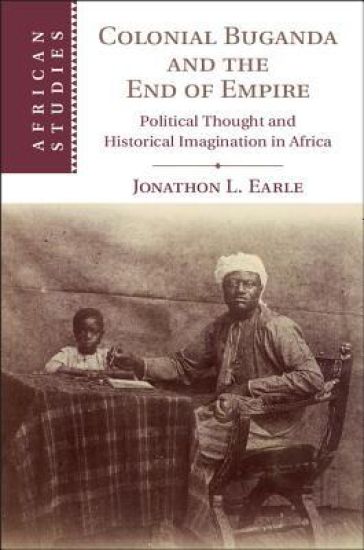
Colonial Buganda was one of the most important and richly documented kingdoms in East Africa. In this book, Jonathon L. Earle offers the first global intellectual history of the Kingdom, using a series of case studies, interviews and previously inaccessible private archives to offer new insights concerning the multiple narratives used by intellectuals. Where previous studies on literacy in Africa have presupposed 'sacred' or 'secular' categories, Earle argues that activists blurred European epistemologies as they reworked colonial knowledge into vernacular debates about kingship and empire. Furthermore, by presenting Catholic, Muslim and Protestant histories and political perspectives in conversation with one another, he offers a nuanced picture of the religious and social environment. Through the lives, politics, and historical contexts of these African intellectuals, Earle presents an important argument about the end of empire, making the reader rethink the dynamics of political imagination and historical pluralism in the colonial and postcolonial state.
Colonial Buganda and the End of Empire

Colonial Buganda and the End of Empire

Jonathon L. Earle

Cambridge University Press
2017
sidottu
Colonial Buganda was one of the most important and richly documented kingdoms in East Africa. In this book, Jonathon L. Earle offers the first global intellectual history of the Kingdom, using a series of case studies, interviews and previously inaccessible private archives to offer new insights concerning the multiple narratives used by intellectuals. Where previous studies on literacy in Africa have presupposed 'sacred' or 'secular' categories, Earle argues that activists blurred European epistemologies as they reworked colonial knowledge into vernacular debates about kingship and empire. Furthermore, by presenting Catholic, Muslim and Protestant histories and political perspectives in conversation with one another, he offers a nuanced picture of the religious and social environment. Through the lives, politics, and historical contexts of these African intellectuals, Earle presents an important argument about the end of empire, making the reader rethink the dynamics of political imagination and historical pluralism in the colonial and postcolonial state.