Kirjojen hintavertailu. Mukana 12 152 606 kirjaa ja 12 kauppaa.

Kirjailija

Joost Schilperoord

Kirjat ja teokset yhdessä paikassa: 2 kirjaa, julkaisuja vuosilta 2024-2025, suosituimpien joukossa A Multimodal Language Faculty. Vertaile teosten hintoja ja tarkista saatavuus suomalaisista kirjakaupoista.

2 kirjaa

Kirjojen julkaisuhaarukka 2024-2025.

A Multimodal Language Faculty

A Multimodal Language Faculty

Neil Cohn; Joost Schilperoord

BLOOMSBURY PUBLISHING PLC
2025
nidottu
Natural human communication is multimodal. We pair speech with gestures, and combine writing with pictures from online messaging to comics to advertising. This richness of human communication remains unaddressed in linguistic and cognitive theories which maintain traditional amodal assumptions about language. What is needed is a new, multimodal paradigm.This book posits a bold reorganization of the structures of language, and heralds a reconsideration of its guiding assumptions. Human expressive behaviors like speaking, signing, and drawing may seem distinct, but they decompose into similar cognitive building blocks which coalesce in emergent states from a singular multimodal communicative architecture. This cognitive model accounts for unimodal and multimodal expression across all of our modalities, providing a “grand unified theory” that incorporates insights from formal linguistics, cognitive semantics, metaphor theory, Peircean semiotics, sign language, gesture, visual language, psycholinguistics, and cognitive neuroscience. Such a perspective reconfigures how we understand linguistic structure, diversity, universals, innateness, relativity, and evolution. A Multimodal Language Faculty directly confronts centuries-old notions of language and offers a compelling reimagination of what language is and how it works.
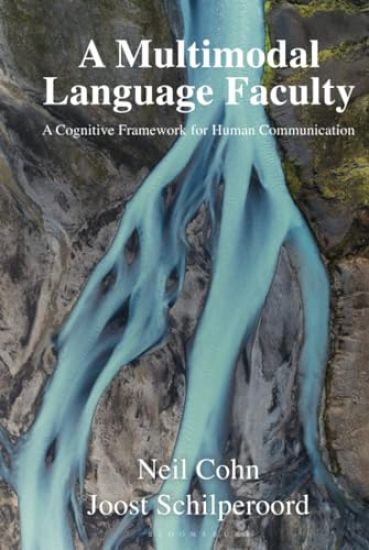
A Multimodal Language Faculty

A Multimodal Language Faculty

Neil Cohn; Joost Schilperoord

BLOOMSBURY PUBLISHING PLC
2024
sidottu
Natural human communication is multimodal. We pair speech with gestures, and combine writing with pictures from online messaging to comics to advertising. This richness of human communication remains unaddressed in linguistic and cognitive theories which maintain traditional amodal assumptions about language. What is needed is a new, multimodal paradigm.This book posits a bold reorganization of the structures of language, and heralds a reconsideration of its guiding assumptions. Human expressive behaviors like speaking, signing, and drawing may seem distinct, but they decompose into similar cognitive building blocks which coalesce in emergent states from a singular multimodal communicative architecture. This cognitive model accounts for unimodal and multimodal expression across all of our modalities, providing a “grand unified theory” that incorporates insights from formal linguistics, cognitive semantics, metaphor theory, Peircean semiotics, sign language, gesture, visual language, psycholinguistics, and cognitive neuroscience. Such a perspective reconfigures how we understand linguistic structure, diversity, universals, innateness, relativity, and evolution. A Multimodal Language Faculty directly confronts centuries-old notions of language and offers a compelling reimagination of what language is and how it works.