Kirjojen hintavertailu. Mukana 12 152 606 kirjaa ja 12 kauppaa.

Kirjailija

Jordan Osserman

Kirjat ja teokset yhdessä paikassa: 4 kirjaa, julkaisuja vuosilta 2022-2026, suosituimpien joukossa Waiting Times. Vertaile teosten hintoja ja tarkista saatavuus suomalaisista kirjakaupoista.

4 kirjaa

Kirjojen julkaisuhaarukka 2022-2026.

Waiting Times

Waiting Times

Kelechi Anucha; Lisa Baraitser; Jocelyn Catty; Stephanie Davies; Michael J. Flexer; Martin D. Moore; Martin O'Brien; Jordan Osserman; Laura Salisbury

BLOOMSBURY PUBLISHING PLC
2026
sidottu
In a world characterised by ‘poly crisis’, two major crises stand out: a crisis of time and a crisis of care. This open access book investigates what it means to wait in and for healthcare in an era when care is politicised and rationed and time is lived at increasingly different and complex tempos. Waiting times within the UK National Health Service (NHS) have been at historic levels through and since the Covid-19 pandemic. Although this sense of a crisis of waiting is culturally and historically specific, it casts important light on the ‘crisis’ of welfare structures across the Global North. Such a crisis in waiting times brings both a call for judgment and a call to action. This book argues that all healthcare entails waiting and other forms of elongated time, such as pausing to observe, staying alongside patients at end of life, or stopping treatment as an ethical intervention. Instead of trying to 'solve' the crisis of the NHS by moving people more quickly through the system, reallocating time to address ‘shortfalls’ to reduce waits to access care, or even abandoning the social commitment to a universal service, the authors argue that it is vital to pay attention, first, to how time and care continue to be made in the current system. It is only by reckoning with the essential ‘untimeliness’ of care that we might then be able to conceptualise interventions in the NHS that are ‘timely’ and that sustain its social mission. The ebook editions of this book are available open access under a CC BY-NC-ND 4.0 licence on bloomsburycollections.com. Open access was funded by The Wellcome Trust.
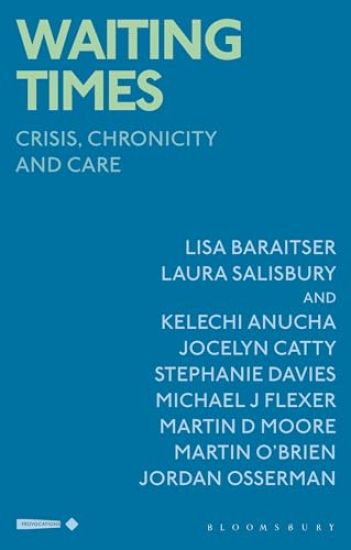
Waiting Times

Waiting Times

Kelechi Anucha; Lisa Baraitser; Jocelyn Catty; Stephanie Davies; Michael J. Flexer; Martin D. Moore; Martin O'Brien; Jordan Osserman; Laura Salisbury

BLOOMSBURY PUBLISHING PLC
2026
nidottu
In a world characterised by ‘poly crisis’, two major crises stand out: a crisis of time and a crisis of care. This open access book investigates what it means to wait in and for healthcare in an era when care is politicised and rationed and time is lived at increasingly different and complex tempos. Waiting times within the UK National Health Service (NHS) have been at historic levels through and since the Covid-19 pandemic. Although this sense of a crisis of waiting is culturally and historically specific, it casts important light on the ‘crisis’ of welfare structures across the Global North. Such a crisis in waiting times brings both a call for judgment and a call to action. This book argues that all healthcare entails waiting and other forms of elongated time, such as pausing to observe, staying alongside patients at end of life, or stopping treatment as an ethical intervention. Instead of trying to 'solve' the crisis of the NHS by moving people more quickly through the system, reallocating time to address ‘shortfalls’ to reduce waits to access care, or even abandoning the social commitment to a universal service, the authors argue that it is vital to pay attention, first, to how time and care continue to be made in the current system. It is only by reckoning with the essential ‘untimeliness’ of care that we might then be able to conceptualise interventions in the NHS that are ‘timely’ and that sustain its social mission. The ebook editions of this book are available open access under a CC BY-NC-ND 4.0 licence on bloomsburycollections.com. Open access was funded by The Wellcome Trust.

Circumcision on the Couch

Circumcision on the Couch

Jordan Osserman

BLOOMSBURY PUBLISHING PLC
2023
nidottu
An Independent Book of the MonthPenises, and the things people do with them, have been subjects of controversy for a long time. This book examines how one thing that some people do to penises—remove the foreskin—has become a site upon which vital questions of gender, race, religion, sexuality, and psychic life are negotiated. While most contemporary work on the subject is concerned with whether circumcision is right or wrong, safe or harmful, Circumcision on the Couch takes as its starting point that the significance of male circumcision exceeds anatomical and juridical considerations.Deploying a feminist Lacanian framework, while drawing from a wide range of archival sources and critical thought, Jordan Osserman asks: How can psychoanalysis help us shed light on the ideologies, discourses, and fantasies surrounding circumcision and the impassioned stances for and against it? And how might the history of circumcision, in turn, allow us to re-assess and clarify how we understand the split (or “snipped”) subject of psychoanalysis?
Circumcision on the Couch

Circumcision on the Couch

Jordan Osserman

Bloomsbury Academic USA
2022
sidottu
An Independent Book of the MonthPenises, and the things people do with them, have been subjects of controversy for a long time. This book examines how one thing that some people do to penises—remove the foreskin—has become a site upon which vital questions of gender, race, religion, sexuality, and psychic life are negotiated. While most contemporary work on the subject is concerned with whether circumcision is right or wrong, safe or harmful, Circumcision on the Couch takes as its starting point that the significance of male circumcision exceeds anatomical and juridical considerations.Deploying a feminist Lacanian framework, while drawing from a wide range of archival sources and critical thought, Jordan Osserman asks: How can psychoanalysis help us shed light on the ideologies, discourses, and fantasies surrounding circumcision and the impassioned stances for and against it? And how might the history of circumcision, in turn, allow us to re-assess and clarify how we understand the split (or “snipped”) subject of psychoanalysis?