Kirjojen hintavertailu. Mukana 12 200 382 kirjaa ja 12 kauppaa.
Kirjailija
Jordi Cat
Kirjat ja teokset yhdessä paikassa: 5 kirjaa, julkaisuja vuosilta 1996-2018, suosituimpien joukossa The Scientists. Vertaile teosten hintoja ja tarkista saatavuus suomalaisista kirjakaupoista.
Naomi Pasachoff; Jay Pasachoff; Robert Iliffe; Frank A.J.L. James; Jordi Cat; Patrick Moore; Martin Rudwick; Laura Dassow Walls; Roger McCoy; Michael Hunter; Jean-Pierre Poirier; Alan Rocke; Nathan Brooks; Georgina Ferry; Virendra Singh; Frank Close; Andrew Whitaker; Robert Paradowski
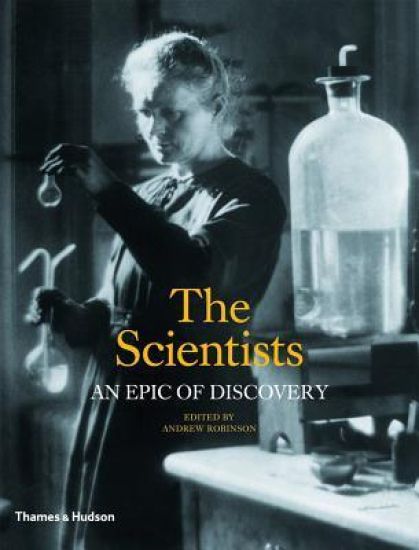
This book tells the remarkable lives of the pioneers of science – from Galileo and Newton, Faraday and Darwin, Pasteur and Marie Curie, to Einstein, Freud, Turing, and Crick and Watson. A series of seventy articles, written by an international team of distinguished scientists, historians of science and science writers, provides an unrivalled account of the lives and personalities behind the greatest scientific breakthroughs of all time. Organized thematically, starting at the ‘Universe’, and moving smaller through the ‘Earth’ and ‘Molecules and Matter’ to ‘Inside the Atom’, with the final two sections looking at ‘Life’ and ‘Body and Mind’, it covers all the major scientific disciplines, including astronomy, biology, biochemistry, chemistry, computing, ecology, geology, medicine, neurology, physics and psychology, as well as mathematics. The Scientists will intrigue budding scientists, those fascinated by the lives of great individuals, and anyone curious to know how over the centuries we came to understand the physical world around us and inside us.
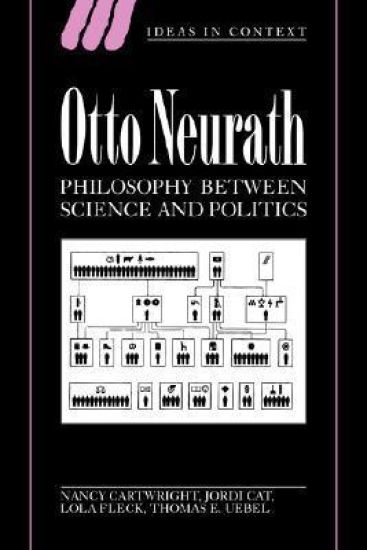
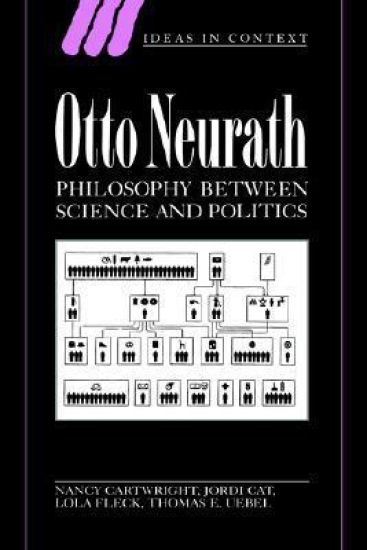
An international team of four authors, led by distinguished philosopher of science, Nancy Cartwright, and leading scholar of the Vienna Circle, Thomas E. Uebel, have produced this lucid and elegant study of a much-neglected figure. The book, which depicts Neurath's science in the political, economic and intellectual milieu in which it was practised, is divided into three sections: Neurath's biographical background and the socio-political context of his economic ideas; the development of his theory of science; and his legacy as illustrated by his contemporaneous involvement in academic and political debates. Coinciding with the renewal of interest in logical positivism, this is a timely publication which will redress a current imbalance in the history and philosophy of science, as well as making a major contribution to our understanding of the intellectual life of Austro-Germany in the inter-war years.
An international team of four authors, led by distinguished philosopher of science, Nancy Cartwright, and leading scholar of the Vienna Circle, Thomas E. Uebel, have produced this lucid and elegant study of a much-neglected figure. The book, which depicts Neurath’s science in the political, economic and intellectual milieu in which it was practised, is divided into three sections: Neurath’s biographical background and the socio-political context of his economic ideas; the development of his theory of science; and his legacy as illustrated by his contemporaneous involvement in academic and political debates. Coinciding with the renewal of interest in logical positivism, this is a timely publication which will redress a current imbalance in the history and philosophy of science, as well as making a major contribution to our understanding of the intellectual life of Austro-Germany in the inter-war years.
This book presents a comprehensive discussion on the characterization of vagueness in pictures. It reports on how the problem of representation of images has been approached in scientific practice, highlighting the role of mathematical methods and the philosophical background relevant for issues such as representation, categorization and reasoning. Without delving too much into the technical details, the book examines and defends different kinds of values of fuzziness based on a complex approach to categorization as a practice, adopting conceptual and empirical suggestions from different fields including the arts. It subsequently advances criticisms and provides suggestions for interpretation and application. By describing a cognitive framework based on fuzzy, rough and near sets, and discussing all of the relevant mathematical and philosophical theories for the representation and processing of vagueness in images, the book offers a practice-oriented guide to fuzzy visual reasoning,along with novel insights into the field of interpreting and thinking with fuzzy pictures and fuzzy data.