

Kirjailija
Jörg Arnold
Kirjat ja teokset yhdessä paikassa: 5 kirjaa, julkaisuja vuosilta 2011-2025, suosituimpien joukossa Pranger 3.0 - Wie Moderne Medien Den Rechtsstaat Gefahrden: Erfahrungen Der Strafverteidigung Und Kritische Betrachtungen. Vertaile teosten hintoja ja tarkista saatavuus suomalaisista kirjakaupoista.
Mukana myös kirjoitusasut: Jorg Arnold
5 kirjaa
Kirjojen julkaisuhaarukka 2011-2025.

The British Miner in the Age of De-Industrialization
Jörg Arnold
Oxford University Press
2023
sidottu
The British coal industry no longer exists and yet the figure of the coal miner lives on in the British cultural imagination. In feature films and documentaries, miners are typically portrayed as proletarian traditionalists working in a dying industry. Taking this perspective, the 1984/85 miners' strike seems a desperate last stand against forces much bigger than the miners themselves -- not just the Thatcher government but the tide of historical change itself. In this ground-breaking study, Jörg Arnold challenges a declinist reading of the people working in one of Britain's most important energy industries. The study makes extensive use of previously inaccessible records to offer a new account of the British miner in the age of de-industrialisation. The book situates the miners in broader structures of feeling, and reconstructs the miners' sense of the past and the future. Arnold argues that Britain's miners went through a cyclical movement -- from loser to winner and back again -- as Britain underwent a de-industrial revolution in the final decades of the twentieth century. The book reinserts the industry's 'new dawn' of the 1970s into the story of coal and shows that the miners wielded real power. The industry's reversal of fortunes, inscribed in Plan for Coal (1974), proved short-lived. It was significant all the same. Its significance, the book argues, did not lie in affecting the long-term trajectory of the coal industry. Rather, the 'new dawn' was important in raising the political and cultural stakes. The miners found themselves at the centre of sharply conflicting visions of the future at a critical juncture in Britain's history. The figure of the coal miner became invested with sharply contrasting characteristics: hero and villain, underdog and enemy, proletarian traditionalist and standard bearer of Socialist advance. The miners were no mere spectators in this process. They were agents, thought to be uniquely powerful by their numerous opponents, and half believing in this power themselves. The miners' special nature, however, jarred with the aspiration to lead an ordinary life, producing tensions that were most cruelly exposed in the year-long strike of 1984/1985.

Pranger 3.0 - Wie Moderne Medien Den Rechtsstaat Gefahrden: Erfahrungen Der Strafverteidigung Und Kritische Betrachtungen
Jorg Arnold
Berliner Wissenschafts-Verlag
2019
nidottu
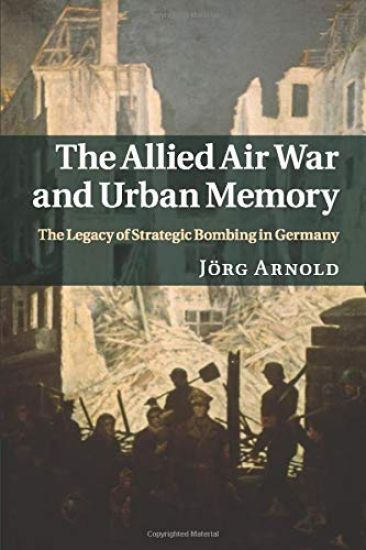
The cultural legacy of the air war on Germany is explored in this comparative study of two bombed cities from different sides of the subsequently divided nation. Contrary to what is often assumed, Allied bombing left a lasting imprint on German society, spawning vibrant memory cultures that can be traced from the 1940s to the present. While the death of half a million civilians and the destruction of much of Germany's urban landscape provided 'usable' rallying points in the great political confrontations of the day, the cataclysms were above all remembered on a local level, in the very spaces that had been hit by the bombs and transformed beyond recognition. The author investigates how lived experience in the shadow of Nazism and war was translated into cultural memory by local communities in Kassel and Magdeburg struggling to find ways of coming to terms with catastrophic events unprecedented in living memory.
The cultural legacy of the air war on Germany is explored in this comparative study of two bombed cities from different sides of the subsequently divided nation. Contrary to what is often assumed, Allied bombing left a lasting imprint on German society, spawning vibrant memory cultures that can be traced from the 1940s to the present. While the death of half a million civilians and the destruction of much of Germany's urban landscape provided 'usable' rallying points in the great political confrontations of the day, the cataclysms were above all remembered on a local level, in the very spaces that had been hit by the bombs and transformed beyond recognition. The author investigates how lived experience in the shadow of Nazism and war was translated into cultural memory by local communities in Kassel and Magdeburg struggling to find ways of coming to terms with catastrophic events unprecedented in living memory.